Kirjojen hintavertailu. Mukana 12 459 402 kirjaa ja 12 kauppaa.

Kirjailija

Kevin Hart

Kirjat ja teokset yhdessä paikassa: 40 kirjaa, julkaisuja vuosilta 1999-2025, suosituimpien joukossa The Manifest and the Revealed. Vertaile teosten hintoja ja tarkista saatavuus suomalaisista kirjakaupoista.

40 kirjaa

Kirjojen julkaisuhaarukka 1999-2025.

I Can't Make This Up: Life Lessons
New York Times bestselling author, superstar comedian, and Hollywood box office star Kevin Hart turns his immense talent to the written word in this "hilarious but also heartfelt" (Elle) memoir on survival, success, and the importance of believing in yourself. The question you're probably asking yourself right now is: What does Kevin Hart have that a book also has? According to the three people who have seen Kevin Hart and a book in the same room, the answer is clear: A book is compact. Kevin Hart is compact. A book has a spine that holds it together. Kevin Hart has a spine that holds him together. A book has a beginning. Kevin Hart's life uniquely qualifies him to write this book by also having a beginning. It begins in North Philadelphia. He was born an accident, unwanted by his parents. His father was a drug addict who was in and out of jail. His brother was a crack dealer and petty thief. And his mother was overwhelmingly strict, beating him with belts, frying pans, and his own toys. The odds, in short, were stacked against our young hero. But Kevin Hart, like Ernest Hemingway, J.K. Rowling, and Chocolate Droppa before him, was able to defy the odds and turn it around. In his literary debut, he takes us on a journey through what his life was, what it is today, and how he's overcome each challenge to become the man he is today. And that man happens to be the biggest comedian in the world, with tours that sell out football stadiums and films that have collectively grossed over $3.5 billion. He achieved this not just through hard work, determination, and talent. "Hart is an incredibly magnetic storyteller, on the page as he is onstage, and that's what shines through in this] genial, entertaining guide to a life in comedy" (Kirkus Reviews).
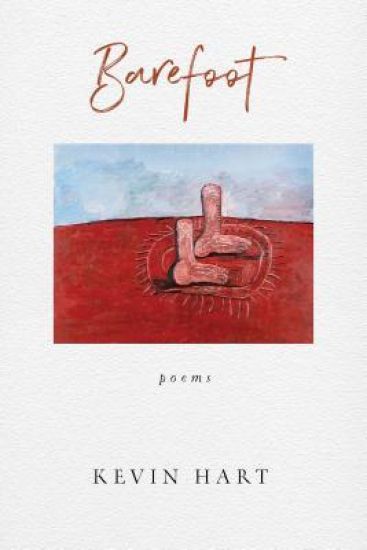
Barefoot

Barefoot

Kevin Hart

University of Notre Dame Press
2018
nidottu
Barefoot is Kevin Hart's eighth collection of poems; it is rich in elegies, meditations on lost love, and celebrations of new love. The title speaks of mourning, pilgrimage, and the direct sensuous contact of flesh with earth. Harold Bloom has long extolled Hart as a "visionary of desire," and in this collection we find that vision deepened and that desire extended. Never before has Hart stretched his range of inspiration quite so far; while continuing to draw from Christianity, he also responds to the rich heritage of American Blues, and reveals a wit as sharp as a razor's edge. The poetry is at once religious poetry and love poetry; indeed, the "religious poetry" is itself love poetry. Always, Hart speaks to us in words that seem inevitable in their simplicity. As he himself has written, "The best conductor of mystery is clarity. The true bearer of complexity is simplicity." Barefoot will delight poetry lovers everywhere.
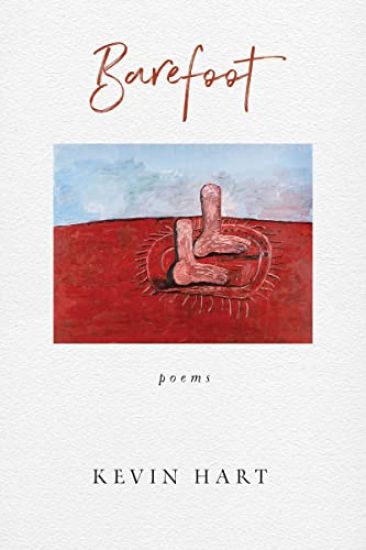
Barefoot

Barefoot

Kevin Hart

University of Notre Dame Press
2018
sidottu
Barefoot is Kevin Hart's eighth collection of poems; it is rich in elegies, meditations on lost love, and celebrations of new love. The title speaks of mourning, pilgrimage, and the direct sensuous contact of flesh with earth. Harold Bloom has long extolled Hart as a "visionary of desire," and in this collection we find that vision deepened and that desire extended. Never before has Hart stretched his range of inspiration quite so far; while continuing to draw from Christianity, he also responds to the rich heritage of American Blues, and reveals a wit as sharp as a razor's edge. The poetry is at once religious poetry and love poetry; indeed, the "religious poetry" is itself love poetry. Always, Hart speaks to us in words that seem inevitable in their simplicity. As he himself has written, "The best conductor of mystery is clarity. The true bearer of complexity is simplicity." Barefoot will delight poetry lovers everywhere.
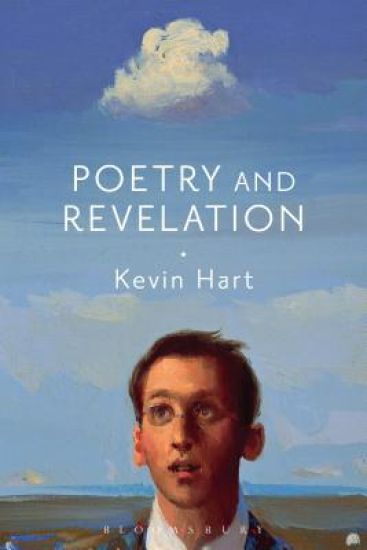
Poetry and Revelation

Poetry and Revelation

Kevin Hart

Bloomsbury Academic
2017
sidottu
Religious poetry has often been regarded as minor poetry and dismissed in large part because poetry is taken to require direct experience; whereas religious poetry is taken to be based on faith, that is, on second or third hand experience. The best methods of thinking about "experience" are given to us by phenomenology. Poetry and Revelation is the first study of religious poetry through a phenomenological lens, one that works with the distinction between manifestation (in which everything is made manifest) and revelation (in which the mystery is re-veiled as well as revealed). Providing a phenomenological investigation of a wide range of “religious poems”, some medieval, some modern; some written in English, others written in European languages; some from America, some from Britain, and some from Australia, Kevin Hart provides a unique new way of thinking about religious poetry and the nature of revelation itself.
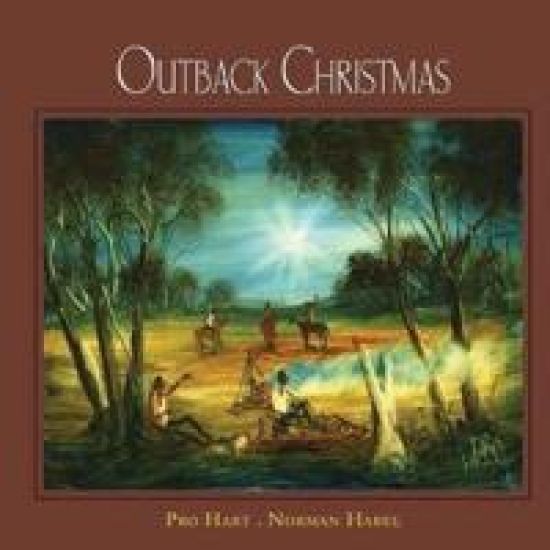
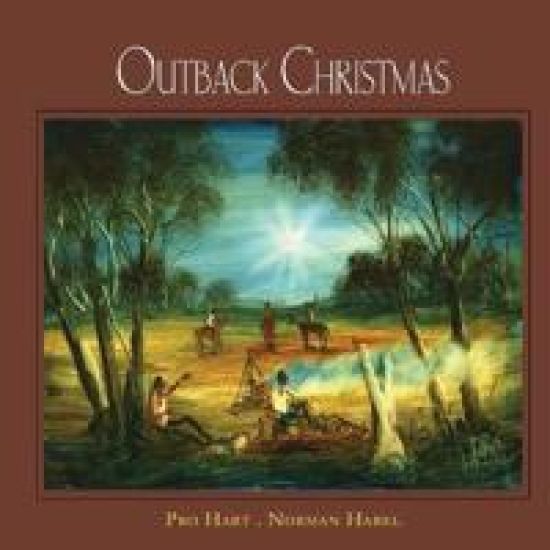
Outback Christmas

Outback Christmas

Kevin Hart; Norm Habel

ATF Press
2017
sidottu
Outback Christmas is a significant book, first published in 1981, and now in a new edition with new Preface, released ten years after the death of the artist, Pro Hart. This book portrays the nativity of Christ in bold images of the Australian Outback. Most of our Christmas art and verse have been inherited from English and European sources, but the Christian message is universal and other cultures commonly portray the characters and events surrounding Christ's birth in line with local custom. The authors write in the 1981 Preface that 'the ideas and images of the book reflect the search of many Australians to make Christianity in Australia and Australian Christianity ... Australians have sought to express their faith in language consistent with the Australian experience.
Outback Christmas

Outback Christmas

Kevin Hart; Norm Habel

ATF Press
2017
nidottu
Outback Christmas is a significant book, first published in 1981, and now in a new edition with new Preface, released ten years after the death of the artist, Pro Hart. This book portrays the nativity of Christ in bold images of the Australian Outback. Most of our Christmas art and verse have been inherited from English and European sources, but the Christian message is universal and other cultures commonly portray the characters and events surrounding Christ's birth in line with local custom. The authors write in the 1981 Preface that 'the ideas and images of the book reflect the search of many Australians to make Christianity in Australia and Australian Christianity ... Australians have sought to express their faith in language consistent with the Australian experience.
Wild Track

Wild Track

Kevin Hart

University of Notre Dame Press
2015
nidottu
The poems of Kevin Hart have nurtured international poetry audiences for nearly four decades. Translations of Hart's work have appeared in Chinese, French, German, Hebrew, Italian, and Vietnamese, among other languages, and bear witness to the growing interest in Hart's poetry both in the United States and abroad. This volume performs a valuable service by bringing together the best of Hart's work from seven published collections, some of them now out of print, and from his forthcoming book, Barefoot. Wild Track reveals a poet capable of articulating genuine feeling and considerable philosophical depth. This volume confirms Hart's standing as one of the most sophisticated poets writing today.
Kingdoms of God

Kingdoms of God

Kevin Hart

Indiana University Press
2014
sidottu
What did Jesus mean by the expression, the Kingdom of God? As an answer, Kevin Hart sketches a "phenomenology of the Christ" that explores the unique way Jesus performs phenomenology. According to Hart, philosophers and theologians continually reinterpret Jesus's teaching of the Kingdom so that there are effectively many Kingdoms of God. Working in, while also displacing, a tradition inaugurated by Husserl and continued by philosophers such as Heidegger, Marion, and Lacoste, Hart puts forward a new phenomenology of religion that claims that ethics and religion are not always unified or continuous.
Morning Knowledge

Morning Knowledge

Kevin Hart

University of Notre Dame Press
2011
nidottu
Kevin Hart is not only one of Australia's most important poets but a major figure in world poetry. He is a visionary writer who has taken his bearings as much from English Romanticism and European Modernism as from the Bible, Plato, and Meister Eckhart. In Morning Knowledge, Kevin Hart grieves the passing of his father, while continuing his unique interlacing of the spiritual and the sensuous. A book of elegies and love poems, prayers and lullabies, a book in which poems sing about a museum of shadows and about rats and afternoons, all wrapped in quatrains, Morning Knowledge is a major book by a poet read and loved throughout the world.
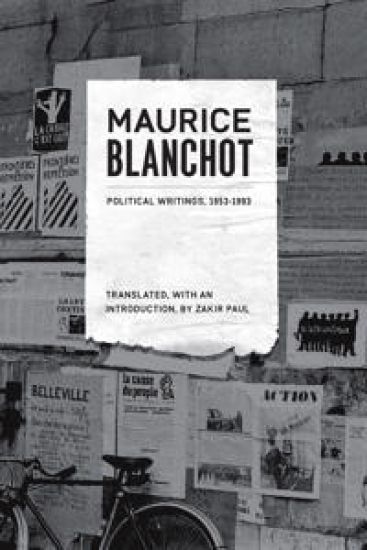
Political Writings, 1953-1993

Political Writings, 1953-1993

Maurice Blanchot; Kevin Hart

Fordham University Press
2010
pokkari
Maurice Blanchot is a towering yet enigmatic figure in twentieth-century French thought. A lifelong friend of Levinas, he had a major influence on Foucault, Derrida, Nancy, and many others. Both his fiction and his criticism played a determining role in how postwar French philosophy was written, especially in its intense concern with the question of writing as such. Never an academic, he published most of his critical work in periodicals and led a highly private life. Yet his writing included an often underestimated public and political dimension. This posthumously published volume collects his political writings from 1953 to 1993, from the French-Algerian War and the mass movements of May 1968 to postwar debates about the Shoah and beyond. A large number of the essays, letters, and fragments it contains were written anonymously and signed collectively, often in response to current events. The extensive editorial work done for the original French edition makes a major contribution to our understanding of Blanchot's work. The political stances Blanchot adopts are always complicated by the possibility that political thought remains forever to be discovered. He reminds us throughout his writings both how facile and how hard it is to refuse established forms of authority. The topics he addresses range from the right to insubordination in the French-Algerian War to the construction of the Berlin Wall and repression in Eastern Europe; from the mass movements of 1968 to personal responses to revelations about Heidegger, Levinas, and Robert Antelme, among others. When read together, these pieces form a testament to what political writing could be: not merely writing about the political or politicizing the written word, but unalterably transforming the singular authority of the writer and his signature. Cet ouvrage, publiÉ dans le cadre d'un programme d'aide À la publication bÉnÉficie du soutien financier du ministÈre des Affaires ÉtrangÈs et du Service culturel de l'ambassade de France aux Etats-Unis, ainsi que de l'appui de FACE (French American Cultural Exchange). This work, published as part of a program providing publication assistance, received financial support from the Cultural Services of the French Embassy in the United States and FACE (French American Cultural Exchange).
Political Writings, 1953-1993

Political Writings, 1953-1993

Maurice Blanchot; Kevin Hart

Fordham University Press
2010
sidottu
Maurice Blanchot is a towering yet enigmatic figure in twentieth-century French thought. A lifelong friend of Levinas, he had a major influence on Foucault, Derrida, Nancy, and many others. Both his fiction and his criticism played a determining role in how postwar French philosophy was written, especially in its intense concern with the question of writing as such. Never an academic, he published most of his critical work in periodicals and led a highly private life. Yet his writing included an often underestimated public and political dimension. This posthumously published volume collects his political writings from 1953 to 1993, from the French-Algerian War and the mass movements of May 1968 to postwar debates about the Shoah and beyond. A large number of the essays, letters, and fragments it contains were written anonymously and signed collectively, often in response to current events. The extensive editorial work done for the original French edition makes a major contribution to our understanding of Blanchot's work. The political stances Blanchot adopts are always complicated by the possibility that political thought remains forever to be discovered. He reminds us throughout his writings both how facile and how hard it is to refuse established forms of authority. The topics he addresses range from the right to insubordination in the French-Algerian War to the construction of the Berlin Wall and repression in Eastern Europe; from the mass movements of 1968 to personal responses to revelations about Heidegger, Levinas, and Robert Antelme, among others. When read together, these pieces form a testament to what political writing could be: not merely writing about the political or politicizing the written word, but unalterably transforming the singular authority of the writer and his signature. Cet ouvrage, publiÉ dans le cadre d'un programme d'aide À la publication bÉnÉficie du soutien financier du ministÈre des Affaires ÉtrangÈs et du Service culturel de l'ambassade de France aux Etats-Unis, ainsi que de l'appui de FACE (French American Cultural Exchange). This work, published as part of a program providing publication assistance, received financial support from the Cultural Services of the French Embassy in the United States and FACE (French American Cultural Exchange).
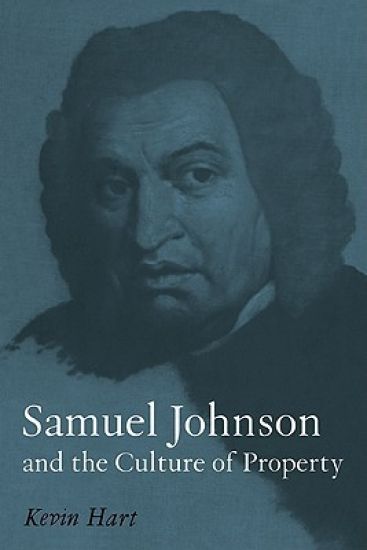
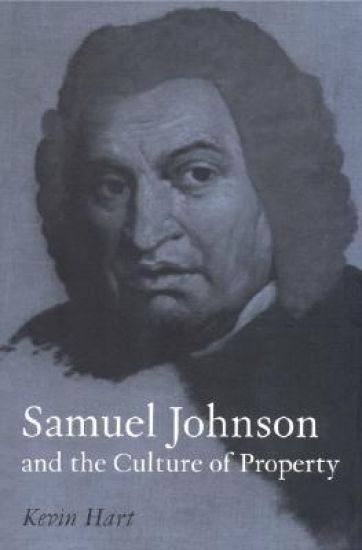
Samuel Johnson and the Culture of Property

Samuel Johnson and the Culture of Property

Kevin Hart

Cambridge University Press
2009
pokkari
Kevin Hart traces the vast literary legacy and reputation of Samuel Johnson. Through detailed analyses of the biographers, critics and epigones who carefully crafted and preserved Johnson's life for posterity, Hart explores the emergence of what came to be called 'The Age of Johnson'. Hart shows how late seventeenth- and early eighteenth-century Britain experienced the emergence and consolidation of a rich and diverse culture of property. In dedicating himself to Johnson's death, Hart argues, James Boswell turned his friend into a monument, a piece of public property. Through subtle analyses of copyright, forgery and heritage in eighteenth-century life, this study traces the emergence of competing forms of cultural property: a Hanoverian politics of property engages a Jacobite politics of land. Kevin Hart places Samuel Johnson within this rich cultural context, demonstrating how Johnson came to occupy a place at the heart of the English literary canon.
Young Rain

Young Rain

Kevin Hart

University of Notre Dame Press
2009
nidottu
In a 1985 interview with fellow poet John Kinsella, Kevin Hart reflected on the nature of poetry: "People sometimes think that the spiritual world is distinct from, even distant from, this world. . . . But the spiritual world is within this one: not as a secret, but as a radiance. . . . We find it through God's grace and our attention. Poetry is one form of attention, and poetry does not lead us to another world: it shows us this world, this relationship, this chair, this ivy on the outside wall." In Young Rain, Hart continues his exploration of the mysterious radiance within this world.
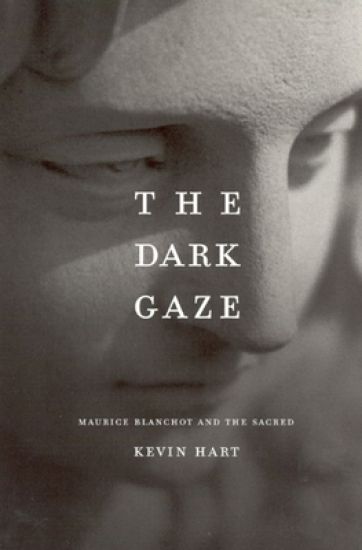
The Dark Gaze

The Dark Gaze

Kevin Hart

University of Chicago Press
2004
nidottu
A profound reconsideration of how Blanchot work figures theologically in some of the major currents of twentieth-century thought. Hart reveals Blanchot to be a thinker devoted to the possibilities of a spiritual life with the possibilities of leading an ethical life in the absence of God.
The Dark Gaze

The Dark Gaze

Kevin Hart

University of Chicago Press
2004
sidottu
A profound reconsideration of how Blanchot work figures theologically in some of the major currents of twentieth-century thought. Hart reveals Blanchot to be a thinker devoted to the possibilities of a spiritual life with the possibilities of leading an ethical life in the absence of God.
Postmodernism

Postmodernism

Kevin Hart

Oneworld Publications
2004
nidottu
Adopting the role of tour guide, award-winning writer Kevin Hart leads the reader through the pitfalls, conundrums and complexities that characterize postmodernism, while providing an overview of the many different approaches (philosophical, cultural, literary…) to the subject. All the major thinkers are introduced – from Derrida to Blanchot, Irigaray to Foucault, and more besides – while the book is unique among introductory guides in its consideration of the role of religion in a postmodern world.
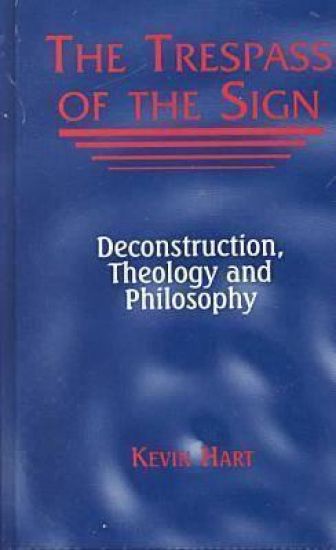
The Trespass of the Sign

The Trespass of the Sign

Kevin Hart

Fordham University Press
2000
pokkari
The Trespass of the Sign offers a clear and thorough account of the relations between deconstruction and theology. Kevin Hart argues that, contrary to popular thought on the topic, deconstruction does not have an antitheological agenda. Rather, deconstruction seeks to question the metaphysics of any theology. Hart pays particular attention to mystical theology as nonmetaphysical theology.
The Trespass of the Sign

The Trespass of the Sign

Kevin Hart

Fordham University Press
2000
sidottu
The Trespass of the Sign offers a clear and thorough account of the relations between deconstruction and theology. Kevin Hart argues that, contrary to popular thought on the topic, deconstruction does not have an antitheological agenda. Rather, deconstruction seeks to question the metaphysics of any theology. Hart pays particular attention to mystical theology as nonmetaphysical theology.
Samuel Johnson and the Culture of Property

Samuel Johnson and the Culture of Property

Kevin Hart

Cambridge University Press
1999
sidottu
Kevin Hart traces the vast literary legacy and reputation of Samuel Johnson. Through detailed analyses of the biographers, critics and epigones who carefully crafted and preserved Johnson’s life for posterity, Hart explores the emergence of what came to be called ‘The Age of Johnson’. Hart shows how late seventeenth- and early eighteenth-century Britain experienced the emergence and consolidation of a rich and diverse culture of property. In dedicating himself to Johnson’s death, Hart argues, James Boswell turned his friend into a monument, a piece of public property. Through subtle analyses of copyright, forgery and heritage in eighteenth-century life, this study traces the emergence of competing forms of cultural property: a Hanoverian politics of property engages a Jacobite politics of land. Kevin Hart places Samuel Johnson within this rich cultural context, demonstrating how Johnson came to occupy a place at the heart of the English literary canon.