Kirjojen hintavertailu. Mukana 12 595 353 kirjaa ja 12 kauppaa.

Kirjailija

Kevin J. Avery

Kirjat ja teokset yhdessä paikassa: 5 kirjaa, julkaisuja vuosilta 2002-2017, suosituimpien joukossa The Painters' Panorama. Vertaile teosten hintoja ja tarkista saatavuus suomalaisista kirjakaupoista.

5 kirjaa

Kirjojen julkaisuhaarukka 2002-2017.

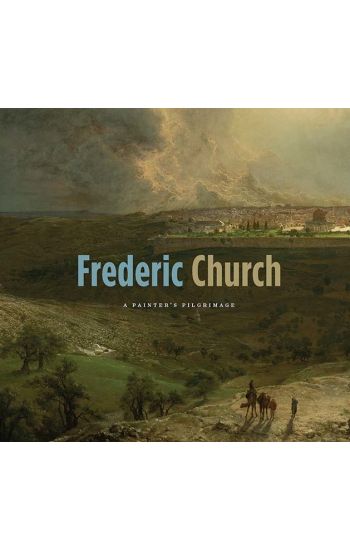
Frederic Church

Frederic Church

Kenneth John Myers; Kevin J. Avery; Gerald L. Carr; Mercedes Volait

Yale University Press
2017
pokkari
A beautiful overview of fascinating paintings of the classical world and the Holy Land by a beloved American artist Frederic Church (1826–1900), one of the leading painters of 19th-century America and the Hudson River School, also journeyed around the globe to find fresh inspiration for his highly detailed compositions. Among Church’s lesser-known masterpieces are his paintings of the Middle East, Italy, and Greece, produced in the late 1860s through late 1870s, which explore themes of human history and achievement. Taking a closer look at this geographical and thematic shift in Church’s practice, this handsome book brings together the artist’s major paintings of Athens, Rome, Jerusalem, and the surrounding region. The essays concentrate on a set of six major paintings of architectural and archaeological marvels; one essay also spotlights Olana, Church’s home in New York State, which reflects the influence of Middle Eastern design. This impressive volume stands apart in its new approach to the artist’s work and its quest to determine why and how this quintessentially American figure was drawn to scenery and themes from the other side of the globe.Distributed for the Detroit Institute of ArtsExhibition Schedule:Detroit Institute of Arts (10/22/17–01/15/18)Reynolda House Museum of American Art, Winston-Salem, NC (02/08/18–05/13/18)Wadsworth Atheneum Museum of Art, Hartford, CT (06/03/18–08/26/18)
The Painters' Panorama

The Painters' Panorama

Jessica Skwire Routhier; Kevin J. Avery; Thomas Hardiman Jr.

Dartmouth College Press
2015
sidottu
The Moving Panorama of Pilgrim's Progress is an extraordinary 8-foot by 800-foot painting that was created in 1851 and thought lost for a full century. Rediscovered in 1996 and fully restored in 2012, it illustrates John Bunyan's iconic book The Pilgrim's Progress - first published in 1678 and in print continuously since then - a heart-stopping allegory of trial and faith in which the hero, Christian, battles giants, monsters, tricksters, and his own weaknesses to reach the Celestial City. Moving panoramas were a mid-nineteenth-century precursor to the motion picture, massive canvases that were scrolled across a stage and accompanied by a lecturer and music. One of only a handful that survive today, the Moving Panorama of Pilgrim's Progress was one of the most popular and important moving panoramas of its day, with designs by rising luminaries of the Hudson River School of American landscape painting: Frederic Edwin Church, Jasper Cropsey, Daniel Huntington, and others. Scholars and fans of theater and film, panoramas, American art, religious studies, literature, and The Pilgrim's Progress itself will value this beautifully illustrated volume.
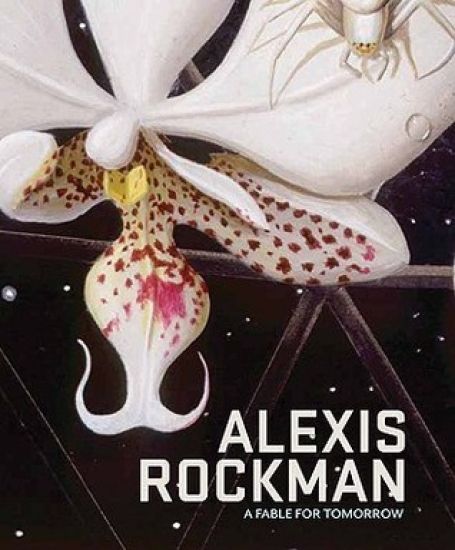
Alexis Rockman: a Fable for Tomorrow

Alexis Rockman: a Fable for Tomorrow

Joanna Marsh; Kevin J. Avery; Thomas Lovejoy

D Giles Ltd
2010
sidottu
'Alexis Rockman: A Fable for Tomorrow' traces the artist's career from 'Pond's Edge' (1986) to 'The Reef' (2009), with its timely reminder of the perils of off-shore oil drilling. Superficially easy viewing, Rockman's paintings subvert the optimism of the American dream with their mix of scientific precision and environmental degradation. This vividly illustrated volume highlights the attention to detail and striking use of colour which give Rockman's work an almost cinematic impact that is seldom seen in contemporary art. His compelling mix of intensely coloured realism, scientific detail and strong polemic, result in art that is both a demand for action and an elegy over what has been lost. Author Joanna Marsh worked closely with Rockman on the painting selection and convincingly links the various themes of the artist's work over three decades with the history of America's environmental movement. Highlights include 'Evolution' (1992), his first mural-sized painting, and 'Manifest Destiny' (2003-04), an ambitious large-scale work commissioned by the Brooklyn Museum of Art. Rockman's ability to cross the boundary between fact and fiction appeals to both scientists and art critics.
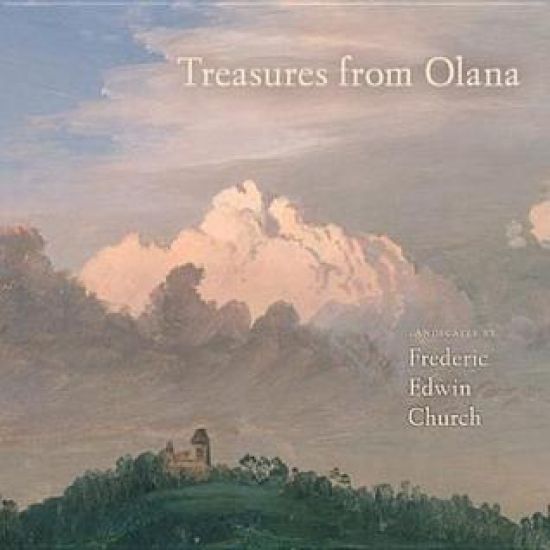
Treasures from Olana

Treasures from Olana

Kevin J. Avery; George E. Pataki

Cornell University Press
2005
sidottu
"The wide variety of selections from Frederic Edwin Church's collection of his own paintings shows the master in all phases of his career, in sketches and finished paintings, depicting the breadth of his subjects and the high technical skills that established him as an eminent and influential artist in his own time. As works he held on to or reacquired and kept in his house during his lifetime, they embody the heart of his artistic vision and convey a deeply personal slant. As pictures he hung and lived with at Olana, they tell the larger story of that extraordinary place and are as illuminating when seen in context as on their own."—from the IntroductionFrederic Edwin Church (1826–1900) traveled the world, captured its beauty in countless paintings, and brought it home to live at Olana, his castle on the Hudson. The name was inspired by a reference Church found to a fortress or a treasury-storehouse in ancient Persia. This extraordinary selection of Church's paintings from his collection at Olana puts the most cherished of his treasures on full display in a volume that includes eighty color plates.Church's paintings, among the most acclaimed examples of art of the Hudson River School, are found in museums and private collections around the globe. However, Church kept some of his art close by during his lifetime. The rich collection that remains at Olana includes about seven hundred pieces, including notebooks, drawings, and oils, both sketches and completed canvases. They cover the full range of Church's career chronologically and thematically. The highlights from his personal collection are found in the touring exhibition that accompanies this book. The introduction by John Wilmerding and a substantial essay by Kevin J. Avery place the work into the context of Church's life and travels and examine Church's influences and the public reception of his art. Throughout Treasures from Olana, they discuss how profoundly Church's hilltop home and the surrounding landscape inspired and informed his work. His paintings, in turn, illuminate Olana more than a century after his death. The Olana Partnership, Hudson, N.Y., and New York State's Office of Parks, Recreation, and Historic Preservation, Albany, N.Y., organized Treasures from Olana: Landscapes by Frederic Edwin Church.
Fire and Ice

Fire and Ice

Thomas Fels; Kevin J. Avery

Cornell University Press
2002
sidottu
Frederic Church (1826–1900), who gained international renown for paintings such as Niagara (1857), Heart of the Andes (1859), Twilight in the Wilderness (1860), and The Icebergs (1861), was inspired by his extensive travel and study. His work was also informed by his appreciation of a new visual medium. Fire & Ice, a selection from the several thousand photographs and daguerreotypes Church collected at Olana, his Orientalist home on the Hudson River, provides insight into the interests and taste of one of nineteenth-century America's greatest painters. Church was a boy of thirteen when the invention of photography was announced to the world. As a painter, he was of the first generation to grow up with photographs and consider them a useful adjunct to his work. Church collected photographs and daguerreotypes by early pioneers of the art, including Désiré Charnay, Eadweard Muybridge, and Carleton Watkins. His collection appears to have served largely as a source of inspiration and armchair travel, reminding him of favorite locations and details of architecture, culture, and landscape. In Fire & Ice, images from Church's collection are shown along with a selection of his own oil sketches, drawings, and archival materials. Some of the photographs are devoted to the varied geographical interests reflected in Church's art and travels: Central and South America, the Middle East, and the polar North. Others served as visual reference for the design and construction of Olana. Lavishly illustrated, Fire & Ice shows how the photographs in Church's collection echoed the principal stages of the painter's career.