Kirjojen hintavertailu. Mukana 12 390 323 kirjaa ja 12 kauppaa.

Kirjailija

Kevin J. Vanhoozer

Kirjat ja teokset yhdessä paikassa: 34 kirjaa, julkaisuja vuosilta 1990-2026, suosituimpien joukossa Pictures at a Theological Exhibition. Vertaile teosten hintoja ja tarkista saatavuus suomalaisista kirjakaupoista.

Mukana myös kirjoitusasut: Kevin J Vanhoozer

34 kirjaa

Kirjojen julkaisuhaarukka 1990-2026.

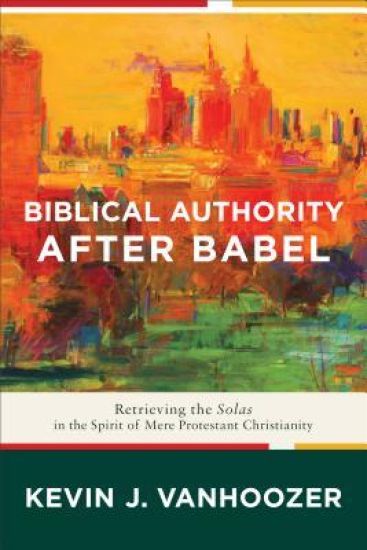
Biblical Authority after Babel – Retrieving the Solas in the Spirit of Mere Protestant Christianity
Christianity Today Book Award WinnerA Jesus Creed Church History Book of the YearIn recent years, notable scholars have argued that the Protestant Reformation unleashed interpretive anarchy on the church. Is it time to consider the Reformation to be a 500-year experiment gone wrong?World-renowned evangelical theologian Kevin Vanhoozer thinks not. While he sees recent critiques as legitimate, he argues that retrieving the Reformation's core principles offers an answer to critics of Protestant biblical interpretation. Vanhoozer explores how a proper reappropriation of the five solas--sola gratia (grace alone), sola fide (faith alone), sola scriptura (Scripture alone), solus Christus (in Christ alone), and sola Deo gloria (for the glory of God alone)--offers the tools to constrain biblical interpretation and establish interpretive authority. He offers a positive assessment of the Reformation, showing how a retrieval of "mere Protestant Christianity" has the potential to reform contemporary Christian belief and practice.This provocative response and statement from a top theologian is accessibly written for pastors and church leaders.
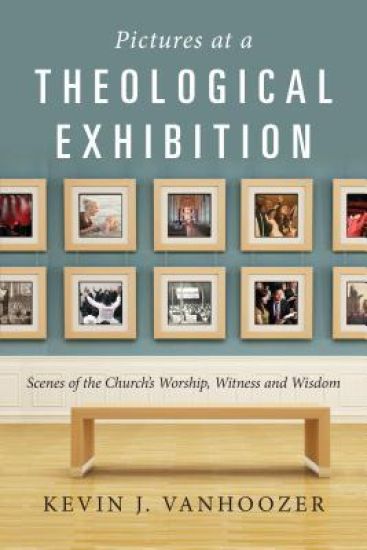
Pictures at a Theological Exhibition

Pictures at a Theological Exhibition

Kevin J. Vanhoozer

INTERVARSITY PRESS
2016
nidottu
Many Christians are held captive by a picture of the imagination as a purveyor of false images, prone to idolatry. We live in a society fixated on images that have little or no significance. We are surrounded by models of the world that are not in touch with any truth outside of themselves. But we lack the resources to see and imagine things differently.Kevin Vanhoozer calls the church to a more biblical and premodern picture, one that sees every particular person, thing and event in the light of God's act of reconciling the world to himself in Christ. Through essays on the church's worship, witness and wisdom, Vanhoozer shows us how a poetic imagination can answer the questions of life's meaning by drawing our attention to what really matters: the God of the gospel.
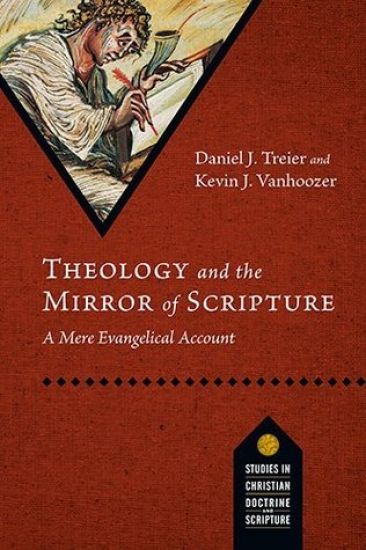
Theology and the Mirror of Scripture

Theology and the Mirror of Scripture

Kevin J. Vanhoozer; Daniel J. Treier

IVP Academic
2015
nidottu
Evangelicalism has long been a hotly disputed label, and what counts as evangelical theology is often anyone's guess. Is evangelicalism a static bounded set defined by clear doctrinal limits, or is it a dynamic centered set without a discernible circumference?In this Studies in Christian Doctrine and Scripture volume, Kevin Vanhoozer and Daniel Treier present evangelical theology as an "anchored" set, rooted in the Trinity. In response to increasing evangelical fragmentation, Theology and the Mirror of Scripture offers a clarion call to reconceive evangelical theology theologically by reflecting on the God of the gospel as mirrored in Scripture. Such "mere" evangelical theology will be an exercise in Christian wisdom for the purpose of building up the fellowship of saints.Studies in Christian Doctrine and Scripture, edited by Daniel J. Treier and Kevin J. Vanhoozer, promotes evangelical contributions to systematic theology, seeking fresh understanding of Christian doctrine through creatively faithful engagement with Scripture in dialogue with church.
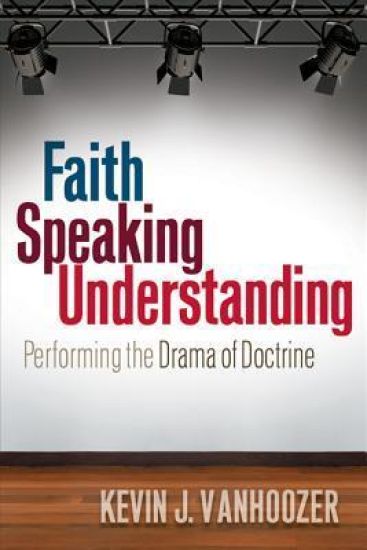
Faith Speaking Understanding

Faith Speaking Understanding

Kevin J. Vanhoozer

Westminster/John Knox Press,U.S.
2014
nidottu
In this volume, highly esteemed scholar Kevin Vanhoozer introduces readers to a way of thinking about Christian theology that takes the work he began in the groundbreaking 2005 book, The Drama of Doctrine, to its next level. Vanhoozer argues that theology is not merely a set of cognitive beliefs, but is also something we do that involves speech and action alike. He uses a theatrical model to explain the ways in which doctrine shapes Christian understanding and forms disciples. The church, Vanhoozer posits, is the preeminent theater where the gospel is "performed," with doctrine directing this performance. Doctrines are not simply truths to be stored, shelved, and stacked, but indications and directions to be followed, practiced, and enacted. In "performing" doctrine, Christians are shaped into active disciples of Jesus Christ. He goes on to examine the state of the church in today's world and explores how disciples can do or perform doctrine. Written in an accessible and engaging style, Faith Speaking Understanding sets forth a compelling vision of what the church is and what it should be doing, and demonstrates the importance of Christian doctrine for this mission.Disciples who want to follow Christ in all situations need doctrinal direction as they walk onto the social stage in the great theater of the world. The Christian faith is about acknowledging, and participating in, the great thing God is doing in our world: making all things new in Christ through the Holy Spirit. Doctrine ministers understanding: of God, of the drama of redemption, of the church as a company of faithful players, and of individual actors, all of whom have important roles to play. In an age where things fall apart and centers fail to hold, doctrine centers us in Jesus Christ, in whom all things hold together.
Five Views on Biblical Inerrancy

Five Views on Biblical Inerrancy

Jr. Mohler; Peter E. Enns; Michael F. Bird; Kevin J. Vanhoozer; John R. Franke

Zondervan
2013
nidottu
The inerrancy of the Bible--the belief that the Bible is without error--is often a contentious topic among mainstream Christianity. Like other titles in the Counterpoints collection, this volume gives those interested in theology the tools they need to draw informed conclusions on debated issues by showcasing the range of positions in a way that helps readers understand the perspectives--especially where and why they diverge.Each essay in Five Views on Biblical Inerrancy considers:The present context, viability, and relevance for the contemporary evangelical Christian witness.Whether and to what extent Scripture teaches its own inerrancy.The position's assumed or implied understandings of the nature of Scripture, God, and truth.Three difficult biblical texts: one that concerns intra-canonical contradictions, one that raises questions of theological plurality, and one that concerns historical authenticity.Five Views on Biblical Inerrancy serves not only as a single-volume resource for surveying the current debate, but also as a catalyst both for understanding and advancing the conversation further. Contributors include Al Mohler, Kevin Vanhoozer, Michael Bird, Peter Enns, and John Franke.
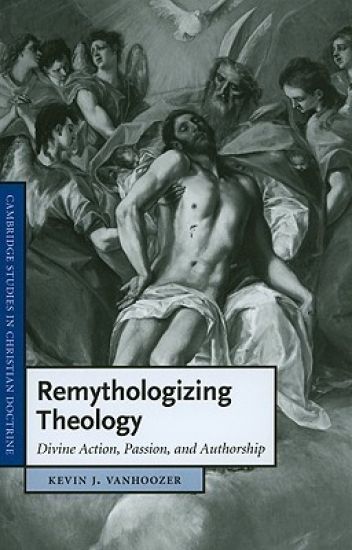
Remythologizing Theology

Remythologizing Theology

Kevin J. Vanhoozer

Cambridge University Press
2010
sidottu
The rise of modern science and the proclaimed 'death' of God in the nineteenth century led to a radical questioning of divine action and authorship - Bultmann's celebrated 'demythologizing'. Remythologizing Theology moves in another direction that begins by taking seriously the biblical accounts of God's speaking. It establishes divine communicative action as the formal and material principle of theology, and suggests that interpersonal dialogue, rather than impersonal causality, is the keystone of God's relationship with the world. This original contribution to the theology of divine action and authorship develops a fresh vision of Christian theism. It also revisits several long-standing controversies such as the relations of God's sovereignty to human freedom, time to eternity, and suffering to love. Groundbreaking and thought-provoking, it brings theology into fruitful dialogue with philosophy, literary theory, and biblical studies.
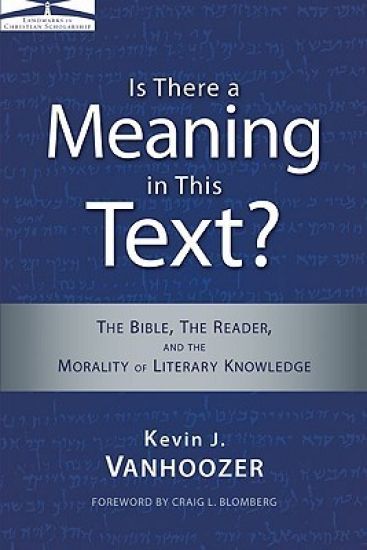
Is There a Meaning in This Text?

Is There a Meaning in This Text?

Kevin J. Vanhoozer; Craig L. Blomberg

Zondervan
2009
nidottu
Is there a meaning in the Bible, or is meaning rather a matter of who is reading or of how one reads? Does Christian doctrine have anything to contribute to debates about interpretation, literary theory, and post modernity? These are questions of crucial importance for contemporary biblical studies and theology alike.Kevin Vanhoozer contends that the postmodern crisis in hermeneutics—”incredulity towards meaning,” a deep–set skepticism concerning the possibility of correct interpretation—is fundamentally a crisis in theology provoked by an inadequate view of God and by the announcement of God’s “death.”Part 1 examines the ways in which deconstruction and radical reader–response criticism “undo” the traditional concepts of author, text, and reading. Dr. Vanhoozer engages critically with the work of Derrida, Rorty, and Fish, among others, and demonstrates the detrimental influence of the postmodern “suspicion of hermeneutics” on biblical studies.In Part 2, Dr. Vanhoozer defends the concept of the author and the possibility of literary knowledge by drawing on the resources of Christian doctrine and by viewing meaning in terms of communicative action. He argues that there is a meaning in the text, that it can be known with relative adequacy, and that readers have a responsibility to do so by cultivating “interpretive virtues.”Successive chapters build on Trinitarian theology and speech act philosophy in order to treat the metaphysics, methodology, and morals of interpretation. From a Christian perspective, meaning and interpretation are ultimately grounded in God’s own communicative action in creation, in the canon, and preeminently in Christ. Prominent features in Part 2 include a new account of the author’s intention and of the literal sense, the reclaiming of the distinction between meaning and significance in terms of Word and Spirit, and the image of the reader as a disciple–martyr, whose vocation is to witness to something other than oneself.Is There a Meaning in This Text? guides the student toward greater confidence in the authority, clarity, and relevance of Scripture, and a well–reasoned expectation to understand accurately the message of the Bible. Is There a Meaning in This Text? is a comprehensive and creative analysis of current debates over biblical hermeneutics that draws on interdisciplinary resources, all coordinated by Christian theology. It makes a significant contribution to biblical interpretation that will be of interest to readers in a number of fields. The intention of the book is to revitalize and enlarge the concept of author–oriented interpretation and to restore confidence that readers of the Bible can reach understanding. The result is a major challenge to the central assumptions of postmodern biblical scholarship and a constructive alternative proposal—an Augustinian hermeneutic—that reinvigorates the notion of biblical authority and finds a new exegetical practice that recognizes the importance of both the reader’s situation and the literal sense.
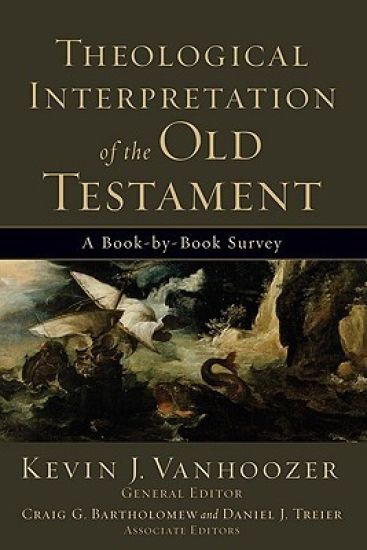
Theological Interpretation of the Old Testament – A Book–by–Book Survey

Theological Interpretation of the Old Testament – A Book–by–Book Survey

Kevin J. Vanhoozer; Craig Bartholomew; Daniel Treier

Baker Academic, Div of Baker Publishing Group
2008
nidottu
The groundbreaking Dictionary for Theological Interpretation of the Bible (DTIB) introduced readers to key names, theories, and concepts in the field of biblical interpretation. It has been well received by pastors and students, won book awards from Christianity Today and the Catholic Press Association, and was named the ECPA 2006 Christian Book of the Year. Theological Interpretation of the Old Testament features key articles from DTIB, providing readers with a book-by-book theological reading of the Old Testament. The articles are authored by leading scholars, including Daniel I. Block, Tremper Longman III, J. Gordon McConville, Walter Moberly, Richard Schultz, and Gordon J. Wenham. This handy and affordable text will work particularly well for students in Old Testament/Bible survey courses, pastors, and lay readers.
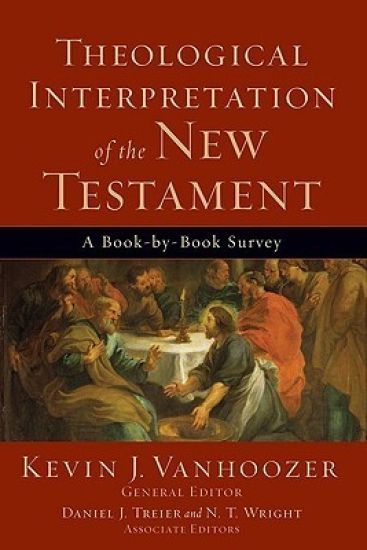
Theological Interpretation of the New Testament – A Book–by–Book Survey

Theological Interpretation of the New Testament – A Book–by–Book Survey

Kevin J. Vanhoozer; Daniel Treier; N.t. Wright

Baker Academic, Div of Baker Publishing Group
2008
nidottu
This convenient text utilizes material from the award-winning Dictionary for Theological Interpretation of the Bible (DTIB) to introduce students to the Bible and theological interpretation through a comprehensive book-by-book survey of the New Testament. The articles, authored by respected scholars, make unique contributions to the study of theological interpretation of Scripture.Theological Interpretation of the New Testament provides a history of interpretation and covers major theological ideas for each book of the New Testament. Contributors include David E. Garland, Robert H. Gundry, I. Howard Marshall, Francesca Aran Murphy, Max Turner, and N. T. Wright. Students of the New Testament, pastors, and lay readers will appreciate this affordable volume. It will also serve as an excellent supplementary text in New Testament/Bible survey courses.
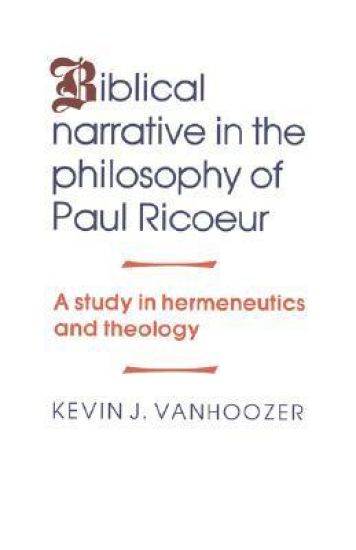
Biblical Narrative in the Philosophy of Paul Ricoeur

Biblical Narrative in the Philosophy of Paul Ricoeur

Kevin J. Vanhoozer

Cambridge University Press
2007
pokkari
Although Paul Ricoeur's writings are widely and appreciatively read by theologians, this book offers a full, sympathetic yet critical account of Ricoeur's theory of narrative interpretation and its contribution to theology. Unlike many previous studies of Ricoeur, Part I argues that Ricoeur's hermeneutics must be viewed in the light of his overall philosophical agenda, as a fusion and continuation of the unfinished projects of Kant and Heidegger. Particularly helpful is the focus on Ricoeur's recent narrative theory as the context in which Ricoeur deals with problems of time and the creative imagination; and it becomes clear that narrative stands at the crossroads of Ricoeur's search for the meaning of human being as well as his search for the meaning of texts. Part II examines the potential of Ricoeur's narrative theory for resolving certain theological problems, such as the dichotomy betweens the Jesus of history and the Christ of faith.
Communion with the Triune God

Communion with the Triune God

John Owen; Kevin J. Vanhoozer

Crossway Books
2007
pokkari
Does it make a difference that the God Christians claim to worship has revealed himself as triune-the Father, Son, and Holy Spirit? Does this fundamental truth of biblical authority have an effect on a believer's personal fellowship with God? Puritan theologian John Owen recognized the great need for every believer to understand the triune God. Communion with the Triune God revisits the truth presented by John Owen and challenges all believers to truly recognize and appreciate the ministry that God the Father, God the Son, and God the Holy Spirit have in their lives. This work of John Owen encourages Christians to enjoy true communion with each person of the triune God.
Everyday Theology – How to Read Cultural Texts and Interpret Trends

Everyday Theology – How to Read Cultural Texts and Interpret Trends

Kevin J. Vanhoozer; Charles A. Anderson; Michael J. Sleasman

Baker Academic, Div of Baker Publishing Group
2007
nidottu
Everyday theology is the reflective and practical task of living each day as faithful disciples of Jesus Christ. In other words, theology is not just for Sundays, and it's not just for professional theologians. Everyday Theology teaches all Christians how to get the theological lay of the land. It enables them to become more conscious of the culture they inhabit every day so that they can understand how it affects them and how they can affect it. If theology is the ministry of the Word to the world, everyday theologians need to know something about that world, and Everyday Theology shows them how to understand their culture make an impact on it. Engaging and full of fresh young voices, this book is the first in the new Cultural Exegesis series.
First Theology

First Theology

Kevin J. Vanhoozer

INTERVARSITY PRESS
2002
nidottu
"This is a book on theological hermeneutics. It is a plea for being hermeneutical about theology and for being theological about hermeneutics. It is an argument for treating the questions of God, Scripture and hermeneutics as one problem. This one problem defines what I call 'first theology.' " (from the Preface)In thirteen chapters, Kevin Vanhoozer explores various dimensions of doing first theology and illuminates not only how we can talk about God but how we can begin with the Word of God and act on the basis of that Word. Blazing a pathway for recovering the unity of biblical studies and theological reflection, he addresses the challenges presented by the contemporary so-called postmodern situation, especially deconstructionism. Not only does a way of doing God-centered biblical interpretation come to light through Vanhoozer's explorations, but the triune identity of a God who is communicative, loving and sovereign also comes into focus. This is a book for students, pastors and teachers who have an interest in the character of God, the nature of Scripture, Christian theology, our approach to hermeneutics and how they are all necessarily interrelated to the glory of God.
Biblical Narrative in the Philosophy of Paul Ricoeur

Biblical Narrative in the Philosophy of Paul Ricoeur

Kevin J. Vanhoozer

Cambridge University Press
1990
sidottu
Although Paul Ricoeur’s writings are widely and appreciatively read by theologians, this is the first book to offer a full, sympathetic yet critical account of Ricoeur’s theory of narrative interpretation and its contribution to theology. Unlike many previous studies of Ricoeur, Part I argues that Ricoeur’s hermeneutics must be viewed in the light of his overall philosophical agenda, as a fusion and continuation of the unfinished projects of Kant and Heidegger. Particularly helpful is the focus on Ricoeur’s recent narrative theory as the context in which Ricoeur deals with problems of time and the creative imagination; and it becomes clear that narrative stands at the crossroads of Ricoeur’s search for the meaning of human being as well as his search for the meaning of texts. Part II examines the potential of Ricoeur’s narrative theory for resolving certain theological problems, such as the dichotomy betweens the Jesus of history and the Christ of faith. In so doing Vanhoozer relates Ricoeur’s work to that of theologians such as Barth, Bultmann, Tillich, Pannenberg, Frei and Tracy.