Kirjojen hintavertailu. Mukana 12 529 926 kirjaa ja 12 kauppaa.

Kirjailija

Kevin Lucas

Kirjat ja teokset yhdessä paikassa: 8 kirjaa, julkaisuja vuosilta 1998-2018, suosituimpien joukossa The Little Blue Book of Limericks. Vertaile teosten hintoja ja tarkista saatavuus suomalaisista kirjakaupoista.

8 kirjaa

Kirjojen julkaisuhaarukka 1998-2018.

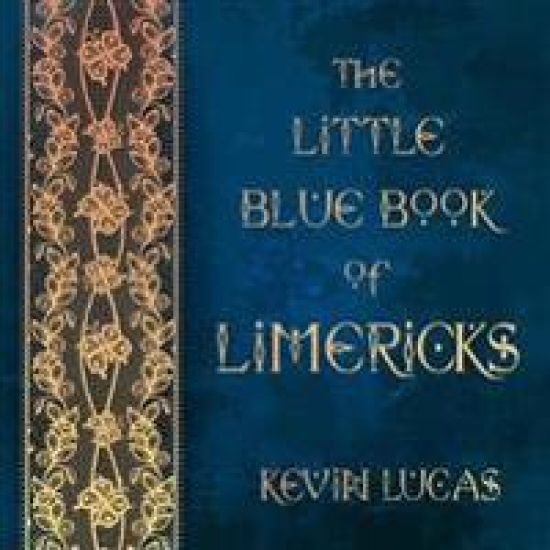
The Little Blue Book of Limericks

The Little Blue Book of Limericks

Kevin Lucas

Temptation Press
2018
pokkari
With more than 3,000 limericks in his repertoire, Kevin Lucas chose to share some of his more salacious works with you in The Little Blue Book of Limericks. Webster's Dictionary defines a limerick as: "a light or humorous verse form of five ... lines"
Puns Upon a Rhyme

Puns Upon a Rhyme

Kevin Lucas

Zimbell House Publishing, LLC
2018
pokkari
Puns Upon a Rhyme: A Collection of Limericks to Tickle Your Fancy showcases Kevin Lucas's unique humor and take on the every day occurrences around us.Webster's Dictionary defines a limerick as: "a light or humorous verse form of five ... lines"Lucas has penned over 3,000 limericks to date and chose to share over two-hundred in this collection for your amusement. "On a clean-living lifestyle, I pride myself. By the teachings of Jesus, I guide myself. But my ne'er-do-well twin, Who's conjoined, lives in sin, And I'm greatly distressed--I'm beside myself " -Kevin Lucas
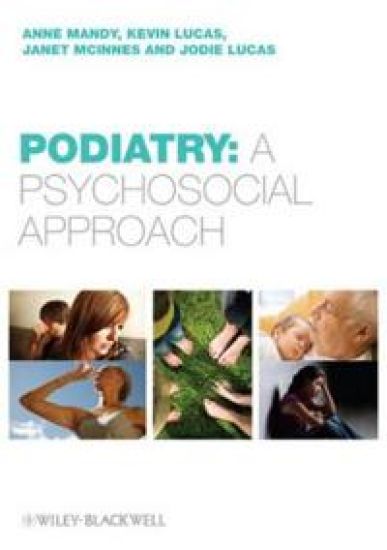
Podiatry

Podiatry

Anne Mandy; Kevin Lucas; Janet McInnes; Jodie Lucas

John Wiley Sons Inc
2009
nidottu
Podiatry: A Psychological Approach provides a problem and case-based approach to understanding psychological and social difficulties commonly experienced by clients and presented to practitioners. This book is designed to be an introduction to important applied psychology in clinical practice. The main chapters are organized as individual patient case studies with relevant psychological theory attached. Attention is also given to social-psychological issues pertinent to both newly qualified and experienced podiatric practitioners.
Health Promotion

Health Promotion

Kevin Lucas; Barbara Lloyd

SAGE Publications Inc
2005
nidottu
'In short, Lloyd and Lucas' approach is challenging in its emphasis on a 'positive' and holistic orientation to health and always humane in its emphasis on quality of life and, in the authors' words, 'the indivisibility of the individual from society' -Professor Keith Tones Health Promotion is a major focus of government policy and an expanding area of practice involving a range of public health professionals. At the same time, there is much debate about what is meant by "health" and the best strategies for improving, developing and promoting it. In light of these debates, Health Promotion offers a major reappraisal of health promotion activity, examining the evidence for what actually works and highlighting issues for improving efficacy. The field of health promotion has traditionally drawn from diverse fields including health psychology, epidemiology, political science and educational theory. The authors argue that the effect of this has often been an unhelpfully fragmented view of people and their health. They propose an alternative, more integrated view as means of better understanding people and for making public health strategies more effective. Health Promotion: Evidence and Experience makes thought-provoking reading for all those involved in public health and those with an interest in finding new ways to improve health outcomes.
Health Promotion

Health Promotion

Kevin Lucas; Barbara Lloyd

SAGE Publications Inc
2005
sidottu
'In short, Lloyd and Lucas' approach is challenging in its emphasis on a 'positive' and holistic orientation to health and always humane in its emphasis on quality of life and, in the authors' words, 'the indivisibility of the individual from society' -Professor Keith Tones Health Promotion is a major focus of government policy and an expanding area of practice involving a range of public health professionals. At the same time, there is much debate about what is meant by "health" and the best strategies for improving, developing and promoting it. In light of these debates, Health Promotion offers a major reappraisal of health promotion activity, examining the evidence for what actually works and highlighting issues for improving efficacy. The field of health promotion has traditionally drawn from diverse fields including health psychology, epidemiology, political science and educational theory. The authors argue that the effect of this has often been an unhelpfully fragmented view of people and their health. They propose an alternative, more integrated view as means of better understanding people and for making public health strategies more effective. Health Promotion: Evidence and Experience makes thought-provoking reading for all those involved in public health and those with an interest in finding new ways to improve health outcomes.
Primary Education in Ecuador's Chota Valley
In November 1998, the author arrived in Mascarilla, a small village in Ecuador's predominantly-black Chota Valley, to begin a six-month teaching assignment at the Escuela "Hernando Taquez" (the local primary school). Based both on his own observations and on the assessments offered by various former students, parents, community leaders, and Ecuadorean scholars, the author judges the educational performance of the Escuela "Hernando Taquez" to be grossly inadequate. Indeed, the various shortcomings attributed to the school (and documented as a case study in chapters two and three of this book) are so glaring that the author was led to question how such a dysfunctional school could be allowed to exist in a country where the government states that "to improve education is to improve the quality of life of Ecuador's people." Ultimately, the school's failure to provide quality education to its students forced the author to reconsider the true purpose of public education. Indeed, why does the state provide public education? It is generally assumed that the state builds and supports public schools because it believes in the potential of education to affect great changes in society. Specifically, most government officials contend that public school systems are designed with two primary goals: to contribute to the state's socio-economic development through the creation of "human capital," and to preserve and promote national unity and democratic values. Reflecting on the poor performance of the Escuela "Hernando Taquez," the author (in chapter four) asks whether there might be a hidden agenda regarding the state's role in public education. Perhaps the state's rhetoric regarding the potential socioeconomic and political benefits of public education is used to obscure the public school system's true purpose. Perhaps the state (acting as the representative of the dominant classes) provides public education in order to control oppressed groups, to ensure that they do not challenge the status quo, and ultimately to ensure the social reproduction of injustice and inequality. The final chapter considers the relationship between education and development, and how the prevailing definition of development as economic development has often led to increased inequality and injustice. Proposing a new understanding of development based on humanist ideals, the author explores how public schools such as the Escuela "Hernando Taquez" could be transformed from the control mechanisms that they are, into the instruments of social justice that they could be.
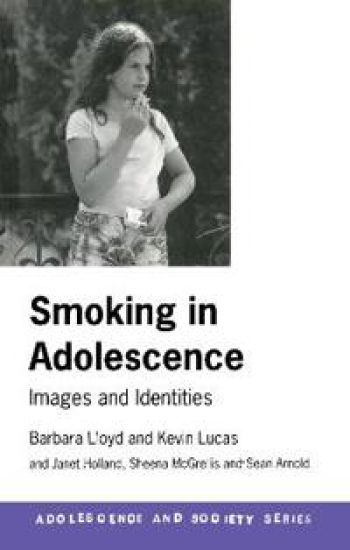
Smoking in Adolescence

Smoking in Adolescence

Barbara Lloyd; Kevin Lucas

Routledge
1998
nidottu
What factors influence adolescents to take up smoking? Why do more girls smoke than boys? In contrast to medical orthodoxy, Smoking in Adolescence looks at smoking from the adolescents' own points of view. What emerges is that regular smokers are seen as fun-loving and nonconformist; cigarettes are a passport to a fashionable, popular and 'hard' identity.Young people create, and are influenced by, complex images of smokers and nonsmokers. Barbara Lloyd and Kevin Lucas explore the psychological dimensions such as social environment, family, peers, stress and coping, body image, mood and pleasure. They suggest how anti-smoking interventions should be re-evaluated to take account of this new evidence throughout the school curriculum.Smoking in Adolescence will be of practical interest to teachers, youth workers, health professionals and parents as well as students of psychology.