Kirjojen hintavertailu. Mukana 12 390 323 kirjaa ja 12 kauppaa.

Kirjailija

Kevin M. Lynch

Kirjat ja teokset yhdessä paikassa: 2 kirjaa, julkaisuja vuosilta 2005-2017, suosituimpien joukossa Modern Robotics. Vertaile teosten hintoja ja tarkista saatavuus suomalaisista kirjakaupoista.

2 kirjaa

Kirjojen julkaisuhaarukka 2005-2017.

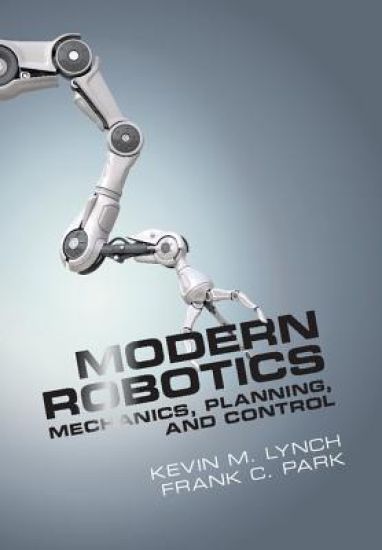
Modern Robotics

Modern Robotics

Kevin M. Lynch; Frank C. Park

Cambridge University Press
2017
sidottu
This introduction to robotics offers a distinct and unified perspective of the mechanics, planning and control of robots. Ideal for self-learning, or for courses, as it assumes only freshman-level physics, ordinary differential equations, linear algebra and a little bit of computing background. Modern Robotics presents the state-of-the-art, screw-theoretic techniques capturing the most salient physical features of a robot in an intuitive geometrical way. With numerous exercises at the end of each chapter, accompanying software written to reinforce the concepts in the book and video lectures aimed at changing the classroom experience, this is the go-to textbook for learning about this fascinating subject.
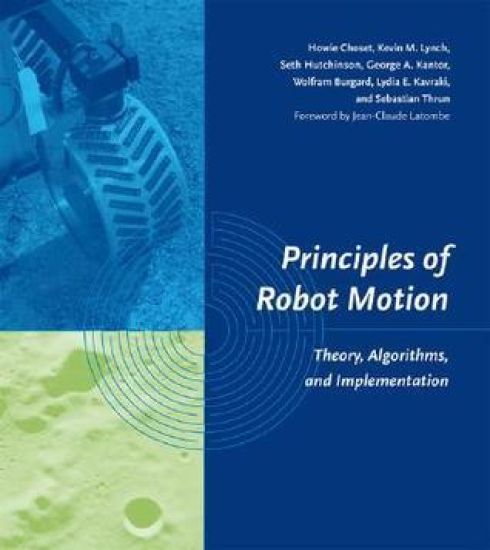
Principles of Robot Motion

Principles of Robot Motion

Howie Choset; Kevin M. Lynch; Seth Hutchinson; George A. Kantor; Wolfram Burgard; Lydia E. Kavraki; Sebastian Thrun

Bradford Books
2005
sidottu
A text that makes the mathematical underpinnings of robot motion accessible and relates low-level details of implementation to high-level algorithmic concepts.Robot motion planning has become a major focus of robotics. Research findings can be applied not only to robotics but to planning routes on circuit boards, directing digital actors in computer graphics, robot-assisted surgery and medicine, and in novel areas such as drug design and protein folding. This text reflects the great advances that have taken place in the last ten years, including sensor-based planning, probabalistic planning, localization and mapping, and motion planning for dynamic and nonholonomic systems. Its presentation makes the mathematical underpinnings of robot motion accessible to students of computer science and engineering, rleating low-level implementation details to high-level algorithmic concepts.