
Kirjailija
Kevin Matthews
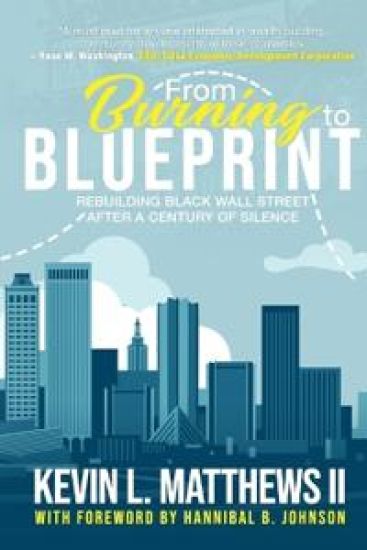
Kirjat ja teokset yhdessä paikassa: 5 kirjaa, julkaisuja vuosilta 2004-2021, suosituimpien joukossa From Burning to Blueprint. Vertaile teosten hintoja ja tarkista saatavuus suomalaisista kirjakaupoista.
5 kirjaa
Kirjojen julkaisuhaarukka 2004-2021.
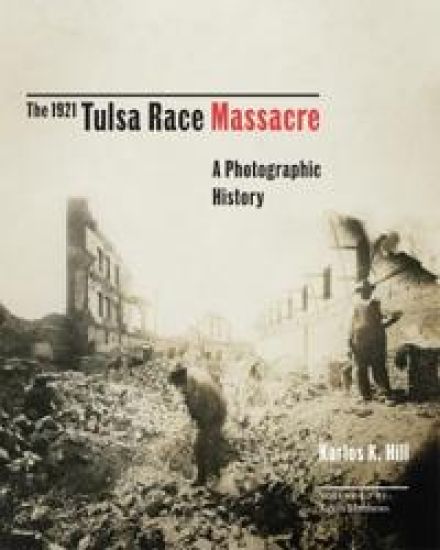
The 1921 Tulsa Race Massacre
Karlos K. Hill; Kevin Matthews
University of Oklahoma Press
2021
sidottu
On the evening of May 31, 1921, and in the early morning hours of June 1, several thousand white citizens and authorities violently attacked the African American Greenwood District of Tulsa, Oklahoma. In the course of some twelve hours of mob violence, white Tulsans reduced one of the nation's most prosperous black communities to rubble and killed an estimated 300 people, mostly African Americans. This richly illustrated volume, featuring more than 175 photographs, along with oral testimonies, shines a new spotlight on the race massacre from the vantage point of its victims and survivors. Historian and Black Studies professor Karlos K. Hill presents a range of photographs taken before, during, and after the massacre, mostly by white photographers. Some of the images are published here for the first time. Comparing these photographs to those taken elsewhere in the United States of lynchings, the author makes a powerful case for terming the 1921 outbreak not a riot but a massacre. White civilians, in many cases assisted or condoned by local and state law enforcement, perpetuated a systematic and coordinated attack on Black Tulsans and their property. Despite all the violence and devastation, black Tulsans rebuilt the Greenwood District brick by brick. By the mid-twentieth century, Greenwood had reached a new zenith, with nearly 250 Black-owned and Black-operated businesses. Today the citizens of Greenwood, with support from the broader community, continue to work diligently to revive the neighborhood once known as 'Black Wall Street.' As a result, Hill asserts, the most important legacy of the Tulsa Race Massacre is the grit and resilience of the Black survivors of racist violence.The 1921 Tulsa Race Massacre: A Photographic History offers a perspective largely missing from other accounts. At once captivating and disturbing, it will embolden readers to confront the uncomfortable legacy of racial violence in U.S. history.
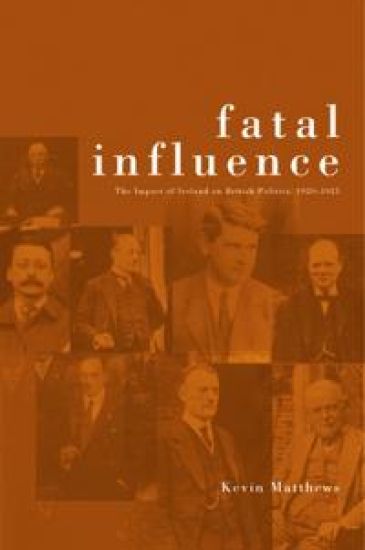
"Fatal Influence" challenges and revises many widely held assumptions about a pivotal moment in both British and Irish history and persuasively demonstrates that Ireland's impact on British politics lasted far longer and was far greater than has been realized. Kevin Matthews places the settlement of the Irish Question in the 1920s within the broader context of a revolution then taking place in British politics and shows how each affected the other. In a detailed investigation, he explores the Irish partition and the often conflicting motives that led to this momentous decision. Far from solving the Irish Question, dividing the country into two parts merely created what one politician at the time called its "elements of dynamite". These explosive elements were thrown into an already unstable political situation in Britain, with three political parties - Liberals, Conservatives, and Labour - all vying for a place in that nation's traditional two-party system. The book brings together some of the most colourful characters of 20th-century British and Irish history, from Winston Churchill and Michael Collins to David Lloyd George and Eamon de Valera. Looming behind is Sir James Craig, the rock-like embodiment of Ulster Unionism. But this story of "high politics" also involves men whose careers are not normally associated with the Irish conflict, figures such as Stanley Baldwin, Ramsay MacDonald, Neville Chamberlain and, even, Oswald Mosley and Anthony Eden.
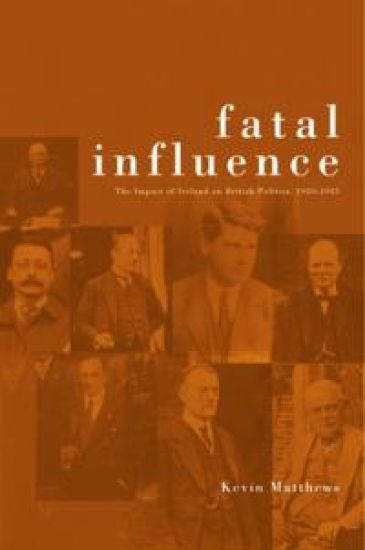
"Fatal Influence" challenges and revises many widely held assumptions about a pivotal moment in both British and Irish history and persuasively demonstrates that Ireland's impact on British politics lasted far longer and was far greater than has been realised. Kevin Matthews places the settlement of the Irish Question in the 1920s within the broader context of a revolution then taking place in British politics and shows how each affected the other. In a detailed investigation, he explores the Irish partition and the often conflicting motives that led to this momentous decision. Far from solving the Irish Question, dividing the country into two parts merely created what one politician at the time called its "elements of dynamite". These explosive elements were thrown into an already unstable political situation in Britain, with three political parties - Liberals, Conservatives, and Labour - all vying for a place in that nation's traditional two-party system. The book brings together some of the most colourful characters of 20th-century British and Irish history, from Winston Churchill and Michael Collins to David Lloyd George and Eamon de Valera. Looming behind is Sir James Craig, the rock-like embodiment of Ulster Unionism. But this story of "high politics" also involves men whose careers are not normally associated with the Irish conflict, figures such as Stanley Baldwin, Ramsay MacDonald, Neville Chamberlain and, even, Oswald Mosley and Anthony Eden.