Kirjojen hintavertailu. Mukana 12 595 353 kirjaa ja 12 kauppaa.

Kirjailija

Kevin Timpe

Kirjat ja teokset yhdessä paikassa: 9 kirjaa, julkaisuja vuosilta 2008-2024, suosituimpien joukossa Free Will 2nd edition. Vertaile teosten hintoja ja tarkista saatavuus suomalaisista kirjakaupoista.

9 kirjaa

Kirjojen julkaisuhaarukka 2008-2024.

Embodiment, Dependence, and God

Embodiment, Dependence, and God

Kevin Timpe

Cambridge University Press
2024
sidottu
The significance of our physical bodies is an important topic in contemporary philosophy and theology. Reflection on the body often assumes, even if only implicitly, idealizations that obscure important facts about what it means for humans to be 'enfleshed.' This Element explores a number of ways that reflection on bodies in their concrete particularities is important. It begins with a consideration of why certain forms of idealization are philosophically problematic. It then explores how a number of features of bodies can reveal important truths about human nature, embodiment, and dependence. Careful reflection on the body raises important questions related to community and interdependence. The Element concludes by exploring the ethical demands we face given human embodiment. Among other results, this Element exposes the reader to a wide diversity of human embodiment and the nature of human dependence, encouraging meaningful theological reflection on aspects of the human condition.
Embodiment, Dependence, and God

Embodiment, Dependence, and God

Kevin Timpe

Cambridge University Press
2024
pokkari
The significance of our physical bodies is an important topic in contemporary philosophy and theology. Reflection on the body often assumes, even if only implicitly, idealizations that obscure important facts about what it means for humans to be 'enfleshed.' This Element explores a number of ways that reflection on bodies in their concrete particularities is important. It begins with a consideration of why certain forms of idealization are philosophically problematic. It then explores how a number of features of bodies can reveal important truths about human nature, embodiment, and dependence. Careful reflection on the body raises important questions related to community and interdependence. The Element concludes by exploring the ethical demands we face given human embodiment. Among other results, this Element exposes the reader to a wide diversity of human embodiment and the nature of human dependence, encouraging meaningful theological reflection on aspects of the human condition.
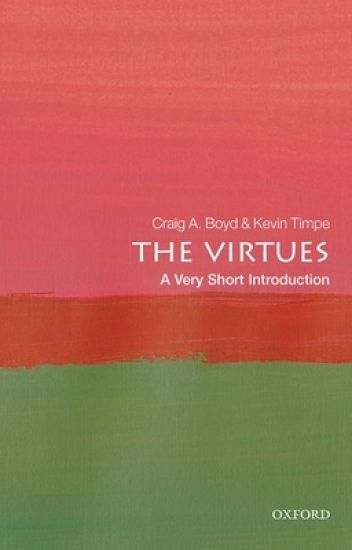
The Virtues

The Virtues

Craig A. Boyd; Kevin Timpe

Oxford University Press
2021
nidottu
From the philosophy of Aristotle and Confucius, to Thomas Aquinas' Summa Theologiae, to the paintings of Raphael, Botticelli and many more, fascination with the virtues has endured and evolved to fit a wide range of cultural, religious, and philosophical contexts through the centuries. This Very Short Introduction introduces readers to the various virtues: the moral virtues, the intellectual virtues, and the theological virtues, as well as the capital vices. It explores the role of the virtues in moral life, their cultivation, and how they offer ways of thinking and acting that are alternatives to mere rule-following. It also considers the relationship of the virtues to our own emotions, desires, and rational capacities. ABOUT THE SERIES: The Very Short Introductions series from Oxford University Press contains hundreds of titles in almost every subject area. These pocket-sized books are the perfect way to get ahead in a new subject quickly. Our expert authors combine facts, analysis, perspective, new ideas, and enthusiasm to make interesting and challenging topics highly readable.
Disability and Inclusive Communities

Disability and Inclusive Communities

Kevin Timpe

Calvin College Press
2018
pokkari
Disability and Inclusive Communities intends to help readers learn how to build communities that fully include people with disabilities. Often our social practices unintentionally exclude those with disabilities by making it difficult for them to fully participate in the community. These practices hurt those whom we exclude. But they are also bad for our communities as a whole. Our communities--from our churches to our schools to our workplaces--are worse off when we exclude those with disabilities. We miss out on the opportunity to learn from complex, complete human beings who experience life in different ways. We miss out on becoming the Body of Christ in all its fullness. But our communities become better places for everyone when we pursue policies and practices of inclusion. Good intentions aren't enough. We need good social practices to make our communities more inclusive. For when we do that, all of us are better off.
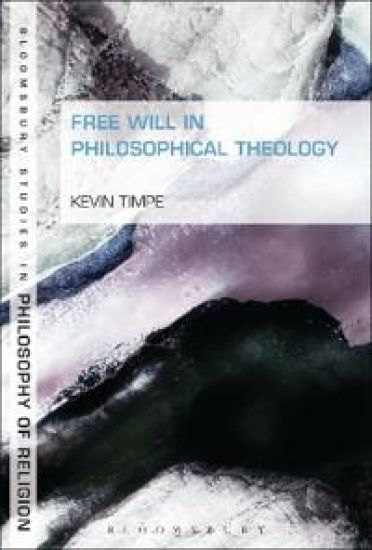
Free Will in Philosophical Theology

Free Will in Philosophical Theology

Kevin Timpe

Bloomsbury Academic USA
2015
nidottu
Free Will in Philosophical Theology takes the most recent philosophical work on free will and uses it to elucidate and explore theological doctrines involving free will. Rather than being a work of natural theology, it is a work in what has been called clarification—using philosophy to understand, develop, systematize, and explain theological claims without first raising the justification for holding the theological claims that one is working with. Timpe's aim is to show how a particular philosophical account of the nature of free will—an account known as source incompatibilism—can help us understand a range of theological doctrines.
Free Will in Philosophical Theology

Free Will in Philosophical Theology

Kevin Timpe

Bloomsbury Academic USA
2014
sidottu
Free Will in Philosophical Theology takes the most recent philosophical work on free will and uses it to elucidate and explore theological doctrines involving free will. Rather than being a work of natural theology, it is a work in what has been called clarification—using philosophy to understand, develop, systematize, and explain theological claims without first raising the justification for holding the theological claims that one is working with. Timpe's aim is to show how a particular philosophical account of the nature of free will—an account known as source incompatibilism—can help us understand a range of theological doctrines.
Free Will 2nd edition

Free Will 2nd edition

Kevin Timpe

Bloomsbury Academic USA
2012
nidottu
Contemporary debates on free will are numerous and multifaceted. According to compatibilists, it is possible for an agent to be determined in all her choices and actions and still be free. Incompatibilists, on the other hand, think that the existence of free will is incompatible with the truth of determinism. There are also two dominant conceptions of the nature of free will. According to the first, it is primarily a function of being able to do otherwise than one in fact does. The second approach focuses on issues of sourcehood, holding that free will is primarily a function of an agent being the source of her actions in a particular way. This book guides the student through all these debates, demarcating the different conceptions of free will, exploring the relationships between them, and examining how they relate to the debate between compatibilists and incompatibilists. In the process, it addresses a number of other views, including revisionism and free will scepticism. This is the ideal introduction to the contemporary debates for students at all levels.
Free Will 2nd edition

Free Will 2nd edition

Kevin Timpe

Bloomsbury Academic USA
2012
sidottu
Contemporary debates on free will are numerous and multifaceted. According to compatibilists, it is possible for an agent to be determined in all her choices and actions and still be free. Incompatibilists, on the other hand, think that the existence of free will is incompatible with the truth of determinism. There are also two dominant conceptions of the nature of free will. According to the first, it is primarily a function of being able to do otherwise than one in fact does. The second approach focuses on issues of sourcehood, holding that free will is primarily a function of an agent being the source of her actions in a particular way.This book guides the student through all these debates, demarcating the different conceptions of free will, exploring the relationships between them, and examining how they relate to the debate between compatibilists and incompatibilists. In the process, it addresses a number of other views, including revisionism and free will scepticism. This is the ideal introduction to the contemporary debates for students at all levels.
Free Will

Free Will

Kevin Timpe

Continuum Publishing Corporation
2008
sidottu
Contemporary debates on free will are numerous and multifaceted. According to compatibilists, it is possible for an agent to be determined in all her choices and actions and still be free. Incompatibilists, on the other hand, think that the existence of free will is incompatible with the truth of determinism. There are also two dominant conceptions of the nature of free will. According to the first, it is primarily a function of being able to do otherwise than one in fact does. The second approach focuses on issues of sourcehood, holding that free will is primarily a function of an agent being the source of her actions in a particular way. This book guides the student through all these debates, demarcating the different conceptions of free will, exploring the relationships between them, and examining how they relate to the debate between compatibilists and incompatibilists. In the process, it addresses a number of other views, including revisionism and free will scepticism. This is the ideal introduction to the contemporary debates for students at all levels.