Kirjojen hintavertailu. Mukana 12 595 353 kirjaa ja 12 kauppaa.
Kirjailija
Kevin Wright
Kirjat ja teokset yhdessä paikassa: 43 kirjaa, julkaisuja vuosilta 2008-2026, suosituimpien joukossa Street Corner Desire. Vertaile teosten hintoja ja tarkista saatavuus suomalaisista kirjakaupoista.
A power-hungry priestess. A malevolent temple sworn to a monstrous god. Can a low-born lackey survive the brutal ascension through a dark cult?Madam Spew seems fated to suffer a wretched death. Shackled into slavery by a heinous church, the frog acolyte toils away endlessly, mindlessly, monotonously. But when the High Priestess tasks her with a crucial quest, the lowly croaker leaps at the golden opportunity. Awakening hope and hunger, Madam Spew struggles to accomplish her critical quest and rise above her baseborn origin. But on the cusp of her greatest triumph, she's waylaid by a mad scrum of conspiring rivals. Will Madam Spew survive the death sentence her quest's failure guarantees, and if she somehow does, will her legion of foes give her the drop? Swamp Lords is a darkly funny series of high-fantasy short stories woven into one complete saga. If you like backstabbing villains, questionable heroes, and all manner of hideous monstrosities, you'll love Swamp Lords. Get some low-brow humor from this high-fantasy series and buy Swamp Lords today
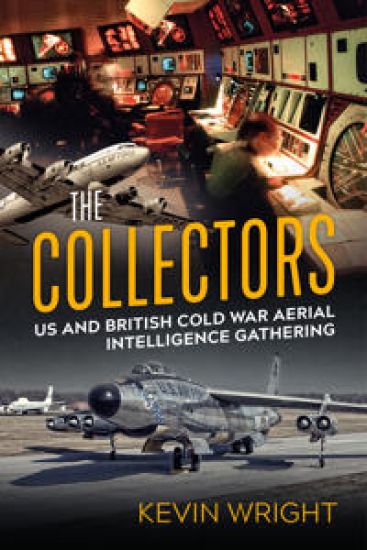
Over Iran an RAF Canberra flies a feint towards the Soviet border, to provoke Soviet air defence radar operators to reveal their location. He will not deliberately enter Soviet airspace, but the possibilities for miscalculation, or misunderstanding leading to tragedy are always there. These flights cost the lives of over 150 US airmen by the end of the Cold War. Also cruising nearby in Iranian airspace, is a heavily modified US Air Force C-130 transport aircraft. Onboard 10 Special Equipment Operators are listening through their headphones for Soviet radio and radar activity. Hearing Soviet ground controllers scramble fighters to intercept the Canberra. The US operators alert the British aircraft to the closing MiG’s and it quickly alters course away from the border. This was the life of crews involved in Cold War intelligence collection flights. Enormous resources were committed to these operations and they shaped the structure of much modern military intelligence collection, analysis and sharing. This book explores their scope, conduct, plus the politics and new technologies behind these operations that started in the dying embers of World War Two. It examines how these often complex missions were planned, coordinated and flown and is supported by first-hand accounts from pilots, aircrews and intelligence analysts. It utilises recently declassified British and US archive material and is illustrated with a wide range of images. The author examines European and Far East operations and a number of topics not previously covered in depth elsewhere. These include authorisation and coordination arrangements for conduct of overflight and peripheral missions; plus the part played by key third party states in operations in Scandinavia, Turkey and others. He looks at why Tyuratam complex was of such major intelligence interest and details the many resources targeted against it. He looks at some of the less explored elements of U-2 operations, including British involvement, plus the development of powerful lenses intended to enable very long range peripheral photography and why the long mythologised `Kapustin Yar’ overflight probably never took place with new details and analysis. This comprehensive book links together the realities of flying, advanced technology and politics to provide a detailed and illustrated examination of Cold War aerial intelligence collection.
This title was first published in 2000: The aim of this text is to explore conventional arms control in Europe. The early chapters provide a primarily historical perspective, looking at the context, foundations, main provisions and institutional structure of the main agreements. The later chapters explore the continuing and likely future roles of the OSCE and NATO in the arms control process. The final chapters examine more contemporary developments by looking at the Adapted CFE Treaty and Vienna Documents agreed at the OSCE Istanbul Summit in November 1998 and the challenges posed to existing arrangements by the changing and emergent security threats that potentially face Europe.
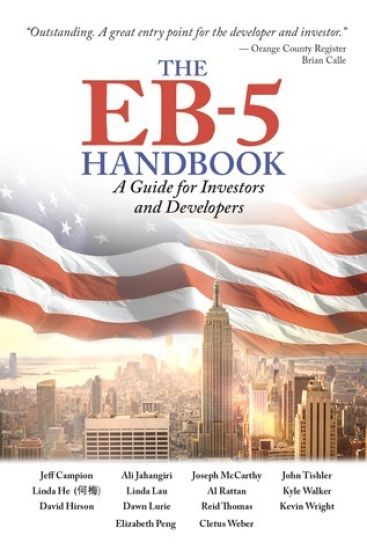
Since 1990, the Immigration Investor Visa Program (EB-5) has enabled American real estate developers raising capital for projects from foreign investors seeking to relocate to the United States. In recent years, however, lack of clear regulations, failure to extend legislation, and shortage of visas has made the landscape difficult, especially for Chinese investors, sending the EB-5 industry globally to alternative markets. Fortunately, there is an essential, up-to-date handbook to guide stakeholders through the changes in the EB-5 process. EB-5 2.0 The Institutionalization of EB-5 explores the state of the industry today and how to overcome obstacles that may arise from proposed legislative alterations. Additionally, it provides powerful strategies in emerging investor markets such as India, Latin America, and the Middle East. Comprehensive, informative, and invaluable, this is a must-read for anyone hoping to benefit from this important government program.
A had a million thoughts running through my mind. I just wanted everyone in the world to hear me out. I felt free, the world at my finger tips, and the flow felt deep.
I was granted a platform to share my words. I sat on the clouds in my dreams and started people watching, my imagination took to me to different limits, I climbed the highest mountains, and swam the Caribbean sea. I found words and clarity in my surroundings. I started living even more. -To my reader
Street Corner represents my thoughts and what I had a imagined. It has always been my dream to write about things that people never imagined. This has been a time where I wanted to find myself, discover the idea of dream and reality, and put things together in a way no one else could.
This title was first published in 2000: The aim of this text is to explore conventional arms control in Europe. The early chapters provide a primarily historical perspective, looking at the context, foundations, main provisions and institutional structure of the main agreements. The later chapters explore the continuing and likely future roles of the OSCE and NATO in the arms control process. The final chapters examine more contemporary developments by looking at the Adapted CFE Treaty and Vienna Documents agreed at the OSCE Istanbul Summit in November 1998 and the challenges posed to existing arrangements by the changing and emergent security threats that potentially face Europe.
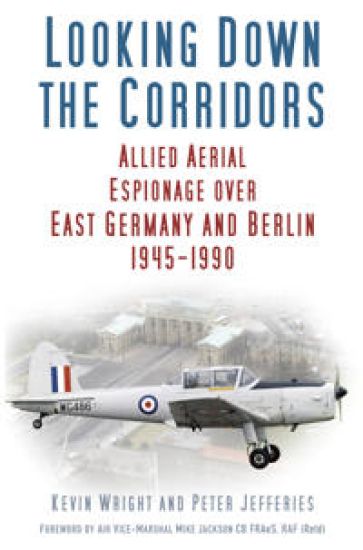
Between 1945 and 1990 the Western Allies mounted some of the most audacious and successful intelligence collection operations of the Cold War. Conducted in great secrecy, aircrews flew specially modified transport and training aircraft along the Berlin Air Corridors and Control Zone to gather intelligence on Soviet and East German military targets in the German Democratic Republic and around Berlin. The Air Corridors comprised three regulated airways for civil and military air traffic that connected West Berlin to West Germany. Operating under the guise of innocent transport and training flights, the pilots used their right of access to gather huge amounts of imagery for forty-five years. They also provided the western intelligence community with unique knowledge of the organisation and equipment used by Warsaw Pact forces.For the first time, using recently declassified materials and extensive interviews with those involved, Looking Down the Corridors provides a detailed account and analysis of these operations and their unique contribution to the Cold War.
Four Aces is the collection of short works from the authors of Quantum Muse Books. Lots of variety: Scifi, Fantasy, Horror, and some Humor thrown in for good measure.
'It came in this darkest of years, this winter of bitterest cold, when dire-wolves loped rabid through the city, marauding, laying slaughter and waste upon man, woman, and child. When finally they retreated, it was believed a miracle from God. It was not.'As plague howls through war-torn Asylum City, Sir Luther Slythe Krait is forced into the service of his mortal enemy, the notorious Gallows Lord.Thrust into a deadly game of cat and mouse, can Sir Luther negotiate the labyrinth of Asylum's treacherous political wasteland? Can he play one mad warlord off against another long enough to realize his quest? To uncover the truth behind a series of unspeakable murders? With dark forces aligned against him and even allies plotting his demise, it's impossible. Like a tightrope walker poised amidst a maelstrom, Sir Luther walks the razor's edge.Balance or fall, there lies but one certainty: He will bleed.It's mystery, mayhem, murder.It's The Maltese Falcon meets The First Law Series in this epic grimdark saga.Read it today.Questions with the author: Q: What inspired you to write 'Lords of Asylum'?Well, Lords of Asylum is a mashup of my two favorite genres: fantasy and detective fiction. I love first person noir detective books like Robert B. Parker's Spenser' series. The immediacy of first person makes it, for me, the most engaging to read. It puts you 'right there' following the breadcrumbs after the serial killer or missing person, fighting some bad guy on a rooftop, I guess you could say. So I used that noir detective genre as a basis to write in my absolute favorite genre: fantasy. I love fantasy and adventure, epic, high, low, quest, old-school sword and sorcery like Conan and Fritz Leiber. Whatever you've got, I love it. Q: What's your favorite part about fantasy?Beside all of it? Hmm... I've asked myself that question before and what I keep coming back to is simply this: monsters. I've always loved monsters. One of my favorite books growing up was the D&D book Deities and Demigods. I loved pouring through it, checking out the awesome art and reading about the history and stats of myths and mythical creatures, devils and demons, and gods and goddesses. I loved comparing them and trying to figure out who'd win in a fight. It was also my first introduction to H.P. Lovecraft, which lead me to more stories about monsters which is another reason I love that book. So yeah. Monsters is my answer. Q: Do you consider 'Lords of Asylum' grimdark? And what is grimdark?I'll take your second question first. No one can quite agree as to what grimdark is because everyone has their own idea of what it is. My idea is that grimdark represents a subgenre spanning many fiction genres where protagonists are not good guys. They're, at the very least, some shade of grey in between and often times real nasty characters. And do I consider Lords of Asylum grimdark fantasy? I don't know. Why don't you read it and let me know.