
Kirjailija
Kieran McCarthy
Kirjat ja teokset yhdessä paikassa: 27 kirjaa, julkaisuja vuosilta 2005-2025, suosituimpien joukossa A-Z of Cork. Vertaile teosten hintoja ja tarkista saatavuus suomalaisista kirjakaupoista.
27 kirjaa
Kirjojen julkaisuhaarukka 2005-2025.

Cork City, Ireland's southern capital, is a place of tradition, continuity, change and legacy. It is a place of direction and experiment by people, of ambition and determination, experiences and learning, of ingenuity and innovation and a place of nostalgia and memory. The pictures within this book provide insights into how such a place came into being and focuses on Cork one hundred years ago. Cork's urban landscape is filled with messages about the past. As a port town, Cork was and still is strongly connected to the outside world - this small international city is ambitious in its ventures and links to a world of adventure and exploration. The photographs within the book help to show the human experience and sense of place and pride in the city, one hundred years ago and today. Views of streets, public spaces, churches, the docks, and an international exhibition to name a few, capture the energy and drive of a city - the legacies of which still linger on in the southern capital of Ireland.
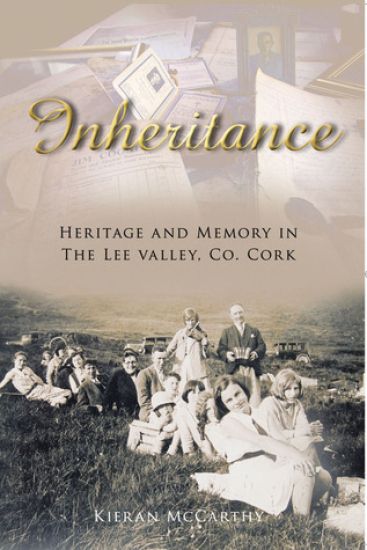
"Inheritance" explores the parishes of Aghabullogue, Inniscarra and Ovens on the northern valleyside of the Inniscarra Reservoir, Co. Cork. Through fieldwork and interviews with local people, Kieran McCarthy focuses on several aspects of the region's cultural heritage, providing insights into place-making, community roots and identity. This work dabbles in the architecture of heritage and its interaction with life in an Irish river valley. The book is focused on the beauty and structure of 'things', which highlight, debate and celebrate our cultural heritage not only from the past but also what we have inherited in the present. The book is a study of the rich language of images and symbols that are so inherent in rural environments. In fact, the many monuments on the local landscape could be described as part of a vast and varied open-air history book just waiting to be read.

The ESB’s Lee hydroelectric scheme is one of Ireland’s great engineering triumphs. Celebrating its fiftieth year in 2008, the Lee scheme has made a lasting impression on the local geography, economy and population of the Cork region and beyond. Generations begins by tracing the story of the river Lee. This is an area rich in ancient history, and a wealth of geographical detail and historical background is explored and explained. The geography of the valley is varied and ever-changing, and the river Lee’s progress through its many different townlands to disgorge at Cork Harbour and into the Irish Sea is carefully charted while telling the story of local saints such as St Finbarre, and of the origins of many of the townland names. The ever-growing need to provide an improved level of electricity service for existing customers, as well as the new demands created by an ambitious programme for rural electrification set in motion the process for the building of the Lee stations and the damming of the valley, 40 kilometres in length and over 22 wide. This was a colossal task, and necessitated years of minute planning, geographical surveys and preservation orders on, for example, the Gearagh region, and land purchase, with the final contracts for the works in place towards the end of 1952. Detailed land acquisition records and newspaper documentation afford a fascinating glimpse into what must have been an enormous upheaval for two hundred families involved, many of whom relocated elsewhere as the valley was flooded and their homes were submerged. The success of the enterprise depended on the effective deployment of manpower (650 personnel, many of them highly trained or skilled), both from home and abroad. This is narrated by way of interviews with the many men and women whose lives were shaped by the Carrigadrohid and Inniscarra dams. The sheer scale of the project required a sophisticated infrastructure of housing, lodging, catering and entertainment as workers were drafted in from not only the Cork region but from all over Europe. The Lee hydroelectric scheme transformed the Lee valley by opening up new tourism opportunities for fishing, waterskiing, sailing and rowing, and by securing the future supply of clean and economical electricity and water throughout the Cork area and beyond. The impact of the Lee scheme is positive and lasting. This beautifully illustrated book is fascinating record of that achievement, and a testament to its continuing success.

McCarthy gives a fascinating insight to the Volunteer Movement in Cobh, how they extended and built up a potent guerrilla movement throughout East Cork, and played a pivotal role in earning Cork the title of the Rebel County. He documents the evolution of the local volunteers post civil war, and the progress of the republican struggle.
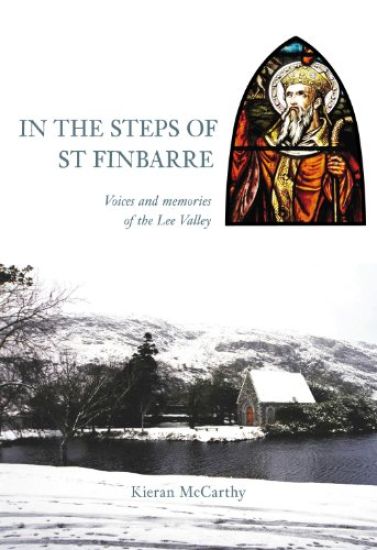
Includes legend, folklore, personal stories, geography and history. Featuring the photographs of professional photographer Tony O'Connell, this book follows the course of the River Lee from where it rises in Gougane Barra estuary in Cork City, touching along the way the many mysteries and hidden gems of Cork's history and geography and more.
Above the earth there is a satellite, which looks down at Cork, and watches the movements of people and cars around the city. Down in the hub, small cameras watch the city in detail, and meteorological equipment tastes the weather. Through up to date technology, this information is transformed into a knitting pattern, which constantly shifts. Down in the city, there is a long room in the crypt of St. Luke's Church, where dozens of people knit for a year. "The Knitting Map" is an amazing project, so many things rolled into one, a textile project, art installation and, a community project. It is mammoth keeping everything going. With the community side, people need to feel rewarded and valued...setting up an atmosphere, which allows people to meet other people and yet the knitting gets done...then you have the textiles...the technology and its unpredictability...the fact that it's not a map of a place but a year...as an art installation and developing the artistic worth of it, finding a forum for it, making connections with other places that the craft of it can be recognized" (Elizabeth O'Dea, half-angel Company Administrator, 2005). "The Knitting Map" is a fabric art and technology project, created over the 2005 calendar year, in collaboration with several communities, and a newly created community of knitters. Voices chart the memories, dreams and life experiences of the community of "The Knitting Map". The stories are fascinating, diverse and a cross section of the human experience.