Kirjojen hintavertailu. Mukana 12 237 029 kirjaa ja 12 kauppaa.

Kirjailija

Kim Cragin

Kirjat ja teokset yhdessä paikassa: 11 kirjaa, julkaisuja vuosilta 2003-2009, suosituimpien joukossa International Cooperation with Partner Air Forces. Vertaile teosten hintoja ja tarkista saatavuus suomalaisista kirjakaupoista.

11 kirjaa

Kirjojen julkaisuhaarukka 2003-2009.

International Cooperation with Partner Air Forces

International Cooperation with Partner Air Forces

Jennifer D P Moroney; Kim Cragin; Eric Gons; Beth Grill; John E Peters

RAND
2009
pokkari
The Air Force faces a challenging environment as it devises an approach to managing security cooperation with partner countries. The important mission of countering terrorist and insurgent groups abroad requires working closely with allies and partner countries to strengthen security. Accordingly, current U.S. defense strategy emphasizes that the U.S. armed forces should do more to work "by, with, and through partners" to accomplish missions.
Dangerous but Not Omnipotent

Dangerous but Not Omnipotent

Frederic Wehrey; David E Thaler; Nora Bensahel; Kim Cragin; Jerrold D Green

RAND
2009
pokkari
In an analysis grounded in the observation that although Iranian power projection is marked by strengths, it also has serious liabilities and limitations, this report surveys the nature of both in four critical areas and offers a new U.S. policy paradigm that seeks to manage the challenges Iran presents through the exploitation of regional barriers to its power and sources of caution in the regime's strategic calculus.
Breaching the Fortress Wall

Breaching the Fortress Wall

Brian A. Jackson; Peter Chalk; Kim Cragin; Bruce Newsome; John V. Parachini; William Rosenau; Erin M. Simpson; Melanie Sisson; Donald Temple

RAND
2006
pokkari
Technology systems play a key role within a larger, integrated strategy to target groups' efforts and protect the public from the threat of terrorist violence. This study draws on relevant data from the history of a variety of terrorist conflicts to understand terrorists' counter-technology efforts. Fully exploring adversaries' counter-technology behaviors can help make the best choices to protect the nation from the threat of terrorism.
Social Science for Counterterrorism

Social Science for Counterterrorism

Paul K Davis; Kim Cragin

RAND
2009
pokkari
This monograph surveys and integrates scholarly social-science literature relevant to counterterrorism. It draws from numerous disciplines and then uses high-level conceptual models to pull the pieces together regarding root causes, individual radicalization, public support, and the ways in which terrorism fades. It identifies points of agreement and disagreement and discusses the consequences of different contexts and perspectives.
Sharing the Dragon's Teeth

Sharing the Dragon's Teeth

Kim Cragin; Peter Chalk; Sara A. Daly; Brian A. Jackson

RAND
2007
pokkari
Terrorist groups - both inside and outside the al Qaeda network - sometimes form mutually beneficial partnerships to exchange "best practices." Operation Enduring Freedom and the global war on terrorism forced many members of al Qaeda to disperse, while like-minded terrorist groups have formed regional alliances and other terrorist groups that are not linked ideologically have formed mutually beneficial partnerships. Understanding these interactions is essential to ongoing and future efforts to counter terrorist threats. This volume examines how eleven terrorist groups in three distinct areas (Mindanao, the West Bank and Gaza Strip, and southwest Colombia) have attempted to exchange technologies and knowledge. The authors chose case studies in regions where terrorist groups are highly capable, thus the technologies and exchange processes are weighed toward success and should be of significant concern to the U.S. national security community. The authors examine a variety of technologies and exchange processes, ranging from remote-detonation devises to converted field ordnance to katyusha rockets.The authors' conclusions relate to improving threat assessments, disrupting innovation processes, and affecting terrorist groups' cost-benefit analyses. This volume should be of interest to homeland security policymakers, the national security community, as well as academics, students, and professionals in counterterrorism, homeland security, and organizational learning.
Aptitude for Destruction

Aptitude for Destruction

Brian A. Jackson; John C. Baker; Peter Chalk; Kim Cragin; John V. Parachini; Horacio R. Trujillo

RAND
2005
pokkari
Understanding how terrorist groups learn may aid in developing strategies to combat terrorist activities Better ways are needed to understand how terrorist groups become more effective and dangerous. Learning is the link between what a group wants to do and its ability to actually do it; therefore, a better understanding of group learning might contribute to the design of better measures for combating terrorism. This study analyzes current understanding of group learning and the factors that influence it and outlines a framework that should be useful in present analytical efforts and for identifying areas requiring further study.
Aptitude for Destruction

Aptitude for Destruction

Brian A. Jackson; John C. Baker; Peter Chalk; Kim Cragin; John V. Parachini; Horacio R. Trujillo

RAND
2005
pokkari
This book includes case studies of the organizational learning activities of five major terrorist groups and a methodology for ascertaining what and why they learned.
Dissuading Terror

Dissuading Terror

Kim Cragin; Scott Gerwehr

RAND
2005
pokkari
Analyzes past U.S. strategic influence campaigns and looks at how and in what circumstances such campaigns can best be applied to today's struggle against terrorism. U.S. government decisionmakers face a number of challenges as they attempt to form policies that aim to dissuade terrorists from attacking the United States, deflect youths from joining terrorist groups, and persuade the leaders of states and nongovernmental institutions to withhold support for terrorists. The successes or failures of such policies and campaigns have long-lasting effects. The findings of this research help U.S. decisionmakers more closely refine how and in what circumstances strategic influence campaigns can best be applied.
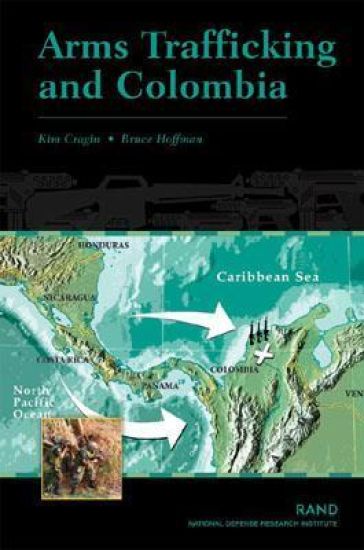
Arms Trafficking and Colombia

Arms Trafficking and Colombia

Kim Cragin; Bruce Hoffman

RAND
2003
pokkari
Many factors have contributed to extreme political instability and violence in Colombia-the drug trade, a protracted insurgent conflict, corruption-but small arms proliferation remains one of the key underlying problems. The authors analyze the black- and gray-market sources of small/light arms, explosives, equipment, and materiel which are available to terrorist and insurgent organizations currently active in Colombia, as well as policy implications for the country and the United States.
Terrorism and Development

Terrorism and Development

Kim Cragin; Peter Chalk

RAND
2003
pokkari
This title examines the social and economic development policies enacted by Israel, the Philippines, and the United Kingdom to inhibit a resurgence of terrorism within their jurisdictions, with the aim of informing U.S. decision makers as they develop policy to counter terrorism.