Kirjojen hintavertailu. Mukana 12 191 993 kirjaa ja 12 kauppaa.

Kirjailija

Kim R. Holmes

Kirjat ja teokset yhdessä paikassa: 2 kirjaa, julkaisuja vuosilta 2013-2018, suosituimpien joukossa Rebound. Vertaile teosten hintoja ja tarkista saatavuus suomalaisista kirjakaupoista.

2 kirjaa

Kirjojen julkaisuhaarukka 2013-2018.

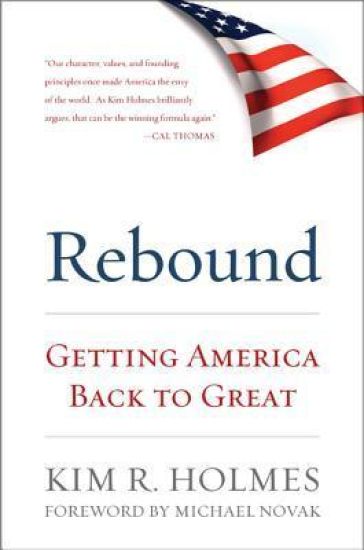
Rebound

Rebound

Kim R. Holmes; Michael Novak

Rowman Littlefield
2013
sidottu
There is a huge concern in America today that the country is in decline, one of the few sentiments that – nationally – our increasingly polarized political leaders can agree on. Americans fear that the economy and our culture itself are in deep crisis. They are also frustrated that the ruling classes are unable to fix America’s problems. Kim R. Holmes’ Rebound taps into these concerns, taking a fresh look at how America has moved away from the principles and practices that once made it the world’s greatest nation. Far from accepting America’s inevitable decline, as so many today do, Holmes argues that decline is a choice, not an inevitability or destiny. To restore our culture, revitalize our economy, and ensure we return to being the world’s number one power, America must reconnect with its historical DNA: the ingredients of its greatness. This book lays out the vision and roadmap for how America can bounce back, with examples from throughout our nation’s history that prove we’ve always been able to meet the challenges facing us, no matter how largely they may loom.
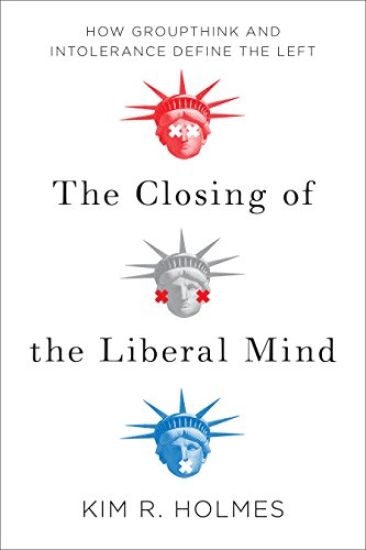
The Closing of the Liberal Mind

The Closing of the Liberal Mind

Kim R. Holmes

Encounter Books,USA
2018
pokkari
A former U.S. Assistant Secretary of State and currently Senior Vice President for Research at The Heritage Foundation, Kim R. Holmes surveys the state of liberalism in America today and finds that it is becoming its opposite-illiberalism-abandoning the precepts of open-mindedness and respect for individual rights, liberties, and the rule of law upon which the country was founded, and becoming instead an intolerant, rigidly dogmatic ideology that abhors dissent and stifles free speech. Tracing the new illiberalism historically to the radical Enlightenment, a movement that rejected the classic liberal ideas of the moderate Enlightenment that were prominent in the American Founding, Holmes argues that today's liberalism has forsaken its American roots, incorporating instead the authoritarian, anti-clerical, and anti-capitalist prejudices of the radical and largely European Left. The result is a closing of the American liberal mind. Where once freedom of speech and expression were sacrosanct, today liberalism employs speech codes, trigger warnings, boycotts, and shaming rituals to stifle freedom of thought, expression, and action. It is no longer appropriate to call it liberalism at all, but illiberalism-a set of ideas in politics, government, and popular culture that increasingly reflects authoritarian and even anti-democratic values, and which is devising new strategies of exclusiveness to eliminate certain ideas and people from the political process. Although illiberalism has always been a temptation for American liberals, lurking in the radical fringes of the Left, it is today the dominant ideology of progressive liberal circles. This makes it a new danger not only to the once venerable tradition of liberalism, but to the American nation itself, which needs a viable liberal tradition that pursues social and economic equality while respecting individual liberties.