Kirjojen hintavertailu. Mukana 12 216 353 kirjaa ja 12 kauppaa.

Kirjailija

Kim Wale

Kirjat ja teokset yhdessä paikassa: 3 kirjaa, julkaisuja vuosilta 2016-2018, suosituimpien joukossa Class in Soweto. Vertaile teosten hintoja ja tarkista saatavuus suomalaisista kirjakaupoista.

3 kirjaa

Kirjojen julkaisuhaarukka 2016-2018.

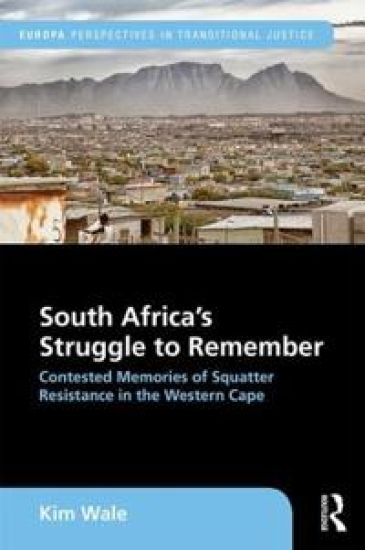
South Africa's Struggle to Remember
Transitional justice studies typically focuses on how nations remember, face and deal with histories of past violence. This book, however, shifts the frame from national discourses of transitional justice onto local memory actors who attempt to engage with these broader systems of meaning from below. The case study is based on the memory struggles of individuals and groups who are attempting to gain access to the discourses and benefits associated with dominant memory identities of ‘victim’ and ‘veteran’ in the context of post-transition South Africa. They share a common history of squatter resistance in the Western Cape in the 1980s and a common struggle for inclusion in dominant memory frameworks. The main theme of this book is the politics of memory, as it relates to the conversation between national and local memory. Integrated within this theme is the further theme of alternative histories and counter-memories of struggle from below. In focusing on counter memories of violence and transition this book aims to tell a different version of South African liberation history in relation to the dominant narrative. It analyses local memory actors' attempts to bring their lived histories into conversation with national discourses of reconciliation and the national liberation struggle. In doing so it unpacks a memory paradox occurring within these narratives, which highlights the politics of inclusion and exclusion within the frames of transitional justice knowledge. On the one hand this alternate story exposes the paradox between local and national memory while on the other hand it brings into focus the local experience of the intersection between international transitional justice discourses and national transition politics. This book will be of local and international interest to scholars and students in the field of transitional justice, memory politics, national liberation struggle and South African historiography. It will also be of interest to a broader South Africa public, as it offers a deeper understanding of South Africa’s history, which challenges taken for granted transitional justice frames of knowledge.
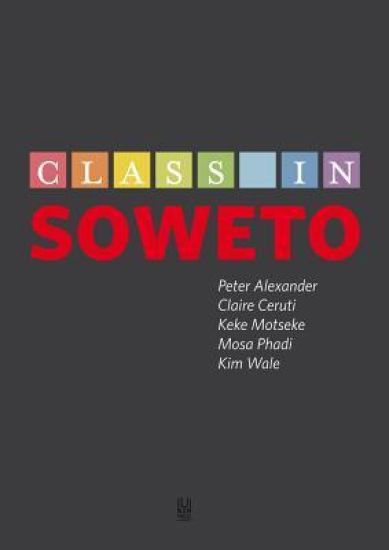
Class in Soweto

Class in Soweto

Peter Alexander; Claire Ceruti; Keke Motseke; Mosa Phadi; Kim Wale

University of KwaZulu-Natal Press
2017
nidottu
The book presents findings and analysis from six years of research on class structure and class identity in Soweto, South Africa’s most populous and politically-important township. This is placed within the context of heightened socio-economic inequalities in nearly all countries around the world. The authors looked at a number of areas. How do Sowetans understand class and how do they locate themselves and each other within the broad divisions of class outline? What are the markers and indicators that influence their perceptions of class and does the terminology of class affect these perceptions through dilution into indigenous languages. Setting out class structure and class identity, with its extremes of unemployment, strike action and ongoing insurrectionary unrest among the urban poor, the book draws on a large, wide-ranging representative survey and extensive qualitative fieldwork. It makes an original contribution to the sociology of class and to the politics of contemporary South Africa.
South Africa's Struggle to Remember

South Africa's Struggle to Remember

Kim Wale

Europa Publications Ltd
2016
sidottu
Transitional justice studies typically focuses on how nations remember, face and deal with histories of past violence. This book, however, shifts the frame from national discourses of transitional justice onto local memory actors who attempt to engage with these broader systems of meaning from below. The case study is based on the memory struggles of individuals and groups who are attempting to gain access to the discourses and benefits associated with dominant memory identities of ‘victim’ and ‘veteran’ in the context of post-transition South Africa. They share a common history of squatter resistance in the Western Cape in the 1980s and a common struggle for inclusion in dominant memory frameworks.The main theme of this book is the politics of memory, as it relates to the conversation between national and local memory. Integrated within this theme is the further theme of alternative histories and counter-memories of struggle from below. In focusing on counter memories of violence and transition this book aims to tell a different version of South African liberation history in relation to the dominant narrative. It analyses local memory actors' attempts to bring their lived histories into conversation with national discourses of reconciliation and the national liberation struggle. In doing so it unpacks a memory paradox occurring within these narratives, which highlights the politics of inclusion and exclusion within the frames of transitional justice knowledge. On the one hand this alternate story exposes the paradox between local and national memory while on the other hand it brings into focus the local experience of the intersection between international transitional justice discourses and national transition politics.This book will be of local and international interest to scholars and students in the field of transitional justice, memory politics, national liberation struggle and South African historiography. It will also be of interest to a broader South Africa public, as it offers a deeper understanding of South Africa’s history, which challenges taken for granted transitional justice frames of knowledge.