
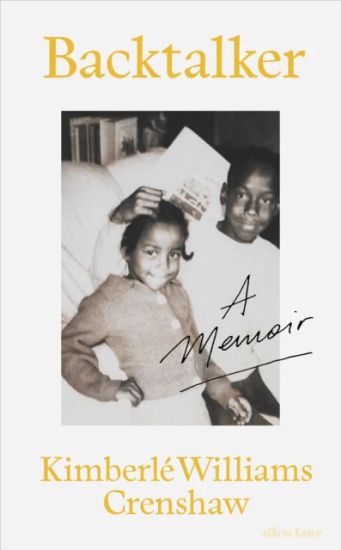
Kirjailija
Kimberle Crenshaw
Kirjat ja teokset yhdessä paikassa: 6 kirjaa, julkaisuja vuosilta 2017-2026, suosituimpien joukossa Backtalker. Vertaile teosten hintoja ja tarkista saatavuus suomalaisista kirjakaupoista.
Mukana myös kirjoitusasut: Kimberlé Crenshaw
6 kirjaa
Kirjojen julkaisuhaarukka 2017-2026.
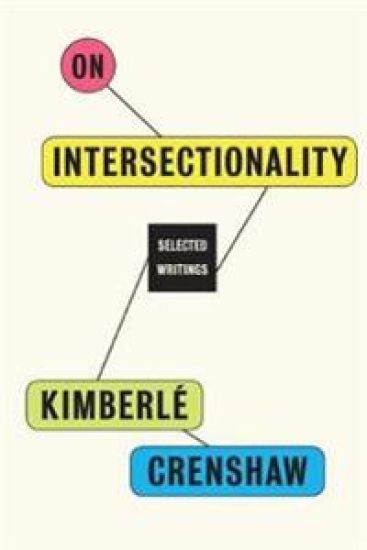
A major publishing event, the collected writings of the groundbreaking scholar who "first coined intersectionality as a political framework" (Salon) For more than twenty years, scholars, activists, educators, and lawyers--inside and outside of the United States--have employed the concept of intersectionality both to describe problems of inequality and to fashion concrete solutions. In particular, as the Washington Post reported recently, "the term has been used by social activists as both a rallying cry for more expansive progressive movements and a chastisement for their limitations." Drawing on black feminist and critical legal theory, Kimberl Crenshaw developed the concept of intersectionality, a term she coined to speak to the multiple social forces, social identities, and ideological instruments through which power and disadvantage are expressed and legitimized. In this comprehensive and accessible introduction to Crenshaw's work, readers will find key essays and articles that have defined the concept of intersectionality, collected together for the first time. The book includes a sweeping new introduction by Crenshaw as well as prefaces that contextualize each of the chapters. For anyone interested in movement politics and advocacy, or in racial justice and gender equity, On Intersectionality will be compulsory reading from one of the most brilliant theorists of our time.
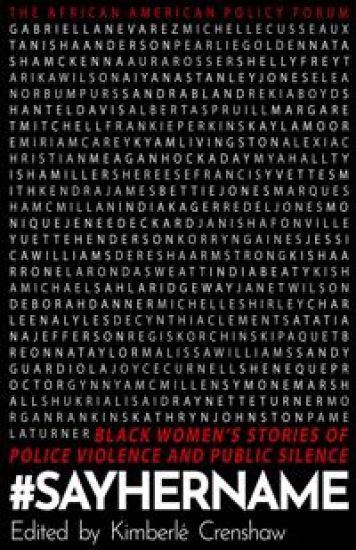
#SayHerName
Kimberle Crenshaw; African American Policy Forum; Janelle Mone
Haymarket Books
2023
sidottu
Since the movement’s founding in 2014, #SayHerName has gained international attention and has served as both a rallying cry and organizing principle in the aftermath of police killings of Black women, including, most recently, the police killing of Breonna Taylor. Black women, girls, and femmes as young as seven and as old as ninety-three have been killed by the police, though we rarely hear their names or learn their stories. Breonna Taylor, Alberta Spruill, Rekia Boyd, Shantel Davis, Shelly Frey, Kayla Moore, Kyam Livingston, Miriam Carey, Michelle Cusseaux, and Tanisha Anderson are among the many lives that should have been. The #SayHerName campaign lifts up the stories of these women and girls in order to build a gender-inclusive framework for understanding, discussing, and combating police violence. Without this knowledge, we cannot have a full understanding of the wide-ranging circumstances that make Black bodies disproportionately subject to police violence, and we cannot understand the ways in which racialized policing and gendered violence intersect and produce lethal consequences. #SayHerName provides an analytical framework for understanding Black women's susceptibility to police brutality and state-sanctioned violence, and it explains how—through black feminist storytelling and ritual—we can effectively mobilize various communities and empower them to advocate for racial justice. Including Black women in police violence and gender violence discourses sends the powerful message that, in fact, all Black lives matter and that the police cannot kill without consequence.This is a powerful story of Black feminist practice, community-building, enablement, and Black feminist reckoning.
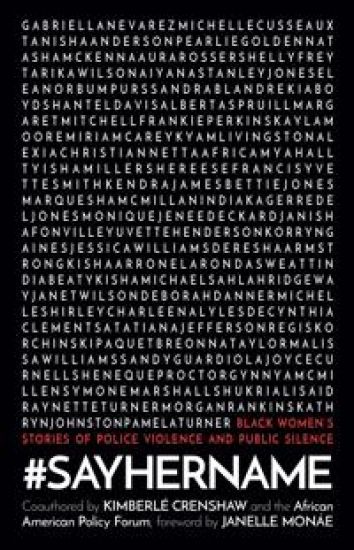
#SayHerName
Kimberle Crenshaw; African American Policy Forum; Janelle Mone
Haymarket Books
2023
pokkari
Fill the void. Lift your voice. Say Her Name.Black women, girls, and femmes as young as seven and as old as ninety-three have been killed by the police, though we rarely hear their names or learn their stories. Breonna Taylor, Alberta Spruill, Rekia Boyd, Shantel Davis, Shelly Frey, Kayla Moore, Kyam Livingston, Miriam Carey, Michelle Cusseaux, and Tanisha Anderson are among the many lives that should have been. #SayHerName provides an analytical framework for understanding Black women's susceptibility to police brutality and state-sanctioned violence, and it explains how—through black feminist storytelling and ritual—we can effectively mobilize various communities and empower them to advocate for racial justice.Centering Black women’s experiences in police violence and gender violence discourses sends the powerful message that, in fact, all Black lives matter and that the police cannot kill without consequence. This is a powerful story of Black feminist practice, community-building, enablement, and Black feminist reckoning.
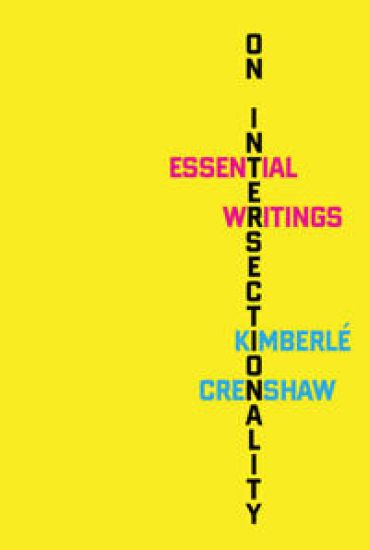
The most influential writing on the pivotal concept of intersectionality, by the scholar who introduced the term, collected for the first time. Intersectionality has emerged as an influential approach to understanding discrimination and exclusion in our society, whose members can experience bias in multiple ways - as a consequence of race, gender, sexual orientation, or a combination of these. In this first-ever collection of Crenshaw's writing, readers will find the key essays and articles that have defined the concept of intersectionality.
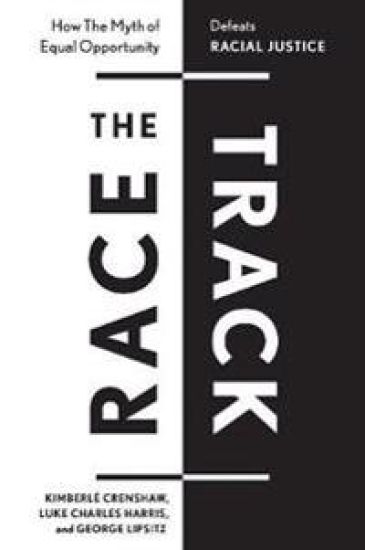
Despite the watershed election of Barack Obama and the claims that racial history ended that day, the painful reality of racism in America has been thrust into the headlines over the past year. The Race Track dispenses with the myth of post-racial America, explaining not only why race matters more than ever but also how we can fashion 21st-century solutions to combating racial injustice. The Race Track champions an intersectional path - pioneered by Kimberle Crenshaw - one that will appeal to people of all races who want to know how to speak the language of racial justice.