Kirjojen hintavertailu. Mukana 12 282 616 kirjaa ja 12 kauppaa.

Kirjailija

Kimberly Mair

Kirjat ja teokset yhdessä paikassa: 4 kirjaa, julkaisuja vuosilta 2016-2023, suosituimpien joukossa Guerrilla Aesthetics. Vertaile teosten hintoja ja tarkista saatavuus suomalaisista kirjakaupoista.

4 kirjaa

Kirjojen julkaisuhaarukka 2016-2023.

The Biopolitics of Care in Second World War Britain

The Biopolitics of Care in Second World War Britain

Kimberly Mair

BLOOMSBURY PUBLISHING PLC
2023
nidottu
During the crisis of the Second World War in Britain, official Air Raid Precautions made the management of daily life a moral obligation of civil defence by introducing new prescriptions for the care of homes, animals, and persons displaced through evacuation. This book examines how the Mass-Observation movement recorded and shaped the logics of care that became central to those daily routines in homes and neighbourhoods. Kimberly Mair looks at how government publicity campaigns communicated new instructions for care formally, while the circulation of wartime rumours negotiated these instructions informally. These rumours, she argues, explicitly repudiated the improper socialization of evacuees and also produced a salient, but contested, image of the host as a good wartime citizen who was impervious to the cultural invasion of the ostensibly ‘animalistic’, dirty, and destructive house guest. Mair also considers the explicit contestations over the value of the lives of pets, conceived as animals who do not work with animal caregivers whose use of limited provisions or personal sacrifice could then be judged in the context of wartime hardship.Together, formal and informal instructions for caregiving reshaped everyday habits in the war years to an idealized template of the good citizen committed to the war and nation, with Mass-Observation enacting a watchful form of care by surveilling civilian feeling and habit in the process.
The Biopolitics of Care in Second World War Britain
During the crisis of the Second World War in Britain, official Air Raid Precautions made the management of daily life a moral obligation of civil defence by introducing new prescriptions for the care of homes, animals, and persons displaced through evacuation. This book examines how the Mass-Observation movement recorded and shaped the logics of care that became central to those daily routines in homes and neighbourhoods. Kimberly Mair looks at how government publicity campaigns communicated new instructions for care formally, while the circulation of wartime rumours negotiated these instructions informally. These rumours, she argues, explicitly repudiated the improper socialization of evacuees and also produced a salient, but contested, image of the host as a good wartime citizen who was impervious to the cultural invasion of the ostensibly ‘animalistic’, dirty, and destructive house guest. Mair also considers the explicit contestations over the value of the lives of pets, conceived as animals who do not work with animal caregivers whose use of limited provisions or personal sacrifice could then be judged in the context of wartime hardship.Together, formal and informal instructions for caregiving reshaped everyday habits in the war years to an idealized template of the good citizen committed to the war and nation, with Mass-Observation enacting a watchful form of care by surveilling civilian feeling and habit in the process.
Guerrilla Aesthetics

Guerrilla Aesthetics

Kimberly Mair

McGill-Queen's University Press
2016
sidottu
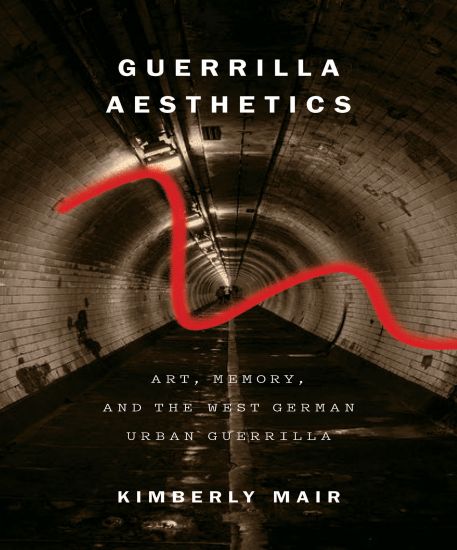
The violent operations performed in the 1970s by West German urban guerrillas - such as the Red Army Faction (RAF) - were so vivid and incomprehensible that it seemed to be more urgent to produce spectacle than to be politically successful. In Guerrilla Aesthetics, Kimberly Mair challenges the assumption that these guerrillas sought to realize specific political goals. Instead, she tracks the guerrilla fighters' plunge into an avant-garde-inspired negativity that rejected rationality and provoked the state. Focusing on the Red Decade of 1967 to 1977, which was characterized not only by terrorism and police brutality but also by counterculture aesthetics, Mair draws from archives, grey literatures, popular culture, art, and memorial and curatorial practices to explore the sensorial aspects of guerrilla communications performed by the RAF, as well as the 2nd of June Movement and the Socialist Patients' Collective. Turning to cultural and artistic responses to the decade and its legacy of raw public feelings, Mair also examines works by Eleanor Antin, Erin Cosgrove, Christoph Draeger, Bruce LaBruce, Gerhard Richter, and others. Reconsidering an enigmatic period in the history of terrorism, Guerrilla Aesthetics innovatively engages with the inherent connections between violence, performance, the senses, and memory.
Guerrilla Aesthetics

Guerrilla Aesthetics

Kimberly Mair

McGill-Queen's University Press
2016
nidottu
The violent operations performed in the 1970s by West German urban guerrillas - such as the Red Army Faction (RAF) - were so vivid and incomprehensible that it seemed to be more urgent to produce spectacle than to be politically successful. In Guerrilla Aesthetics, Kimberly Mair challenges the assumption that these guerrillas sought to realize specific political goals. Instead, she tracks the guerrilla fighters' plunge into an avant-garde-inspired negativity that rejected rationality and provoked the state. Focusing on the Red Decade of 1967 to 1977, which was characterized not only by terrorism and police brutality but also by counterculture aesthetics, Mair draws from archives, grey literatures, popular culture, art, and memorial and curatorial practices to explore the sensorial aspects of guerrilla communications performed by the RAF, as well as the 2nd of June Movement and the Socialist Patients' Collective. Turning to cultural and artistic responses to the decade and its legacy of raw public feelings, Mair also examines works by Eleanor Antin, Erin Cosgrove, Christoph Draeger, Bruce LaBruce, Gerhard Richter, and others. Reconsidering an enigmatic period in the history of terrorism, Guerrilla Aesthetics innovatively engages with the inherent connections between violence, performance, the senses, and memory.