

Kirjailija
Kindra M Austin
Kirjat ja teokset yhdessä paikassa: 7 kirjaa, julkaisuja vuosilta 2018-2021, suosituimpien joukossa I am a war.. Vertaile teosten hintoja ja tarkista saatavuus suomalaisista kirjakaupoista.
Mukana myös kirjoitusasut: Kindra M. Austin
7 kirjaa
Kirjojen julkaisuhaarukka 2018-2021.

Poetry comes in a myriad form. If your taste is melancholy, if you want your poetry to bleed, you'll need to get your hands on I Am A War.I Am A War is a collection of poems on loss, haunting, shrinking in the light, and then, despite yourself, growing.Intensely personal, these poems don't need to apologize for being rawer than sushi, deeper than any thrown stone, almost feral. They exist because shit happens and despite that, we survive. If you'd been through the same, you'd be trying to write like this, but it's not something just anyone can do. Kindra M. Austin can. Austin's uncompromising, unapologetic, direct style, belies her talent as a technically brilliant writer. She's intensely smart, and able to write in many different genres, but my personal favorite is when she puts all her varied abilities down and just writes her damn heart out. When you put love, loss and pain together and create a road, then along the way you will hear these poems, howled into the wind, blown like pollen through our souls, echoing the way memory does, when you need it to go and it never truly does. The reverse of love is hate, the reverse of love is alone. When you have love and lost, you contain within you, a mixture of resentment and loss, blended with an acute sense of being consciously alone. Only love can bring you back from the brink, but how can you ever trust again? And yet we do, we keep putting ourselves back together. Kindra M. Austin is a story teller in her poetry, she describes how we survive even when we think we aren't able to. Survival isn't always tidy, more often it's a dirty, ugly, screaming creature. Most of us run from the truth and cover it over with silence. A poet's role is to be that voice we all have in some form, to speak truths and not disguise it out of fear. In that sense, a poet is the bravest creature out there. The code of pain is a private affair, and maybe that's half the problem. We go around grieving with no way to get that grief OUT. Poetry has always been a realm for discovery and sharing experience, but even there, we excessively edit our realities. When a poet has the gravitas to defy that and cry out, we should all listen.Poets are often so easily dismissed when they stay in the safe zone. Austin has never been a safe writer, she may do that in her day-to-day, but as a writer, she'll take her beating heart out and offer you the gore. This isn't for pity, but to remind us all, pain leaves scars, tragedy doesn't go away after a day or two, life can be a bitter pill. Instead of negative, this reminds us why caring and giving a damn is so essential. The power of the female. The power of pain to transform. The necessity of going on the journey, bravely and without compromise. I don't want cold, life-less poetry. I want my poetry to steam and flinch on the plate I don't want poetry to tiptoe around, or fall asleep reading. I want poetry that will keep me awake, get me thinking, get me feeling. If I wanted something safe, I would read a Louise Hay book. I don't want to fix myself; I want to understand myself. Give me truth or let me die. I Am A War is in battle dress with strung bow. This is the only way I want my poetry.

Magpie Carey despises the lake; she only goes on the annual trip to Tawas for her mother's sake. It's been their tradition since Magpie's little sister, Renny, drowned in Lake Huron eight years ago at the age of ten. Magpie wishes her husband, Peter, would accompany her to Tawas, but for her own good, she must travel with her mother, alone.A detour lands the two in Lapeer, at Magpie's childhood home. The house is vacant, and Magpie is confronted with frightening memories of a childhood with the black naught, the sentinel being with non-eyes that had attached itself to her at the age of fifteen. She believes the black naught lived in her bedroom, but the being had been following her from place to place as she grew older. The black naught had been present when Magpie crashed her car in a street race at the age of eighteen. After she lost control and drove into a utility pole, Peter dragged her out of the car. Magpie reflects on her near death accident, and realizes Lynette was right-Magpie had been trying to outrun her grief by behaving dangerously.They arrive in Tawas, and Magpie's mother, Lynette, wants to pull over at a roadside park. An argument about Renny causes Lynette to walk off alone. Magpie "talks" to Renny about how the drowning, and how difficult it is to live without her. Magpie blames herself for her sister's death because she was supposed to be watching Renny, instead of flirting with a strange boy on the beach. Worried her mother had disappeared forever, Magpie began to search for Lynette. She finds her, and the two apologize to one another.Magpie and Lynette make it to the cabin on the lake. They have dinner together and talk about Lynette's alcoholism, and the importance of forgiveness. Lynette wants Magpie to forgive herself for Renny's death. After dinner, the two walk down to the lake, and Magpie feels she is being watched.Peter reveals that he is the black naught-an angel of death. It was Magpie who was supposed to drown, but the black naught fell in love with her the moment he first saw her. He struck a deal with Him, and collected Renny instead. The black naught was the boy Magpie had been flirting with while Renny drowned. Magpie falls asleep next to her mother, and Renny's ghost visits. Renny tells her sister that she must move on, and stop blaming herself for the drowning. In the morning, Magpie takes her mother to the marina to rent a boat. It is revealed that Lynette is actually dead. She takes the urn containing Lynette's ashes and scatters them in the lake, just like they'd done with Renny's ashes.Magpie returns to the lake one year later, pregnant with her first child. She writes a letter to her mother and sister to sink in the water-the beginning of a new tradition. The story ends with Peter holding his baby girl. He screams when he sees her eyes. His daughter was the final payment for all the deals he'd made with Him.
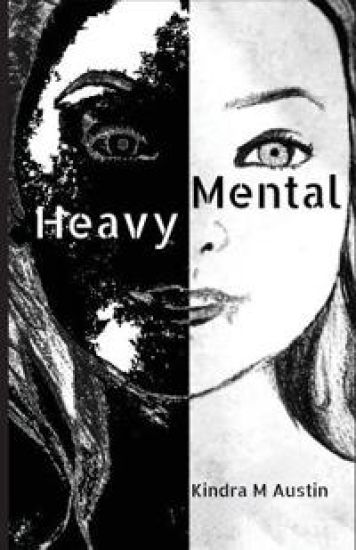
Heavy Mental is a eulogy of a life not yet fully lived, and it stands as a testament to life thus far through the pen of Austin, a writer of acute truth. You will not be able to handle some of it. It will sting. It will burn. It may even cause you to exclaim out loud. But stay with it. Follow her trail. Be loyal to her because she has literally pulled out her guts and heart and laid them carefully on white linen to bleed across these pages. If you cannot respect that, then do not read poetry like this; for this kind of poetry? This is what poetry was invented for. It is the poetry of the soul, lain bare and pulsing beneath our useless resuscitation. For nothing can keep it alive, except its own damn torment and will to endure.
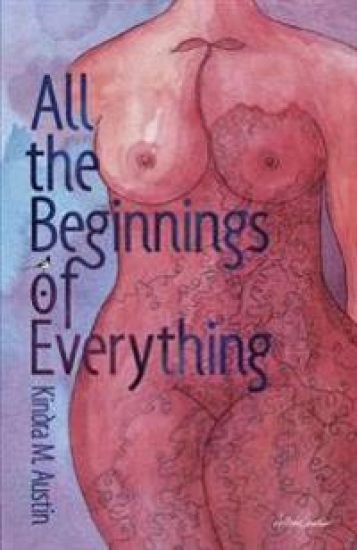
Poetry that explores death; grief; love; spiritualism; and self preservation.

TWELVE is the yearlong journey of my grief and healing expressed in poems and prose. While most pieces involve my mom directly, some are just byproducts of melancholy. But dark as my days have been, there is one who keeps me tethered to the light-you will know her influence in certain pieces; she reminds me to breathe on my worst days. And so I keep on digging into the pit of me-I know my truths deserve to be heard.In TWELVE, you'll feel the mourning of a daughter, the love of a mother, and the highs, lows, and plateaus that make the healing process an intricate one. Above all, you'll feel the steel of a woman determined to hold on to life. To quote The Crow, one of my favorite films: "It can't rain all the time."

Weeks before his wedding, a man is approached by his dying ex-flame, trying to make her peace with the inevitable, and turning his world upside down in the process. A story of "youth turning into middle age, infatuation becoming love, connections transforming to loyalty, and the fragility of life." (Candice Daquin, Indie Blue review)