Kirjojen hintavertailu. Mukana 12 390 323 kirjaa ja 12 kauppaa.

Kirjailija

Kisha G. Tracy

Kirjat ja teokset yhdessä paikassa: 7 kirjaa, julkaisuja vuosilta 2017-2026, suosituimpien joukossa Teaching the Once and Future Middle Ages. Vertaile teosten hintoja ja tarkista saatavuus suomalaisista kirjakaupoista.

7 kirjaa

Kirjojen julkaisuhaarukka 2017-2026.

Teaching the Once and Future Middle Ages

Teaching the Once and Future Middle Ages

Lucy C. Barnhouse; Matthew Baker; Esther Liberman Cuenca; Samantha Sagui; Kisha G. Tracy; Caroline Dunn; Ruma Salhi; Sarah Ifft Decker; Joshua Hevert; David Gyllenhaal; Hilary Rhodes; Shannen Hutton; Habib Al Badawi; John Terry; Rachel Talbert; Kerry Boeye; Whitney Leeson

BLOOMSBURY PUBLISHING PLC
2026
nidottu
On graduating high school, many American students believe that the Middle Ages was full of knights, war, all-powerful popes, and, if their content went beyond Europe, potentially an incredibly wealthy man named Mansa Musa, and a Mesoamerican ballgame. In this version of the past, medieval people were backward, dirty, and all believed the earth was flat. While people who work within this chronological time period recognize its complexity, most students are not exposed to the history of the middle ages until they take upper level or graduate classes at universities, if they ever get that far. Given recent national and international events, it is evident that leaving this complicated and nuanced history for so late in a person’s educational journey is doing a social as well as educational disservice. In a quest to help teachers remediate this problem, several scholars of the global Middle Ages and Medievalisms have written lesson guides to be used by teachers of World and United States history for grades six through twelve. the goal is to create a collection that a teacher would be able to implement in their classroom with minimal additional work.

Teaching the Once and Future Middle Ages

Teaching the Once and Future Middle Ages

Lucy C. Barnhouse; Matthew Baker; Esther Liberman Cuenca; Samantha Sagui; Kisha G. Tracy; Caroline Dunn; Ruma Salhi; Sarah Ifft Decker; Joshua Hevert; David Gyllenhaal; Hilary Rhodes; Shannen Hutton; Habib Al Badawi; John Terry; Rachel Talbert; Kerry Boeye; Whitney Leeson

BLOOMSBURY PUBLISHING PLC
2026
sidottu
On graduating high school, many American students believe that the Middle Ages was full of knights, war, all-powerful popes, and, if their content went beyond Europe, potentially an incredibly wealthy man named Mansa Musa, and a Mesoamerican ballgame. In this version of the past, medieval people were backward, dirty, and all believed the earth was flat. While people who work within this chronological time period recognize its complexity, most students are not exposed to the history of the middle ages until they take upper level or graduate classes at universities, if they ever get that far. Given recent national and international events, it is evident that leaving this complicated and nuanced history for so late in a person’s educational journey is doing a social as well as educational disservice. In a quest to help teachers remediate this problem, several scholars of the global Middle Ages and Medievalisms have written lesson guides to be used by teachers of World and United States history for grades six through twelve. the goal is to create a collection that a teacher would be able to implement in their classroom with minimal additional work.
The Ashgate Research Companion to Medieval Disability Studies
The questions posed by disability studies scholarship are increasingly of interest to medieval studies scholars and there have been a wealth of books published on the intersection of these two fields of research over the past two decades. More recently, medieval scholars have developed a framework for considering more specifically medieval ways of thinking about disability, analyzing the medieval conception of the different or ’othered’ body and thinking through ’medieval things’: such as the responses to injury and resulting impairment in contemporary law, literature, and art; the impaired body as a site for miraculous transformation; the presence of physical and mental difference in different cultural modes than exist in the modern world; and the role of theosophical thought in characterizing difference. This is the first volume to survey this field as a whole, bringing together the most notable scholars in the field alongside up-and-coming academics, to analyse recent studies and to suggest directions for future research. Chapters are organized into four categories that treat broadly the current questions of the field as they apply to each contributor’s area of expertise: Articulations of Difference; Critical Perspectives; Traditions of Medieval Thought; and Disability and Material Cultures. Each category is introduced by a leading figure in the field, and the volume is concluded with an Afterword.
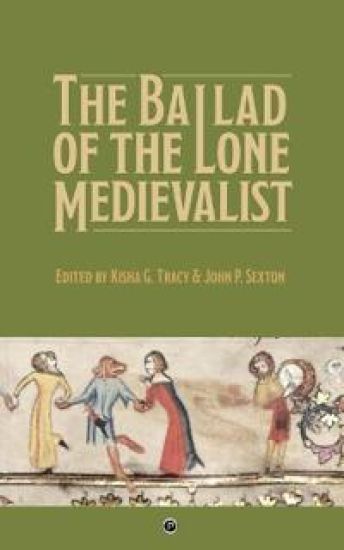
The Ballad of the Lone Medievalist

The Ballad of the Lone Medievalist

Kisha G. Tracy

Punctum Books
2018
nidottu
Working medievalists are often the only scholar of the Middle Ages in a department, a university, or a hundred-mile radius. While working to build a body of focused scholarly work, the lone medievalist is expected to be a generalist in the classroom and a contributing member of a campus community that rarely offers disciplinary community in return. As a result, overtasked and single medievalists often find it challenging to advocate for their work and field.As other responsibilities and expectations crowd in, we come to feel disconnected from the projects and subjects that sustain our intellectual passion. An insidious isolation even from one another creeps in, and soon, even attending a conference of fellow medievalists can become a lonely experience. Surrounded by scholars with greater institutional support, lower teaching loads, or more robust research agendas, we may feel alienated from our work - the work to which we've dedicated our careers.The Lone Medievalist (the collaborative community and the book) is intended as an antidote to the problem of professional isolation. It is offered in the spirit of common weal that marks the ideals (if not always the realities) of so many of the communities we study - agricultural, professional, national, notional, and of course, monastic. The Ballad of the Lone Medievalist isn't only about scholarship, or teaching, or institutional life, or the pursuit of new learning - it's about all of them.The essays in this volume address all aspects of the professional and intellectual life of medievalists. Though many of us acknowledge and address the challenges in being Lone Medievalists, these essays are not intended as voces clamantium; they are offered to provide strategies, camaraderie, and an occasional bit of inspiration. They are a call to action, a sharing of hard-won wisdom, and a helping hand - and, above all, a reminder that we are not alone.
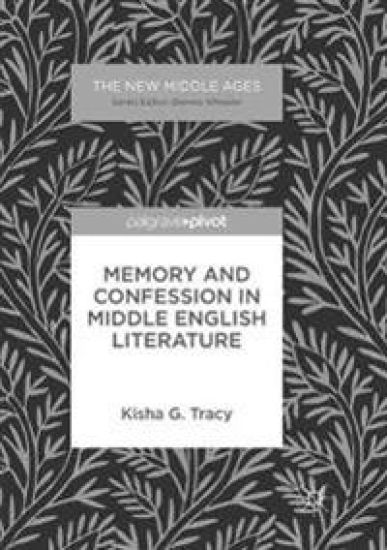
Memory and Confession in Middle English Literature

Memory and Confession in Middle English Literature

Kisha G. Tracy

Springer International Publishing AG
2018
nidottu
This book argues that the traditional relationship between the act of confessing and the act of remembering is manifested through the widespread juxtaposition of confession and memory in Middle English literary texts and, furthermore, that this concept permeates other manifestations of memory as written by authors in a variety of genres. This study, through the framework of confession, identifies moments of recollection within the texts of four major Middle English authors – Langland, Chaucer, Gower, and the Gawain-Poet – and demonstrates that these authors deliberately employed the devices of recollection and forgetfulness in order to indicate changes or the lack thereof, both in conduct and in mindset, in their narrative subjects. Memory and Confession in Middle English Literature explores memory’s connection to confession along with the recurring textual awareness of confession’s ability to transform the soul; demonstrating that memory and recollectionis used in medieval literature to emphasize emotional and behavioral change.
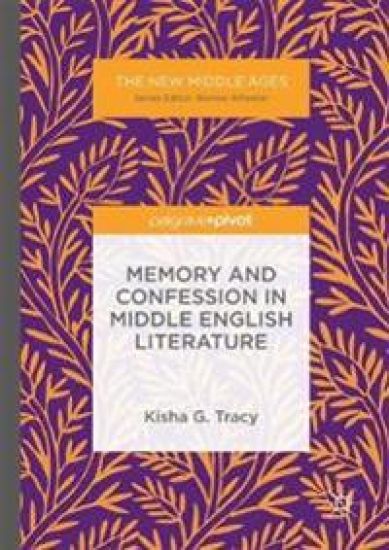
Memory and Confession in Middle English Literature

Memory and Confession in Middle English Literature

Kisha G. Tracy

Springer International Publishing AG
2017
sidottu
This book argues that the traditional relationship between the act of confessing and the act of remembering is manifested through the widespread juxtaposition of confession and memory in Middle English literary texts and, furthermore, that this concept permeates other manifestations of memory as written by authors in a variety of genres. This study, through the framework of confession, identifies moments of recollection within the texts of four major Middle English authors – Langland, Chaucer, Gower, and the Gawain-Poet – and demonstrates that these authors deliberately employed the devices of recollection and forgetfulness in order to indicate changes or the lack thereof, both in conduct and in mindset, in their narrative subjects. Memory and Confession in Middle English Literature explores memory’s connection to confession along with the recurring textual awareness of confession’s ability to transform the soul; demonstrating that memory and recollectionis used in medieval literature to emphasize emotional and behavioral change.