

Kirjailija
Kit Yates
Kirjat ja teokset yhdessä paikassa: 13 kirjaa, julkaisuja vuosilta 2020-2026, suosituimpien joukossa How to Expect the Unexpected: The Science of Making Predictions--And the Art of Knowing When Not to. Vertaile teosten hintoja ja tarkista saatavuus suomalaisista kirjakaupoista.
13 kirjaa
Kirjojen julkaisuhaarukka 2020-2026.
A Waterstones Best Popular Science Book of 2023'Delightfully clear and vivid to read...A splendid book! Philip Pullman'Absolutely fascinating' James O'Brien'An exceptional book - readable, funny and more needed than ever' Dr Chris van Tulleken, bestselling author of Ultra-Processed People· Are you more likely to become a professional footballer if your surname is Ball?· How can you be one hundred per cent sure you will win a bet?· Why did so many Pompeiians stay put while Mount Vesuvius was erupting?· How do you prevent a nuclear war?Ever since the dawn of human civilisation, we have been trying to make predictions about what's in store for us. We do this on a personal level, so that we can get on with our lives efficiently (should I hang my laundry out to dry, or will it rain?). But we also have to predict on a much larger scale, often for the good of our broader society (how can we spot economic downturns or prevent terrorist attacks?). For just as long, we have been getting it wrong. From religious oracles to weather forecasters, and from politicians to economists, we are subjected to poor predictions all the time. Our job is to separate the good from the bad. Unfortunately, the foibles of our own biology - the biases that ultimately make us human - can let us down when it comes to making rational inferences about the world around us. And that can have disastrous consequences.How to Expect the Unexpected will teach you how and why predictions go wrong, help you to spot phony forecasts and give you a better chance of getting your own predictions correct.


How to Expect the Unexpected: The Science of Making Predictions--And the Art of Knowing When Not to
Kit Yates
BASIC BOOKS
2023
sidottu
A "vivid, wide-ranging, and delightful guide" (bestselling author Tim Harford) for understanding how and why predictions go wrong, with practical tips to give you a better chance of getting them right How can you be 100 percent sure you will win a bet? Why did so many Pompeians stay put while Mount Vesuvius was erupting? Are you more likely to work in a kitchen if your last name is Baker? Ever since the dawn of human civilization, we have been trying to make predictions about what the world has in store for us. For just as long, we have been getting it wrong. In How to Expect the Unexpected, mathematician Kit Yates uncovers the surprising science that undergirds our predictions--and how we can use it to our advantage. From religious oracles to weather forecasters, and from politicians to economists, we are subjected to poor predictions all the time. Synthesizing results from math, biology, psychology, sociology, medicine, economic theory, and physics, Yates provides tools for readers to understand uncertainty and to recognize the cognitive biases that make accurate predictions so hard to come by. This book will teach you how and why predictions go wrong, help you to spot phony forecasts, and give you a better chance of getting your own predictions correct.
Matematikk er historien om verden rundt oss, og kunnskapen den gir oss kan være forskjellen mellom suksess og katastrofe, liv og død.Vi holder på med matematikk hele tiden, fra måten vi kommuniserer med hverandre til måten vi reiser på, fra hvordan vi jobber til hvordan vi slapper av. Mange av oss er klar over dette. Men få av oss setter virkelig pris på matematikkens fulle kraft – at den i stor grad påvirker oss ikke bare på kontoret og hjemme, men også i rettssaler og på sykehus.I denne øyeåpnende og ekstraordinære boken utforsker Yates de sanne historiene om hendelser der bruken - eller feil bruk - av matematikk har spilt en kritisk rolle: pasienter med genfeil og gründere som er slått konkurs på grunn av feil algoritmer; uskyldige ofre for misbruk av loven og ofrene for programvarefeil. Vi følger historier om investorer som har mistet formuer og foreldre som har mistet barn, alt sammen på grunn av matematiske misforståelser. Underveis utstyrer Yates oss med enkle matematiske regler og verktøy som kan hjelpe oss å ta bedre beslutninger i vårt stadig mer kvantitative samfunn. Du vil oppdage hvorfor det alltid er fornuftig å stille spørsmål ved en statistikk, at det ofte er viktig å be om en second opinion og noen ganger overraskende nyttig å holde seg til 37% regelen ...

A Waterstones Best Popular Science Book of 2023'Delightfully clear and vivid to read...A splendid book! Philip Pullman'Absolutely fascinating' James O'Brien'An exceptional book - readable, funny and more needed than ever' Dr Chris van Tulleken, bestselling author of Ultra-Processed People· Are you more likely to become a professional footballer if your surname is Ball?· How can you be one hundred per cent sure you will win a bet?· Why did so many Pompeiians stay put while Mount Vesuvius was erupting?· How do you prevent a nuclear war?Ever since the dawn of human civilisation, we have been trying to make predictions about what's in store for us. We do this on a personal level, so that we can get on with our lives efficiently (should I hang my laundry out to dry, or will it rain?). But we also have to predict on a much larger scale, often for the good of our broader society (how can we spot economic downturns or prevent terrorist attacks?). For just as long, we have been getting it wrong. From religious oracles to weather forecasters, and from politicians to economists, we are subjected to poor predictions all the time. Our job is to separate the good from the bad. Unfortunately, the foibles of our own biology - the biases that ultimately make us human - can let us down when it comes to making rational inferences about the world around us. And that can have disastrous consequences.How to Expect the Unexpected will teach you how and why predictions go wrong, help you to spot phony forecasts and give you a better chance of getting your own predictions correct.

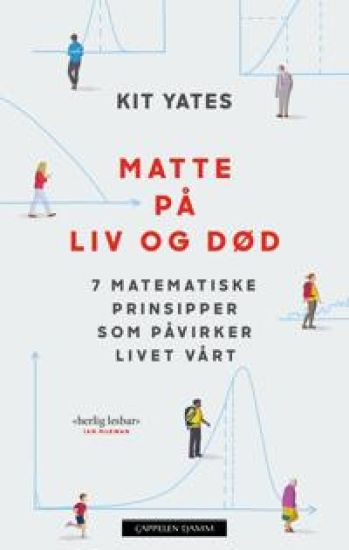
Matematikk er historien om verden rundt oss, og kunnskapen den gir oss kan være forskjellen mellom suksess og katastrofe, liv og død.Vi holder på med matematikk hele tiden, fra måten vi kommuniserer med hverandre til måten vi reiser på, fra hvordan vi jobber til hvordan vi slapper av. Mange av oss er klar over dette. Men få av oss setter virkelig pris på matematikkens fulle kraft – at den i stor grad påvirker oss ikke bare på kontoret og hjemme, men også i rettssaler og på sykehus.I denne øyeåpnende og ekstraordinære boken utforsker Yates de sanne historiene om hendelser der bruken - eller feil bruk - av matematikk har spilt en kritisk rolle: pasienter med genfeil og gründere som er slått konkurs på grunn av feil algoritmer; uskyldige ofre for misbruk av loven og ofrene for programvarefeil. Vi følger historier om investorer som har mistet formuer og foreldre som har mistet barn, alt sammen på grunn av matematiske misforståelser. Underveis utstyrer Yates oss med enkle matematiske regler og verktøy som kan hjelpe oss å ta bedre beslutninger i vårt stadig mer kvantitative samfunn. Du vil oppdage hvorfor det alltid er fornuftig å stille spørsmål ved en statistikk, at det ofte er viktig å be om en second opinion og noen ganger overraskende nyttig å holde seg til 37% regelen ...
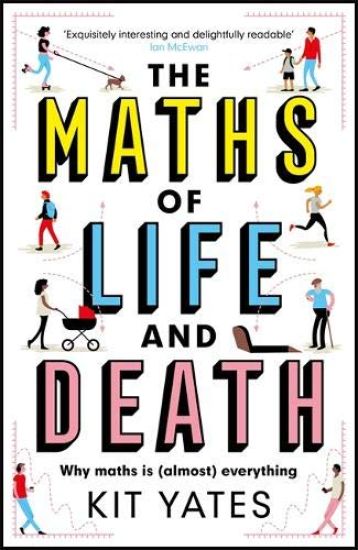
Maths underpins nearly everything we do, but few of us know that it is often a matter of life and death.

The Math of Life and Death: 7 Mathematical Principles That Shape Our Lives
Kit Yates
Scribner Book Company
2021
nidottu
Brilliant and entertaining mathematician Kit Yates illuminates seven mathematical concepts that shape our daily lives. From birthdays to birth rates to how we perceive the passing of time, mathematical patterns shape our lives. But for those of us who left math behind in high school, the numbers and figures we encounter as we go about our days can leave us scratching our heads, feeling as if we're fumbling through a mathematical minefield. In this eye-opening and "welcome addition to the math-for-people-who-hate-math" (Kirkus Reviews), Kit Yates illuminates hidden principles that can help us understand and navigate the chaotic and often opaque surfaces of our world. In The Math of Life and Death, Yates takes us on a "dizzying, dazzling" (Nature) tour of everyday situations and grand-scale applications of mathematical concepts, including exponential growth and decay, optimization, statistics and probability, and number systems. Along the way he reveals the mathematical undersides of controversies over DNA testing, Ponzi schemes, viral marketing, and historical events such as the Chernobyl disaster and the Amanda Knox trial. Readers will finish this book with an enlightened perspective on the news, the law, medicine, and history, and will be better equipped to make personal decisions and solve problems with math in mind, whether it's choosing the shortest checkout line at the grocery store or halting the spread of a deadly disease.

The Math of Life and Death: 7 Mathematical Principles That Shape Our Lives
Kit Yates
Scribner Book Company
2020
sidottu
A brilliant and entertaining mathematician illuminates seven mathematical principles that shape our lives. "Kit Yates shows how our private and social lives are suffused by mathematics. Ignorance may bring tragedy or farce. This is an exquisitely interesting book. It's a deeply serious one too and, for those like me who have little math, it's delightfully readable." --Ian McEwan, author of Atonement "Kit Yates is a natural storyteller. Through fascinating stories and examples, he shows how maths is the beating heart of so much of modern life. An exciting new voice in the world of science communication." --Marcus du Sautoy, author of The Music of the Primes From birthdays to birth rates to how we perceive the passing of time, mathematical patterns shape our lives. But for those of us who left math behind in high school, the numbers and figures hurled at us as we go about our days can sometimes leave us scratching our heads and feeling as if we're fumbling through a mathematical minefield. In this eye-opening and extraordinarily accessible book, mathemati-cian Kit Yates illuminates hidden principles that can help us understand and navigate the chaotic and often opaque surfaces of our world. In The Math of Life and Death, Yates takes us on a fascinating tour of everyday situations and grand-scale applications of mathematical concepts, including exponential growth and decay, optimization, statistics and probability, and number systems. Along the way he reveals the mathematical undersides of controversies over DNA testing, medical screening results, and historical events such as the Chernobyl disaster and the Amanda Knox trial. Readers will finish this book with an enlightened perspective on the news, the law, medicine, and history, and will be better equipped to make personal decisions and solve problems with math in mind, whether it's choosing the shortest checkout line at the grocery store or halting the spread of a deadly disease.