Kirjojen hintavertailu. Mukana 12 390 323 kirjaa ja 12 kauppaa.

Kirjailija

Klaus Biesenbach

Kirjat ja teokset yhdessä paikassa: 7 kirjaa, julkaisuja vuosilta 2006-2023, suosituimpien joukossa Yoko Ono. Vertaile teosten hintoja ja tarkista saatavuus suomalaisista kirjakaupoista.

7 kirjaa

Kirjojen julkaisuhaarukka 2006-2023.

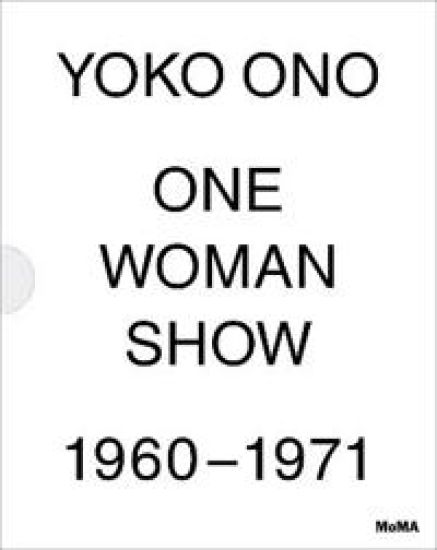
Yoko Ono

Yoko Ono

Klaus Biesenbach; Christophe Cherix

Museum of Modern Art
2015
nidottu
Yoko Ono: One Woman Show, 1960–1971 examines the beginnings of Ono’s extensive career, demonstrating her pioneering role in visual art, performance and music during the 1960s and early 1970s. The exhibition begins in New York in December 1960, where Ono initiated a performance series with La Monte Young in her Chambers Street loft. Over the course of the decade, Ono earned international recognition, staging Cut Piece in Tokyo and Kyoto in 1964, exhibiting at the Indica Gallery in London in 1966, and launching her global War is Over! campaign in 1969. Ono returned to New York in the early 1970s and organized an unsanctioned ‘one woman show’ at The Museum of Modern Art. Over forty years after Ono’s unofficial MoMA debut, the Museum will present its first exhibition dedicated exclusively to the artist’s work. The publication evaluates the broader cultural context of Ono’s early work and features five sections reflecting her geographic locations during this period and the corresponding evolution of her artistic practice. Each chapter includes an introduction written by a guest scholar, artwork descriptions, new interviews with key figures from the time, and a selection of primary documents culled from newspapers, magazines and journals.
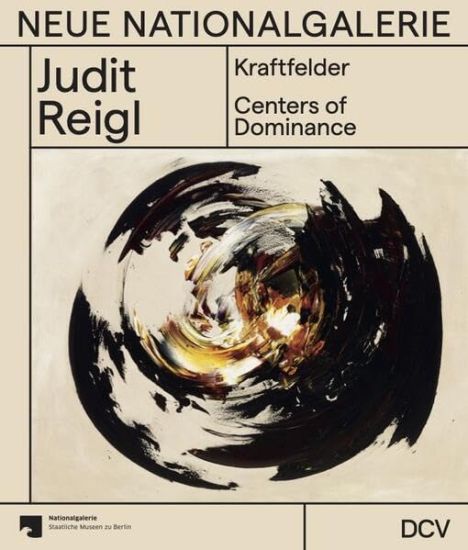
Judit Reigl - Kraftfelder / Centers of Dominance

Judit Reigl - Kraftfelder / Centers of Dominance

Klaus Biesenbach; Maike Steinkamp

DCV
2023
sidottu
Beginning in the 1950s, Judit Reigl (b. Kapuv r, Hungary, 1923; d. Marcoussis, France, 2020) builds a singular creative oeuvre between abstraction and figuration, between Surrealism and gestural painting. After studying art in Budapest, Reigl flees Hungary in 1950; arriving in Paris, she is introduced to Andr Breton, who organizes her first exhibition in 1954. Under the influence of the cole de Paris, she branches out into criture automatique, then shifts toward free expression. Like her contemporaries Jackson Pollock and Helen Frankenthaler in New York, she lays out ever larger unprimed canvases on the floor and works them with a brush, her fingers, or other instruments. After 1966, bodily shapes emerge from her abstractions, and figures reappear in the pictures. On occasion of Reigl's centenary and the gift of three major works, the Neue Nationalgalerie mounts the artist's first solo exhibition at a museum in Germany. The book surveys the oeuvre of one of the most important protagonists of European art in the second half of the twentieth century.
Samara Golden: The Flat Side of the Knife
Los Angeles–based artist Samara Golden (born 1973) creates immersive installations that explore what she calls the sixth dimension, where a multitude of pasts, presents and futures exist concurrently. For The Flat Side of the Knife, curated by Mia Locks and organized by MoMA PS1, Golden presented her largest installation to date, filling the double height of MoMA PS1’s Duplex Gallery with staircases, beds, couches, lamps, musical instruments, video and sound. The Flat Side of the Knife combines physical spaces with illusory spaces that appear only in mirrors, akin to psychological and hallucinatory spaces in the mind. Her use of mirrors in conjunction with sculptural elements made from a silvery insulation board allows the illusion of space to expand in multiple directions. This catalogue includes documentation of this exhibition alongside the artist’s major works to date.
Christoph Schlingensief

Christoph Schlingensief

Klaus Biesenbach; Chris Dercon; Anna-Catherina Gebbers

Verlag der Buchhandlung Walther Konig
2013
nidottu
Christoph Schlingensief (1960-2010) was a German film and theatre director, actor, artist and author. Starting as an independent underground filmmaker, Schlingensief later began staging productions for theatres and festivals, which often were accompanied by public controversies. Edited by his friends and associates Klaus Biesenbach, Anna-Catharina Gebbers, Aino Laberenz and Susanne Pfeffer, Christoph Schlingensief is an overview of the artist's works that includes over 500 pages of photographs from Schlingensief's films, plays and projects. In the preface the publication, the editors write: "Just how far ahead of his time Christoph Schlingensief was with regard to artistic, political and social themes and subjects is evident only in retrospect ... He still challenges and overwhelms viewers with his overflowing images, his deliberate confusion of fact and imagination, and the sociopolitical volatility of the issues he tackles."
September 11

September 11

Klaus Biesenbach; Alexander Kluge

P.S.1 Contemporary Art Center
2011
pokkari
The attacks of September 11, 2001 were among the most pictured disasters in history, yet they remain, a decade later, underrepresented in cultural discourse--particularly within the realm of contemporary art. Responding to these conditions, MoMA PS1 curator Peter Eleey brings together more than 70 works by 41 artists--many made prior to 9/11--to explore the attacks’ enduring resonance. Eschewing both images of the event itself and art made directly in response, the exhibition and its accompanying catalogue provide a subjective framework within which to reflect upon the attacks and their aftermath, and explore the ways that they have altered how we see and experience the world in their wake. Opening on the tenth anniversary of the attacks, September 11 includes works by Diane Arbus, John Chamberlain, Bruce Conner, Christo, Ellsworth Kelly, Mary Lucier, Stephen Vitiello and others.
Douglas Gordon: Timeline

Douglas Gordon: Timeline

Klaus Biesenbach

Museum of Modern Art
2006
sidottu
A collaboration with Gordon; a collection of images and texts from the past forty years that deal with the idea of visual memory, shared visual knowledge and the interwoven texture of imagined and remembered sounds and images. Also explores the relationship between film and psychoanalysis, and the way these systems of thought have affected the idea of individual biography.