Kirjojen hintavertailu. Mukana 12 595 353 kirjaa ja 12 kauppaa.
Kirjailija
Klaus Mainzer
Kirjat ja teokset yhdessä paikassa: 27 kirjaa, julkaisuja vuosilta 1988-2026, suosituimpien joukossa Künstliche Intelligenz – Wann übernehmen die Maschinen?. Vertaile teosten hintoja ja tarkista saatavuus suomalaisista kirjakaupoista.
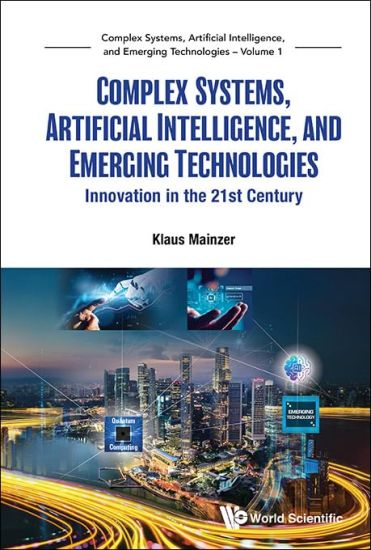
This book is the opening volume of an interdisciplinary series exploring the dynamic intersection of complex systems, artificial intelligence (AI), and emerging technologies. As AI-driven solutions become essential for handling vast and ever-growing data sets, innovation in computing technologies is crucial. At the same time, sustainability and resource limitations must be addressed.Bringing together classic digitalization, neuromorphic computing, quantum technologies, and the latest breakthroughs in generative AI (e.g., ChatGPT, Deepseek), this book examines the evolving innovation portfolio that shapes the future of AI and computing. It highlights the balance between digital and analog technologies, advocating for a hybrid IT and AI approach geared toward efficiency and sustainability.Rooted in decades of research on complex systems and AI, this volume sets the stage for a broader discussion on strategic innovation, offering insights into the evolving technological landscape and its impact on society.
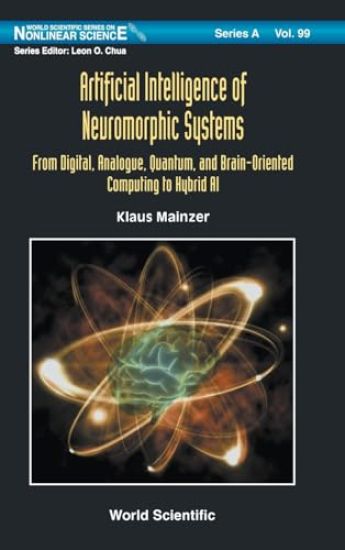
This book argues for neuromorphic systems as a technology of the future, which are oriented towards the energy efficiency of natural brains. Energy efficiency is a dramatic claim in times of environmental and climate challenges which should consider the sustainability goals of the United Nations (UN). Mathematically, neuromorphic computing is connected to analogue ('real') computing, which theoretically overcomes the limits of digital Turing computability. Therefore, the book also considers material sciences and engineering sciences which start to realize neuromorphic computing in hardware. Other mathematical formalisms such as quantum mechanics also open up new solutions (e.g., quantum computing) beyond the limits of digital Turing computability. These research fields are no longer merely of theoretical interest, they promise increasing innovation power of market interest. Nevertheless, neuromorphic computing is connected with deep logical, mathematical, and epistemic questions. Does it open new avenues to Artificial General Intelligence (AGI)? All these tendencies of research and innovation demonstrate that we need more integrated research in the foundations of logic, mathematics, physics, engineering sciences, cognitive science, and philosophy. The book is a plea for this kind of research.
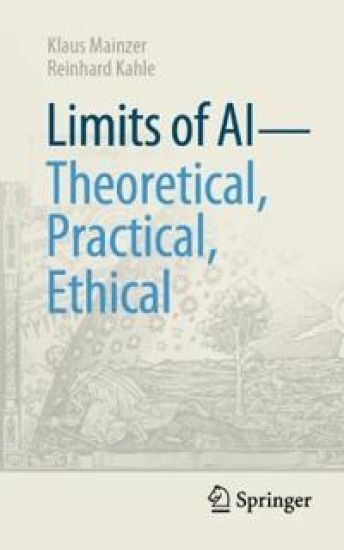
Artificial intelligence is a key technology with great expectations in science, industry, and everyday life. This book discusses both the perspectives and the limitations of this technology. This concerns the practical, theoretical, and conceptual challenges that AI has to face. In an early phase of symbolic AI, AI focused on formal programs (e.g., expert systems), in which rule-based knowledge was processed with the help of symbolic logic. Today, AI is dominated by statistics-based machine learning methods and Big Data. While this sub-symbolic AI is extremely successful (e.g., chatbots like ChatGPT), it is often not transparent. The book argues for explainable and reliable AI, in which the logical and mathematical foundations of AI-algorithms become understandable and verifiable.
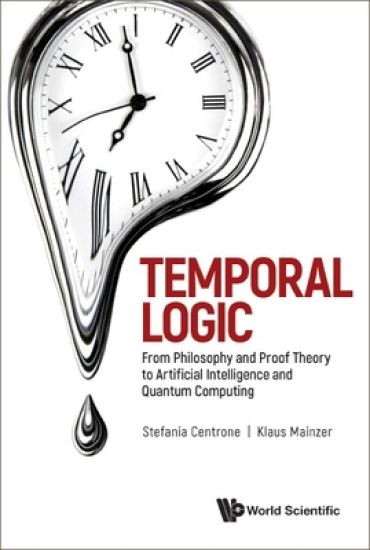
Calculi of temporal logic are widely used in modern computer science. The temporal organization of information flows in the different architectures of laptops, the Internet, or supercomputers would not be possible without appropriate temporal calculi. In the age of digitalization and High-Tech applications, people are often not aware that temporal logic is deeply rooted in the philosophy of modalities. A deep understanding of these roots opens avenues to the modern calculi of temporal logic which have emerged by extension of modal logic with temporal operators. Computationally, temporal operators can be introduced in different formalisms with increasing complexity such as Basic Modal Logic (BML), Linear-Time Temporal Logic (LTL), Computation Tree Logic (CTL), and Full Computation Tree Logic (CTL*). Proof-theoretically, these formalisms of temporal logic can be interpreted by the sequent calculus of Gentzen, the tableau-based calculus, automata-based calculus, game-based calculus, and dialogue-based calculus with different advantages for different purposes, especially in computer science.The book culminates in an outlook on trendsetting applications of temporal logics in future technologies such as artificial intelligence and quantum technology. However, it will not be sufficient, as in traditional temporal logic, to start from the everyday understanding of time. Since the 20th century, physics has fundamentally changed the modern understanding of time, which now also determines technology. In temporal logic, we are only just beginning to grasp these differences in proof theory which needs interdisciplinary cooperation of proof theory, computer science, physics, technology, and philosophy.
Auf dem Hintergrund der aktuellen politischen, wirtschaftlichen und militärischen Weltlage wird deutlich, woran es in der jüngsten Vergangenheit gravierend mangelte – an strategischem Denken. Der Schlüssel zu einer gelungenen Strategie für Europa heißt Innovation. Der Druck der gegenwärtigen Krisen sollte genutzt werden, um beschleunigt in nachhaltige Innovationen umzusteigen. So soll das eigentliche große Menschheitsproblem gelöst werden – die globale Umwelt- und Klimakrise. Es darf dabei allerdings nicht auf eine einzige Lösung gesetzt werden, sondern es muss das gesamte technologische Potential in einem Innovationsportfolio gebündelt werden. Dazu müssen für Europa Vor- und Nachteile von z.B. Solar- und Windenergie, Wasserkraft, Wasserstoff, Kern- und Fusionsenergie gegeneinander abgewogen und in einem „hybriden“ Energiesystem miteinander verbunden werden, um das europäische Innovationsportfolio auf eine nachhaltige Zukunft auszurichten.Wie in der Energiefrage darf auch bei der Digitalisierung und Künstlichen Intelligenz nicht auf eine einzige Lösung gesetzt werden, sondern muss das gesamte technologische Potential in einem Innovationsportfolio gebündelt werden, um energieeffizient und nachhaltig zu sein. Im Wettkampf der Wertsysteme sollte sich Europa durch demokratische Rechtssicherheit auszeichnen.
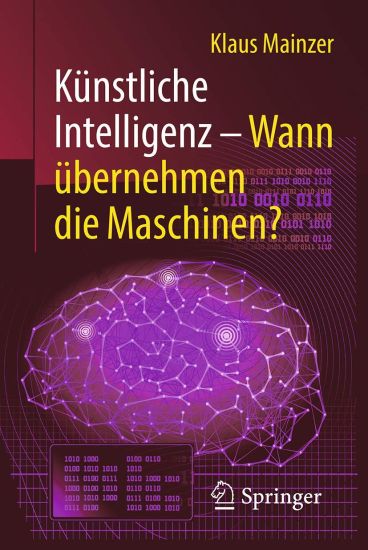
Künstliche Intelligenz ist eine Schlüsseltechnologie, mit der sowohl in der Wissenschaft als auch in der Industrie große Erwartungen verbunden sind. In diesem Buch werden sowohl die Perspektiven als auch die Grenzen dieser Technologie diskutiert. Das betrifft die praktischen, theoretischen und konzeptionellen Herausforderungen, denen sich die KI stellen muss. In einer Frühphase standen in der KI Expertensysteme im Vordergrund, bei denen mit Hilfe symbolischer Datenverarbeitung regelbasiertes Wissen verarbeitet wurde. Heute wird die KI von statistik-basierten Methoden im Bereich des maschinellen Lernens beherrscht. Diese subsymbolische KI wird an den Lehren, die aus der Frühphase der KI gezogen werden können, gemessen. Als Ergebnis wird vor allem für eine hybride KI argumentiert, die die Potentiale beider Ansätze zur Entfaltung bringen kann.
Die Quantenwelt ist längst im Alltag angekommen, ohne dass es vielen bewusst ist. Dazu gehören Transistoren, Dioden und Laser, die aus Alltagsgeräten nicht mehr fortzudenken sind. Nach dieser ersten Generation der Quantentechnologien leben wir derzeit in der zweiten Generation, in der Grundprinzipien der Quantenmechanik gezielt in quantenmechanischen Geräten umgesetzt werden. Dazu gehören erste Prototypen von Quantencomputern, klassische Supercomputer mit Quantensimulation, Quantenkryptographie und Quantenkommunikation, Quantensensorik und Quantenmesstechnik. Was Einstein 1935 als spukhafter Effekt vorkam, ist längst Grundlage umwälzender Quantenkommunikation in Glasfasernetzen und Satellitentechnik, die ein zukünftiges Quanteninternet ankündigt. Quantencomputer als Mehrzweckrechner sind nur die Spitze des Eisbergs mit einer Technologie, die sich schrittweise als Netzwerk unserer Zivilisation ausbreitet. Umso dringender ist es, die Grundlagen der Quantenwelt als Hintergrund dieser Technologie zu verstehen. Grundlagen und Zusammenhänge begreifen, von den mathematischen und physikalischen Grundlagen bis zu den technischen Anwendungen, ist ein zentrales Ziel des Buchs. Ein weiteres Anliegen dieses Buchs ist das Zusammenwachsen mit der Künstlichen Intelligenz. In meinem Buch „Künstliche Intelligenz. Wann übernehmen die Maschinen?“ (Springer 2. Aufl. 2019) wird Machine learning herausgestellt, das Automatisierung in Robotik, Industrie- und Arbeitswelt verwirklicht. Mit Quantentechnologie, Quantencomputer und künstlicher Intelligenz zeichnet sich aber nicht nur eine Potenzierung neuer Möglichkeiten ab, sondern auch von Gefährdungen. Daher erhebt sich die Forderung nach frühzeitiger Technikgestaltung, damit Quantentechnologie und Künstliche Intelligenz sich als Dienstleistung in der Gesellschaft bewähren.
Blick ins Buch Unter Hochdruck wird auf der ganzen Welt nach einem Impfstoff gegen das neue Corona-Virus gesucht. Die Bioinformatik spielt dabei eine gro e Rolle. Denn auch die molekulare Struktur eines Virus l sst sich in einem pr zisen Sinn als eine informationsverarbeitende Maschine verstehen, die auf einem Computer simuliert werden kann. In einem neuen Kapitel zu "Bioinformatik - Schl ssel zum Kode des Lebens" zeigt Klaus Mainzer, dass durch eine Zusammenf hrung von Bioinformatik, Machine Learning, KI-Forschung und Big Data die Frage, wie Algorithmen helfen k nnen, Sars-CoV-2 zu entschl sseln und auszuschalten und - dar ber hinaus - auch die evolution ren Gesetze erkannt werden k nnen, nach denen Viren mutieren: So k nnte es mittelfristig gelingen, kommende Pandemien zu antizipieren und gleich bei ihrem Auftreten zu bek mpfen. Mit einem solchen Forschungsprogramm sind auch wichtige Fragen von Ethik und Recht ber hrt: Wie bleiben wir Menschen Ma stab der Technik?
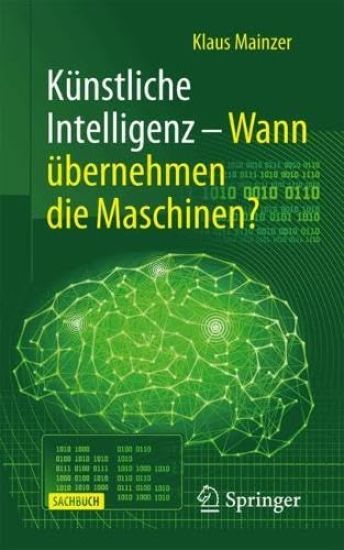
Everybody knows them. Smartphones that talk to us, wristwatches that record our health data, workflows that organize themselves automatically, cars, airplanes and drones that control themselves, traffic and energy systems with autonomous logistics or robots that explore distant planets are technical examples of a networked world of intelligent systems. Machine learning is dramatically changing our civilization. We rely more and more on efficient algorithms, because otherwise we will not be able to cope with the complexity of our civilizing infrastructure. But how secure are AI algorithms? This challenge is taken up in the 2nd edition: Complex neural networks are fed and trained with huge amounts of data (big data). The number of necessary parameters explodes exponentially. Nobody knows exactly what is going on in these "black boxes". In machine learning we need more explainability and accountability of causes and effects in order to be able to decide ethicaland legal questions of responsibility (e.g. in autonomous driving or medicine)! Besides causal learning, we also analyze procedures of tests and verification to get certified AI-programs. Since its inception, AI research has been associated with great visions of the future of mankind. It is already a key technology that will decide the global competition of social systems. "Artificial Intelligence and Responsibility" is another central supplement to the 2nd edition: How should we secure our individual liberty rights in the AI world? This book is a plea for technology design: AI must prove itself as a service in society.
Jeder kennt sie. Smartphones, die mit uns sprechen, Armbanduhren, die unsere Gesundheitsdaten aufzeichnen, Arbeitsabläufe, die sich automatisch organisieren, Autos, Flugzeuge und Drohnen, die sich selber steuern, Verkehrs- und Energiesysteme mit autonomer Logistik oder Roboter, die ferne Planeten erkunden, sind technische Beispiele einer vernetzten Welt intelligenter Systeme. Machine Learning verändert unsere Zivilisation dramatisch. Wir verlassen uns immer mehr auf effiziente Algorithmen, weil die Komplexität unserer zivilisatorischen Infrastruktur sonst nicht zu bewältigen ist. Aber wie sicher sind KI-Algorithmen? Diese Herausforderung wird in der 2.Auflage aufgegriffen: Komplexe neuronale Netze werden mit riesigen Datenmengen (Big Data) gefüttert und trainiert. Die Anzahl der dazu notwenigen Parameter explodiert exponentiell. Niemand weiß genau, was sich in diesen „Black Boxes“ im Einzelnen abspielt. Im Machine Learning benötigen wir mehr Erklärung (explainability) und Zurechnung (accountability) von Ursachen und Wirkungen, um ethische und rechtliche Fragen der Verantwortung (z.B. beim autonomen Fahren oder in der Medizin) entscheiden zu können! Seit ihrer Entstehung ist die KI-Forschung mit großen Visionen über die Zukunft der Menschheit verbunden. Sie ist bereits eine Schlüsseltechnologie, die den globalen Wettstreit der Gesellschaftssysteme entscheiden wird. „Künstliche Intelligenz und Verantwortung“ ist eine weitere zentrale Ergänzung der 2. Auflage: Wie sollen wir unsere individuellen Freiheitsrechte in der KI-Welt sichern? Dieses Buch ist ein Plädoyer für Technikgestaltung: KI muss sich als Dienstleistung in der Gesellschaft bewähren.
Klaus Mainzer legt in diesem essential dar, dass die Zukunft von KI und Digitalisierung eine nüchterne Analyse erfordert, die Grundlagenforschung mit Anwendung verbindet. Berechenbarkeits- und Beweistheorie können dazu beitragen, Big Data und Machine Learning sicherer zu bewältigen. Dabei zeigt sich, dass die komplexen Herausforderungen der digitalen und analogen Welt in Grundlagenfragen der Mathematik, Informatik und Philosophie tief verwurzelt sind.
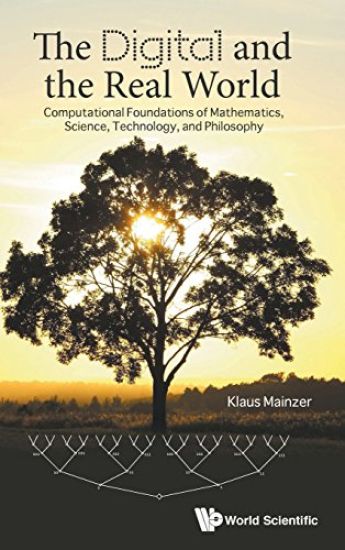
In the 21st century, digitalization is a global challenge of mankind. Even for the public, it is obvious that our world is increasingly dominated by powerful algorithms and big data. But, how computable is our world? Some people believe that successful problem solving in science, technology, and economies only depends on fast algorithms and data mining. Chances and risks are often not understood, because the foundations of algorithms and information systems are not studied rigorously. Actually, they are deeply rooted in logics, mathematics, computer science and philosophy.Therefore, this book studies the foundations of mathematics, computer science, and philosophy, in order to guarantee security and reliability of the knowledge by constructive proofs, proof mining and program extraction. We start with the basics of computability theory, proof theory, and information theory. In a second step, we introduce new concepts of information and computing systems, in order to overcome the gap between the digital world of logical programming and the analog world of real computing in mathematics and science. The book also considers consequences for digital and analog physics, computational neuroscience, financial mathematics, and the Internet of Things (IoT).
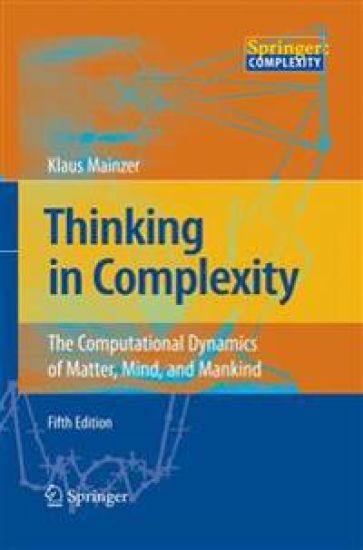
The theory of nonlinear, complex systems has become by now a proven problem-solving approach in the natural sciences. And it is now also recognized that many if not most of our social, ecological, economical and political problems are essentially of a global, complex and nonlinear nature. And it is now further accepted than any holistic perspective of the human mind and brain can hardly be achieved by any other approach. In this wide-ranging, scholarly but very concise treatment, physicist, computer scientist and philosopher Klaus Mainzer discusses, in essentially nontechnical language, the common framework behind these ideas and challenges. Emphasis is given to the evolution of new structures in natural and cultural systems and we are lead to see clearly how the new integrative approach can give insights not available from traditional reductionistic methods. The fifth edition enlarges and revises almost all sections and supplements an entirely new chapter on the complexity of economic systems. From the reviews of the fourth edition: "… this highly recommended book is a wonderful resource for intuitive basic ideas in the need of rigorous formulation." (Albert A. Mullin, Zentralblatt MATH)
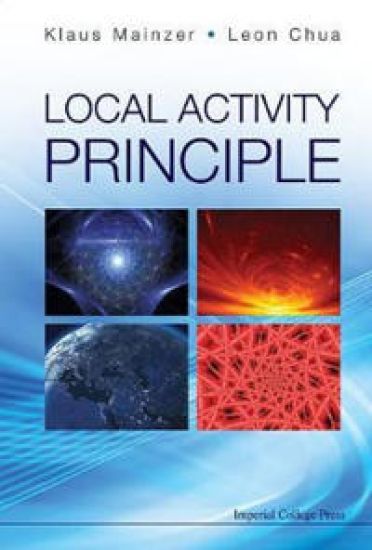
The principle of local activity explains the emergence of complex patterns in a homogeneous medium. At first defined in the theory of nonlinear electronic circuits in a mathematically rigorous way, it can be generalized and proven at least for the class of nonlinear reaction-diffusion systems in physics, chemistry, biology, and brain research. Recently, it was realized by memristors for nanoelectronic device applications. In general, the emergence of complex patterns and structures is explained by symmetry breaking in homogeneous media, which is caused by local activity. This book argues that the principle of local activity is really fundamental in science, and can even be identified in quantum cosmology as symmetry breaking of local gauge symmetries generating the complexity of matter and forces in our universe. Applications are considered in economic, financial, and social systems with the emergence of equilibrium states, symmetry breaking at critical points of phase transitions and risky acting at the edge of chaos.
This Brief is an essay at the interface of philosophy and complexity research, trying to inspire the reader with new ideas and new conceptual developments of cellular automata. Going beyond the numerical experiments of Steven Wolfram, it is argued that cellular automata must be considered complex dynamical systems in their own right, requiring appropriate analytical models in order to find precise answers and predictions in the universe of cellular automata.Indeed, eventually we have to ask whether cellular automata can be considered models of the real world and, conversely, whether there are limits to our modern approach of attributing the world, and the universe for that matter, essentially a digital reality.
chapter 1 Time in the Classical and Medieval Worldviews From the Beginnings to the Pre-Socratic School Zeno's Time Arrow and Aristotle's Continuum 6 Time and Creation According to Saint Augustine 15 Time and Medieval Astronomy 18 20 Calendars and Clocks chapter 2 Time in the Worldview of Classical Physics 25 Absolute Time According to Newton 26 Relational Time According to Leibniz 30 Time in Classical Mechanics 31 Time in Kant's Epistemology 35 chapter 3 Relativistic Spacetime 43 Time in Special Relativity Theory 44 Time in General Relativity Theory 50 Time in Relativistic Cosmology 54 chapter 4 Time and the Quantum World 61 Time in Quantum Mechanics 62 Time in Quantum Field Theories 70 Time, Black Holes, and the Anthropic Principle 78 Time and Thermodynamics chapter 5 83 Time in Equilibrium Thermodynamics 84 Time in Nonequilibrium Thermodynamics 2 9 Time, Irreversibility, and Self-Organization 100 chapter 6 Time and Life 107 Time in Darwin's Theory of Evolution 108 Time in Molecular Evolution 111 Time Hierarchies and Biological Rhythms 117 chapter 7 Time and Consciousness 121 Temporal Rhythms and Brain Physiology 122 The Experience of Time and the Emergence of Consciousness 124 Computation Time and Artificial Intelligence 128 chapter 8 Time in History and Culture 137 Time in Historical Cultures 138 Time in Technological-Industrial Cultures 144 The Time Horizon of the Technological World and the Philosophy of Time 152 Further Reading 161 Index 167 Acknowledgments The Little Book of Time was inspired by my research in
The theory of nonlinear, complex systems has become by now a proven problem-solving approach in the natural sciences. And it is now also recognized that many if not most of our social, ecological, economical and political problems are essentially of a global, complex and nonlinear nature. And it is now further accepted than any holistic perspective of the human mind and brain can hardly be achieved by any other approach. In this wide-ranging, scholarly but very concise treatment, physicist, computer scientist and philosopher Klaus Mainzer discusses, in essentially nontechnical language, the common framework behind these ideas and challenges. Emphasis is given to the evolution of new structures in natural and cultural systems and we are lead to see clearly how the new integrative approach can give insights not available from traditional reductionistic methods. The fifth edition enlarges and revises almost all sections and supplements an entirely new chapter on the complexity of economic systems. From the reviews of the fourth edition: "… this highly recommended book is a wonderful resource for intuitive basic ideas in the need of rigorous formulation." (Albert A. Mullin, Zentralblatt MATH)
Cosmic evolution leads from symmetry to complexity by symmetry breaking and phase transitions. The emergence of new order and structure in nature and society is explained by physical, chemical, biological, social and economic self-organization, according to the laws of nonlinear dynamics. All these dynamical systems are considered computational systems processing information and entropy. Are symmetry and complexity only useful models of science or are they universals of reality? Symmetry and Complexity discusses the fascinating insights gained from natural, social and computer sciences, philosophy and the arts. With many diagrams and pictures, this book illustrates the spirit and beauty of nonlinear science. In the complex world of globalization, it strongly argues for unity in diversity.
Time is fundamental to our experience, but remains mysterious. This book shows how philosophers and scientists have grappled with time, from the attempts to reconcile solar, lunar and terrestrial reckonings to the expansions of time consciousness brought on by Newton, Darwin and Einstein.