Kirjojen hintavertailu. Mukana 12 390 323 kirjaa ja 12 kauppaa.

Kirjailija

Knut S. Vikor

Kirjat ja teokset yhdessä paikassa: 6 kirjaa, julkaisuja vuosilta 1995-2024, suosituimpien joukossa The Maghreb Since 1800. Vertaile teosten hintoja ja tarkista saatavuus suomalaisista kirjakaupoista.

6 kirjaa

Kirjojen julkaisuhaarukka 1995-2024.

The Maghreb Since 1800

The Maghreb Since 1800

Knut S. Vikor

C HURST CO PUBLISHERS LTD
2024
nidottu
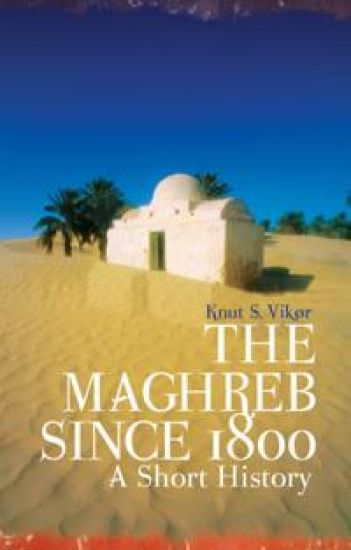
The Maghreb - the region that today encompasses Morocco, Algeria, Tunisia and Libya - is a region apart within the larger Muslim and Arab world. Today the focus of popular uprisings for democracy and participation, it underwent long periods of colonisation and anti-colonial nationalist resistance, both peaceful and militant. To understand the nature of today's developments in North Africa we need fully to appreciate the tumultuous history of the region and how its four discrete countries followed different trajectories, some marked by a continuity of social and political structures in both the colonial era and as independent states, while others were marked by sharp ruptures and violent struggles. These historical differences are still visible in the current era and tell us much about the societies in question. This short history of the Maghreb surveys its development from the coming of Islam to the present day, but with greatest emphasis on the modern period from the early nineteenth century onwards. It follows the French protectorates, Morocco and Tunisia, and how their nationalist movements forged the independent states that followed; and it chronicles the wars of resistance and liberation in Algeria and Libya, and how these conflicts also marked their independence, with a long-running civil war in the former and the recent uprising against the Gaddafi regime in the latter.
The Maghreb Since 1800

The Maghreb Since 1800

Knut S. Vikor

C Hurst Co Publishers Ltd
2012
nidottu
The Maghreb - the region that today encompasses Morocco, Algeria, Tunisia and Libya - is a region apart within the larger Muslim and Arab world. Today the focus of popular uprisings for democracy and participation, it underwent long periods of colonisation and anti-colonial nationalist resistance, both peaceful and militant. To understand the nature of today's developments in North Africa we need fully to appreciate the tumultuous history of the region and how its four discrete countries followed different trajectories, some marked by a continuity of social and political structures in both the colonial era and as independent states, while others were marked by sharp ruptures and violent struggles. These historical differences are still visible in the current era and tell us much about the societies in question. This short history of the Maghreb surveys its development from the coming of Islam to the present day, but with greatest emphasis on the modern period from the early nineteenth century onwards. It follows the French protectorates, Morocco and Tunisia, and how their nationalist movements forged the independent states that followed; and it chronicles the wars of resistance and liberation in Algeria and Libya, and how these conflicts also marked their independence, with a long-running civil war in the former and the recent uprising against the Gaddafi regime in the latter.
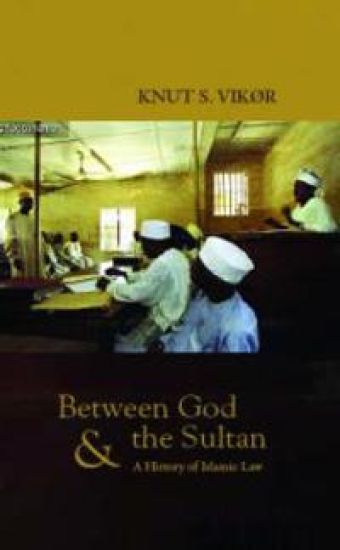
Between God and the Sultan

Between God and the Sultan

Knut S. Vikor

C Hurst Co Publishers Ltd
2005
sidottu
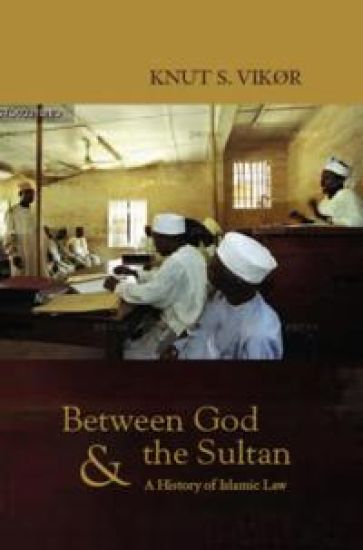
This introduction to Islamic jurisprudence (usul al-fiqh) summarizes its major concepts and presents the contemporary debates among historians concerning the historicity of the Islamic sources of dogma, and of the dating of early Islamic law. It describes the classical practice of the law, in the formulation and elaboration of the legal rules (fatwas, furu' works, mukhtasars and so forth) and in the paradigms of legal practice in the courts. It summarizes various types of Islamic substantive legal rules (in mu'amalat), hudud and ta'zir, bodily harm and diya, marriage and family law and some apects of economic law, in particular taxation, contracts and the marketplace.
Between God and the Sultan

Between God and the Sultan

Knut S. Vikor

C Hurst Co Publishers Ltd
2005
nidottu
Today's discussions on Islam and the place religion should have in society often lead to questions about the Shari'a - Islamic law. Those who work for a political role for Islam demand that the Shari'a must be applied in their country, while those critical of Islam use the law as proof of its 'medieval' character. Islam is sometimes, not quite justly, called a 'religion of rules', and the rules of Islam are the Shari'a. But it is often hard to establish the exact nature of this law in more practical terms. Asking those who favour it or those who oppose it may only lead to greater confusion. But a rule and its exact opposite can both be said to be 'what the Shari'a says' and what God demands of the believer. It may even be questioned if there is any Shari'a at all in the work-a-day world, or whether it is just an ethical ideal, or a body whose secrets are known only to God. At the same time people may be stoned or mutilated in the name of this law. The key to understanding Shari'a is the concept of 'religious law', a term which might seem contradictory. 'Religion' is faith in a non-material force of some kind, and something we consider internal to the human soul. 'Law', on the other hand, is external to us, established by society in order to regulate the material needs of the community. The contrast between 'religion' and 'law' has been continuous throughout Muslim history. Islamic law has always existed in a tension between these two forces: God, who gave the law, and the state - the 'sultan' - representing society and implementing the law. This tension and dynamic have created a very particular history for the law - in how it was formulated and by whom, in its theoretical basis and its actual rules, and in how it was practised in historical reality from the time of its formation till today. That is the main theme of the book. Knut S. Vikor aims in this book to introduce the development and practice of Islamic law to a wide readership: students, lawyers and the growing number of those interested in Islamic civilisation. He summarises the main concepts of Islamic jurisprudence, discusses debates concerning the historicity of Islamic sources of dogma and the dating of early Islamic law; describes the classic practice of the law, in the formulation of legal rules and practice in the courts; and sets out various substantive legal rules, on such vital matters as the family and economic activity.
Oasis of Salt

Oasis of Salt

Knut S. Vikor

C Hurst Co Publishers Ltd
1999
nidottu
Kawar, an oasis in the centre of the Sahara, rose to prominence on revenues from the vast quantities of salt it produced and traded with the south. This study traces Kawar's history from classical times to the colonial conquest and occupation of 1906, focusing on its role in salt production.
Sufi and Scholar of the Desert Edge

Sufi and Scholar of the Desert Edge

Knut S. Vikor

C Hurst Co Publishers Ltd
1995
sidottu
The Sanusiya was one of the most influential Islamic movements in North Africa and the Sahara in the nineteenth century. It organised the Beduin of the desert and desert fringes into a Sufi movement that combined religious piety with trade. Later, it played a key role in the resistance to French and Italian colonialism. The basis of the movement was laid by the Maghrebi scholar Muhammad b. Ali al-Sanusi (1787-1859), who saw his task as being to advance the growth and spread of Islamic learning, in particular the study of Law and the prophetic tradition. This study of al-Sanusi focuses on the scholarly tradition of which he was part, and the heritage of his numerous books and the organisation of the Sufi order in North Africa. The book discusses his role in the Sufi network of Ahmad Ibn ldris and of the scholarly milieu of the Qarawiyin in Fez, giving an overview of the Sanusiya order in the mid-nineteenth century. It also presents al-Sanusi's writings.