Kirjojen hintavertailu. Mukana 12 204 001 kirjaa ja 12 kauppaa.

Kirjailija

Ko-lin Chin

Kirjat ja teokset yhdessä paikassa: 15 kirjaa, julkaisuja vuosilta 1990-2025, suosituimpien joukossa Chinatown Gangs. Vertaile teosten hintoja ja tarkista saatavuus suomalaisista kirjakaupoista.

Mukana myös kirjoitusasut: Ko Lin Chin

15 kirjaa

Kirjojen julkaisuhaarukka 1990-2025.

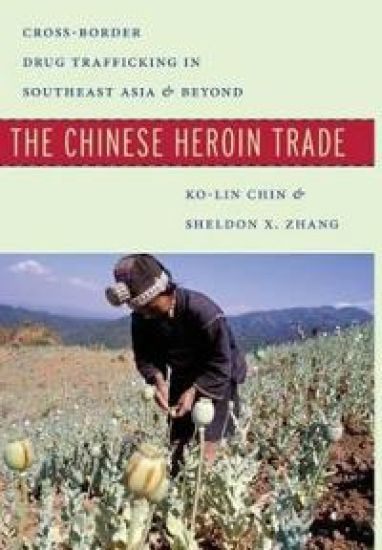
The Chinese Heroin Trade

The Chinese Heroin Trade

Ko-lin Chin; Sheldon X. Zhang

New York University Press
2015
sidottu
In a country long associated with the trade in opiates, the Chinese government has for decades applied extreme measures to curtail the spread of illicit drugs, only to find that the problem has worsened. Burma is blamed as the major producer of illicit drugs and conduit for the entry of drugs into China. Which organizations are behind the heroin trade? What problems and prospects of drug control in the so-called "Golden Triangle" drug-trafficking region are faced by Chinese and Southeast Asian authorities? In The Chinese Heroin Trade, noted criminologists Ko-Lin Chin and Sheldon Zhangexamine the social organization of the trafficking of heroin from the Golden Triangle to China and the wholesale and retail distribution of the drug in China. Based on face-to-face interviews with hundreds of incarcerated drug traffickers, street-level drug dealers, users, and authorities, paired with extensive fieldwork in the border areas of Burma and China and several major urban centers in China and Southeast Asia, this volume reveals how the drug trade has evolved in the Golden Triangle since the late 1980s. Chin and Zhang also explore the marked characteristics of heroin traffickers; the relationship between drug use and sales in China; and how China compares to other international drug markets. The Chinese Heroin Trade is a fascinating, nuanced account of the world of high-risk drug trafficking in a tightly-controlled society.
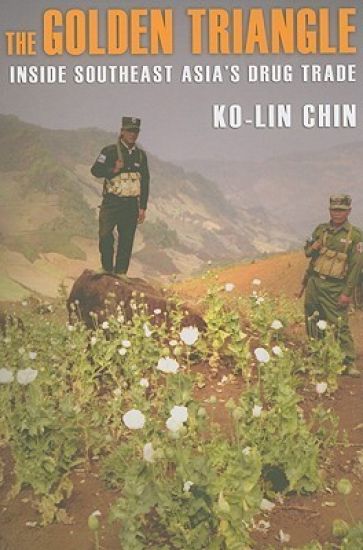
The Golden Triangle

The Golden Triangle

Ko-lin Chin

Cornell University Press
2009
pokkari
The Golden Triangle region that joins Burma, Thailand, and Laos is one of the global centers of opiate and methamphetamine production. Opportunistic Chinese businessmen and leaders of various armed groups are largely responsible for the manufacture of these drugs. The region is defined by the apparently conflicting parallel strands of criminality and efforts at state building, a tension embodied by a group of individuals who are simultaneously local political leaders, drug entrepreneurs, and members of heavily armed militias. Ko-lin Chin, a Chinese American criminologist who was born and raised in Burma, conducted five hundred face-to-face interviews with poppy growers, drug dealers, drug users, armed group leaders, law-enforcement authorities, and other key informants in Burma, Thailand, and China. The Golden Triangle provides a lively portrait of a region in constant transition, a place where political development is intimately linked to the vagaries of the global market in illicit drugs. Chin explains the nature of opium growing, heroin and methamphetamine production, drug sales, and drug use. He also shows how government officials who live in these areas view themselves not as drug kingpins, but as people who are carrying the responsibility for local economic development on their shoulders.
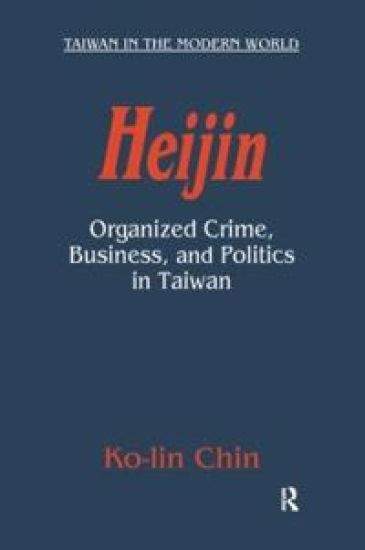
Heijin

Heijin

Ko-Lin Chin

Routledge
2003
nidottu
This work examines the structure and illegal activities of organized crime groups in Taiwan and explores the infiltration of crime groups into the business and political arenas. It looks at the intricate relationship among government officials, elected deputies, businessmen, and underworld figures.
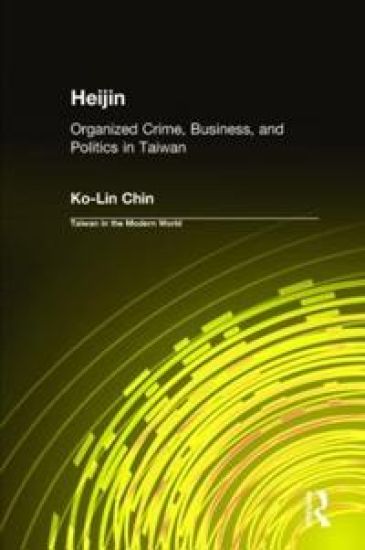
Heijin

Heijin

Ko-Lin Chin

Routledge
2003
sidottu
This work examines the structure and illegal activities of organized crime groups in Taiwan and explores the infiltration of crime groups into the business and political arenas. It looks at the intricate relationship among government officials, elected deputies, businessmen, and underworld figures.
Chinatown Gangs

Chinatown Gangs

Ko-lin Chin

Oxford University Press Inc
2000
nidottu
In Chinatown Gangs, Ko-lin Chin penetrates a closed society and presents a rare portrait of the underworld of New York City's Chinatown. Based on first-hand accounts from gang members, gang victims, community leaders, and law enforcement authorities, this pioneering study reveals the pervasiveness, the muscle, the longevity, and the institutionalization of Chinatown gangs. Chin reveals the fear gangs instill in the Chinese community. At the same time, he shows how the economic viability of the community is sapped, and how gangs encourage lawlessness, making a mockery of law enforcement agencies. Ko-lin Chin makes clear that gang crime is inexorably linked to Chinatown's political economy and social history. He shows how gangs are formed to become "equalizers" within a social environment where individual and group conflicts, whether social, political, or economic, are unlikely to be solved in American courts. Moreover, Chin argues that Chinatown's informal economy provides yet another opportunity for street gangs to become "providers" or "protectors" of illegal services. These gangs, therefore, are the pathological manifestation of a closed community, one whose problems are not easily seen--and less easily understood--by outsiders. Chin's concrete data on gang characteristics, activities, methods of operation and violence make him uniquely qualified to propose ways to restrain gang violence, and Chinatown Gangs closes with his specific policy suggestions. It is the definitive study of gangs in an American Chinatown.
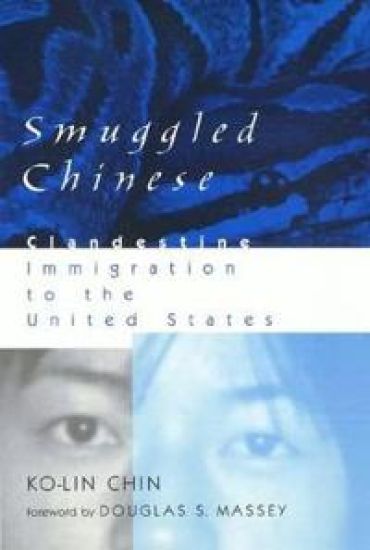
Smuggled Chinese

Smuggled Chinese

Ko-Lin Chin

Temple University Press,U.S.
1999
pokkari
No one knows how many Chinese are being smuggled into the United States, but credible estimates put the number at 50,000 arrivals each year. Astonishing as this figure is, it represents only a portion of the Chinese illegally residing in the United States. Smuggled Chinese presents a detailed account of how this traffic is conducted and what happens to the people who risk their lives to reach Gold Mountain. When the Golden Venture ran aground off New York's coast in 1993 and ten of the 260 Chinese on board drowned, the public outcry about human smuggling became front-page news. Probing into the causes and consequences of this clandestine traffic, Ko-lin Chin has interviewed more than 300 people -- smugglers, immigrants, government officials, and business owners -- in the United States, China, and Taiwan. Their poignant and chilling testimony describes a flourishing industry in which smugglers -- big and little snakeheads -- command fees as high as $30,000 to move desperate but hopeful men and women around the world. For many who survive the hunger, filthy and crowded conditions, physical and sexual abuse, and other perils of the arduous journey, life in the United States, specifically in New York's Chinatown, is a disappointment if not a curse. Few will return to China, though, because their families depend on the money and status gained by having a relative in the States. In Smuggled Chinese, Ko-lin Chin puts a human face on this intractable international problem, showing how flaws in national policies and lax law enforcement perpetuate the cycle of desperation and suffering. He strongly believes, however, that the problem of human smuggling will continue as long as China's citizens are deprived of fundamental human rights and economic security. Smuggled Chinese will engage readers interested in human rights, Asian and Asian American studies, urban studies, and sociology.
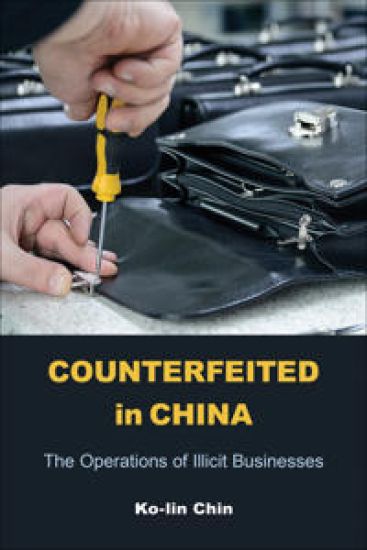
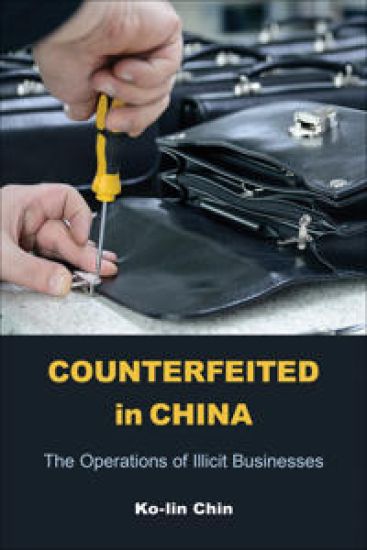
Counterfeited in China

Counterfeited in China

Ko-Lin Chin

TEMPLE UNIVERSITY PRESS,U.S.
2025
sidottu
Counterfeiting tops the list of organized crimes committed worldwide, raking in nearly half a trillion dollars in 2019. The impact of this illicit business is felt by consumers, brand owners, state authorities, and workers, and it impacts the economy. Moreover, its proliferation has fueled the advancement of organized crime groups. In his illuminating study, Counterfeited in China, Ko-lin Chin investigates this lucrative industry and its emergence in China. His face-to-face interviews with counterfeiters - business owners, workers, facilitators, and key informants - in the hub of Guangzhou, China reveal how businesses that design, produce, and distribute fake and unauthorized luxury goods manage the risks inherent in their business.Counterfeited in China examines the individual and group characteristics of counterfeiters and their relationships with organized crime; analyzes the economic aspects of counterfeiting; assesses the relationships among counterfeiting, violence, and corruption; and seeks to understand the demand for counterfeit goods. Chin also discusses the role of Chinese authorities and other parties in the war against counterfeiting. Assessing the state of the industry and its future, Chin provides fascinating new insights into the modus operandi of counterfeiters.
Counterfeited in China

Counterfeited in China

Ko-Lin Chin

TEMPLE UNIVERSITY PRESS,U.S.
2025
nidottu
Counterfeiting tops the list of organized crimes committed worldwide, raking in nearly half a trillion dollars in 2019. The impact of this illicit business is felt by consumers, brand owners, state authorities, and workers, and it impacts the economy. Moreover, its proliferation has fueled the advancement of organized crime groups. In his illuminating study, Counterfeited in China, Ko-lin Chin investigates this lucrative industry and its emergence in China. His face-to-face interviews with counterfeiters - business owners, workers, facilitators, and key informants - in the hub of Guangzhou, China reveal how businesses that design, produce, and distribute fake and unauthorized luxury goods manage the risks inherent in their business.Counterfeited in China examines the individual and group characteristics of counterfeiters and their relationships with organized crime; analyzes the economic aspects of counterfeiting; assesses the relationships among counterfeiting, violence, and corruption; and seeks to understand the demand for counterfeit goods. Chin also discusses the role of Chinese authorities and other parties in the war against counterfeiting. Assessing the state of the industry and its future, Chin provides fascinating new insights into the modus operandi of counterfeiters.
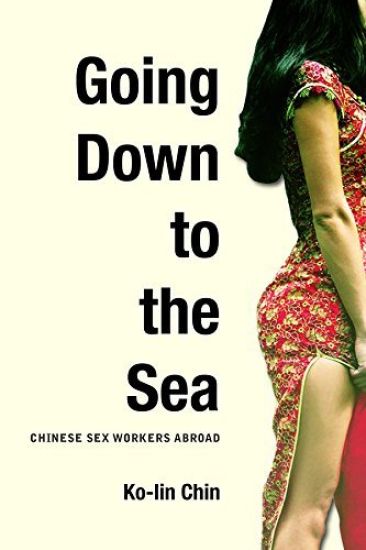
Going Down to the Sea

Going Down to the Sea

Ko-lin Chin

Silkworm Books
2014
pokkari
In this book, eighteen Chinese women tell how they came to sell sex in Hong Kong, Macau, Taipei, Bangkok, Singapore, Kuala Lumpur, Jakarta, Los Angeles, and New York. The women's candid stories put a human face on issues of globalized commercial sex and provide a raw, inside view of the money-driven transnational sex industry. The author, an expert in the field of criminal justice, frames their personal accounts with contextual details and incisive commentary to provide a rich understanding of the realities and myths of prostitution and global sex trafficking. While the interviews were gathered as part of an extensive research project for the author's 2012 book, Selling Sex Overseas, the full accounts are published here for the first time. The women describe, in their own words, what motivated them to leave China to work in the sex trade abroad, how much they earn, what hardships they face, and what they hope for in the future.
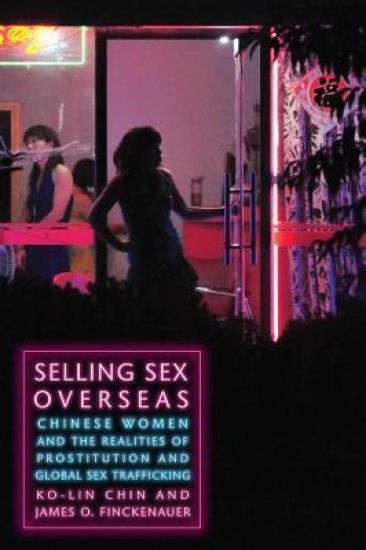
Selling Sex Overseas

Selling Sex Overseas

Ko-lin Chin; James O. Finckenauer

New York University Press
2012
pokkari
2013 Outstanding Book Award Winner from the Division of International Criminology, American Society of Criminology Every year, thousands of Chinese women travel to Asia and the United States in order to engage in commercial sex work. In Selling Sex Overseas, Ko-lin Chin and James Finckenauer challenge the current sex trafficking paradigm that considers all sex workers as victims, or sexual slaves, and as unwilling participants in the world of commercial sex. Bringing to life an on-the-ground portrait of this usually hidden world, Chin and Finckenauer provide a detailed look at all of its participants: sex workers, pimps, agents, mommies, escort agency owners, brothel owners, and drivers. Ultimately, they probe the social, economic, and political organization of prostitution and sex trafficking, contradicting many of the 'moral crusaders' of the human trafficking world.
Selling Sex Overseas

Selling Sex Overseas

Ko-lin Chin; James O. Finckenauer

New York University Press
2012
sidottu
2013 Outstanding Book Award Winner from the Division of International Criminology, American Society of Criminology Every year, thousands of Chinese women travel to Asia and the United States in order to engage in commercial sex work. In Selling Sex Overseas, Ko-lin Chin and James Finckenauer challenge the current sex trafficking paradigm that considers all sex workers as victims, or sexual slaves, and as unwilling participants in the world of commercial sex. Bringing to life an on-the-ground portrait of this usually hidden world, Chin and Finckenauer provide a detailed look at all of its participants: sex workers, pimps, agents, mommies, escort agency owners, brothel owners, and drivers. Ultimately, they probe the social, economic, and political organization of prostitution and sex trafficking, contradicting many of the 'moral crusaders' of the human trafficking world.
Handbook of Organized Crime in the United States

Handbook of Organized Crime in the United States

Ko Lin Chin; Robert J. Kelly; Rufus Schatzberg

Greenwood Press
1994
sidottu
Internationally known authorities in criminal justice provide one of the most comprehensive and detailed surveys today of the diverse ethnic and racial groups in the criminal underworld and their grave threats to the very fabric of American society. This coherent overview describes Mafia, Chinese, African American, Russian, and other criminal activities in different cities currently with historical background, showing the pernicious effects that their illicit operations have had on the economic, social, political, and moral life of the nation. This one-volume reference also assesses law enforcement and crime control programs during the 20th century, defines key problems, analyzes recent trends, and reviews the basic research about organized crime through the years. Lengthy bibliographical data and a full index further enrich this landmark study. This sobering overview should be required reading for specialist and general audiences alike and for broad library use given the serious threat of organized crime to all Americans in the 1990s.
Chinese Subculture and Criminality

Chinese Subculture and Criminality

Ko Lin Chin

Praeger Publishers Inc
1990
sidottu
The President's Commission on Organized Crime predicted that Asian crime groups would be the United States' foremost organized crime problem by the 1990s. There are few comprehensive studies on the nature and scope of these groups. Ko-lin Chin warns that our limited law enforcement resources will be ineffective without a precise understanding of the norms, values, structure, criminal patterns, and interrelationships of these groups. His study takes a major step toward this effort. A sociological investigation of Triads, tongs, and street gangs, Chin's volume explores the where, how, and why of these groups as well as the connection between Triad subculture and criminality.Chinese Subculture and Criminality is a thoroughly researched study of Asian criminality and its manifestations in America's ethnic communities. Ko-lin Chin describes both the history and activities of Chinese secret societies, and how these societies degenerated into crime groups. He analyzes the symbiotic relationship of Chinese communities and tongs; and details the history of the gangs' development in San Franscisco, Los Angeles, Monterey Park, and New York City. The causative and intervening factors leading to the rise of these gangs is explored as well as their nature and activities. Personal and group characteristics help explain why these gangs persist. Comparisons are made with other ethnic gangs. The volume predicts the future direction of Chinese organized crime. It concludes with a discussion of ethnic succession and the role of Chinese gangs in the heroin trade.