Kirjojen hintavertailu. Mukana 12 595 353 kirjaa ja 12 kauppaa.

Kirjailija

Kory Floyd

Kirjat ja teokset yhdessä paikassa: 15 kirjaa, julkaisuja vuosilta 2005-2024, suosituimpien joukossa Loose Leaf for Interpersonal Communication. Vertaile teosten hintoja ja tarkista saatavuus suomalaisista kirjakaupoista.

15 kirjaa

Kirjojen julkaisuhaarukka 2005-2024.

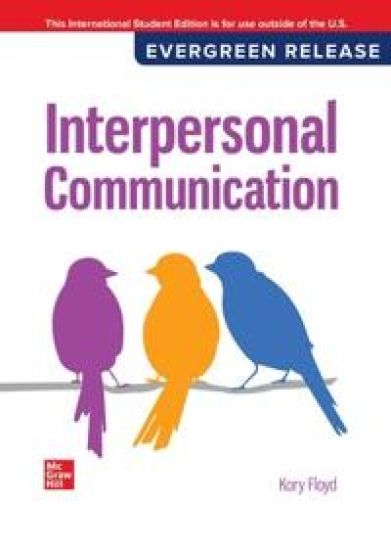
Interpersonal Communication: 2024 Release ISE

Interpersonal Communication: 2024 Release ISE

Kory Floyd

McGraw-Hill Education
2024
nidottu
Interpersonal Communication helps students see how communication not only affects their relationships but also influences their health, happiness, and quality of life. Author Kory Floyd encourages students to go beyond commonsense notions about communication and helps them see the value of investigating interpersonal processes - both face-to-face and online - in a systematic manner. Interpersonal Communication meets students where they are, speaking to them in a way that engages them and helping them to use both the content and the cognitive tools to relate theories and concepts to their own experiences, and features:•Seamless integration of scholarship, theory, and skills•Emphasis on critical thinking and self-reflection•Examples with real-world relevance relate content to real life•Online and electronically mediated communication integrated in every chapter•Culture, gender and diversity integrated throughout the text•Enhanced coverage of deceptive communication
Exploring Communication Theory

Exploring Communication Theory

Kory Floyd; Paul Schrodt; Larry A. Erbert; Kristina M. Scharp

TAYLOR FRANCIS LTD
2022
sidottu
Continuing its engaging and readable approach, this second edition presents an overview of the major theories within the discipline of communication studies inclusive of the three major paradigms of social scientific, interpretive, and critical.Each member of the author team writes from his or her area of expertise, giving readers further insight into how the theory is applied to research within communication studies. With extensive pedagogical features, the text underscores key concepts and links them to students’ own communication studies scholarship and everyday lives. Key updates for this edition include updated examples and discussions around theories to give students a deeper understanding; explorations of Black Lives Matter and intersectionality; and new pedagogical features in line with Bloom’s taxonomy.This book is ideal as a core text for undergraduate courses in communication theory.Online resources also accompany the text: an instructor manual, test bank, lecture slides, and author introduction videos. Please visit www.routledge.com/9781032015194 to access the materials.
Exploring Communication Theory

Exploring Communication Theory

Kory Floyd; Paul Schrodt; Larry A. Erbert; Kristina M. Scharp

TAYLOR FRANCIS LTD
2022
nidottu
Continuing its engaging and readable approach, this second edition presents an overview of the major theories within the discipline of communication studies inclusive of the three major paradigms of social scientific, interpretive, and critical.Each member of the author team writes from his or her area of expertise, giving readers further insight into how the theory is applied to research within communication studies. With extensive pedagogical features, the text underscores key concepts and links them to students’ own communication studies scholarship and everyday lives. Key updates for this edition include updated examples and discussions around theories to give students a deeper understanding; explorations of Black Lives Matter and intersectionality; and new pedagogical features in line with Bloom’s taxonomy.This book is ideal as a core text for undergraduate courses in communication theory.Online resources also accompany the text: an instructor manual, test bank, lecture slides, and author introduction videos. Please visit www.routledge.com/9781032015194 to access the materials.
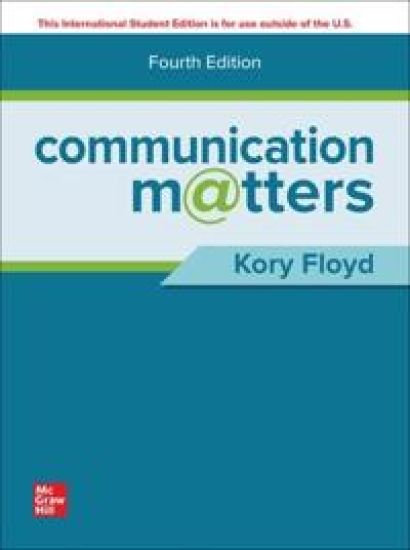
ISE Communication Matters

ISE Communication Matters

Kory Floyd

McGraw-Hill Education
2021
nidottu
With a research-based, skills-focused approach to the Introduction to Communication course, Communication Matters debunks the often-held belief that good communication is based on personal instincts. Taking research and relevance a step further, Communication Matters helps students think critically about the communication they take part in every day.
Affectionate Communication in Close Relationships

Affectionate Communication in Close Relationships

Kory Floyd

Cambridge University Press
2020
pokkari
Few communication behaviors are more consequential to the development and maintenance of close relationships than the expression of affection. Indeed, people often use affectionate gestures to initiate or accelerate relationship development. In contrast, the absence of affection in established relationships frequently coincides with relational deterioration. This text explores the scientific research on affection exchange that has emerged from the disciplines of communication, social and clinical psychology, family studies, psychophysiology, sociology, nursing, and behavioral health. Specific points of focus include the individual and relational benefits - including health benefits - of affectionate behavior, the significant detriments associated with lacking sufficient affection, and the risks of expressing affection. It also discusses the primary social and cultural influences on affection exchange, critiques principal theories and measurement models, and offers suggestions for future empirical research.
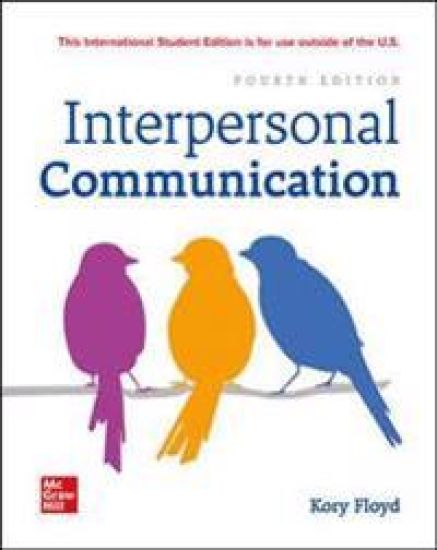
ISE Interpersonal Communication

ISE Interpersonal Communication

Kory Floyd

McGraw-Hill Education
2020
nidottu
Interpersonal Communication helps students see how communication not only affects their relationships but also influences their health, happiness, and quality of life. Author Kory Floyd encourages students to go beyond commonsense notions about communication and helps them see the value of investigating interpersonal processes - both face-to-face and online - in a systematic manner. Interpersonal Communication meets students where they are, speaking to them in a way that interests them and helping them to use both the content and the cognitive tools to relate theories and concepts to their own experiences. In this new edition, the following features enhance Kory Floyd’s unique and engaging approach to interpersonal communication: Seamless integration of scholarship, theory, and skills. By combining the latest research with the everyday scenarios learners face, Kory Floyd presents a systematic and modern approach to the study of interpersonal communication that helps students build vital interpersonal skills and make sound choices—academically, personally, and professionally.Emphasis on critical thinking and self-reflection. Students will have numerous opportunities to make connections between the text and their own lives, as well as to consider how their communication choices influence the outcomes they experience.Examples with real-world relevance relate content to real life. Chapter-opening vignettes and examples throughout the chapters enliven the content and allow learners to study interpersonal communication in an engaging way that directly relates to them.Online and electronically mediated communication integrated in every chapter. Every chapter includes comprehensive coverage of technology and digital devices’ influence on interpersonal communication, from online deception and relational maintenance via tests to improving listening and emotional expression when online. Culture, gender and diversity are integrated throughout the text. Every chapter includes essential information about how culture, gender, and sexual identity affect communication. Throughout the new edition, coverage of gender and sexuality topics has been updated to reflect the latest scholarship as well as cultural conventions for applying gender-neutral pronouns and using inclusive language. Enhanced coverage of deceptive communication. Unique in its focus on the timely and critical topic of deceptive communication, Chapter 12 now features enhanced coverage of, and guidance for responding to, the various types of deception students encounter in their daily lives, including high-profile lying and lying through dating apps.
Affectionate Communication in Close Relationships

Affectionate Communication in Close Relationships

Kory Floyd

Cambridge University Press
2018
sidottu
Few communication behaviors are more consequential to the development and maintenance of close relationships than the expression of affection. Indeed, people often use affectionate gestures to initiate or accelerate relationship development. In contrast, the absence of affection in established relationships frequently coincides with relational deterioration. This text explores the scientific research on affection exchange that has emerged from the disciplines of communication, social and clinical psychology, family studies, psychophysiology, sociology, nursing, and behavioral health. Specific points of focus include the individual and relational benefits - including health benefits - of affectionate behavior, the significant detriments associated with lacking sufficient affection, and the risks of expressing affection. It also discusses the primary social and cultural influences on affection exchange, critiques principal theories and measurement models, and offers suggestions for future empirical research.
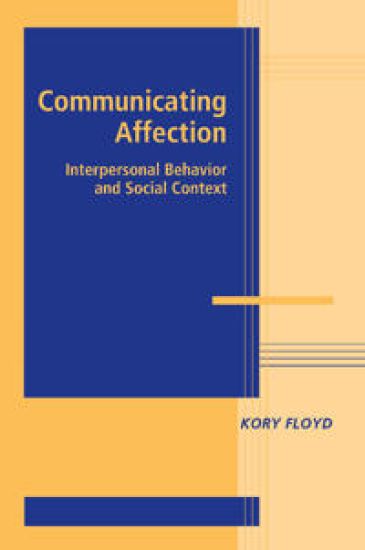
Communicating Affection

Communicating Affection

Kory Floyd

Cambridge University Press
2008
pokkari
Few behavioral processes are more central to the development and maintenance of intimate relationships than the communication of affection. Indeed, affectionate expressions often initiate and accelerate relational development. By contrast, their absence in established relationships frequently coincides with relational deterioration. This text explores the scientific research on affection exchange to emerge from the disciplines of communication, social psychology, family studies, psychophysiology, anthropology, and nursing. Specific foci include the individual and relational benefits (including health benefits) of affectionate behavior, as well as the significant risks often associated with expressing affection. A new, comprehensive theory of human affection exchange is offered, and its merits relative to existing theories are explored.
Communicating Affection

Communicating Affection

Kory Floyd

Cambridge University Press
2006
sidottu
Few behavioral processes are more central to the development and maintenance of intimate relationships than the communication of affection. Indeed, affectionate expressions often initiate and accelerate relational development. By contrast, their absence in established relationships frequently coincides with relational deterioration. This text explores the scientific research on affection exchange to emerge from the disciplines of communication, social psychology, family studies, psychophysiology, anthropology, and nursing. Specific foci include the individual and relational benefits (including health benefits) of affectionate behavior, as well as the significant risks often associated with expressing affection. A new, comprehensive theory of human affection exchange is offered, and its merits relative to existing theories are explored.
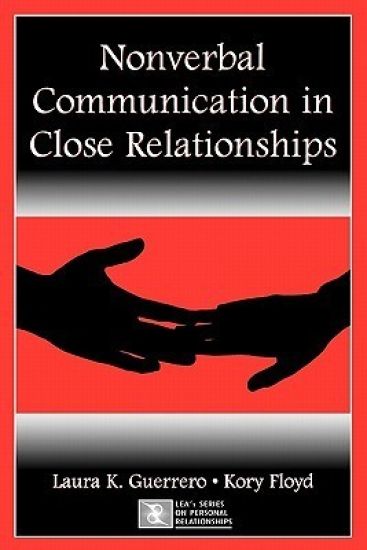
Nonverbal Communication in Close Relationships

Nonverbal Communication in Close Relationships

Laura K. Guerrero; Kory Floyd

Routledge Member of the Taylor and Francis Group
2005
nidottu
Nonverbal Communication in Close Relationships provides a synthesis of research on nonverbal communication as it applies to interpersonal interaction, focusing on the close relationships of friends, family, and romantic partners. Authors Laura K. Guerrero and Kory Floyd support the premise that nonverbal communication is a product of biology, social learning, and relational context. They overview six prominent nonverbal theories and show how each is related to bio-evolutionary or sociocultural perspectives. Their work focuses on various functions of nonverbal communication, emphasizing those that are most relevant to the initiation, maintenance, and dissolution of close relationships. Throughout the book, Guerrero and Floyd highlight areas where research is either contradictory or inconclusive, hoping that in the years to come scholars will have a clearer understanding of these issues. The volume concludes with a discussion of practical implications that emerge from the scholarly literature on nonverbal communication in relationships – an essential component for understanding relationships in the real world.Nonverbal Communication in Close Relationships makes an important contribution to the development of our understanding not only of relationship processes but also of the specific workings of nonverbal communication. It will serve as a springboard for asking new questions and advancing new theories about nonverbal communication. It is intended for scholars and advanced students in personal relationship study, social psychology, interpersonal communication, nonverbal communication, family studies, and family communication. It will also be a helpful resource for researchers, clinicians, and couples searching for a better understanding of the complicated roles that nonverbal cues play in relationships.
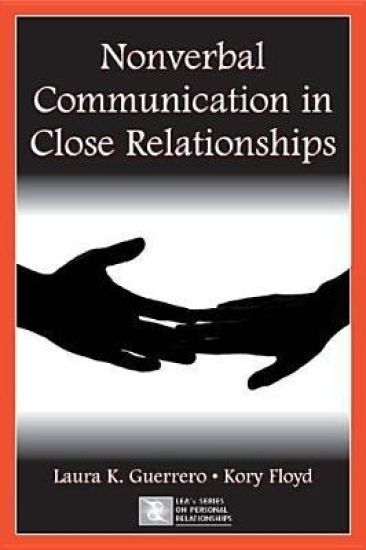
Nonverbal Communication in Close Relationships

Nonverbal Communication in Close Relationships

Laura K. Guerrero; Kory Floyd

Routledge Member of the Taylor and Francis Group
2005
sidottu
Nonverbal Communication in Close Relationships provides a synthesis of research on nonverbal communication as it applies to interpersonal interaction, focusing on the close relationships of friends, family, and romantic partners. Authors Laura K. Guerrero and Kory Floyd support the premise that nonverbal communication is a product of biology, social learning, and relational context. They overview six prominent nonverbal theories and show how each is related to bio-evolutionary or sociocultural perspectives. Their work focuses on various functions of nonverbal communication, emphasizing those that are most relevant to the initiation, maintenance, and dissolution of close relationships. Throughout the book, Guerrero and Floyd highlight areas where research is either contradictory or inconclusive, hoping that in the years to come scholars will have a clearer understanding of these issues. The volume concludes with a discussion of practical implications that emerge from the scholarly literature on nonverbal communication in relationships – an essential component for understanding relationships in the real world.Nonverbal Communication in Close Relationships makes an important contribution to the development of our understanding not only of relationship processes but also of the specific workings of nonverbal communication. It will serve as a springboard for asking new questions and advancing new theories about nonverbal communication. It is intended for scholars and advanced students in personal relationship study, social psychology, interpersonal communication, nonverbal communication, family studies, and family communication. It will also be a helpful resource for researchers, clinicians, and couples searching for a better understanding of the complicated roles that nonverbal cues play in relationships.