Kirjojen hintavertailu. Mukana 12 657 676 kirjaa ja 12 kauppaa.

Kirjailija

Kris Lane

Kirjat ja teokset yhdessä paikassa: 10 kirjaa, julkaisuja vuosilta 2011-2022, suosituimpien joukossa World in the Making. Vertaile teosten hintoja ja tarkista saatavuus suomalaisista kirjakaupoista.

10 kirjaa

Kirjojen julkaisuhaarukka 2011-2022.

World in the Making

World in the Making

Bonnie G. Smith; Marc Van De Mieroop; Richard von Glahn; Kris Lane

OXFORD UNIVERSITY PRESS INC
2022
nidottu
Featuring a renowned author team and the best recent scholarship, World in the Making: A Global History explores both the global and local dimensions of world history. Abundant full-color maps and images, along with other special pedagogical features that highlight the lives and voices of the world's peoples, make this synthesis accessible and memorable for students--all at an affordable low price.
World in the Making

World in the Making

Bonnie G. Smith; Marc Van De Mieroop; Richard von Glahn; Kris Lane

OXFORD UNIVERSITY PRESS INC
2022
nidottu
Featuring a renowned author team and the best recent scholarship, World in the Making: A Global History explores both the global and local dimensions of world history. Abundant full-color maps and images, along with other special pedagogical features that highlight the lives and voices of the world's peoples, make this synthesis accessible and memorable for students--all at an affordable low price.
Pandemic in Potosí

Pandemic in Potosí

Kris Lane

Pennsylvania State University Press
2022
pokkari
In 1719, a deadly and highly contagious disease took hold of the Imperial Villa of Potosí, a silver mining metropolis in what is now Bolivia. Within a year, the pathogen had killed some 22,000 people, just over a third of the city’s residents. Victims collapsed with fever, body aches, and effusions of blood from the nose and mouth. Most died within days. The great Andean pandemic of 1717–22 was likely the most destructive disease to strike South America since the days of the Spanish conquest.Pandemic in Potosí features the single longest narrative of this nearly forgotten period, penned by local historian Bartolomé Arzáns de Orsúa y Vela, along with shorter treatments of the disease’s ravages in Cuzco, Arequipa, and the outskirts of Lima. The “Gran Peste,” as it was called, was a pivotal event about which Arzáns wrote at length because he lived through it, but also because it was believed to have cosmic significance. Kris Lane translates and contextualizes Arzáns’s account, which is rich in local detail that sheds light on a range of topics—from therapeutics, devotional life, class relations, gender, and race to conceptions of illness, sin, and human will and responsibility during a major public health crisis.Original narratives of the pandemic, translated here for the first time, help readers see commonalities and differences between past and present disease encounters. Designed for use in courses on Latin American history, this concise work will also interest scholars and students of the history of religion, history of medicine, urban studies, and epidemiology.
Potosi

Potosi

Kris Lane

University of California Press
2021
pokkari
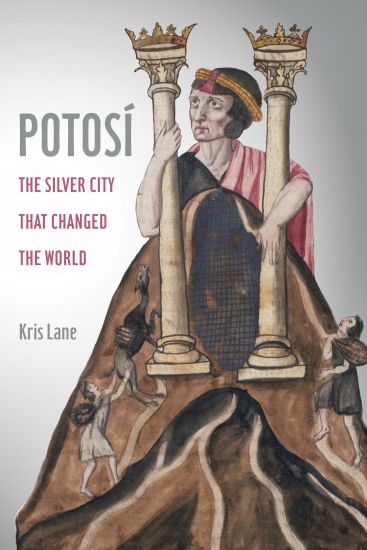
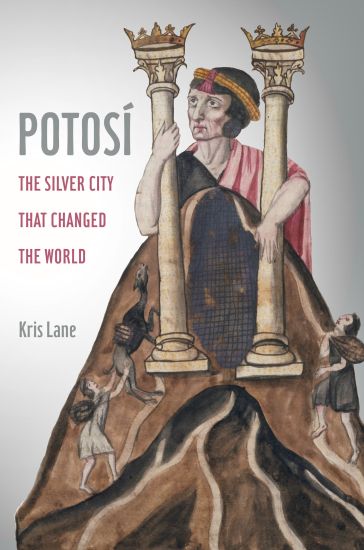
"For anyone who wants to learn about the rise and decline of Potosí as a city . . . Lane’s book is the ideal place to begin."—The New York Review of Books In 1545, a native Andean prospector hit pay dirt on a desolate red mountain in highland Bolivia. There followed the world's greatest silver bonanza, making the Cerro Rico or "Rich Hill" and the Imperial Villa of Potosí instant legends, famous from Istanbul to Beijing. The Cerro Rico alone provided over half of the world's silver for a century, and even in decline, it remained the single richest source on earth. Potosí is the first interpretive history of the fabled mining city’s rise and fall. It tells the story of global economic transformation and the environmental and social impact of rampant colonial exploitation from Potosí’s startling emergence in the sixteenth century to its collapse in the nineteenth. Throughout, Kris Lane’s invigorating narrative offers rare details of this thriving city and its promise of prosperity. A new world of native workers, market women, African slaves, and other ordinary residents who lived alongside the elite merchants, refinery owners, wealthy widows, and crown officials, emerge in lively, riveting stories from the original sources. An engrossing depiction of excess and devastation, Potosí reveals the relentless human tradition in boom times and bust.
Potosi

Potosi

Kris Lane

University of California Press
2019
sidottu
"For anyone who wants to learn about the rise and decline of Potosí as a city . . . Lane's book is the ideal place to begin."—New York Review of BooksIn 1545, a native Andean prospector hit pay dirt on a desolate red mountain in highland Bolivia. There followed the world’s greatest silver bonanza, making the Cerro Rico, or “Rich Hill,” and the Imperial Villa of Potosí instant legends, famous from Istanbul to Beijing. The Cerro Rico alone provided over half of the world’s silver for a century, and even in decline, it remained the single richest source on Earth.Potosí is the first interpretive history of the fabled mining city’s rise and fall. From Potosí’s startling emergence in the sixteenth century to its collapse in the nineteenth, Kris Lane tells the story of global economic transformation and the environmental and social impact of rampant colonial exploitation. Lane’s invigorating narrative offers rare details of this thriving city and its promise of prosperity. A new world—native workers, market women, African slaves, and other ordinary residents living alongside elite merchants, refinery owners, wealthy widows, and crown officials—emerges in lively, riveting stories from the original sources. An engrossing depiction of excess and devastation, Potosí reveals the relentless human tradition in boom times and bust.
Latin America in Colonial Times

Latin America in Colonial Times

Matthew Restall; Kris Lane

Cambridge University Press
2018
sidottu
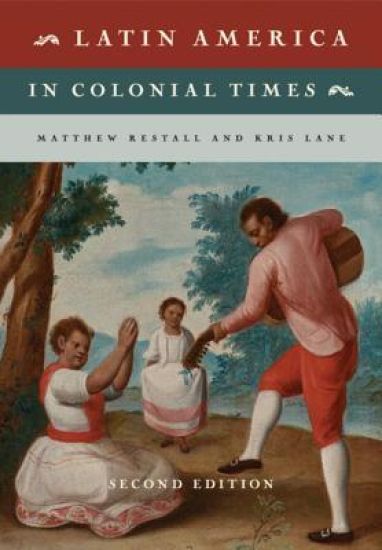
Few milestones in human history are as momentous as the meeting of three great civilizations on American soil in the sixteenth century. The fully revised textbook Latin America in Colonial Times presents that story in an engaging but informative new package, revealing how a new civilization and region - Latin America - emerged from that encounter. The authors give equal attention to the Spanish and Portuguese conquerors and settlers, to the African slaves they brought across the Atlantic, and to the indigenous peoples whose lands were invaded. From the dawn of empires in the fifteenth century, through the conquest age of the sixteenth and to the end of empire in the nineteenth, the book combines broad brushstrokes with anecdotal details that bring the era to life. This new edition incorporates the newest scholarship on Spain, Portugal, and Atlantic Africa, in addition to Latin America itself, with indigenous and African views and women's experiences and contributions to colonial society highlighted throughout.
Latin America in Colonial Times

Latin America in Colonial Times

Matthew Restall; Kris Lane

Cambridge University Press
2018
pokkari
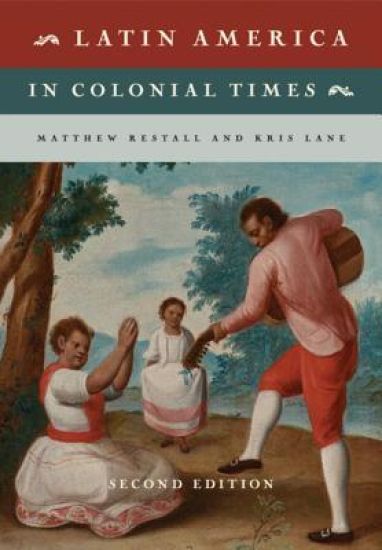
Few milestones in human history are as momentous as the meeting of three great civilizations on American soil in the sixteenth century. The fully revised textbook Latin America in Colonial Times presents that story in an engaging but informative new package, revealing how a new civilization and region - Latin America - emerged from that encounter. The authors give equal attention to the Spanish and Portuguese conquerors and settlers, to the African slaves they brought across the Atlantic, and to the indigenous peoples whose lands were invaded. From the dawn of empires in the fifteenth century, through the conquest age of the sixteenth and to the end of empire in the nineteenth, the book combines broad brushstrokes with anecdotal details that bring the era to life. This new edition incorporates the newest scholarship on Spain, Portugal, and Atlantic Africa, in addition to Latin America itself, with indigenous and African views and women's experiences and contributions to colonial society highlighted throughout.
Pillaging the Empire

Pillaging the Empire

Kris E Lane; Kris Lane; Robert M. Levine

Routledge
2015
sidottu
Between 1500 and 1750, European expansion and global interaction produced vast wealth. As goods traveled by ship along new global trade routes, piracy also flourished on the world’s seas. Pillaging the Empire tells the fascinating story of maritime predation in this period, including the perspectives of both pirates and their victims. Brushing aside the romantic legends of piracy, Kris Lane pays careful attention to the varied circumstances and motives that led to the rise of this bloodthirsty pursuit of riches, and places the history of piracy in the context of early modern empire building.This second edition of Pillaging the Empire has been revised and expanded to incorporate the latest scholarship on piracy, maritime law, and early modern state formation. With a new chapter on piracy in East and Southeast Asia, Lane considers piracy as a global phenomenon. Filled with colorful details and stories of individual pirates from Francis Drake to the women pirates Ann Bonny and Mary Read, this engaging narrative will be of interest to all those studying the history of Latin America, the Atlantic world, and the global empires of the early modern era.
Pillaging the Empire

Pillaging the Empire

Kris E Lane; Kris Lane; Robert M. Levine

Routledge
2015
nidottu
Between 1500 and 1750, European expansion and global interaction produced vast wealth. As goods traveled by ship along new global trade routes, piracy also flourished on the world’s seas. Pillaging the Empire tells the fascinating story of maritime predation in this period, including the perspectives of both pirates and their victims. Brushing aside the romantic legends of piracy, Kris Lane pays careful attention to the varied circumstances and motives that led to the rise of this bloodthirsty pursuit of riches, and places the history of piracy in the context of early modern empire building.This second edition of Pillaging the Empire has been revised and expanded to incorporate the latest scholarship on piracy, maritime law, and early modern state formation. With a new chapter on piracy in East and Southeast Asia, Lane considers piracy as a global phenomenon. Filled with colorful details and stories of individual pirates from Francis Drake to the women pirates Ann Bonny and Mary Read, this engaging narrative will be of interest to all those studying the history of Latin America, the Atlantic world, and the global empires of the early modern era.
The Riddle of Latin America

The Riddle of Latin America

Kris Lane; Matthew Restall

Wadsworth Publishing Co Inc
2011
nidottu
THE RIDDLE OF LATIN AMERICA explores the promise and paradox of Latin America in a novel way by giving equal weight to the colonial and national periods. This is essential because in Latin America colonialism started early and independence came late. The aim of this book is to provide unfamiliar readers with a more balanced, interpretive view of Latin America’s long and complex history by identifying key patterns and trends and tracing them across time and space. Within chapters THE RIDDLE OF LATIN AMERICA takes a regional rather than country-by-country approach, treating, for example, the Greater Caribbean, Mexico and Central America, the Andes, the Southern Cone, and Brazil.