Kirjojen hintavertailu. Mukana 12 595 353 kirjaa ja 12 kauppaa.

Kirjailija

Kris Manjapra

Kirjat ja teokset yhdessä paikassa: 8 kirjaa, julkaisuja vuosilta 2010-2023, suosituimpien joukossa M. N. Roy. Vertaile teosten hintoja ja tarkista saatavuus suomalaisista kirjakaupoista.

8 kirjaa

Kirjojen julkaisuhaarukka 2010-2023.

M. N. Roy

M. N. Roy

Kris Manjapra

Routledge India
2016
sidottu
This is a work of South Asian intellectual history written from a transnational perspective and based on the life and work of M.N. Roy, one of India’s most formidable Marxist intellectuals. Swadeshi revolutionary, co-founder of the Mexican Communist Party, member of the Communist International Presidium, and a major force in the rise of Indian communism, M.N. Roy was a colonial cosmopolitan icon of the interwar years. Exploring the intellectual production of this important thinker, this book traces the historical context of his ideas from 19th-century Bengal to Weimar Germany, through the tumultuous period of world politics in the 1930s and 1940s, and on to post-Independence India. In this book the author makes a number of valuable theoretical contributions. He argues for the importance of conceiving the ‘deterritorial’ zones of thought and action through which Indian anti-colonial political thought operated, and advances a new periodisation for Swadeshi on this basis. He also argues against viewing ‘international communism’ of the 1920s as a single monolith by highlighting the fractures and contestations that influenced colonial politics worldwide.A fresh and insightful perspective on the history of India in the interwar years, this book will be of great interest to scholars and students of the modern history of South and East Asia, America and Europe, and to those interested in anti-colonial struggles, Communist politics and trajectories of Marxist thought in the 20th century.
Zeitalter der Verflechtungen

Zeitalter der Verflechtungen

Kris Manjapra

de Gruyter Oldenbourg
2022
sidottu
Age of Entanglement explores the patterns of connection linking German and Indian intellectuals from the nineteenth century to the years after the Second World War. Kris Manjapra traces the intersecting ideas and careers of philologists, physicists, poets, economists, and others who shared ideas, formed networks, and studied one another's worlds. Moving beyond well-rehearsed critiques of colonialism, this study recasts modern intellectual history in terms of the knotted intellectual itineraries of seeming strangers. Collaborations in the sciences, arts, and humanities produced extraordinary meetings of German and Indian minds. Meghnad Saha met Albert Einstein, Stella Kramrisch brought the Bauhaus to Calcutta, and Girindrasekhar Bose began a correspondence with Sigmund Freud. Rabindranath Tagore traveled to Germany to recruit scholars for a new university, and Himanshu Rai worked with Franz Osten to establish movie studios in Bombay. These interactions, Manjapra argues, evinced shared responses to the hegemony of the British empire. Germans and Indians hoped to find in one another the tools needed to disrupt an Anglocentric world order. As Manjapra demonstrates, transnational encounters are not inherently progressive. From Orientalism to Aryanism to scientism, German-Indian entanglements were neither necessarily liberal nor conventionally cosmopolitan, often characterized as much by manipulation as by genuine cooperation.
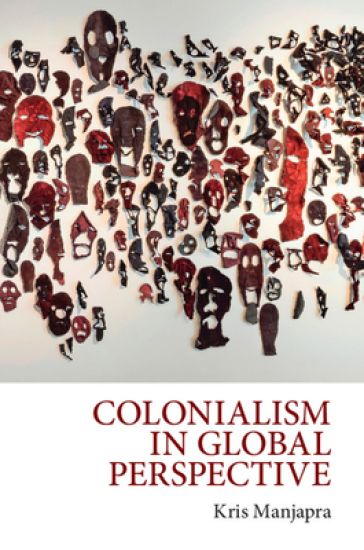
Colonialism in Global Perspective

Colonialism in Global Perspective

Kris Manjapra

Cambridge University Press
2020
sidottu
Kris Manjapra weaves together the study of colonialism over the past 500 years, across the globe's continents and seas. This captivating work vividly evokes living human histories, introducing the reader to manifestations of colonialism as expressed through war, militarization, extractive economies, migrations and diasporas, racialization, biopolitical management, and unruly and creative responses and resistances by colonized peoples. This book describes some of the most salient political, social, and cultural constellations of our present times across the Americas, Africa, Asia, and Europe. By exploring the dissimilar, yet entwined, histories of conquest, settler colonialism, racial slavery, and empire, Manjapra exposes the enduring role of colonial force and freedom struggle in the making of our modern world.
M. N. Roy

M. N. Roy

Kris Manjapra

Routledge India
2010
nidottu
This is a work of South Asian intellectual history written from a transnational perspective and based on the life and work of M.N. Roy, one of India’s most formidable Marxist intellectuals. Swadeshi revolutionary, co-founder of the Mexican Communist Party, member of the Communist International Presidium, and a major force in the rise of Indian communism, M.N. Roy was a colonial cosmopolitan icon of the interwar years. Exploring the intellectual production of this important thinker, this book traces the historical context of his ideas from 19th-century Bengal to Weimar Germany, through the tumultuous period of world politics in the 1930s and 1940s, and on to post-Independence India. In this book the author makes a number of valuable theoretical contributions. He argues for the importance of conceiving the ‘deterritorial’ zones of thought and action through which Indian anti-colonial political thought operated, and advances a new periodisation for Swadeshi on this basis. He also argues against viewing ‘international communism’ of the 1920s as a single monolith by highlighting the fractures and contestations that influenced colonial politics worldwide.A fresh and insightful perspective on the history of India in the interwar years, this book will be of great interest to scholars and students of the modern history of South and East Asia, America and Europe, and to those interested in anti-colonial struggles, Communist politics and trajectories of Marxist thought in the 20th century.
Black Ghost of Empire

Black Ghost of Empire

Kris Manjapra

PENGUIN BOOKS LTD
2023
pokkari
A revelatory historical indictment of the long afterlife of slavery in the Atlantic worldTo fully understand why the shadow of slavery haunts us today, we must confront the flawed way that it ended. We celebrate abolition - in Haiti after the revolution, in the British Empire in 1833, in the United States during the Civil War. Yet in Black Ghost of Empire, acclaimed historian Kris Manjapra argues that during each of these supposed emancipations, Black people were dispossessed by the moves that were meant to free them. Emancipation, in other words, simply codified the existing racial caste system - rather than obliterating it.Ranging across the Americas, Europe and Africa, Manjapra unearths disturbing truths about the Age of Emancipations, 1780-1880. In Britain, reparations were given to wealthy slaveowners, not the enslaved, a vast debt that was only paid off in 2015, and the crucial role of Black abolitionists and rebellions in bringing an end to slavery has been overlooked. In Jamaica, Black people were liberated only to enter into an apprenticeship period harsher than slavery itself. In the American South, the formerly enslaved were 'freed' into a system of white supremacy and racial terror. Across Africa, emancipation served as an alibi for colonization. None of these emancipations involved atonement by the enslavers and their governments for wrongs committed, or reparative justice for the formerly enslaved-an omission that grassroots Black organizers and activists are rightly seeking to address today.Black Ghost of Empire will rewire readers' understanding of the world in which we live. Paradigm-shifting, lucid and courageous, this book shines a light into the enigma of slavery's supposed death, and its afterlives.
Black Ghost of Empire: The Long Death of Slavery and the Failure of Emancipation
If the 1619 Project illuminated the ways in which life in the United States has been shaped by the existence of slavery, this "historical, literary masterpiece" (Kiese Laymon, author of Heavy) focuses on emancipation and how its afterlife further codified the racial caste system--instead of obliterating it. To understand why the shadow of slavery still haunts us today, we must look closely at the way it ended. Between the 1770s and 1880s, emancipation processes took off across the Atlantic world. But far from ushering in a new age of human rights and universal freedoms, these emancipations further codified the racial caste systems they claimed to disrupt. In this paradigm-altering book, acclaimed historian and professor Kris Manjapra identifies five types of emancipations across the globe and reveals that their perceived failures were not failures at all, but the predictable outcomes of policies designed first and foremost to preserve the status quo of racial oppression. In the process, Manjapra shows how, amidst this unfinished history, grassroots Black organizers and activists have become custodians of collective recovery and remedy; not only for our present, but also for our relationship with the past. Black Ghost of Empire will rewire readers' understanding of the world in which we live. Timely, lucid, and crucial to our understanding of contemporary society, this book shines a light into the gap between the idea of slavery's end and the reality of its continuation--exposing to whom a debt was paid and to whom a debt is owed.
Colonialism in Global Perspective

Colonialism in Global Perspective

Kris Manjapra

Cambridge University Press
2020
pokkari
Kris Manjapra weaves together the study of colonialism over the past 500 years, across the globe's continents and seas. This captivating work vividly evokes living human histories, introducing the reader to manifestations of colonialism as expressed through war, militarization, extractive economies, migrations and diasporas, racialization, biopolitical management, and unruly and creative responses and resistances by colonized peoples. This book describes some of the most salient political, social, and cultural constellations of our present times across the Americas, Africa, Asia, and Europe. By exploring the dissimilar, yet entwined, histories of conquest, settler colonialism, racial slavery, and empire, Manjapra exposes the enduring role of colonial force and freedom struggle in the making of our modern world.
Age of Entanglement

Age of Entanglement

Kris Manjapra

Harvard University Press
2014
sidottu
Age of Entanglement explores patterns of connection linking German and Indian intellectuals from the nineteenth century to the years after the Second World War. Kris Manjapra traces the intersecting ideas and careers of a diverse collection of individuals from South Asia and Central Europe who shared ideas, formed networks, and studied one another’s worlds. Moving beyond well-rehearsed critiques of colonialism towards a new critical approach, this study recasts modern intellectual history in terms of the knotted intellectual itineraries of seeming strangers.Collaborations in the sciences, arts, and humanities produced extraordinary meetings of German and Indian minds. Meghnad Saha met Albert Einstein, Stella Kramrisch brought the Bauhaus to Calcutta, and Girindrasekhar Bose began a correspondence with Sigmund Freud. Rabindranath Tagore traveled to Germany to recruit scholars for a new Indian university, and the actor Himanshu Rai hired director Franz Osten to help establish movie studios in Bombay. These interactions, Manjapra argues, evinced shared responses to the cultural and political hegemony of the British empire. Germans and Indians hoped to find in one another the tools needed to disrupt an Anglocentric world order.As Manjapra demonstrates, transnational intellectual encounters are not inherently progressive. From Orientalism and Aryanism to socialism and scientism, German–Indian entanglements were neither necessarily liberal nor conventionally cosmopolitan, often characterized as much by manipulation as by cooperation. Age of Entanglement underscores the connections between German and Indian intellectual history, revealing the characteristics of a global age when the distance separating Europe and Asia seemed, temporarily, to disappear.