Kirjojen hintavertailu. Mukana 12 595 353 kirjaa ja 12 kauppaa.

Kirjailija

Krishan Kumar

Kirjat ja teokset yhdessä paikassa: 35 kirjaa, julkaisuja vuosilta 2001-2025, suosituimpien joukossa Libraries and Librarianship in India. Vertaile teosten hintoja ja tarkista saatavuus suomalaisista kirjakaupoista.

35 kirjaa

Kirjojen julkaisuhaarukka 2001-2025.

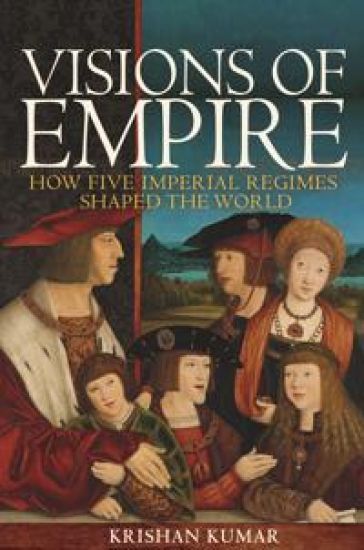
Visions of Empire

Visions of Empire

Krishan Kumar

Princeton University Press
2019
pokkari
What the rulers of empire can teach us about navigating today’s increasingly interconnected worldThe empires of the past were far-flung experiments in multinationalism and multiculturalism, and they have much to teach us about navigating our own increasingly globalized world. Visions of Empire sheds critical new light on their rulers—who they were, how they justified their empires, how they viewed themselves, and the styles of rule they adopted toward their subjects. Krishan Kumar provides panoramic and multifaceted portraits of five major European empires—Ottoman, Habsburg, Russian/Soviet, British, and French—showing how each, like ancient Rome, saw itself as the carrier of civilization to the rest of the world. This compelling book demonstrates how the rulers of empire, in their quest for a universal world order, left behind a legacy of multiculturalism and diversity that is uniquely relevant for us today.
Complete Guide to Group Discussion

Complete Guide to Group Discussion

Krishan Kumar

Friends Publications India
2019
sidottu
Creating an impact within the limited time frame under pressure plays an important role here. Every candidate needs to be well prepared before facing the panellists. To help our students through this daunting task, here is a book that explains exactly what to expect in a GD/PI. The material in this book outlines each step of the selection process and throws light on what is expected of a student at a GD/PI. The compilation of theory lessons, articles by CAT 100 percentiles, user experiences and GD capsules in this book will boost a candidate's GD/PI preparation. This book aims at providing students with the extra edge and confidence needed to crack the GD/PI session.
The Idea of Englishness

The Idea of Englishness

Krishan Kumar

Routledge
2017
nidottu
Ideas of Englishness, and of the English nation, have become a matter of renewed interest in recent years as a result of threats to the integrity of the United Kingdom and the perceived rise of that unusual thing, English nationalism. Interrogating the idea of an English nation, and of how that might compare with other concepts of nationhood, this book enquires into the origins of English national identity, partly by questioning the assumption of its long-standing existence. It investigates the role of the British empire - the largest empire in world history - in the creation of English and British identities, and the results of its disappearance. Considering the ’myths of the English’ - the ideas and images that the English and others have constructed about their history and their sense of themselves as a people - the distinctiveness of English social thought (in comparison with that of other nations), the relationship between English and British identity and the relationship of Englishness to Europe, this wide-ranging, comparative and historical approach to understanding the particular nature of Englishness and English national identity, will appeal to scholars of sociology, cultural studies and history with interests in English and British national identity and debates about England’s future place in the United Kingdom.
The Idea of Englishness

The Idea of Englishness

Krishan Kumar

Routledge
2015
sidottu
Ideas of Englishness, and of the English nation, have become a matter of renewed interest in recent years as a result of threats to the integrity of the United Kingdom and the perceived rise of that unusual thing, English nationalism. Interrogating the idea of an English nation, and of how that might compare with other concepts of nationhood, this book enquires into the origins of English national identity, partly by questioning the assumption of its long-standing existence. It investigates the role of the British empire - the largest empire in world history - in the creation of English and British identities, and the results of its disappearance. Considering the ’myths of the English’ - the ideas and images that the English and others have constructed about their history and their sense of themselves as a people - the distinctiveness of English social thought (in comparison with that of other nations), the relationship between English and British identity and the relationship of Englishness to Europe, this wide-ranging, comparative and historical approach to understanding the particular nature of Englishness and English national identity, will appeal to scholars of sociology, cultural studies and history with interests in English and British national identity and debates about England’s future place in the United Kingdom.
From Post-Industrial to Post-Modern Society

From Post-Industrial to Post-Modern Society

Krishan Kumar

Wiley-Blackwell (an imprint of John Wiley Sons Ltd)
2004
nidottu
The second edition of this classic study, revised with a new and substantial opening chapter. New edition of a classic study by a leading social theorist Explores three major ideas crucial to contemporary social theory: the information society, post-Fordism, and post-modernism Places the three key ideas within the context of contemporary discourse on globalization.
The Making of English National Identity

The Making of English National Identity

Krishan Kumar

Cambridge University Press
2003
sidottu
Why is English national identity so enigmatic and so elusive? Why, unlike the Scots, Welsh, Irish and most of continental Europe, do the English find it so difficult to say who they are? The Making of English National Identity, first published in 2003, is a fascinating exploration of Englishness and what it means to be English. Drawing on historical, sociological and literary theory, Krishan Kumar examines the rise of English nationalism and issues of race and ethnicity from earliest times to the present day. He argues that the long history of the English as an imperial people has, as with other imperial people like the Russians and the Austrians, developed a sense of missionary nationalism which in the interests of unity and empire has necessitated the repression of ordinary expressions of nationalism. Professor Kumar's lively and provocative approach challenges readers to reconsider their pre-conceptions about national identity and who the English really are.
The Making of English National Identity

The Making of English National Identity

Krishan Kumar

Cambridge University Press
2003
pokkari
Why is English national identity so enigmatic and so elusive? Why, unlike the Scots, Welsh, Irish and most of continental Europe, do the English find it so difficult to say who they are? The Making of English National Identity, first published in 2003, is a fascinating exploration of Englishness and what it means to be English. Drawing on historical, sociological and literary theory, Krishan Kumar examines the rise of English nationalism and issues of race and ethnicity from earliest times to the present day. He argues that the long history of the English as an imperial people has, as with other imperial people like the Russians and the Austrians, developed a sense of missionary nationalism which in the interests of unity and empire has necessitated the repression of ordinary expressions of nationalism. Professor Kumar's lively and provocative approach challenges readers to reconsider their pre-conceptions about national identity and who the English really are.
1989

1989

Krishan Kumar

University of Minnesota Press
2001
nidottu
In 1989, from East Berlin to Budapest and Bucharest to Moscow, communism was falling. The walls were coming down and the world was being changed in ways that seemed entirely new. The conflict of ideas and ideals that began with the French Revolution of 1789 culminated in these revolutions, which raised the prospects of the "return to Europe" of East and Central European nations, the "restarting of their history," even, for some, the "end of history." What such assertions and aspirations meant, and what the larger events that inspired them mean-not just for the world of history and politics, but for our very understanding of that world-are the questions Krishan Kumar explores in 1989. A well-known and widely respected scholar, Kumar places these revolutions of 1989 in the broadest framework of political and social thought, helping us see how certain ideas, traditions, and ideological developments influenced or accompanied these movements-and how they might continue to play out. Asking questions about some of the central dilemmas facing modern society in the new century, Kumar offers critical insight into how these questions might be answered and how political, social, and historical ideas and ideals can shape our destiny. Contradictions Series, volume 12