Kirjojen hintavertailu. Mukana 12 595 353 kirjaa ja 12 kauppaa.
Kirjailija
Krishna B. Kumar
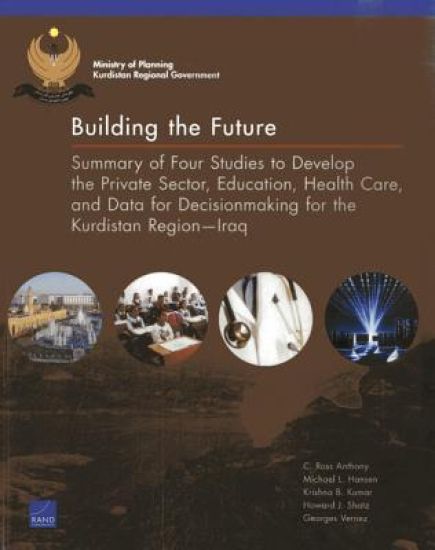
Kirjat ja teokset yhdessä paikassa: 10 kirjaa, julkaisuja vuosilta 2008-2019, suosituimpien joukossa Building the Future. Vertaile teosten hintoja ja tarkista saatavuus suomalaisista kirjakaupoista.
This monograph provides strategies to reemploy civil-service workers in the private sector and to increase private-sector employment in the Kurdistan Region Iraq. The research is based on a variety of methods, including analyses of survey data, analysis of Kurdistan regional and Iraqi national documents and laws, and a qualitative assessment of numerous conversations with government officials and private-sector employers."
This is the first volume in an ambitious new series-"Patterns of Potential Human Progress"-inspired by the UN Millennium Development Goals (MGDs) and other initiatives to improve the global condition. The first and most fundamental of these goals-reducing poverty worldwide-is the focus of this book. Using the large-scale computer program called International Futures (IFs) developed over three decades at the prestigious University of Denver Graduate School of International Studies, this book explores the most extensive set of forecasts of global poverty ever made-providing a wide range of scenarios based on an authoritative array of data. It transcends the "$1 a day" baseline measure of poverty and probes important concepts like income poverty gaps and relative poverty. The forecasts are long-term, looking 50 years into the future, far beyond the 2015 date set out by the MDGs. They are geographically rich, spanning the entire globe and drilling down to the country level, including one of the most important global focal points, India. The poverty forecasts in this book, and all the volumes in the series, are fully integrated in perspective across a wide range of human development arenas including demographics, economics, politics, agriculture, energy, and the environment. Full of colorful, thoughtfully designed graphs, tables, maps, and other visual presentations of data and forecasts, this large-format inaugural volume ensures that the "Patterns of Potential Human Progress" series will become an indispensable resource for every development professional, student, professor, library, and indeed, country around the world.
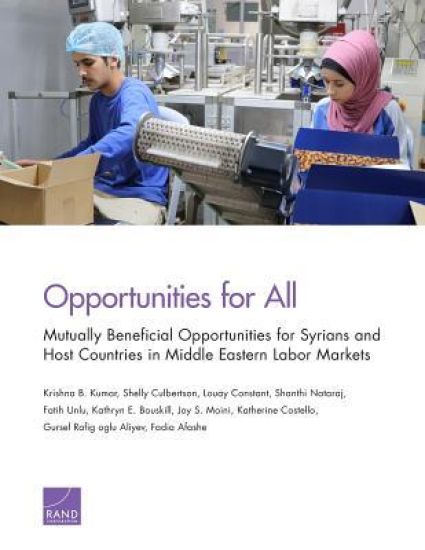
Over 5 million Syrian refugees entered Turkey, Jordan, and Lebanon due to the civil war. This report examines the labor market for refugees in these countries. In Turkey, a barrier was speaking Turkish; in Jordan and Lebanon, the refugees' arrival exacerbated existing economic slowdowns. Working legally was a challenge for all. Recommendations are tailored to each country in order to improve the socioeconomic environment for all.
Shmuel Abramzon; Nicholas Burger; Peter Glick; Krishna B. Kumar; Cheryl K. Montemayor; Nelly Mejia; Shanthi Nataraj; Francisco Perez-Arce; Claude Messan Setodji
This report presents estimates of the gross regional product (GRP) of the Kurdistan Region Iraq in 2012 (excluding natural resources, because of lack of available data). It also describes efforts to set up a system for continuing data collection and analysis to support the annual calculation of the GRP, a critical indicator for successful policy planning."
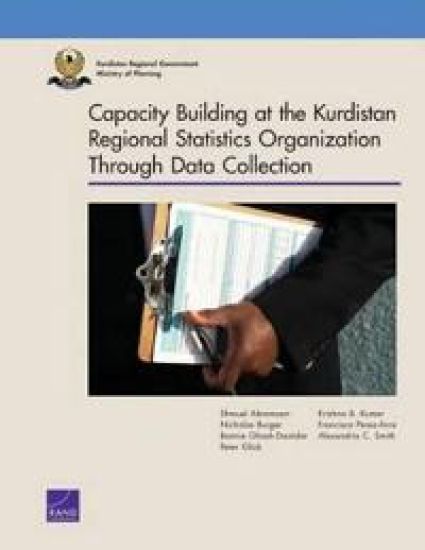
The Kurdistan Region of Iraq needs policy-relevant data to help improve infrastructure, encourage the private sector, attract foreign investment, and foster economic growth. The Kurdistan Region Statistics Office needs to build capacity to collect the data. RAND worked closely with the Office to build capacity by preparing, conducting, and analyzing the first round of a survey of the regional labor force.
This is the first volume in an ambitious new series-"Patterns of Potential Human Progress"-inspired by the UN Millennium Development Goals (MGDs) and other initiatives to improve the global condition. The first and most fundamental of these goals-reducing poverty worldwide-is the focus of this book. Using the large-scale computer program called International Futures (IFs) developed over three decades at the prestigious University of Denver Graduate School of International Studies, this book explores the most extensive set of forecasts of global poverty ever made-providing a wide range of scenarios based on an authoritative array of data. It transcends the "$1 a day" baseline measure of poverty and probes important concepts like income poverty gaps and relative poverty. The forecasts are long-term, looking 50 years into the future, far beyond the 2015 date set out by the MDGs. They are geographically rich, spanning the entire globe and drilling down to the country level, including one of the most important global focal points, India. The poverty forecasts in this book, and all the volumes in the series, are fully integrated in perspective across a wide range of human development arenas including demographics, economics, politics, agriculture, energy, and the environment. Full of colorful, thoughtfully designed graphs, tables, maps, and other visual presentations of data and forecasts, this large-format inaugural volume ensures that the "Patterns of Potential Human Progress" series will become an indispensable resource for every development professional, student, professor, library, and indeed, country around the world.