Kirjojen hintavertailu. Mukana 12 657 676 kirjaa ja 12 kauppaa.

Kirjailija

Kristen Ghodsee

Kirjat ja teokset yhdessä paikassa: 23 kirjaa, julkaisuja vuosilta 2005-2026, suosituimpien joukossa Professor Mommy. Vertaile teosten hintoja ja tarkista saatavuus suomalaisista kirjakaupoista.

23 kirjaa

Kirjojen julkaisuhaarukka 2005-2026.

Professor Mommy

Professor Mommy

Kristen Ghodsee; Rachel Connelly

Rowman Littlefield
2014
nidottu
Professor Mommy is designed as a guide for women who want to combine the life of the mind with the joys of motherhood. The book provides practical suggestions from the authors' experiences together with those of other women who have successfully combined parenting with professorships. Professor Mommy addresses key questions—when to have children and how many, what kinds of academic institutions are the most family friendly, how to negotiate around the myths that many people hold about academic life, etc.—for women throughout all stages of their academic careers, from graduate school through full professor. The authors follow the demands of motherhood all the way from the infant stages through the empty nest. At each stage, the authors offer invaluable advice and tested strategies from women who have successfully juggled the demands and rewards of an academic career and motherhood. Written in clear, jargon-free prose, the book is accessible to women in all disciplines, with concise chapters for the time-constrained academic. The book's conversational tone is supplemented with a review of the most current scholarship on work/family balance and a survey of emerging family-friendly practices at U.S. colleges and universities. Professor Mommy asserts that the faculty mother has become and will remain a permanent fixture on the landscape of the American academy.The paperback edition features a new Preface that addresses the public conversation about mothers and work raised in Sheryl Sandberg’s Lean In and Anne-Marie Slaughter’s Why Women Still Can’t Have it All. The new Preface also answers frequently asked questions from readers. The paperback edition features a new preface that brings the book into conversation with Sheryl Sandberg’s Lean In and Anne-Marie Slaughter’s “Why Women Still Can’t Have It All,” as well as a new afterword providing specific suggestions for institutional change.
Professor Mommy

Professor Mommy

Kristen Ghodsee; Rachel Connelly

Rowman Littlefield
2011
sidottu
Professor Mommy is a guide for women who want to combine the life of the mind with the joys of motherhood. The book provides practical suggestions gleaned from the experiences of the authors, together with those of other women who have successfully combined parenting with professorships. Professor Mommy addresses key questions—when to have children and how many to have; what kinds of academic institutions are the most family friendly; how true or not true are the beliefs that many people hold about academic life, and so on—for women throughout all stages of their academic careers, from graduate school through full professor. The authors follow the demands of motherhood all the way from infancy to the teenage years. At each stage, the authors offer invaluable advice and tested strategies for juggling the demands and achieving the rewards of an academic career and motherhood. Written in clear, jargon-free prose, the book is accessible to women in all disciplines, with concise chapters for the time-constrained academic. The book's conversational tone is supplemented with a review of the most current scholarship on work/family balance and a survey of emerging family-friendly practices at U.S. colleges and universities. Professor Mommy asserts that the faculty mother has become and will remain a permanent fixture on the landscape of the American academy. The paperback edition features a new preface that brings the book into conversation with Sheryl Sandberg’s Lean In and Anne-Marie Slaughter’s “Why Women Still Can’t Have It All,” as well as a new afterword providing specific suggestions for institutional change.

Red Valkyries

Red Valkyries

Kristen Ghodsee

Verso Books
2026
nidottu
Through a series of lively and accessible biographical essays, Red Valkyries explores the history of socialist feminism century Eastern Europe. By examining the revolutionary careers of five prominent socialist women active in the 19th and 20th centuries-the aristocratic Bolshevik, Alexandra Kollontai; the radical pedagogue, Nadezhda Krupskaya; the polyamorous firebrand, Inessa Armand; the deadly sniper, Lyudmila Pavlichenko; and the partisan turned scientist turned global women's activist, Elena Lagadinova-Kristen Ghodsee tells the story of the personal challenges faced by earlier generations of socialist and communist women. None of these women were "perfect" leftists. Their lives were filled with inner conflicts, contradictions, and sometimes outrageous privilege, but they still managed to move forward their own political projects through perseverance and dedication to their cause. Always walking a fine line between the need for class solidarity and the desire to force their sometimes callous male colleagues to take women's issues seriously, these five women pursued novel solutions with lessons for activists of today. In brief conversational chapters-with plenty of concrete examples from the history of the state socialist countries in Eastern Europe and contemporary reflections on the status of women in the world today-Ghodsee renders the big ideas of socialist feminism accessible to those newly inspired by the emancipatory politics of insurgent left feminist movements around the globe.
Everyday Utopia

Everyday Utopia

Kristen Ghodsee

Vintage Publishing
2024
pokkari
Anthropologist Kristen Ghodsee looks at pioneering experiments in communal living to present a rousing argument for rethinking what we mean by home.‘A must-read’ THOMAS PIKETTY‘Just wonderful’ ANGELA SAINIThroughout history and around the world today, forward-thinking communities have pioneered alternative ways of living together, sharing property and raising children. In Everyday Utopia, anthropologist Kristen Ghodsee explores what we can learn from these experiments – from the ancient Greek commune founded by Pythagoras to the trail-blazing feminists of the French Revolution, from the cohousing movement in contemporary Denmark to the flourishing ecovillages of Colombia and Portugal. She shows why utopian thinking is essential to making a fairer world and that many of the best ways of getting there begin at home.‘This warm, intelligent and lucid book takes us on a deep dive into how people have created better systems for living – systems that actually work’ ROBERT WALDINGER, author of The Good Life and director of the Harvard Study of Adult Developmet‘Exhilarating. A powerful reminder that dreaming of better worlds is not just some fantastical project but also a very serious political one’ REBECCA TRAISTER, author of Good and Mad‘Splendid. Invigorating writing for a cheerless era' YANIS VAROUFAKIS, author of Technofeudalism‘A vision of what our future could be if we dare to dream’ SUSAN NEIMAN, Left Is Not Woke
Everyday Utopia

Everyday Utopia

Kristen Ghodsee

Vintage Publishing
2023
sidottu
A practical and uplifting vision of better ways to live together, own property, have families and raise children, from the author of Why Women Have Better Sex Under Socialism.'Kristen Ghodsee is back with another splendid insight: utopia can and ought to be an everyday thing. In every home. Invigorating writing for a cheerless era' YANIS VAROUFAKIS'History is made by the dreamers ... A must-read' THOMAS PIKETTY---The traditional 'nuclear' family home is a problem: it places unfair and unnecessary burdens on women (and men too), it entrenches inequalities, it entraps us financially and it hinders certain kinds of child development. Also, it doesn't seem to make us very happy.And yet throughout history and around the world today, forward-thinking communities have pioneered alternative ways of living - from the all-female 'beguinages' of medieval Belgium to the matriarchal ecovillages of contemporary Colombia; from the ancient Greek commune founded by Pythagoras, where men and women lived as equals and shared property, to present-day Connecticut, where new laws make it easier for extra 'alloparents' to help raise children not their own. Some of these experiments burned brightly and briefly; others are living proof of what is possible.Everyday Utopia upends our assumptions and raises our sights by gathering these and many more inspiring examples together, arguing that many of the most important and effective ways of changing our lives and the world are to be found in the home. The result is a radically hopeful and practical vision of more connected - and contented - ways of living.'Liberating and inspirational, a sweeping feminist history of society at its most creative' ADA CALHOUN, author of Why We Can't Sleep
Red Valkyries

Red Valkyries

Kristen Ghodsee

Verso Books
2022
sidottu
Through a series of lively and accessible biographical essays, Red Valkyries explores the history of socialist feminism century Eastern Europe. By examining the revolutionary careers of five prominent socialist women active in the 19th and 20th centuries-the aristocratic Bolshevik, Alexandra Kollontai; the radical pedagogue, Nadezhda Krupskaya; the polyamorous firebrand, Inessa Armand; the deadly sniper, Lyudmila Pavlichenko; and the partisan turned scientist turned global women's activist, Elena Lagadinova-Kristen Ghodsee tells the story of the personal challenges faced by earlier generations of socialist and communist women. None of these women were "perfect" leftists. Their lives were filled with inner conflicts, contradictions, and sometimes outrageous privilege, but they still managed to move forward their own political projects through perseverance and dedication to their cause. Always walking a fine line between the need for class solidarity and the desire to force their sometimes callous male colleagues to take women's issues seriously, these five women pursued novel solutions with lessons for activists of today. In brief conversational chapters-with plenty of concrete examples from the history of the state socialist countries in Eastern Europe and contemporary reflections on the status of women in the world today-Ghodsee renders the big ideas of socialist feminism accessible to those newly inspired by the emancipatory politics of insurgent left feminist movements around the globe.
Taking Stock of Shock

Taking Stock of Shock

Kristen Ghodsee; Mitchell Orenstein

Oxford University Press Inc
2021
nidottu
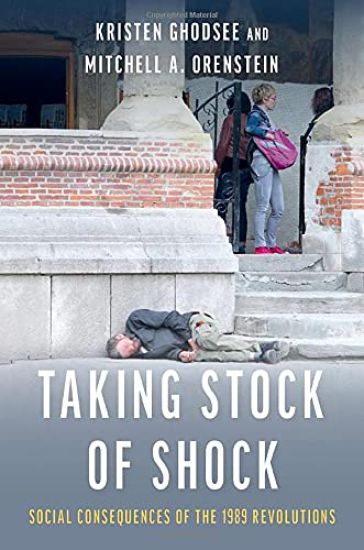
Kristen Ghodsee and Mitchell A. Orenstein blend empirical data with lived experiences to produce a robust picture of who won and who lost in post-communist transition, contextualizing the rise of populism in Eastern Europe. After the fall of the Berlin Wall in 1989, more than 400 million people suddenly found themselves in a new reality, a dramatic transition from state socialist and centrally planned workers' states to liberal democracy (in most cases) and free markets. Thirty years later, postsocialist citizens remain sharply divided on the legacies of transition. Was it a success that produced great progress after a short recession, or a socio-economic catastrophe foisted on the East by Western capitalists? Taking Stock of Shock aims to uncover the truth using a unique, interdisciplinary investigation into the social consequences of transition—including the rise of authoritarian populism and xenophobia. Showing that economic, demographic, sociological, political scientific, and ethnographic research produce contradictory results based on different disciplinary methods and data, Kristen Ghodsee and Mitchell Orenstein triangulate the results. They find that both the J-curve model, which anticipates sustained growth after a sharp downturn, and the "disaster capitalism" perspective, which posits that neoliberalism led to devastating outcomes, have significant basis in fact. While substantial percentages of the populations across a variety of postsocialist countries enjoyed remarkable success, prosperity, and progress, many others suffered an unprecedented socio-economic catastrophe. Ghodsee and Orenstein conclude that the promise of transition still remains elusive for many and offer policy ideas for overcoming negative social and political consequences.
Taking Stock of Shock

Taking Stock of Shock

Kristen Ghodsee; Mitchell Orenstein

Oxford University Press Inc
2021
sidottu
Kristen Ghodsee and Mitchell A. Orenstein blend empirical data with lived experiences to produce a robust picture of who won and who lost in post-communist transition, contextualizing the rise of populism in Eastern Europe. After the fall of the Berlin Wall in 1989, more than 400 million people suddenly found themselves in a new reality, a dramatic transition from state socialist and centrally planned workers' states to liberal democracy (in most cases) and free markets. Thirty years later, postsocialist citizens remain sharply divided on the legacies of transition. Was it a success that produced great progress after a short recession, or a socio-economic catastrophe foisted on the East by Western capitalists? Taking Stock of Shock aims to uncover the truth using a unique, interdisciplinary investigation into the social consequences of transition—including the rise of authoritarian populism and xenophobia. Showing that economic, demographic, sociological, political scientific, and ethnographic research produce contradictory results based on different disciplinary methods and data, Kristen Ghodsee and Mitchell Orenstein triangulate the results. They find that both the J-curve model, which anticipates sustained growth after a sharp downturn, and the "disaster capitalism" perspective, which posits that neoliberalism led to devastating outcomes, have significant basis in fact. While substantial percentages of the populations across a variety of postsocialist countries enjoyed remarkable success, prosperity, and progress, many others suffered an unprecedented socio-economic catastrophe. Ghodsee and Orenstein conclude that the promise of transition still remains elusive for many and offer policy ideas for overcoming negative social and political consequences.
Pochemu u zhenschin pri sotsializme seks luchshe: Argumenty v polzu ekonomicheskoj nezavisimosti
Professor Pensilvanskogo universiteta, avtor semi knig Kristen Godsi objasnjaet, pochemu triumf kapitalizma v stranakh pervogo i vtorogo mira ne stal vykhodom dlja bolshinstva zhenschin. Ona masterski razvenchivaet ustojchivye mify o tom, chto v uslovijakh svobodnogo rynka u zhenschin bolshe vozmozhnostej dostich karernykh vysot i ekonomicheskoj nezavisimosti, vnutrennego ravnovesija i lichnogo schastja. Na mnozhestve primerov Kristen Godsi pokazyvaet, kak, diskriminiruja zhenschin, kapitalizm vo vsem obdeljaet ikh - ot fizicheskikh radostej do intellektualnoj samorealizatsii - i ispolzuet v interesakh protsvetanija tekh, kto uzhe nakhoditsja na vershine ekonomicheskoj piramidy. Nesmotrja na krakh i idejnuju diskreditatsiju sotsializma v stranakh Vostochnoj Evropy, Godsi ubezhdena, chto mnogie elementy sotsialisticheskoj ekonomiki sposobny obespechit zhenschine uslovija dlja razvitija i polnopravnogo truda, zdorovoe raspredelenie sil mezhdu rabotoj i semej i v konechnom itoge garmonichnye i nasyschennye seksualnye otnoshenija. Perevodchik: Kolpakova N.
Second World, Second Sex

Second World, Second Sex

Kristen Ghodsee

Duke University Press
2019
pokkari
Women from the state socialist countries in Eastern Europe-what used to be called the Second World-once dominated women’s activism at the United Nations, but their contributions have been largely forgotten or deemed insignificant in comparison with those of Western feminists. In Second World, Second Sex Kristen Ghodsee rescues some of this lost history by tracing the activism of Eastern European and African women during the 1975 United Nations International Year of Women and the subsequent Decade for Women (1976-1985). Focusing on case studies of state socialist Bulgaria and nonaligned but socialist-leaning Zambia, Ghodsee examines the feminist networks that developed between the Second and Third Worlds and shows how alliances between socialist women challenged American women’s leadership of the global women’s movement. Drawing on interviews and archival research across three continents, Ghodsee argues that international ideological competition between capitalism and socialism profoundly shaped the world women inhabit today.
Second World, Second Sex

Second World, Second Sex

Kristen Ghodsee

Duke University Press
2019
sidottu
Women from the state socialist countries in Eastern Europe-what used to be called the Second World-once dominated women’s activism at the United Nations, but their contributions have been largely forgotten or deemed insignificant in comparison with those of Western feminists. In Second World, Second Sex Kristen Ghodsee rescues some of this lost history by tracing the activism of Eastern European and African women during the 1975 United Nations International Year of Women and the subsequent Decade for Women (1976-1985). Focusing on case studies of state socialist Bulgaria and nonaligned but socialist-leaning Zambia, Ghodsee examines the feminist networks that developed between the Second and Third Worlds and shows how alliances between socialist women challenged American women’s leadership of the global women’s movement. Drawing on interviews and archival research across three continents, Ghodsee argues that international ideological competition between capitalism and socialism profoundly shaped the world women inhabit today.
Red Hangover

Red Hangover

Kristen Ghodsee

Duke University Press
2017
sidottu
In Red Hangover Kristen Ghodsee examines the legacies of twentieth-century communism twenty-five years after the Berlin Wall fell. Ghodsee's essays and short stories reflect on the lived experience of postsocialism and how many ordinary men and women across Eastern Europe suffered from the massive social and economic upheavals in their lives after 1989. Ghodsee shows how recent major crises-from the Russian annexation of Crimea and the Syrian Civil War to the rise of Islamic State and the influx of migrants in Europe-are linked to mistakes made after the collapse of the Eastern Bloc when fantasies about the triumph of free markets and liberal democracy blinded Western leaders to the human costs of "regime change." Just as the communist ideal has become permanently tainted by its association with the worst excesses of twentieth-century Eastern European regimes, today the democratic ideal is increasingly sullied by its links to the ravages of neoliberalism. An accessible introduction to the history of European state socialism and postcommunism, Red Hangover reveals how the events of 1989 continue to shape the world today.
Red Hangover

Red Hangover

Kristen Ghodsee

Duke University Press
2017
pokkari
In Red Hangover Kristen Ghodsee examines the legacies of twentieth-century communism twenty-five years after the Berlin Wall fell. Ghodsee's essays and short stories reflect on the lived experience of postsocialism and how many ordinary men and women across Eastern Europe suffered from the massive social and economic upheavals in their lives after 1989. Ghodsee shows how recent major crises-from the Russian annexation of Crimea and the Syrian Civil War to the rise of Islamic State and the influx of migrants in Europe-are linked to mistakes made after the collapse of the Eastern Bloc when fantasies about the triumph of free markets and liberal democracy blinded Western leaders to the human costs of "regime change." Just as the communist ideal has become permanently tainted by its association with the worst excesses of twentieth-century Eastern European regimes, today the democratic ideal is increasingly sullied by its links to the ravages of neoliberalism. An accessible introduction to the history of European state socialism and postcommunism, Red Hangover reveals how the events of 1989 continue to shape the world today.
From Notes to Narrative

From Notes to Narrative

Kristen Ghodsee

University of Chicago Press
2016
sidottu
Ethnography centers on the culture of everyday life. So it is ironic that most scholars who do research on the intimate experiences of ordinary people write their books in a style that those people cannot understand. In recent years, the ethnographic method has spread from its original home in cultural anthropology to fields such as sociology, marketing, media studies, law, criminology, education, cultural studies, history, geography, and political science. Yet, while more and more students and practitioners are learning how to write ethnographies, there is little or no training on how to write ethnographies well. From Notes to Narrative picks up where methodological training leaves off. Kristen Ghodsee, an award-winning ethnographer, addresses common issues that arise in ethnographic writing. Ghodsee works through sentence-level details, such as word choice and structure. She also tackles bigger-picture elements, such as how to incorporate theory and ethnographic details, how to effectively deploy dialogue, and how to avoid distracting elements such as long block quotations and in-text citations. She includes excerpts and examples from model ethnographies. The book concludes with a bibliography of other useful writing guides and nearly one hundred examples of eminently readable ethnographic books.
From Notes to Narrative

From Notes to Narrative

Kristen Ghodsee

University of Chicago Press
2016
nidottu
Ethnography centers on the culture of everyday life. So it is ironic that most scholars who do research on the intimate experiences of ordinary people write their books in a style that those people cannot understand. In recent years, the ethnographic method has spread from its original home in cultural anthropology to fields such as sociology, marketing, media studies, law, criminology, education, cultural studies, history, geography, and political science. Yet, while more and more students and practitioners are learning how to write ethnographies, there is little or no training on how to write ethnographies well. From Notes to Narrative picks up where methodological training leaves off. Kristen Ghodsee, an award-winning ethnographer, addresses common issues that arise in ethnographic writing. Ghodsee works through sentence-level details, such as word choice and structure. She also tackles bigger-picture elements, such as how to incorporate theory and ethnographic details, how to effectively deploy dialogue, and how to avoid distracting elements such as long block quotations and in-text citations. She includes excerpts and examples from model ethnographies. The book concludes with a bibliography of other useful writing guides and nearly one hundred examples of eminently readable ethnographic books.
The Left Side of History

The Left Side of History

Kristen Ghodsee

Duke University Press
2015
pokkari
In The Left Side of History Kristen Ghodsee tells the stories of partisans fighting behind the lines in Nazi-allied Bulgaria during World War II: British officer Frank Thompson, brother of the great historian E.P. Thompson, and fourteen-year-old Elena Lagadinova, the youngest female member of the armed anti-fascist resistance. But these people were not merely anti-fascist; they were pro-communist, idealists moved by their socialist principles to fight and sometimes die for a cause they believed to be right. Victory brought forty years of communist dictatorship followed by unbridled capitalism after the fall of the Berlin Wall in 1989. Today in democratic Eastern Europe there is ever-increasing despair, disenchantment with the post-communist present, and growing nostalgia for the communist past. These phenomena are difficult to understand in the West, where “communism” is a dirty word that is quickly equated with Stalin and Soviet labor camps. By starting with the stories of people like Thompson and Lagadinova, Ghodsee provides a more nuanced understanding of how communist ideals could inspire ordinary people to make extraordinary sacrifices.
The Left Side of History

The Left Side of History

Kristen Ghodsee

Duke University Press
2015
sidottu
In The Left Side of History Kristen Ghodsee tells the stories of partisans fighting behind the lines in Nazi-allied Bulgaria during World War II: British officer Frank Thompson, brother of the great historian E.P. Thompson, and fourteen-year-old Elena Lagadinova, the youngest female member of the armed anti-fascist resistance. But these people were not merely anti-fascist; they were pro-communist, idealists moved by their socialist principles to fight and sometimes die for a cause they believed to be right. Victory brought forty years of communist dictatorship followed by unbridled capitalism after the fall of the Berlin Wall in 1989. Today in democratic Eastern Europe there is ever-increasing despair, disenchantment with the post-communist present, and growing nostalgia for the communist past. These phenomena are difficult to understand in the West, where “communism” is a dirty word that is quickly equated with Stalin and Soviet labor camps. By starting with the stories of people like Thompson and Lagadinova, Ghodsee provides a more nuanced understanding of how communist ideals could inspire ordinary people to make extraordinary sacrifices.
Lost in Transition

Lost in Transition

Kristen Ghodsee

Duke University Press
2011
pokkari
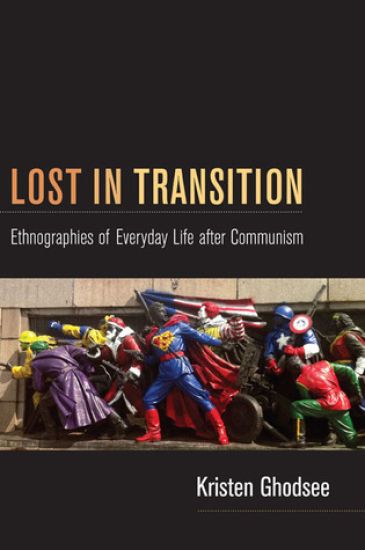
Lost in Transition tells of ordinary lives upended by the collapse of communism. Through ethnographic essays and short stories based on her experiences with Eastern Europe between 1989 and 2009, Kristen Ghodsee explains why it is that so many Eastern Europeans are nostalgic for the communist past. Ghodsee uses Bulgaria, the Eastern European nation where she has spent the most time, as a lens for exploring the broader transition from communism to democracy. She locates the growing nostalgia for the communist era in the disastrous, disorienting way that the transition was handled. The privatization process was contested and chaotic. A few well-connected foreigners and a new local class of oligarchs and criminals used the uncertainty of the transition process to take formerly state-owned assets for themselves. Ordinary people inevitably felt that they had been robbed. Many people lost their jobs just as the state social-support system disappeared. Lost in Transition portrays one of the most dramatic upheavals in modern history by describing the ways that it interrupted the rhythms of everyday lives, leaving confusion, frustration, and insecurity in its wake.
Lost in Transition

Lost in Transition

Kristen Ghodsee

Duke University Press
2011
sidottu
Lost in Transition tells of ordinary lives upended by the collapse of communism. Through ethnographic essays and short stories based on her experiences with Eastern Europe between 1989 and 2009, Kristen Ghodsee explains why it is that so many Eastern Europeans are nostalgic for the communist past. Ghodsee uses Bulgaria, the Eastern European nation where she has spent the most time, as a lens for exploring the broader transition from communism to democracy. She locates the growing nostalgia for the communist era in the disastrous, disorienting way that the transition was handled. The privatization process was contested and chaotic. A few well-connected foreigners and a new local class of oligarchs and criminals used the uncertainty of the transition process to take formerly state-owned assets for themselves. Ordinary people inevitably felt that they had been robbed. Many people lost their jobs just as the state social-support system disappeared. Lost in Transition portrays one of the most dramatic upheavals in modern history by describing the ways that it interrupted the rhythms of everyday lives, leaving confusion, frustration, and insecurity in its wake.