Kirjojen hintavertailu. Mukana 12 540 222 kirjaa ja 12 kauppaa.

Kirjailija

Kristie Miller

Kirjat ja teokset yhdessä paikassa: 13 kirjaa, julkaisuja vuosilta 2005-2026, suosituimpien joukossa The Normative Status of Time Bias. Vertaile teosten hintoja ja tarkista saatavuus suomalaisista kirjakaupoista.

13 kirjaa

Kirjojen julkaisuhaarukka 2005-2026.

The Normative Status of Time Bias

The Normative Status of Time Bias

Kristie Miller

TAYLOR FRANCIS LTD
2026
nidottu
This book empirically investigates the nature of time biases. Many philosophers think that it is rationally permissible to prefer a life that is overall worse to one that is overall better, as long as the badness of that life lies in the past rather than the future. These philosophers think that it is rationally permissible to be time biased. Time biased individuals differently value the wellbeing of their various selves in virtue of where those selves are located in time. This book focuses on three key kinds of time bias: near, present, and future bias. It presents a rich picture of the conditions under which we display these biases, and it outlines several psychological explanations for them. It then uses this new empirical research we conducted to inform arguments regarding the normative status of these biases. At its heart it considers the question: does having time biased preferences of one sort or another make us better off or worse off? And it uses the answers to these questions to inform our theorising about whether we have reason either to have or to avoid having such preferences.
Life in Four Dimensions

Life in Four Dimensions

Kristie Miller

Oxford University Press
2026
sidottu
There is a widespread idea that we experience our world as if it is other than a block world; as if, instead, our world is dynamical and time passes in a robustly A-theoretic manner. In light of this, some argue that there is good reason to think that our world is robustly dynamical, for the best explanation of our having these various experiences is that we are experiencing time as it really is, in itself, as dynamical. Thus, there is a kind of inference to the best explanation from the nature of our experience, broadly construed, to the conclusion that our world is not a block. This book takes up the challenge of responding to this argument in its various guises, where these guises reflect the different ways that we might be said to experience time (whether in terms of our attitudes, our beliefs, our temporal preferences, or our perceptual experiences). By appealing to new empirical work undertaken at the Centre for Time in Sydney, it is argued that for a whole range of ways that we experience our world temporally, including attitudinally, preference-wise, belief-wise, and perception-wise, we experience the world just as it is: as a block world. There is, at the end of the day, no pressure to conclude that our world is dynamical via the nature of any of our experiences of the world.
The Normative Status of Time Bias

The Normative Status of Time Bias

Kristie Miller

TAYLOR FRANCIS LTD
2024
sidottu
This book empirically investigates the nature of time biases. Many philosophers think that it is rationally permissible to prefer a life that is overall worse to one that is overall better, as long as the badness of that life lies in the past rather than the future. These philosophers think that it is rationally permissible to be time biased. Time biased individuals differently value the wellbeing of their various selves in virtue of where those selves are located in time. This book focuses on three key kinds of time bias: near, present, and future bias. It presents a rich picture of the conditions under which we display these biases, and it outlines several psychological explanations for them. It then uses this new empirical research we conducted to inform arguments regarding the normative status of these biases. At its heart it considers the question: does having time biased preferences of one sort or another make us better off or worse off? And it uses the answers to these questions to inform our theorising about whether we have reason either to have or to avoid having such preferences.
Does Tomorrow Exist?

Does Tomorrow Exist?

Nikk Effingham; Kristie Miller

TAYLOR FRANCIS LTD
2023
sidottu
This book takes up the question of whether past and future events exist. Two very different views are explored. According to one of these views (presentism), advanced by Nikk Effingham, the present is special. Effingham argues that only present things exist, but which things those are changes as time passes. Given presentism, although there once existed dinosaurs, they exist no more, and although you and I exist, at some time in the future we will come to exist no more. According to the alternative view (eternalism), advanced by Kristie Miller, our world is a giant four-dimensional block of spacetime in which all things, past, present, and future, exist. On this view, dinosaurs exist, it is just that they are not located at the current time. The book considers arguments for and against presentism and eternalism, including arguments that appeal to our best science, to the way the world seems to us to be in our experiences of time, change, and freedom, and to how to make sense of ordinary claims about the past. Key Features:Offers an accessible introduction to the philosophy of temporal ontologyCaptures the process of philosophical debate, giving readers an insight into the craft of philosophyEngages with and clearly explains state-of-the-art and cutting-edge research
Does Tomorrow Exist?

Does Tomorrow Exist?

Nikk Effingham; Kristie Miller

TAYLOR FRANCIS LTD
2023
nidottu
This book takes up the question of whether past and future events exist. Two very different views are explored. According to one of these views (presentism), advanced by Nikk Effingham, the present is special. Effingham argues that only present things exist, but which things those are changes as time passes. Given presentism, although there once existed dinosaurs, they exist no more, and although you and I exist, at some time in the future we will come to exist no more. According to the alternative view (eternalism), advanced by Kristie Miller, our world is a giant four-dimensional block of spacetime in which all things, past, present, and future, exist. On this view, dinosaurs exist, it is just that they are not located at the current time. The book considers arguments for and against presentism and eternalism, including arguments that appeal to our best science, to the way the world seems to us to be in our experiences of time, change, and freedom, and to how to make sense of ordinary claims about the past. Key Features:Offers an accessible introduction to the philosophy of temporal ontologyCaptures the process of philosophical debate, giving readers an insight into the craft of philosophyEngages with and clearly explains state-of-the-art and cutting-edge research
Persistence

Persistence

Kristie Miller

Cambridge University Press
2022
pokkari
Persistence realism is the view that ordinary sentences that we think and utter about persisting objects are often true. Persistence realism involves both a semantic claim, about what it would take for those sentences to be true, and an ontological claim about the way things are. According to persistence realism, given what it would take for persistence sentences to be true, and given the ontology of our world, often such sentences are true. According to persistence error-theory, they are not. This Element considers several different views about the conditions under which those sentences are true. It argues for a view on which it is relatively easy to vindicate persistence realism, because all it takes is for the world to be the way it seems to us. Thereby it argues for the view that relations of numerical identity, or of being-part-of-the-same-object, are neither necessary nor sufficient for persistence realism.
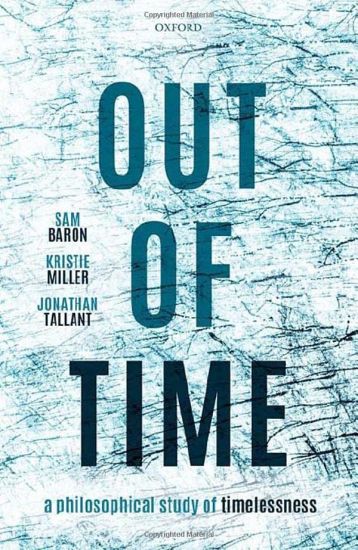
Out of Time

Out of Time

Samuel Baron; Kristie Miller; Jonathan Tallant

Oxford University Press
2022
sidottu
The idea that time does not exist is, for many, unthinkable: time must exist. Almost every experience we have tells us so. There has been plenty of debate around what time is like, but not whether it exists. The goal of this book is to make the absence of time thinkable. Time might not exist. Beginning with an empirically flavoured examination of the 'folk' concept of time, the book explores the implications this has for our understanding of agency, and the extent to which our best physics and best metaphysics are compatible with a timeless conception of reality.
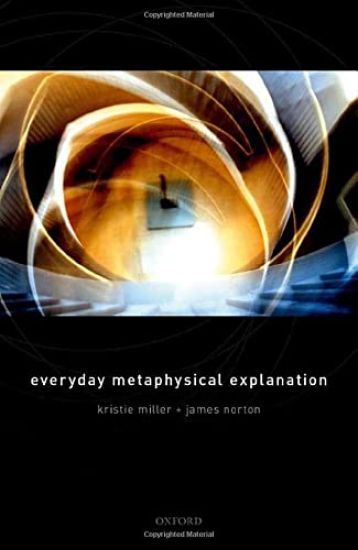
Everyday Metaphysical Explanation

Everyday Metaphysical Explanation

Kristie Miller; James Norton

Oxford University Press
2022
sidottu
The philosophical notion of metaphysical explanation has been subject to an increased level of attention in the previous decade. Despite tantalising claims about how metaphysical explanations are part of everyday life, the everyday notion has not been explored. In Everyday Metaphysical Explanation, Kristie Miller and James Norton take up the task of developing an account of the everyday notion of metaphysical explanation: the notion that we all use in ordinary contexts when we ask for, and receive, explanations of a certain sort. Building on the striking results of their empirical investigation of folk judgements regarding what metaphysically explains what, together with evidence of our ordinary practices surrounding the notion, they build three unique accounts of the phenomenon.
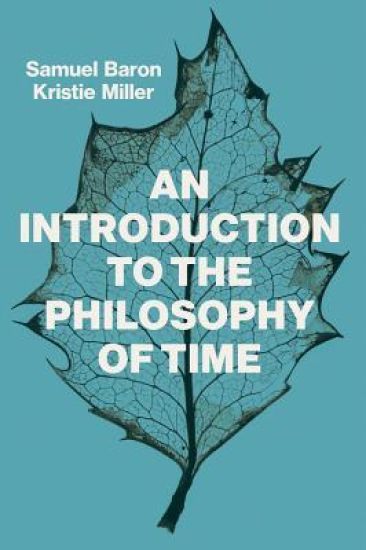
An Introduction to the Philosophy of Time

An Introduction to the Philosophy of Time

Sam Baron; Kristie Miller

Polity Press
2018
nidottu
Time is central to our lived experience of the world. Yet, as this book reveals, it is startlingly difficult to reconcile the way we seem to experience time with many of the theories presented to us in physics and metaphysics. This comprehensive and accessible introduction guides the unfamiliar reader through difficult questions at the intersection of the metaphysics and physics of time. It starts with the assumption that physics and metaphysics are inextricably connected, and that each can, and should, shed light on the other. The authors explore a range of views about the nature of time, showing how different these are from the way we typically think about time and our place in it. They consider such questions as: whether time travel is possible, and, if it is, whether we can change the past; whether there is a single moment that is objectively present; whether time flows or is static; and whether, ultimately, time exists at all. An Introduction to the Philosophy of Time will appeal to students of physics and philosophy who want both a comprehensive overview of the area and enough depth to allow for rigorous discussion. The book’s detailed readings and exercises will challenge students and provide a clear roadmap for further study.
An Introduction to the Philosophy of Time

An Introduction to the Philosophy of Time

Sam Baron; Kristie Miller

Polity Press
2018
sidottu
Time is central to our lived experience of the world. Yet, as this book reveals, it is startlingly difficult to reconcile the way we seem to experience time with many of the theories presented to us in physics and metaphysics. This comprehensive and accessible introduction guides the unfamiliar reader through difficult questions at the intersection of the metaphysics and physics of time. It starts with the assumption that physics and metaphysics are inextricably connected, and that each can, and should, shed light on the other. The authors explore a range of views about the nature of time, showing how different these are from the way we typically think about time and our place in it. They consider such questions as: whether time travel is possible, and, if it is, whether we can change the past; whether there is a single moment that is objectively present; whether time flows or is static; and whether, ultimately, time exists at all. An Introduction to the Philosophy of Time will appeal to students of physics and philosophy who want both a comprehensive overview of the area and enough depth to allow for rigorous discussion. The book’s detailed readings and exercises will challenge students and provide a clear roadmap for further study.
Ellen and Edith

Ellen and Edith

Kristie Miller

University Press of Kansas
2015
nidottu
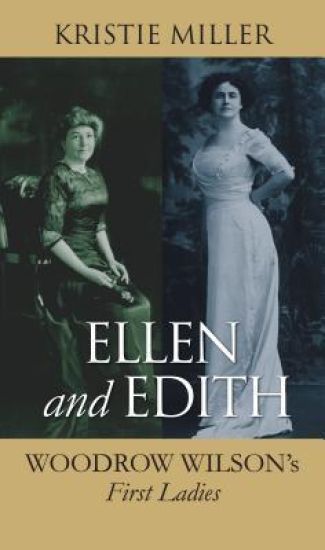
The wives of Woodrow Wilson were strikingly different from each other. Ellen Axson Wilson, quiet and intellectual, died after just a year and a half in the White House and is thought to have had little impact on history. Edith Bolling Wilson was flamboyant and confident but left a legacy of controversy. Yet, as Kristie Miller shows, each played a significant role in the White House. Miller presents a rich and complex portrait of Wilson's wives, one that compels us to reconsider our understanding of both women. Ellen comes into clear focus as an artist and intellectual who dedicated her talents to an ambitious man whose success enabled her to have a significant influence on the institution of the first lady. Miller's assessment of Edith Wilson goes beyond previous flattering accounts and critical assessments. She examines a woman who overstepped her role by hiding her husband's serious illness to allow him to remain in office. But, Miller concludes, Edith was acting as she knew her husband would have wished. Miller explains clearly how these women influenced Woodrow Wilson's life and career. But she keeps her focus on the women themselves, placing their concerns and emotions in the foreground. She presents a balanced appraisal of each woman's strengths and weaknesses. She argues for Ellen's influence not only on her husband but on subsequent first ladies. She strives for an understanding of the controversial Edith, who saw herself as Wilson's principal advisor and, some would argue, acted as shadow president after his stroke. Miller also helps us better appreciate the role of Mary Allen Hulbert Peck, whose role as Wilson's ""playmate"" complemented that of Ellen-but was intolerable to Edith. Especially because Woodrow Wilson continues to be one of the most-studied American presidents, the task of recognizing and understanding the influence of his wives is an important one. Drawing extensively on the Woodrow Wilson papers and newly available material, Miller's book answers that call with a sensitive and compelling narrative of how private and public emotions interacted at a pivotal moment in the history of first ladies.
Isabella Greenway

Isabella Greenway

Kristie Miller

University of Arizona Press
2005
nidottu
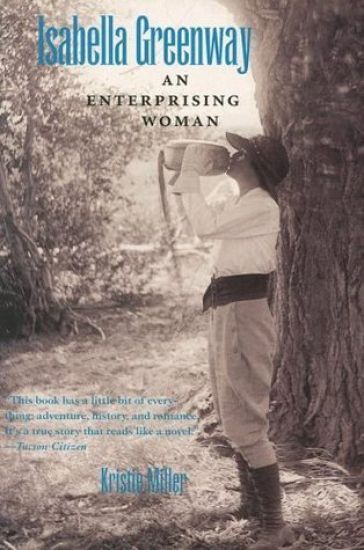
She was at home on the western range and in New York salons. An energetic entrepreneur who managed a ranch, an airline, and a resort. A politician who became a key player in the New Deal. Isabella Greenway blazed a trail for remarkable women in Arizona politics today, from Janet Napolitano to Sandra Day O'Connor. Now Kristie Miller offers an intimate view of this extraordinary woman. Isabella Greenway's life was linked with both Theodore Roosevelt and Franklin D. Roosevelt. Her infancy was spent on a snow-swept ranch in North Dakota, where young TR was a neighbor and a friend. In her teens, she captivated Edith Wharton's New York as a glamorous debutante. A bridesmaid in the wedding of Eleanor and Franklin Roosevelt, Isabella was the bride of Robert Ferguson, a Scottish nobleman and one of TR's Rough Riders. They went west when he developed tuberculosis; after his death, she married his fellow Rough Rider, Arizona copper magnate John Greenway. In Tucson, the energetic Isabella ran an airline, worked with disabled veterans, and founded the world-famous Arizona Inn. When the Great Depression brought hard times, Eleanor Roosevelt recruited Isabella to work for the Democratic Party. Isabella played a decisive role in Franklin Roosevelt's nomination to the presidency in 1932; the New York Times called her "the most-talked-of woman at the National Democratic Convention." She was elected to Congress as Arizona's only US Representative, and again drew national media attention when she challenged FDR for not being sufficiently progressive. Miller's meticulous biography captures a life of adventure and romance, from southern tobacco country to the ballrooms of New York, from western ranches to the dome of the US Capitol. She shows national politics played out behind the scenes, Isabella's lifelong friendship with Eleanor Roosevelt, and the drama of a loyal wife caring for a dying husband despite having fallen in love with a younger man. The book also shows Greenway's considerable influence on the development of Arizona's business and politics in the early decades of statehood. Although Isabella Greenway died in 1953, the Arizona Inn a tribute to her enterprise remains a premier resort hotel, celebrating its 75th anniversary in 2005. This book, too, celebrates Isabella's energy, vision, indomitable spirit, and love of life.