Kirjojen hintavertailu. Mukana 12 390 323 kirjaa ja 12 kauppaa.

Kirjailija

Kristin J. Anderson

Kirjat ja teokset yhdessä paikassa: 5 kirjaa, julkaisuja vuosilta 2009-2024, suosituimpien joukossa Enraged, Rattled, and Wronged. Vertaile teosten hintoja ja tarkista saatavuus suomalaisista kirjakaupoista.

5 kirjaa

Kirjojen julkaisuhaarukka 2009-2024.

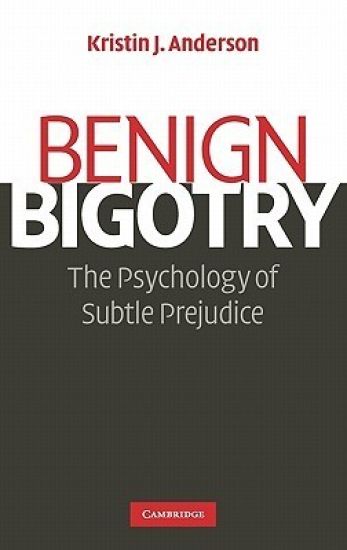
Benign Bigotry

Benign Bigotry

Kristin J. Anderson

Cambridge University Press
2024
sidottu
Benign Bigotry delves into the multifaceted landscape of prejudice, spanning academic and scientific research, popular culture, and contemporary politics. At its core lies the concept of subtle prejudice-a pervasive, often unconscious bias in race, gender, and sexuality. Through meticulous analysis and the author's own experience serving eight years on the Police Oversight Board, this book exposes seven seemingly harmless cultural myths that perpetuate inequality. It also confronts prejudices against women and LGBTQ+ individuals, offering concrete strategies to dismantle entrenched beliefs. Designed as a textbook for undergraduate and graduate classes, yet accessible to the educated lay reader, each chapter caters to those interested in psychology, sociology, business, and education. With a valuable new chapter on systemic inequality, updated real-life examples, and engaging with the exploration of empirical research on discrimination and prejudice emerging since 2009, this second edition is not to be missed.
Benign Bigotry

Benign Bigotry

Kristin J. Anderson

Cambridge University Press
2024
pokkari
Benign Bigotry delves into the multifaceted landscape of prejudice, spanning academic and scientific research, popular culture, and contemporary politics. At its core lies the concept of subtle prejudice-a pervasive, often unconscious bias in race, gender, and sexuality. Through meticulous analysis and the author's own experience serving eight years on the Police Oversight Board, this book exposes seven seemingly harmless cultural myths that perpetuate inequality. It also confronts prejudices against women and LGBTQ+ individuals, offering concrete strategies to dismantle entrenched beliefs. Designed as a textbook for undergraduate and graduate classes, yet accessible to the educated lay reader, each chapter caters to those interested in psychology, sociology, business, and education. With a valuable new chapter on systemic inequality, updated real-life examples, and engaging with the exploration of empirical research on discrimination and prejudice emerging since 2009, this second edition is not to be missed.
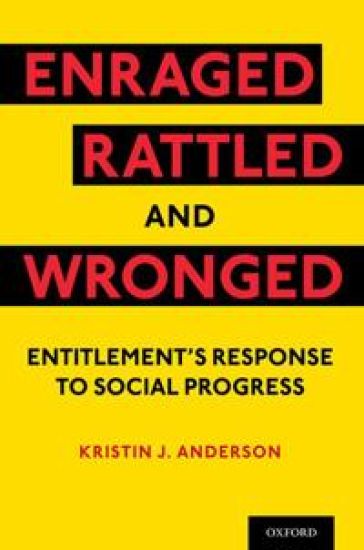
Enraged, Rattled, and Wronged

Enraged, Rattled, and Wronged

Kristin J. Anderson

Oxford University Press Inc
2021
nidottu
Psychological entitlement, or a sense that some individuals or groups are inherently worthier of certain privileges, is an overlooked but essential feature of the persistent inequality that resists social progress and oppresses those in the margins. In the political climate that gave rise to and resulted in Donald Trump's presidency, confusion, rage, and feelings of victimization linger among those who felt empowered by the validation felt with him into office--feelings that existed and will continue to exist independently of the former president himself. Enraged, Rattled, and Wronged confronts psychological entitlement in its many forms or related attributes, such as narcissism, to expose the ugly truths at the heart of this phenomenon. In exploring how members of advantaged groups come to understand their belief in their own worthiness relative to those in disadvantaged groups, expert psychologist Kristin J. Anderson channels her research and expertise in prejudice and discrimination to ask critical questions of the current political and social climate. What happens to entitled people when they feel pushed aside? How does their inflated sense of deservingness make them vulnerable to manipulation by the demagogues who use them, blinding them to the negative outcomes that are often paradoxical? What are they willing to tear down as they scramble to keep their grip on the status and power they believe are rightfully theirs? How has entitled rage played out historically, and how do these events lend themselves to both the predictable and unpredictable manifestations of power grabs that we see now? Drawing from a wealth of timely examples and empirical literature, Anderson situates this anger as backlash against the social progress that empowers marginalized groups, even at the expense of the dominant group, if necessary. Citing historical moments such as the rage of whites directed at newly freed African Americans in the South during Reconstruction and the anger of the entitled when women have attempted to control their reproduction, Anderson traces this phenomenon over time and delineates the link between individual-level processing of psychological deservingness and macro-level problems that impede equality, concluding with a call for action for to dominant group members to join the vibrant movements for social progress that have emerged in recent years.
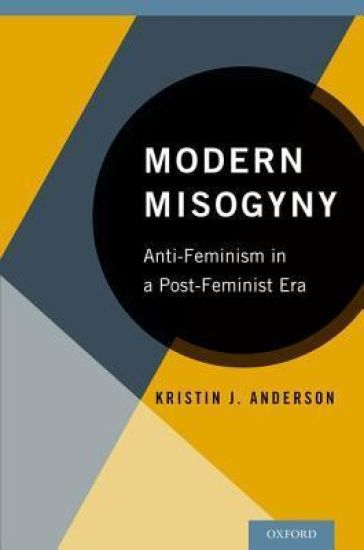
Modern Misogyny

Modern Misogyny

Kristin J. Anderson

Oxford University Press Inc
2014
nidottu
Pundits and politicians often opine on the irrelevance of feminism and the women's movement today. Some commentators describe the state of feminism as "post-feminist," alongside equally questionable claims of Barack Obama's election as signaling a "post-racial" America. Modern Misogyny examines contemporary anti-feminism in a "post-feminist" era. It considers the widespread notion that the feminist movement has ended, in large part because the work of feminism has been completed. In fact, the argument goes, women have been so successful in achieving equality, it is now men who currently are at risk of becoming irrelevant and unnecessary. These sentiments make up modern anti-feminism. Modern Misogyny argues that equality has not been fully achieved and that anti-feminism is now packaged in a more palatable, but stealthy form. This book addresses the nature, function, and implications of modern anti-feminism in the United States. Modern Misogyny explores the landscape of popular culture and politics, emphasizing relatively recent moves away from feminist activism to individualism and consumerism where "self-empowerment" represents women's progress. It also explores the retreat to traditional gender roles after September 11, 2001. It interrogates the assumption that feminism is unnecessary, that women have achieved equality, and therefore those women who do insist on being feminists want to get ahead of men. Finally, it takes a fresh look at the positive role that feminism plays in today's "post-feminist" era, and how feminism does and might function in women's lives. Post-feminist discourse encourages young women to believe that they were born into a free society, so if they experience discrimination, it is an individual, isolated problem that may even be their own fault. Modern Misogyny examines that rendering of feminism as irrelevant and as the silencing and marginalizing of feminists. Anderson calls for a revived feminism that is vigilant in combatting modern forms of sexism.
Benign Bigotry

Benign Bigotry

Kristin J. Anderson

Cambridge University Press
2009
sidottu
While overt prejudice is now much less prevalent than in decades past, subtle prejudice - prejudice that is inconspicuous, indirect, and often unconscious - continues to pervade our society. Laws do not protect against subtle prejudice and, because of its covert nature, it is difficult to observe and frequently goes undetected by both perpetrator and victim. Benign Bigotry uses a fresh format to examine subtle prejudice by addressing six commonly held cultural myths based on assumptions that appear harmless but actually foster discrimination: 'those people all look alike'; 'they must be guilty of something'; 'feminists are man-haters'; 'gays flaunt their sexuality'; 'I'm not a racist, I'm color-blind' and 'affirmative action is reverse racism'. Kristin J. Anderson skillfully relates each of these myths to real world events, emphasizes how errors in individual thinking can affect society at large, and suggests strategies for reducing prejudice in daily life.