Kirjojen hintavertailu. Mukana 12 657 676 kirjaa ja 12 kauppaa.
Kirjailija
Kristin Shrader-Frechette
Kirjat ja teokset yhdessä paikassa: 12 kirjaa, julkaisuja vuosilta 1982-2016, suosituimpien joukossa Policy for Land. Vertaile teosten hintoja ja tarkista saatavuus suomalaisista kirjakaupoista.
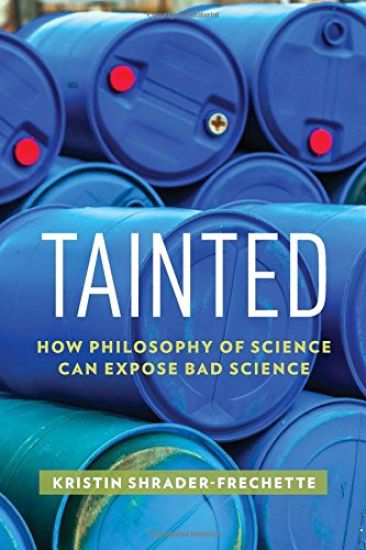
Three-fourths of scientific research in the United States is funded by special interests. Many of these groups have specific practical goals, such as developing pharmaceuticals or establishing that a pollutant causes only minimal harm. For groups with financial conflicts of interest, their scientific findings often can be deeply flawed. To uncover and assess these scientific flaws, award-winning biologist and philosopher of science Kristin Shrader-Frechette uses the analytical tools of classic philosophy of science. She identifies and evaluates the concepts, data, inferences, methods, models, and conclusions of science tainted by the influence of special interests. As a result, she challenges accepted scientific findings regarding risks such as chemical toxins and carcinogens, ionizing radiation, pesticides, hazardous-waste disposal, development of environmentally sensitive lands, threats to endangered species, and less-protective standards for workplace-pollution exposure. In so doing, she dissects the science on which many contemporary scientific controversies turn. Demonstrating and advocating "liberation science," she shows how practical, logical, methodological, and ethical evaluations of science can both improve its quality and credibility -- and protect people from harm caused by flawed science, such as underestimates of cancers caused by bovine growth hormones, cell phones, fracking, or high-voltage wires. This book is both an in-depth look at the unreliable scientific findings at the root of contemporary debates in biochemistry, ecology, economics, hydrogeology, physics, and zoology -- and a call to action for scientists, philosophers of science, and all citizens.
Three-fourths of scientific research in the United States is funded by special interests. Many of these groups have specific practical goals, such as developing pharmaceuticals or establishing that a pollutant causes only minimal harm. For groups with financial conflicts of interest, their scientific findings often can be deeply flawed. To uncover and assess these scientific flaws, award-winning biologist and philosopher of science Kristin Shrader-Frechette uses the analytical tools of classic philosophy of science. She identifies and evaluates the concepts, data, inferences, methods, models, and conclusions of science tainted by the influence of special interests. As a result, she challenges accepted scientific findings regarding risks such as chemical toxins and carcinogens, ionizing radiation, pesticides, hazardous-waste disposal, development of environmentally sensitive lands, threats to endangered species, and less-protective standards for workplace-pollution exposure. In so doing, she dissects the science on which many contemporary scientific controversies turn. Demonstrating and advocating "liberation science," she shows how practical, logical, methodological, and ethical evaluations of science can both improve its quality and credibility -- and protect people from harm caused by flawed science, such as underestimates of cancers caused by bovine growth hormones, cell phones, fracking, or high-voltage wires. This book is both an in-depth look at the unreliable scientific findings at the root of contemporary debates in biochemistry, ecology, economics, hydrogeology, physics, and zoology -- and a call to action for scientists, philosophers of science, and all citizens.
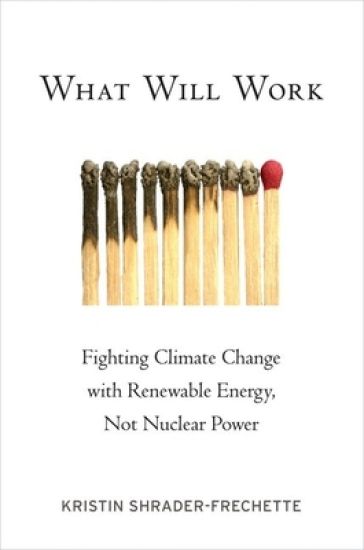
What Will Work makes a rigorous and compelling case that energy efficiencies and renewable energy -- and not nuclear fission or "clean coal" -- are the most effective, cheapest, and equitable solutions to the pressing problem of climate change. Kristin Shrader-Frechette, a respected environmental ethicist and scientist, makes a damning case that the only reason that debate about climate change continues is because fossil-fuel interests pay non-experts to confuse the public. She then builds a comprehensive case against the argument made by many that nuclear fission is a viable solution to the problem, arguing that data on the viability of nuclear power has been misrepresented by the nuclear industry and its supporters. In particular she says that they present deeply flawed cases that nuclear produces low greenhouse gas emissions, that it is financially responsible, that it is safe, and that its risks do not fall mainly on the poor and vulnerable. She argues convincingly that these are all completely false assumptions. Shrader-Frechette then shows that energy efficiency and renewable solutions meet all these requirements - in particular affordability, safety, and equitability. In the end, the cheapest, lowest-carbon, most-sustainable energy solutions also happen to be the most ethical. This urgent book on the most pressing issue of our time will be of interest to anyone involved in environmental and energy policy.
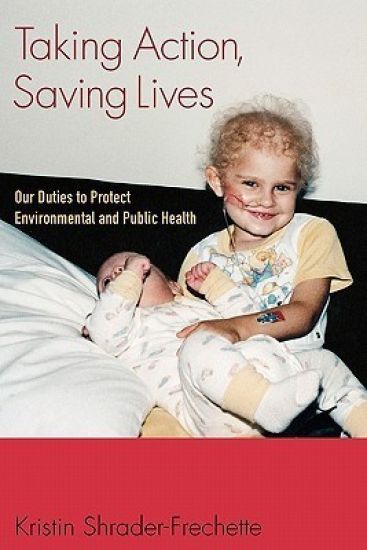
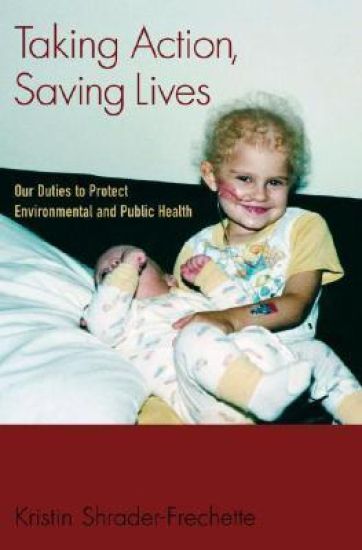
In the United States alone, industrial and agricultural toxins account for about 60,000 avoidable cancer deaths annually. Pollution-related health costs to Americans are similarly staggering: $13 billion a year from asthma, $351 billion from cardiovascular disease, and $240 billion from occupational disease and injury. Most troubling, children, the poor, and minorities bear the brunt of these health tragedies. Why, asks Kristin Shrader-Frechette, has the government failed to protect us, and what can we do about it? In this book, at once brilliant and accessible, Shrader-Frechette reveals how politicians, campaign contributors, and lobbyists--and their power over media, advertising, and public relations--have conspired to cover up environmental disease and death. She also shows how science and regulators themselves are frequently "captured" by well-funded polluters and special interests. But most important, the author puts both the blame--and the solution--on the shoulders of ordinary citizens. She argues that everyone, especially in a democracy, has a duty to help prevent avoidable environmental deaths, to remain informed about, and involved in, public-health and environmental decision-making. Toward this end, she outlines specific, concrete ways in which people can contribute to life-saving reforms, many of them building on recommendations of the American Public Health Association. As disturbing as it is, Shrader-Frechette's message is ultimately hopeful. Calling for a new "democratic revolution," she reminds us that while only a fraction of the early colonists supported the American Revolution, that tiny group managed to change the world. Her book embodies the conviction that we can do the same for environmental health, particularly if citizens become the change they seek. "Influential and impressive. " - Nicholas A. Ashford, Massachusetts Institute of Technology "Important and compelling, clearly written, accessible. I enthusiastically recommend this book." - James F. Childress, University of Virginia "This book shakes the reader." - Avner de-Shalit, Hebrew University of Jerusalem "Powerful, perspicuous, convincing. Essential reading for today." - Inmaculada de Melo-Martin "A must-read - a book you won't want to put down." - Kevin Elliott, University of South Carolina "An eloquent and persuasive plea to scientists and citizens." - George W. Fisher, Johns Hopkins University "Engaging, compelling - deserves to be read by nearly everyone." - William R. Freudenberg, University of California, Santa Barbara "By one of America's foremost philosophers and public intellectuals; immensely readable, courageous, often startling, insightful." - Richard Hiskes, University of Connecticut "Timely, accessible, and written with enviable clarity and passion. A distinguished philosopher sounds an ethical call to arms to prevent illness and death from pollution." - Sheila Jasanoff, Harvard University "A blistering account of how advocacy must be brought to bear on issues of justice and public health." - Jeffrey Kahn, University of Minnesota "Breaks new ground in linking environmental protection with social justice. A brilliant inquiry." - Sheldon Krimsky, Tufts University "Powerful, lucid, disturbing, poignantly hopeful, lively; deserves to be widely read." - Hugh Lacey, Swarthmore College "A powerful call to action that needs to be heard by consumers and policymakers alike." - Anna C. Mastroianni, University of Washington "No other author can so forcefully bring together ethical analysis, government policy, and environmental science. Outstanding." - Colleen Moore, University of Wisconsin "Accessible, thoughtful, exceptional. It made me want to go out and slay a few dragons of my own!" - Felicity Sackville Northcott, Johns Hopkins University "Convincing, with an impressive command of scientific knowledge. No book more clearly demonstrates the need for citizen action." - Mark Sagoff, University of Maryland "Like Rachel Carson's Silent Spring - brilliant, brave." - Sylvia Hood Washington, University of Illinois, Chicago "This book is inspirational as much as it is scientific....Highly recommended." -- CHOICE
Pollution annually kills hundreds of thousands of people. In a brilliant, disturbing, yet readable book, Shrader-Frechette shows why this environmental epidemic continues. Campaign contributors, lobbyists, and special interests often control information by capturing media and even science itself. Yet Shrader-Frechette puts the blame - and the solution - on the shoulders of ordinary citizens. Calling for a new "democratic revolution." Arguing that justice requires us each to become he change we seek, she offers many concrete proposals for reform - many based on American Public Health Association recommendations.
Shrader-Frechette offers a rigorous philosophical discussion of environmental justice. Explaining fundamental ethical concepts such as equality, property rights, procedural justice, free informed consent, intergenerational equity, and just compensation--and then bringing them to bear on real-world social issues--she shows how many of these core concepts have been compromised for a large segment of the global population, among them Appalachians, African-Americans, workers in hazardous jobs, and indigenous people in developing nations. She argues that burdens like pollution and resource depletion need to be apportioned more equally, and that there are compelling ethical grounds for remedying our environmental problems. She also argues that those affected by environmental problems must be included in the process of remedying those problems; that all citizens have a duty to engage in activism on behalf of Environmental Justice; and that in a democracy it is the people, not the government, that are ultimately responsible for fair use of the environment.
In this book, two leading scholars, a political scientist and an ethical philosopher, outline a new national policy for land use, and provide the legal, political, and ethical justifications for their proposed policies.
In this book, two leading scholars, a political scientist and an ethical philosopher, outline a new national policy for land use, and provide the legal, political, and ethical justifications for their proposed policies.
Much of the work in this volume was supported by the National Science Foundation under Grant SES82-05112 from the Program in History and Philosophy of Science and the Division of Policy Research and Analysis. (Any opinions, findings, conclusions, or recommendations expressed in this publication are those of the author and do not necessarily reflect the views of the National Science Foundation. ) Several of these essays were written because of the impetus afforded by speaking invitations. An earlier version of Chapter 3 was presented in Berkeley in January 1983 at a Principal Investi gators' Conference sponsored by the National Science Foundation, Division of Policy Research and Analysis, Technology Assessment and Risk Assessment Group. In May 1982, an earlier version of Chapter 5 was presented at the meeting of the Society for Philos ophy and Technology, held in conjunction with the American Philosophical Association meeting, Western Division, in Columbus, Ohio. Finally, earlier versions of Chapter 6 were presented in Boston in December 1981 at the Boston Colloquium for the Philosophy of Science, as well as at the University of Delaware in January 1982 and at the Biennial Meeting of the Philosophy of Science Association held in Philadelphia in October 1982. An earlier version of this same chapter was published in Philosophy of Science Association 82, volume 1, ed. T. Nickles, Philosophy of Science Association, East Lansing, Michigan, 1982. A number of people have helped to make this book better than it might have been.
If indeed scientists and technologists, especially economists, set much of the agenda by which the future is played out, and I think they do, then the student of scientific methodology and public ethics has at least three options. He can embrace certain scientific methods and the value they hold for social decisionmaking, much as Milton Friedman has accepted neoclassical econom ics. Or, he can condemn them, regardless of their value, much as Stuart Hampshire has rejected risk-cost-benefit analysis (RCBA). Finally, he can critically assess these scientific methods and attempt to provide solutions to the problems he has uncovered. As a philosopher of science seeking the middle path between uncritical acceptance and extremist rejection of the economic methods used in policy analysis, I have tried to avoid the charge of being "anti science". Fred Hapgood, in response to my presentation at a recent Boston Colloquium for the Philosophy of Science, said that my arguments "felt like" a call for rejection of the methods of risk-cost-benefit analysis. Not so, as Chapter Two of this volume should make eminently clear. All my criticisms are construc tive ones, and the flaws in economic methodology which I address are uncovered for the purpose of suggesting means of making good techniques better. Likewise, although I criticize the economic methodology by which many technology assessments (TA's) and environmental-impact analyses (EIA's) have been used to justify public projects, it is wrong to conclude that I am anti-technology.
If indeed scientists and technologists, especially economists, set much of the agenda by which the future is played out, and I think they do, then the student of scientific methodology and public ethics has at least three options. He can embrace certain scientific methods and the value they hold for social decisionmaking, much as Milton Friedman has accepted neoclassical econom ics. Or, he can condemn them, regardless of their value, much as Stuart Hampshire has rejected risk-cost-benefit analysis (RCBA). Finally, he can critically assess these scientific methods and attempt to provide solutions to the problems he has uncovered. As a philosopher of science seeking the middle path between uncritical acceptance and extremist rejection of the economic methods used in policy analysis, I have tried to avoid the charge of being "anti science". Fred Hapgood, in response to my presentation at a recent Boston Colloquium for the Philosophy of Science, said that my arguments "felt like" a call for rejection of the methods of risk-cost-benefit analysis. Not so, as Chapter Two of this volume should make eminently clear. All my criticisms are construc tive ones, and the flaws in economic methodology which I address are uncovered for the purpose of suggesting means of making good techniques better. Likewise, although I criticize the economic methodology by which many technology assessments (TA's) and environmental-impact analyses (EIA's) have been used to justify public projects, it is wrong to conclude that I am anti-technology.
This book grew out of projects funded by the Kentucky Human ities Council in 1974 and. 1975 and by the Environmental Protec tion Agency in 1976 and 1977. As a result of the generosity of these two agencies, I was able to study the logical, methodological, and ethical assumptions inherent in the decision to utilize nuclear fission for generating electricity. Since both grants gave me the opportunity to survey public policy-making, I discovered that there were critical lacunae in allegedly comprehensive analyses of various energy technologies. Ever since this discovery, one of my goals has been to fill one of these gaps by writing a well-docu mented study of some neglected social and ethical questions regarding nuclear power. Although many assessments of atomic energy written by en vironmentalists are highly persuasive, they often also are overly emotive and question-begging. Sometimes they employ what seem to be correct ethical conclusions, but they do so largely in an in tuitive, rather than a closely-reasoned, manner. On the other hand, books and reports written by nuclear proponents, often Under government contract, almost always ignore the social and ethical aspects of energy decision-making; they focus instead only on a purely scientific assessment of fission generation of electricity. What the energy debate needs, I believe, are more studies which aim at ethical analysis and which avoid unsubstantiated assertions. I hope that these essays are steps in that direction.