Kirjojen hintavertailu. Mukana 12 390 323 kirjaa ja 12 kauppaa.

Kirjailija

Kristin Thompson

Kirjat ja teokset yhdessä paikassa: 15 kirjaa, julkaisuja vuosilta 1987-2025, suosituimpien joukossa ISE Film History: An Introduction. Vertaile teosten hintoja ja tarkista saatavuus suomalaisista kirjakaupoista.

15 kirjaa

Kirjojen julkaisuhaarukka 1987-2025.

Statuary from Royal Buildings at Amarna (2-volume set)

Statuary from Royal Buildings at Amarna (2-volume set)

Kristin Thompson; Marsha Hill

EGYPT EXPLORATION SOCIETY
2024
sidottu
Two-volume set in slipcase Over more than a century and a quarter of excavations the royal and administrative buildings in the city of Amarna have yielded the remains of many hundreds of statues that had been part of Akhenaten’s visionary plan. But fragmentation and dispersal have up until now made the results almost invisible. Only a relatively small number of the original statues have been widely known, even to experts. The present publication brings together all these traces of the city’s past to reveal the abundance, beauty, variety, and novelty of the statuary and to begin the process of reintegrating it in considerations of the temples and palaces of the city. The work is presented in two parts. The first volume presents extensive observations about the creation of the statuary, comprising chapters dealing with the range of materials and the methods of working them, a detailed explication of the novel creation of composite statuary, and an overview of the workshop buildings that have been identified so far at Amarna. In the second volume, the excavated fragments themselves, most of them previously unpublished, are catalogued in a series of chapters devoted to individual royal buildings. The original statues are envisioned and analysed for their contexts, resulting in new information about these buildings, the intentions and concerns behind them, and the evolution in those intentions.
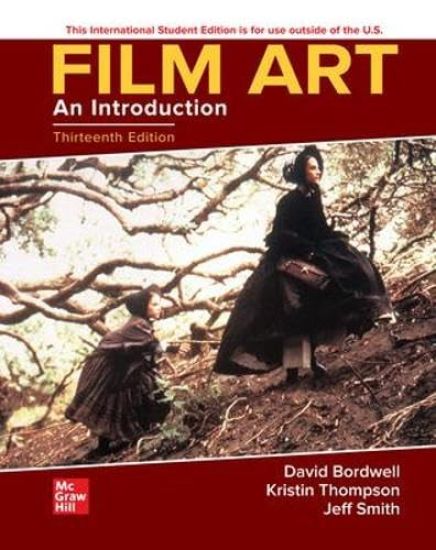
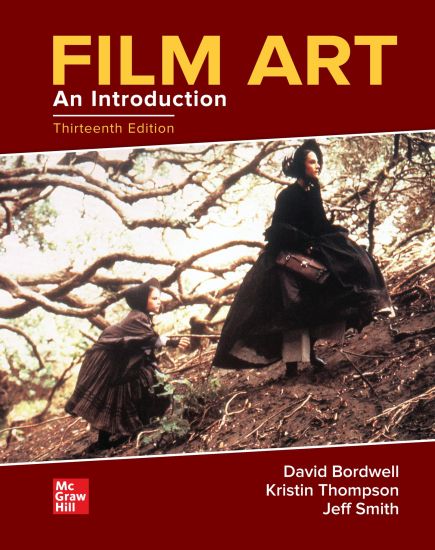
Loose Leaf for Film Art: An Introduction

Loose Leaf for Film Art: An Introduction

David Bordwell; Kristin Thompson; Jeff Smith

McGraw-Hill Companies
2023
irtolehti
Film is an art form with a language and an aesthetic all its own. Since 1979, Film Art has been the best-selling and most widely respected introduction to the analysis of cinema. Taking a skills-centered approach supported by examples from many periods and countries, the authors help students develop a core set of analytical skills that will enrich their understanding of any film, in any genre. In-depth examples deepen students' appreciation for how creative choices by filmmakers affect what viewers experience and how they respond. Film Art is generously illustrated with more than 1,000 frame enlargements taken directly from completed films, providing concrete illustrations of key concepts. Its Connect program includes invaluable tutorials featuring canonic film clips from the Criterion Collection. The thirteenth edition of Film Art includes extensively updated examples, and expanded coverage of digital filmmaking and the artistic and commercial implications of streaming.
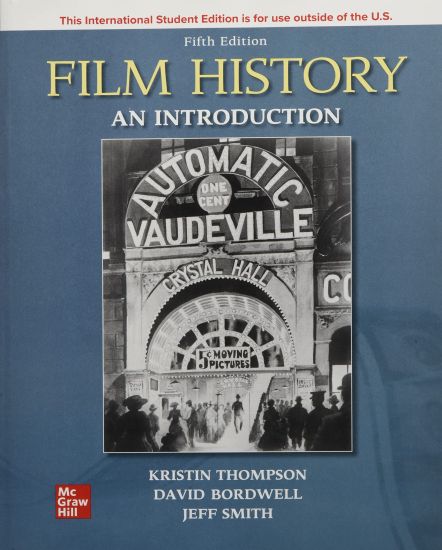
Film History: An Introduction ISE

Film History: An Introduction ISE

Kristin Thompson; David Bordwell

McGraw-Hill Education
2021
nidottu
This new edition of Film History has been revised to include recent films, new examples, and updated comprehensive overviews of the rise of streaming services as purveyors of cinematic content as well as the massive disruptions of film production, distribution, and exhibition caused by the COVID-19 pandemic. It is a comprehensive global survey of film and its many genres – from drama and comedy to documentary and experimental – written by three of the discipline’s leading scholars. Concepts and events are illustrated with frame enlargements taken from the original sources, giving students more realistic and relevant points of reference than publicity stills. There are 100 new film clips with commentary in McGraw Hill Connect® – the web-based assignment and assessment platform that helps you connect your students to their coursework. Film History is a text that any serious film scholar – professor, undergraduate, or graduate student – will want to read and keep.
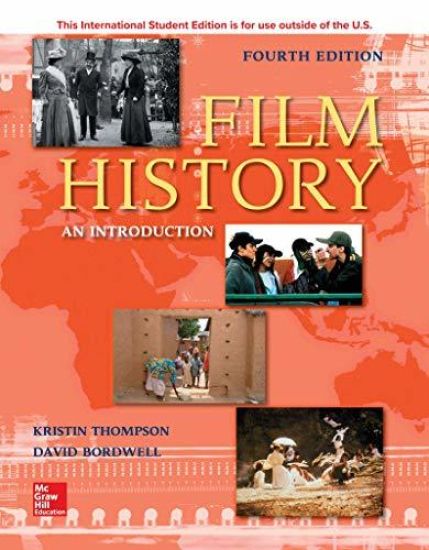
ISE Film History: An Introduction

ISE Film History: An Introduction

Kristin Thompson; David Bordwell

McGraw-Hill Education
2018
nidottu
Written by two of the leading scholars in film studies, Film History: An Introduction 4e is a comprehensive, global survey of the medium that covers the development of every genre in film, from drama and comedy to documentary and experimental. Concepts and events are illustrated with frame enlargements taken from the original sources, giving students more realistic points of reference.
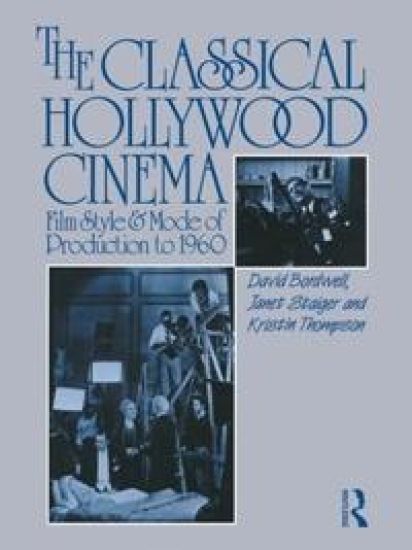
The Classical Hollywood Cinema

The Classical Hollywood Cinema

David Bordwell; Janet Staiger; Kristin Thompson

Routledge
2015
sidottu
'A dense, challenging and important book.' Philip French Observer'At the very least, this blockbuster is probably the best single volume history of Hollywood we're likely to get for a very long time.' Paul Kerr City Limits'Persuasively argued, the book is also packed with facts, figures and photographs.' Nigel Andrews Financial TimesAcclaimed for their breakthrough approach, Bordwell, Staiger and Thompson analyze the basic conditions of American film-making as a historical institution and consider to what extent Hollywood film production constitutes a systematic enterprise, in both its style and its business operations.Despite differences of director, genre or studio, most Hollywood films operate within a set of shared assumptions about how a film should look and sound. Such assumptions are neither natural nor inevitable; but because classical-style films have been the type most widely seen, they have come to be accepted as the 'norm' of film-making and viewing.The authors show how these classical conventions were formulated and standardized, and how they responded to the arrival of sound, colour, widescreen ratios and stereophonic sound. They argue that each new technological development has served a function within an existing narrational system.The authors also examine how the Hollywood cinema standardized the film-making process itself. They describe how, over the course of its history, Hollywood developed distinct modes of production in a constant search for maximum efficiency, predictability and novelty.Set apart by its combination of theoretical analysis and empirical evidence, this book is the standard work on the classical Hollywood cinema style of film-making from the silent era to the 1960s. Now available in paperback, it is a 'must' for film students, lecturers and all those seriously interested in the development of the film industry.
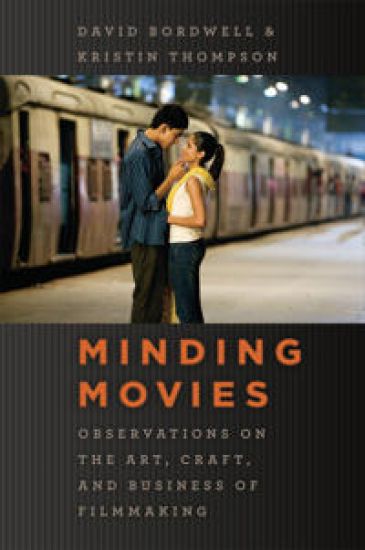
Minding Movies

Minding Movies

David Bordwell; Kristin Thompson

University of Chicago Press
2011
sidottu
David Bordwell and Kristin Thompson are two of America's preeminent film scholars. You would be hard pressed to find a serious student of the cinema who hasn't spent at least a few hours huddled with their seminal introduction to the field-Film Art, now in its ninth edition-or a cable television junkie unaware that the Independent Film Channel sagely christened them the 'Critics of the Naughts.' Since launching their blog, Observations on Film Art, in 2006, the two have added web virtuosos to their growing list of accolades, creating unconventional long-form pieces engaged with film artistry that have helped to redefine cinematic storytelling for a new age and audience. "Minding Movies" presents a selection from over three hundred essays on genre movies, art films, animation, and the business of Hollywood that have graced Bordwell and Thompson's blog. Informal pieces, conversational in tone but grounded in three decades of authoritative research, the essays gathered here range from in-depth analyses of individual films such as "Slumdog Millionaire" and "Inglourious Basterds" to adjustments of Hollywood media claims and forays into cinematic humor. For Bordwell and Thompson, the most fruitful place to begin is how movies are made, how they work, and how they work on us. Written for film lovers, these essays-on topics ranging from Borat to blockbusters and back again-will delight current fans and gain new enthusiasts. Serious but not solemn, vibrantly informative without condescension, and above all illuminating reading, Minding Movies offers ideas sure to set film lovers thinking-and keep them returning to the silver screen.
Minding Movies

Minding Movies

David Bordwell; Kristin Thompson

University of Chicago Press
2011
nidottu
David Bordwell and Kristin Thompson are two of America's preeminent film scholars. You would be hard pressed to find a serious student of the cinema who hasn't spent at least a few hours huddled with their seminal introduction to the field - Film Art, now in its ninth edition - or a cable television junkie unaware that the Independent Film Channel sagely christened them the 'Critics of the Naughts.' Since launching their blog, Observations on Film Art, in 2006, the two have added web virtuosos to their growing list of accolades, creating unconventional long-form pieces engaged with film artistry that have helped to redefine cinematic storytelling for a new age and audience. "Minding Movies" presents a selection from over three hundred essays on genre movies, art films, animation, and the business of Hollywood that have graced Bordwell and Thompson's blog. Informal pieces, conversational in tone but grounded in three decades of authoritative research, the essays gathered here range from in-depth analyses of individual films such as Slumdog Millionaire and Inglourious Basterds to adjustments of Hollywood media claims and forays into cinematic humor. For Bordwell and Thompson, the most fruitful place to begin is how movies are made, how they work, and how they work on us. Written for film lovers, these essays - on topics ranging from Borat to blockbusters and back again - will delight current fans and gain new enthusiasts. Serious but not solemn, vibrantly informative without condescension, and above all illuminating reading, "Minding Movies" offers ideas sure to set film lovers thinking-and keep them returning to the silver screen.
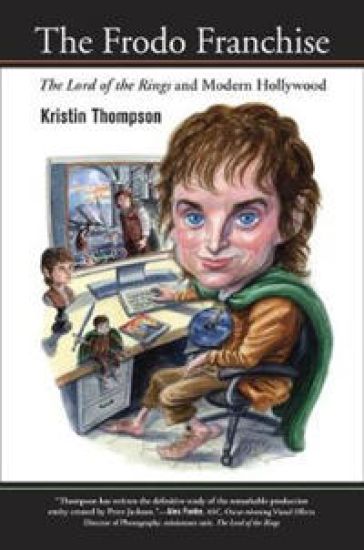
The Frodo Franchise

The Frodo Franchise

Kristin Thompson

University of California Press
2007
pokkari
"Once in a lifetime." The phrase comes up over and over from the people who worked on Peter Jackson's "The Lord of the Rings". The film's seventeen Oscars, record-setting earnings, huge fan base, and hundreds of ancillary products attest to its importance and to the fact that "Rings" is far more than a film. Its makers seized a crucial moment in Hollywood - the special effects digital revolution, plus the rise of "infotainment" and the Internet - to satisfy the trilogy's fans while fostering a huge new international audience.The resulting franchise of franchises has earned billions of dollars to date with no end in sight. Kristin Thompson interviewed seventy-six people to examine the movie's scripting and design and the new technologies deployed to produce the films, video games, and DVDs. She demonstrates the impact "Rings" had on the companies that made it, on the fantasy genre, on New Zealand, and on independent cinema. In fast-paced, compulsively readable prose, she affirms Jackson's "Rings" as one the most important films ever made.
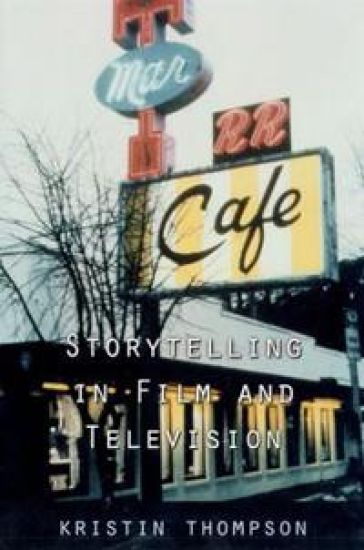
Storytelling in Film and Television

Storytelling in Film and Television

Kristin Thompson

Harvard University Press
2003
nidottu
Derided as simple, dismissed as inferior to film, famously characterized as a vast wasteland, television nonetheless exerts an undeniable, apparently inescapable power in our culture. The secret of television's success may well lie in the remarkable narrative complexities underlying its seeming simplicity, complexities Kristin Thompson unmasks in this engaging analysis of the narrative workings of television and film.After first looking at the narrative techniques the two media share, Thompson focuses on the specific challenges that series television presents and the tactics writers have devised to meet them--tactics that sustain interest and maintain sense across multiple plots and subplots and in spite of frequent interruptions as well as weeklong and seasonal breaks. Beyond adapting the techniques of film, Thompson argues, television has wrought its own changes in traditional narrative form. Drawing on classics of film and television, as well as recent and current series like Buffy the Vampire Slayer, The Sopranos, and The Simpsons, she shows how adaptations, sequels, series, and sagas have altered long-standing notions of closure and single authorship. And in a comparison of David Lynch's Blue Velvet and Twin Peaks, she asks whether there can be an "art television" comparable to the more familiar "art cinema."
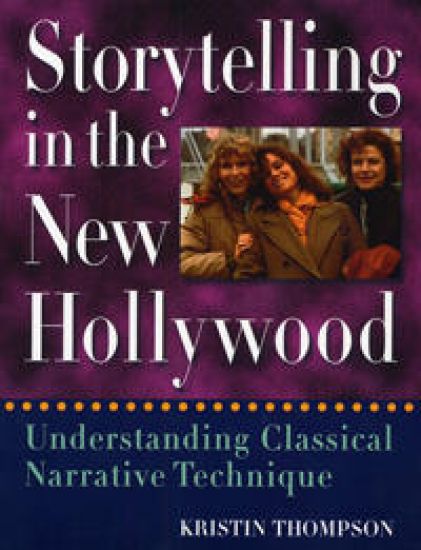
Storytelling in the New Hollywood

Storytelling in the New Hollywood

Kristin Thompson

Harvard University Press
1999
nidottu
In a book as entertaining as it is enlightening, Kristin Thompson offers the first in-depth analysis of Hollywood's storytelling techniques and how they are used to make complex, easily comprehensible, entertaining films. She also takes on the myth that modern Hollywood films are based on a narrative system radically different from the one in use during the Golden Age of the studio system.Drawing on a wide range of films from the 1920s to the 1990s--from Keaton's Our Hospitality to Casablanca to Terminator 2--Thompson explains such staples of narrative as the goal-oriented protagonist, the double plot-line, and dialogue hooks. She domonstrates that the "three-act structure," a concept widely used by practitioners and media commentators, fails to explain how Hollywood stories are put together.Thompson then demonstrates in detail how classical narrative techniques work in ten box-office and critical successes made since the New Hollywood began in the 1970s: Tootsie, Back to the Future, The Silence of the Lambs, Groundhog Day, Desperately Seeking Susan, Amadeus, The Hunt for Red October, Parenthood, Alien, and Hannah and Her Sisters. In passing, she suggests reasons for the apparent slump in quality in Hollywood films of the 1990s. The results will be of interest to movie fans, scholars, and film practitioners alike.
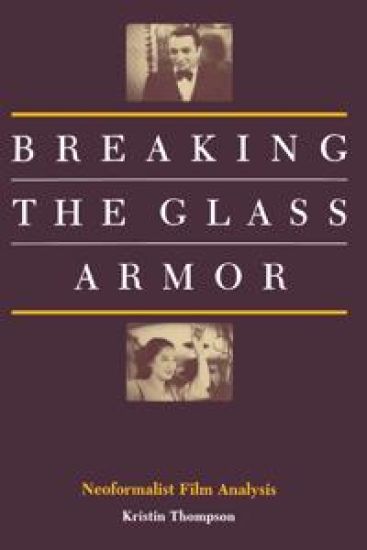
Breaking the Glass Armor

Breaking the Glass Armor

Kristin Thompson

Princeton University Press
1988
pokkari
"Classical works have for us become covered with the glassy armor of familiarity," wrote Victor Shklovsky in 1914. Here Kristin Thompson "defamiliarizes" the reader with eleven different films. Developing the technique formulated in her Eisenstein's Ivan the Terrible (Princeton, 1981), she clearly demonstrates the flexibility of the neoformalist approach. She argues that critics often use cut-and-dried methods and choose films that easily fit those methods. Neoformalism, on the other hand, encourages the critic to deal with each film differently and to modify his or her analytical assumptions continually. Thompson's analyses are thus refreshingly varied and revealing, ranging from an ordinary Hollywood film, Terror by Night, to such masterpieces as Late Spring and Lancelot du Lac. She proposes a formal historical way of dealing with realism, using Bicycle Thieves and The Rules of the Game as examples. Stage Fright and Laura provide cases in which the classical cinema defamiliarizes its own conventions by playing with audience expectations. Other chapters deal with Tati's Les Vacances de Monsieur Hulot and Play Time and Godard's Tout va bien and Sauve qui peut (la vie). Although neoformalist analysis is a rigorous, distinctive approach, it avoids extensive specialized vocabulary and esoteric concepts: the essays here can be read separately by those interested in the individual films. The book's overall purpose, however, goes beyond making these particular films more accessible and intriguing to propose new ways of looking at cinema as a whole.
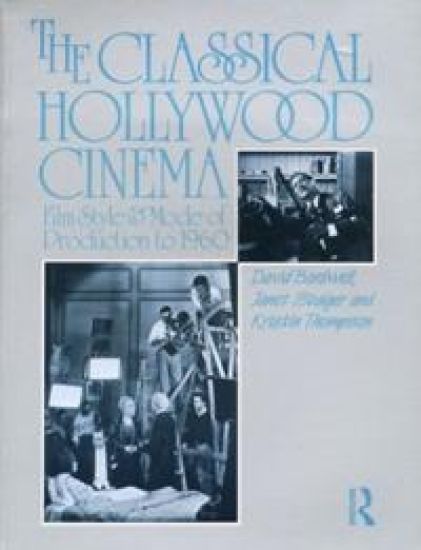
The Classical Hollywood Cinema

The Classical Hollywood Cinema

David Bordwell; Janet Staiger; Kristin Thompson

Routledge
1988
nidottu
'A dense, challenging and important book.' Philip French Observer'At the very least, this blockbuster is probably the best single volume history of Hollywood we're likely to get for a very long time.' Paul Kerr City Limits'Persuasively argued, the book is also packed with facts, figures and photographs.' Nigel Andrews Financial TimesAcclaimed for their breakthrough approach, Bordwell, Staiger and Thompson analyze the basic conditions of American film-making as a historical institution and consider to what extent Hollywood film production constitutes a systematic enterprise, in both its style and its business operations.Despite differences of director, genre or studio, most Hollywood films operate within a set of shared assumptions about how a film should look and sound. Such assumptions are neither natural nor inevitable; but because classical-style films have been the type most widely seen, they have come to be accepted as the 'norm' of film-making and viewing.The authors show how these classical conventions were formulated and standardized, and how they responded to the arrival of sound, colour, widescreen ratios and stereophonic sound. They argue that each new technological development has served a function within an existing narrational system.The authors also examine how the Hollywood cinema standardized the film-making process itself. They describe how, over the course of its history, Hollywood developed distinct modes of production in a constant search for maximum efficiency, predictability and novelty.Set apart by its combination of theoretical analysis and empirical evidence, this book is the standard work on the classical Hollywood cinema style of film-making from the silent era to the 1960s. Now available in paperback, it is a 'must' for film students, lecturers and all those seriously interested in the development of the film industry.

The Classical Hollywood Cinema

The Classical Hollywood Cinema

Bordwell David; Staiger Janet; Kristin Thompson

Columbia University Press
1987
pokkari
How films are conceived,planned, and produced leaves a mark upon the films, directly and structurally. The relations between film style and mode of production are, according to the authors, reciprocal and mutually influencing. The authors trace such topics as style, economics, and technology over time, demonstrating how significant changes occurrred in Hollywood from the earliest days through the sixties.