Kirjojen hintavertailu. Mukana 12 390 323 kirjaa ja 12 kauppaa.

Kirjailija

Kumar Ramakrishna

Kirjat ja teokset yhdessä paikassa: 10 kirjaa, julkaisuja vuosilta 2001-2025, suosituimpien joukossa Original Sin"? Revising the Revisionist Critique of the 1963 Operation Coldstore in Singapore. Vertaile teosten hintoja ja tarkista saatavuus suomalaisista kirjakaupoista.

10 kirjaa

Kirjojen julkaisuhaarukka 2001-2025.

Jemaah Islamiyah, Isis And Beyond: Tracking The Evolving Challenge Of Violent Extremism In Southeast Asia (2001-2025)
This book explores the evolution of violent extremism in Southeast Asia, charting its development from the 2001 discovery of the Jemaah Islamiyah plot linked to Al Qaeda in Singapore, to the rise of ISIS in the mid-2010s, and the emergence of new forms of extremism such as white supremacist, Hindu, and Buddhist extremism in the 2020s. It provides a comprehensive look at how these threats have shaped both regional and global security landscapes.The book brings together a series of policy-oriented commentaries that unpack the complexities of extremism, from the rise of terrorist organisations to the dynamics of radicalisation. It also examines key counter-extremism strategies, highlighting the roles of women, youth, and the importance of addressing the ideological narratives that fuel violent extremism. In the final sections, the book brings the conversation up to the present, analysing non-Islamist extremisms, social media's role in radicalisation, and the need for integrated, context-specific strategies to combat the evolving threat.
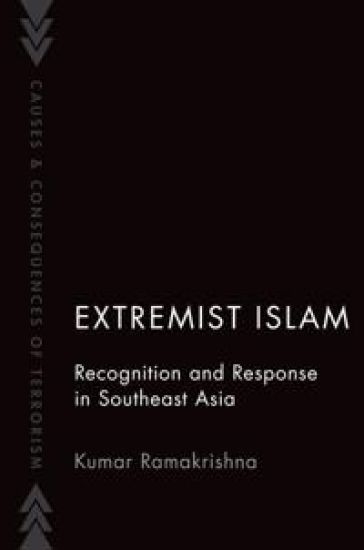
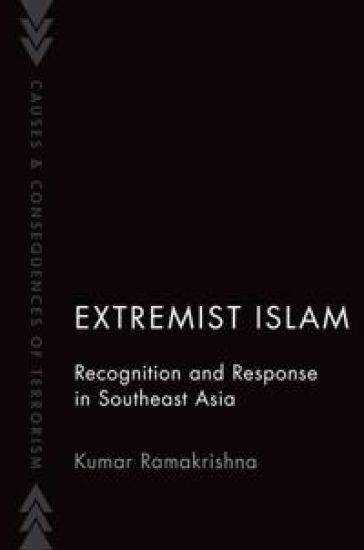
Extremist Islam

Extremist Islam

Kumar Ramakrishna

OXFORD UNIVERSITY PRESS INC
2023
sidottu
Since the Bali terrorist attacks in 2002, law enforcement agencies have rigorously combatted terrorist networks in Southeast Asia, yet groups motivated by violent extremist interpretations of Islam remain resilient and dangerous. This book shines a light on specific beliefs, behaviors, and policies that impact these challenges, ultimately offering cutting-edge, effective tools for response. The book begins by challenging misguided and controversial notions that depict Islam as an inherently violent religion, arguing that the theological-ideological amalgam of what has been called Salafabism is the more useful lens for recognizing closed-minded extremist currents. The book carefully distinguishes this Salafabist extremist mindset from relatively open-minded Salafabist radicalism, paying due attention to "nonviolent extremists" and the ways they can contribute to rather than reduce violent terrorist activity in the region. Using poignant case studies from Malaysia, Singapore, the Philippines and Indonesia, the book clarifies a bewildering range of terminology associated with Islamist violence and explains how imprecise and oversimplified narratives are destructive to progress--and worse, empowering to terrorist organizations. These chapters build up to research-informed policies and rhetorical recommendations for improved outcomes. With its novel insights into the root causes of extremist terrorism in Southeast Asia, the ineffective policies that prohibit progress and promote unrest in this region, and the avenues for positive change, this book offers a comprehensive strategy for fostering theologically sound yet culturally authentic counterterrorist measures that defend the complex, richly textured tapestry of culture in Southeast Asia.
Extremist Islam

Extremist Islam

Kumar Ramakrishna

OXFORD UNIVERSITY PRESS INC
2022
nidottu
Since the Bali terrorist attacks in 2002, law enforcement agencies have rigorously combatted terrorist networks in Southeast Asia, yet groups motivated by violent extremist interpretations of Islam remain resilient and dangerous. This book shines a light on specific beliefs, behaviors, and policies that impact these challenges, ultimately offering cutting-edge, effective tools for response. The book begins by challenging misguided and controversial notions that depict Islam as an inherently violent religion, arguing that the theological-ideological amalgam of what has been called Salafabism is the more useful lens for recognizing closed-minded extremist currents. The book carefully distinguishes this Salafabist extremist mindset from relatively open-minded Salafabist radicalism, paying due attention to "nonviolent extremists" and the ways they can contribute to rather than reduce violent terrorist activity in the region. Using poignant case studies from Malaysia, Singapore, the Philippines and Indonesia, the book clarifies a bewildering range of terminology associated with Islamist violence and explains how imprecise and oversimplified narratives are destructive to progress--and worse, empowering to terrorist organizations. These chapters build up to research-informed policies and rhetorical recommendations for improved outcomes. With its novel insights into the root causes of extremist terrorism in Southeast Asia, the ineffective policies that prohibit progress and promote unrest in this region, and the avenues for positive change, this book offers a comprehensive strategy for fostering theologically sound yet culturally authentic counterterrorist measures that defend the complex, richly textured tapestry of culture in Southeast Asia.
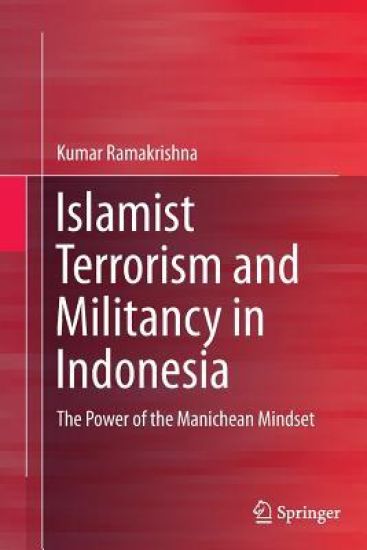
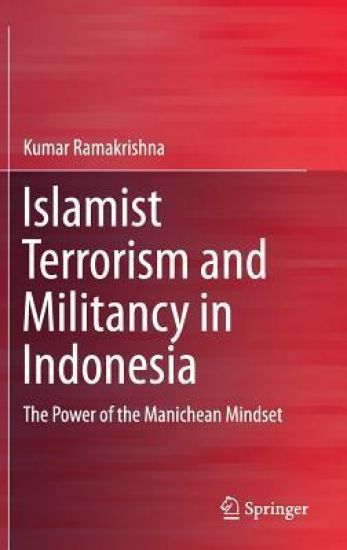
Islamist Terrorism and Militancy in Indonesia

Islamist Terrorism and Militancy in Indonesia

Kumar Ramakrishna

Springer Verlag, Singapore
2016
nidottu
Drawing upon insights from the natural and social sciences, this book puts forth a provocative new argument that the violent Islamist threat in Indonesia today derives its stubborn resilience from being in essence a complex, adaptive and self-organizing system – or what some specialists might even call a super-organism. The book challenges the popular assumption that ideology is the root cause that explains why Indonesian Islamists radicalize into violent extremism. In addition it addresses why despite years of intense security force pressure, seemingly disparate militant cells keep ‘popping up’ like the proverbial hydra - and in the apparent absence of a centralized coordinating body, nevertheless appear to display an organic interconnectivity with one another. Going beyond standard ideological mantras the book argues that fresh inter-disciplinary thinking is needed to cope with the constantly mutating violent Islamist challenge in Indonesia, and puts forth a comprehensive strategy for doing so. It will be of interest to academics and students of terrorism, religion and violence in the Southeast Asian region.
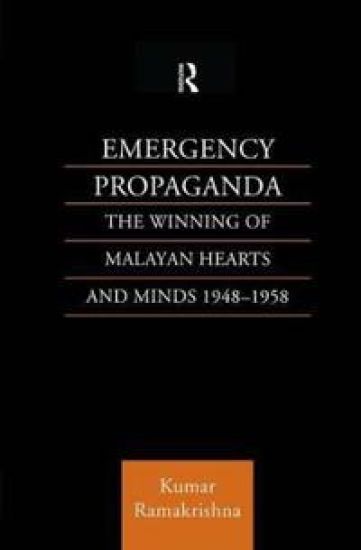
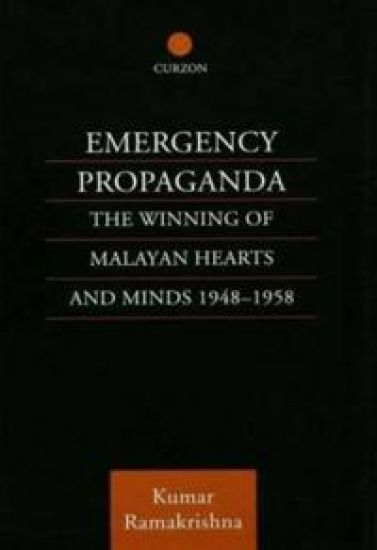
Emergency Propaganda

Emergency Propaganda

Kumar Ramakrishna

Routledge
2015
nidottu
Sheds new light on the hitherto neglected years of the Emergency (1955-58) demonstrating how it was British propaganda which decisively ended the shooting war in December 1958. The study argues for a concept of 'propaganda' that embraces not merely 'words' in the form of film, radio and leaflets but also 'deeds'.
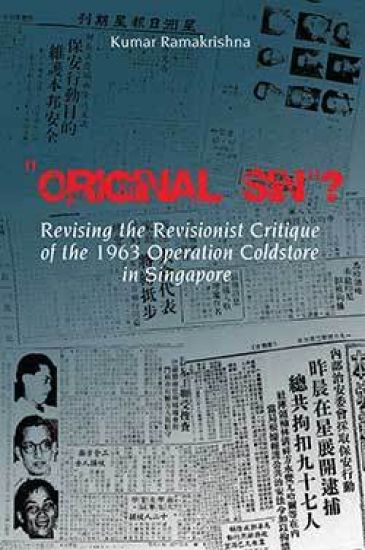
Original Sin"? Revising the Revisionist Critique of the 1963 Operation Coldstore in Singapore
Revisionist" or "alternative" historians have increasingly questioned elements of the Singapore Story — the master narrative of the nation's political and socioeconomic development since its founding by the British in 1819. Much criticism focuses especially on one defining episode of the Story: the internal security dragnet mounted on 2 February 1963 against Communist United Front elements on the island, known to posterity as Operation Coldstore. The revisionists claim that Coldstore was mounted for political rather than security reasons and actually destroyed a legitimate Progressive Left opposition personalized by the charismatic figure of Lim Chin Siong — rather than a dangerous Communist network as the conventional wisdom holds. Relying on both declassified and some previously unseen classified sources, this book challenges revisionist claims, reiterating the historic importance of Coldstore in helping pave the way for Singapore's remarkable journey from Third World status to First in a single generation.
Islamist Terrorism and Militancy in Indonesia

Islamist Terrorism and Militancy in Indonesia

Kumar Ramakrishna

Springer Verlag, Singapore
2014
sidottu
Drawing upon insights from the natural and social sciences, this book puts forth a provocative new argument that the violent Islamist threat in Indonesia today derives its stubborn resilience from being in essence a complex, adaptive and self-organizing system – or what some specialists might even call a super-organism. The book challenges the popular assumption that ideology is the root cause that explains why Indonesian Islamists radicalize into violent extremism. In addition it addresses why despite years of intense security force pressure, seemingly disparate militant cells keep ‘popping up’ like the proverbial hydra - and in the apparent absence of a centralized coordinating body, nevertheless appear to display an organic interconnectivity with one another. Going beyond standard ideological mantras the book argues that fresh inter-disciplinary thinking is needed to cope with the constantly mutating violent Islamist challenge in Indonesia, and puts forth a comprehensive strategy for doing so. It will be of interest to academics and students of terrorism, religion and violence in the Southeast Asian region.
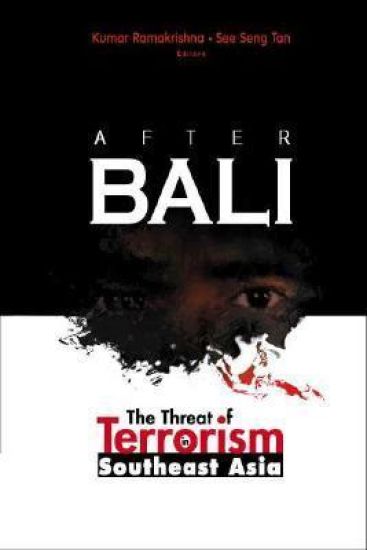
After Bali: The Threat Of Terrorism In Southeast Asia

After Bali: The Threat Of Terrorism In Southeast Asia

Kumar Ramakrishna; See Seng Tan

World Scientific Publishing Co Pte Ltd
2003
nidottu
This book critically analyses the specific threat of terrorism in Southeast Asia since the Bali blasts of 12 October 2002 and the US-led war on Iraq. It offers a comprehensive and critical examination of the ideological, socioeconomic and political motivations, trans-regional linkages, and media representations of the terrorist threat in the region, assesses the efficacy of the regional counter-terror response and suggests a more balanced and nuanced approach to combating the terror threat in Southeast Asia. The contributors include leading scholars of political Islam in the region, renowned terrorism and regional security analysts, as well as highly regarded regional journalists and commentators. This represents a formidable and unequalled combination of expertise.
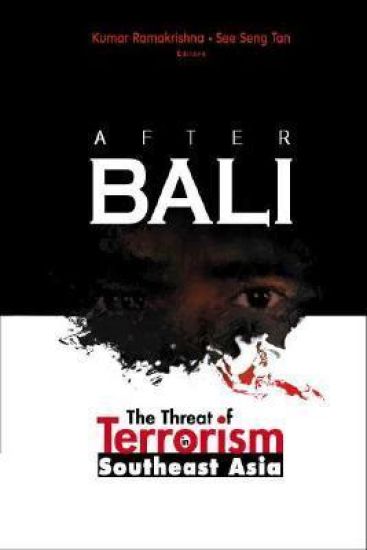
After Bali: The Threat Of Terrorism In Southeast Asia

After Bali: The Threat Of Terrorism In Southeast Asia

Kumar Ramakrishna; See Seng Tan

World Scientific Publishing Co Pte Ltd
2003
sidottu
This book critically analyses the specific threat of terrorism in Southeast Asia since the Bali blasts of 12 October 2002 and the US-led war on Iraq. It offers a comprehensive and critical examination of the ideological, socioeconomic and political motivations, trans-regional linkages, and media representations of the terrorist threat in the region, assesses the efficacy of the regional counter-terror response and suggests a more balanced and nuanced approach to combating the terror threat in Southeast Asia. The contributors include leading scholars of political Islam in the region, renowned terrorism and regional security analysts, as well as highly regarded regional journalists and commentators. This represents a formidable and unequalled combination of expertise.
Emergency Propaganda

Emergency Propaganda

Kumar Ramakrishna

RoutledgeCurzon
2001
sidottu
Sheds new light on the hitherto neglected years of the Emergency (1955-58) demonstrating how it was British propaganda which decisively ended the shooting war in December 1958. The study argues for a concept of 'propaganda' that embraces not merely 'words' in the form of film, radio and leaflets but also 'deeds'.