Kirjojen hintavertailu. Mukana 12 595 353 kirjaa ja 12 kauppaa.

Kirjailija

Kun Mo LEE

Kirjat ja teokset yhdessä paikassa: 4 kirjaa, julkaisuja vuosilta 2004-2012, suosituimpien joukossa ECODESIGN -- The Competitive Advantage. Vertaile teosten hintoja ja tarkista saatavuus suomalaisista kirjakaupoista.

4 kirjaa

Kirjojen julkaisuhaarukka 2004-2012.

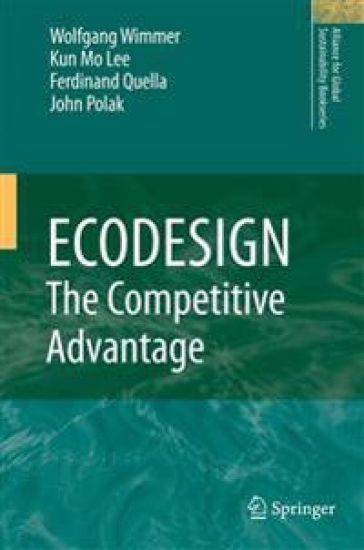
ECODESIGN -- The Competitive Advantage

ECODESIGN -- The Competitive Advantage

Wolfgang Wimmer; Kun Mo LEE; Ferdinand Quella; John Polak

Springer
2012
nidottu
Dealing with environmental issues should no longer be considered simply as a cost of doing business. Effective environmental improvements to a company’s products and services can be turned into business opportunities. This book was written with the express purpose of helping managers of companies, in particular of Small to Medium sized Enterprises (SMEs), to better deal with environmental challenges and address customer requirements, all in order to turn their environmental inve- ments into competitive market advantages. Several examples are provided throughout the book, but also warning signs (Alert Boxes). These “Alerts” are posted to help managers avoid typical traps when working with environmental considerations in business processes. The authors have many years of experience in the various aspects of impleme- ing Ecodesign. This experience includes working in industry for many years; le- ing the environmental departments in a multinational company; managing research projects in eco-product development; Life Cycle Assessment; and national and international environmental communication and marketing. This book is the latest in a series. The 2002 “Ecodesign Pilot” introduced a tool and software to help design more environmentally compatible products. It was directed specifically at designers. The 2004 book, “Ecodesign Implementation”, was written to help project managers optimize product development processes from an environmental perspective.
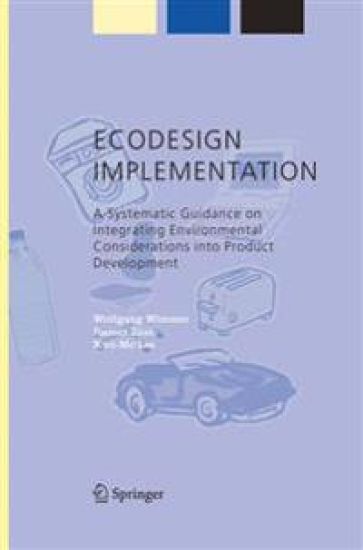
ECODESIGN Implementation

ECODESIGN Implementation

Wolfgang Wimmer; Rainer Züst; Kun Mo LEE

Springer
2010
nidottu
Stakeholders such as environmental directives and customer demands for reducing environmental impacts of a product require innovative and environmentally improved products. Therefore a systematic approach and effective methods and tools are needed in the early phase of product development. The basic elements for optimized process management in the design department are described in this book. The book provides twelve easy to follow steps for implementing ECODESIGN in a company. It gives clear advice how to integrate environmental considerations into product design and development, and combines ECODESIGN with Life Cycle Assessment and Environmental Communication. Chapters on Product modeling, Life Cycle Assessment, ECODESIGN tasks, Product Improvement and Environmental Communication use the previously developed ECODESIGN PILOT (www.ecodesign.at/pilot) and show its application to a real product example. The book comes with two web tools: one is the ECODESIGN PILOT, used to find measures to environmentally improve a product within a short time. The other is the ECODESIGN PILOT's Assistant (www.ecodesign.at/assist): an expert system, which helps to find the right improvement strategy for a product. Audience: This book will be of interest to environmental and sustainability managers, engineers in research and product development, to designers, environmental experts, and consultants, as well as to students working in this field.
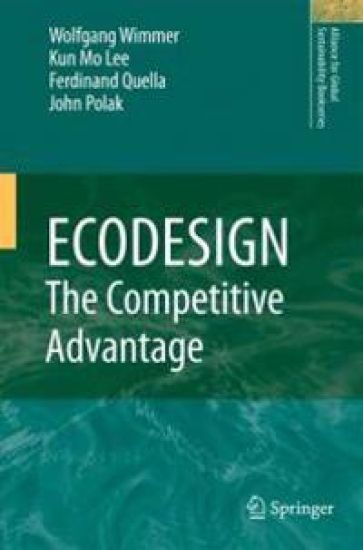
ECODESIGN -- The Competitive Advantage

ECODESIGN -- The Competitive Advantage

Wolfgang Wimmer; Kun Mo LEE; Ferdinand Quella; John Polak

Springer
2010
sidottu
Dealing with environmental issues should no longer be considered simply as a cost of doing business. Effective environmental improvements to a company’s products and services can be turned into business opportunities. This book was written with the express purpose of helping managers of companies, in particular of Small to Medium sized Enterprises (SMEs), to better deal with environmental challenges and address customer requirements, all in order to turn their environmental inve- ments into competitive market advantages. Several examples are provided throughout the book, but also warning signs (Alert Boxes). These “Alerts” are posted to help managers avoid typical traps when working with environmental considerations in business processes. The authors have many years of experience in the various aspects of impleme- ing Ecodesign. This experience includes working in industry for many years; le- ing the environmental departments in a multinational company; managing research projects in eco-product development; Life Cycle Assessment; and national and international environmental communication and marketing. This book is the latest in a series. The 2002 “Ecodesign Pilot” introduced a tool and software to help design more environmentally compatible products. It was directed specifically at designers. The 2004 book, “Ecodesign Implementation”, was written to help project managers optimize product development processes from an environmental perspective.
ECODESIGN Implementation

ECODESIGN Implementation

Wolfgang Wimmer; Rainer Züst; Kun Mo LEE

Springer-Verlag New York Inc.
2004
sidottu
Stakeholders such as environmental directives and customer demands for reducing environmental impacts of a product require innovative and environmentally improved products. Therefore a systematic approach and effective methods and tools are needed in the early phase of product development. The basic elements for optimized process management in the design department are described in this book. The book provides twelve easy to follow steps for implementing ECODESIGN in a company. It gives clear advice how to integrate environmental considerations into product design and development, and combines ECODESIGN with Life Cycle Assessment and Environmental Communication. Chapters on Product modeling, Life Cycle Assessment, ECODESIGN tasks, Product Improvement and Environmental Communication use the previously developed ECODESIGN PILOT (www.ecodesign.at/pilot) and show its application to a real product example. The book comes with two web tools: one is the ECODESIGN PILOT, used to find measures to environmentally improve a product within a short time. The other is the ECODESIGN PILOT's Assistant (www.ecodesign.at/assist): an expert system, which helps to find the right improvement strategy for a product. Audience: This book will be of interest to environmental and sustainability managers, engineers in research and product development, to designers, environmental experts, and consultants, as well as to students working in this field.