Kirjojen hintavertailu. Mukana 12 390 323 kirjaa ja 12 kauppaa.

Kirjailija

Kwame Dawes

Kirjat ja teokset yhdessä paikassa: 46 kirjaa, julkaisuja vuosilta 1995-2026, suosituimpien joukossa A Place to Hide. Vertaile teosten hintoja ja tarkista saatavuus suomalaisista kirjakaupoista.

46 kirjaa

Kirjojen julkaisuhaarukka 1995-2026.

A New Beginning

A New Beginning

Kwame Dawes

Peepal Tree Press Ltd
2018
nidottu
When Speak from Here to There was published in 2016 it was, remarkably, doing something quite new. There are of course the conversations implied in the poems of Coleridge and Wordsworth, but no two poets had committed to, in the words of Will Harris, the almost daily “structure of call-and-response, each utterance is filtered through the other”. A New Beginning offers, as Karen McCarthy Wolf noted in her review of Speak from Here, the same “warmth and a reassurance … in the correspondence itself, between a black man almost but not quite marooned in the white of America’s Midwest, and a white man negotiating his own exile from the vast physical and historical dissonance of Western Australia”, but there is much that carries that initial dialogue to new depths of trust, self-exposure and intimacy, to the expression of new themes, concerns and investigations of poetic form. This richly multi-layered dialogue arises from responses to each poet’s public world, to the private worlds of family, to the inner world of wondering how one can write “love poems in a time of war, these times of monstrous beasts”, and from the stimulus of the other’s poem arriving in the e-mail in-tray. This is the age of Trump, the monster “Lurking in the shadows”, of the seemingly unstoppable degradation of the Australian environment, of, in John Kinsella’s words, a time when there is no “exoneration or relief” in poetry “but witness and recounting”. Above all, though both poets express their anxieties about the limitations of the prophetic (“the pain of hope, and the terror of faithlessness”), there is the countervailing witness of their immensely fertile imaginative response to each other’s words and the comfort that “On the road, you long for the like-minded” is a longing that is being fulfilled. What is also clear is that for both poets there is also a generous space for the third party to the exchange – the reader.
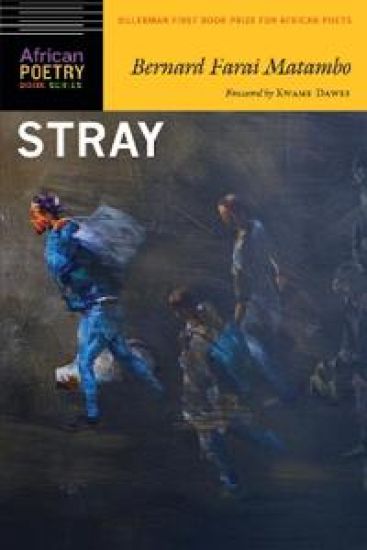
Stray

Stray

Bernard Farai Matambo; Kwame Dawes

University of Nebraska Press
2018
pokkari
Winner of the Sillerman First Book Prize for African Poets, Zimbabwean writer Bernard Farai Matambo’s poems in Stray favor a prose-shaped line as they uncover the contradictory impulses in search of emotional and intellectual truth. Stray not only captures the essence of identity but also eloquently articulates the pain of displacement and speaks to the vulnerability of Africans who have left their native continent. This collection delicately examines the theme of migration-migration in a literal, geographic sense; migration of language from one lexicon to another; migration of a poem toward prose-and the instability of the creative experience in the broader sense.
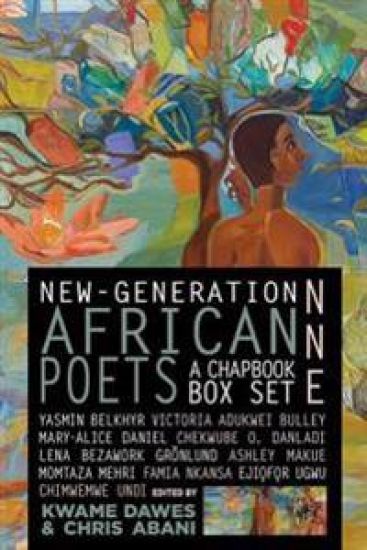
Nne: New-Generation African Poets: A Chapbook Box Set

Nne: New-Generation African Poets: A Chapbook Box Set

Chris Abani; Kwame Dawes

Akashic Books, Ltd.
2017
nidottu
"An amazing assemblage in this set of ten chapbooks. The entirety of it--the books and the language, the art and the binding--is a thing of beauty, and reading it is an experience not to be missed." --New York Journal of Books The limited-edition box set is an annual project started in 2014 to ensure the publication of seven to ten chapbooks by African poets through Akashic Books. The series seeks to identify the best poetry written by African poets working today, and it is especially interested in featuring poets who have not yet published their first full-length book of poetry. The ten poets included in this box set are: Yasmin Belkhyr, Victoria Adukwei Bulley, Chekwube O. Danladi, Mary-Alice Daniel, Lena Bezawork Gr nlund, Ashley Makue, Momtaza Mehri, Famia Nkansa, Ejiofor Ugwu, and Chimwemwe Undi.
The January Children

The January Children

Safia Elhillo; Kwame Dawes

University of Nebraska Press
2017
pokkari
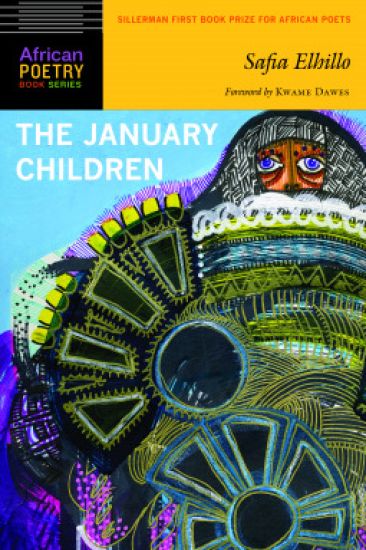
Sillerman First Book Prize for African Poets 2018 Arab American Book Award Winner, Poetry "A taut debut collection of heartfelt poems."-Publishers WeeklyIn her dedication Safia Elhillo writes, “The January Children are the generation born in Sudan under British occupation, where children were assigned birth years by height, all given the birth date January 1.” What follows is a deeply personal collection of poems that describe the experience of navigating the postcolonial world as a stranger in one’s own land. The January Children depicts displacement and longing while also questioning accepted truths about geography, history, nationhood, and home. The poems mythologize family histories until they break open, using them to explore aspects of Sudan’s history of colonial occupation, dictatorship, and diaspora. Several of the poems speak to the late Egyptian singer Abdelhalim Hafez, who addressed many of his songs to the asmarani-an Arabic term of endearment for a brown-skinned or dark-skinned person. Elhillo explores Arabness and Africanness and the tensions generated by a hyphenated identity in those two worlds. No longer content to accept manmade borders, Elhillo navigates a new and reimagined world. Maintaining a sense of wonder in multiple landscapes and mindscapes of perpetually shifting values, she leads the reader through a postcolonial narrative that is equally terrifying and tender, melancholy and defiant.
City of Bones

City of Bones

Kwame Dawes

Northwestern University Press
2017
nidottu
As if convinced that all divination of the future is somehow a revisioning of the past, Kwame Dawes reminds us of the clairvoyance of haunting. The lyric poems in City of Bones: A Testament constitute a restless jeremiad for our times, and Dawes’s inimitable voice peoples this collection with multitudes of souls urgently and forcefully singing, shouting, groaning, and dreaming about the African diasporic present and future. As the twentieth collection in the poet’s hallmarked career, City of Bones reaches a pinnacle, adding another chapter to the grand narrative of invention and discovery cradled in the art of empathy that has defined his prodigious body of work. Dawes’s formal mastery is matched only by the precision of his insights into what is at stake in our lives today. These poems are shot through with music from the drum to reggae to the blues to jazz to gospel, proving that Dawes is the ambassador of words and worlds.
Speak from Here to There

Speak from Here to There

Kwame Dawes; John Kinsella

Peepal Tree Press Ltd
2016
pokkari
During 2015 and 2016, two poets from opposite sides of the world, Kwame Dawes and John Kinsella, exchanged poems in two cycles, Echoes and Refrains and Illuminations, that were in constant dialogue even as they remained defined and shaped by the details of their own private and public lives. Kwame Dawes’ base was the flat prairieland of Lincoln, Nebraska, a landscape in which he, a black man, originally from Ghana and Jamaica, felt at once alien and deeply committed to the challenges of finding “home”. John Kinsella’s base was in the violently beautiful landscape of Western Australia, his home ground, thick with memory and the challenge of ecological threat and political ineptitude. In the first cycle, Echoes and Refrains, the poets sought and found a language for this conversation of various modes and moods. They were linked by the political and social upheavals in their respective spheres – Dawes contemplating the waves of violence consuming the US and the world, and Kinsella confronting the injustice of the theft of indigenous land and the terrible treatment of refugees and immigrants. These poems chart an unpredictable journey towards friendship. They reflect commonalities – love of family, cricket, art, politics, music, and travel – and in poem after poem one senses how each is hungry to hear from the other and to then treat the revelations that arrive as triggers for his own lyric introspection – risky, complex, formally considered and beautiful. They stretch one another, and provoke to a poetic honesty that comes with authority and assurance. In the second cycle of poems, Illuminations, locations shift but the concerns remain and are considered in different lights. Speak from Here to There reminds us of how poetry can offer comfort and solace, and how it can ignite the peculiar creative frenzy that enriches us.
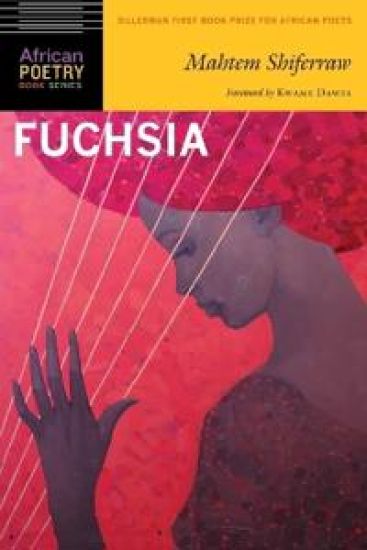
Fuchsia

Fuchsia

Mahtem Shiferraw; Kwame Dawes

University of Nebraska Press
2016
pokkari
Winner of the Sillerman First Book Prize for African Poets, Ethiopian American Mahtem Shiferraw's Fuchsia examines conceptions of the displaced, disassembled, and nomadic self. Embedded in her poems are colors, elements, and sensations that evoke painful memories related to deep-seated remnants of trauma, war, and diaspora. Yet rooted in these losses and dangers also lie opportunities for mending and reflecting, evoking a distinct sense of hope. Elegant and traditional, the poems in Fuchsia examine what it means to both recall the past and continue onward with a richer understanding.
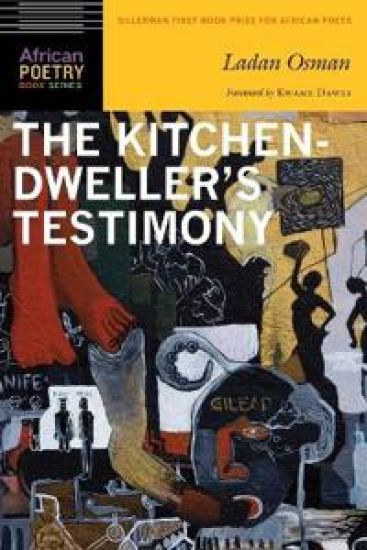
The Kitchen-Dweller's Testimony

The Kitchen-Dweller's Testimony

Ladan Osman; Kwame Dawes

University of Nebraska Press
2015
pokkari
Winner of the Sillerman First Book Prize for African Poets, The Kitchen-Dweller's Testimony asks: Whose testimony is valid? Whose testimony is worth recording? Osman's speakers, who are almost always women, assert and reassert in an attempt to establish authority, often through persistent questioning. Specters of race, displacement, and colonialism are often present in her work, providing momentum for speakers to reach beyond their primary, apparent dimensions and better communicate. The Kitchen-Dweller's Testimony is about love and longing, divorce, distilled desire, and all the ways we injure ourselves and one another.
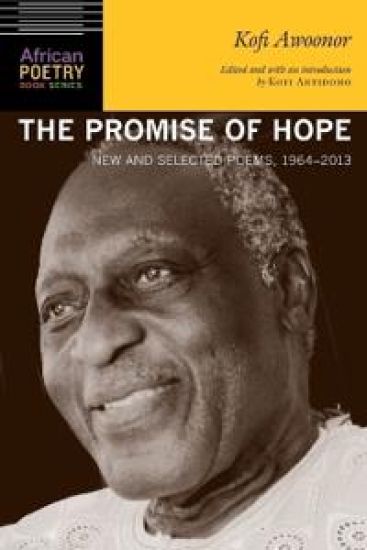
The Promise of Hope

The Promise of Hope

Kofi Awoonor; Kwame Dawes

University of Nebraska Press
2014
pokkari
Kofi Awoonor, one of Ghana's most accomplished poets, had for almost half a century committed himself to teaching, political engagement, and the literary arts. The one constant that guided and shaped his many occupations and roles in life was poetry. The Promise of Hope is a beautifully edited collection of some of Awoonor's most arresting work spanning almost fifty years. Selected and edited by Awoonor's friend and colleague Kofi Anyidoho, himself a prominent poet and academic in Ghana, The Promise of Hope contains much of Awoonor's most recent unpublished poetry, along with many of his anthologized and classic poems. This engaging volume serves as a fitting contribution to the inaugural cohort of books in the African Poetry Book Series.
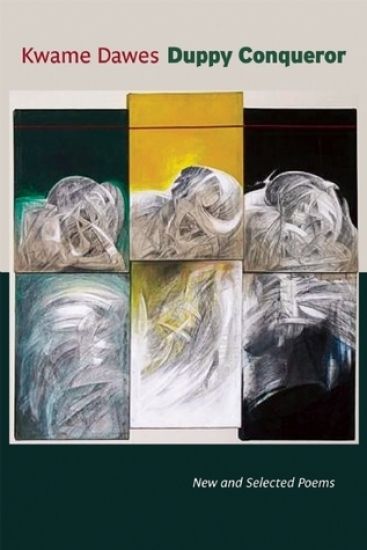
Duppy Conqueror

Duppy Conqueror

Kwame Dawes

Copper Canyon Press
2013
pokkari
Paterson Award for Literary Excellence.Milt Kessler Poetry Book Award, finalist. "Dawes's verse has an expressive power and lyric resonance that can be attributed to a trans-Atlantic consciousness weaned on the spiritual sources of reggae."--New York Times Book Review"Raised in Jamaica, Dawes takes some of his cues, and this book's title, from reggae music. But his voice in these long and short poems and sequences selected from each of his many books, which began appearing in the mid-1990s, is crystal clear, accessible and serious, mixing a timeless myth-making energy with a strong contemporary conscience..." --National Public Radio"This first U.S. selection from the Jamaica-bred, Nebraska-based poet (he also has a reputation in Britain) is his 16th book of verse in just 20 years; it reveals a writer syncretic, effusive, affectionate, alert to familial joys, but also sensitive to history, above all to the struggles of African diasporic history--the Middle Passage, sharecropper-era South Carolina, the Kingston of Bob Marley, whose song gives this big book its title. Dawes is at home with cityscape and seascape, patois and transatlantic tradition." --Publishers Weekly Dawes] is highly original and intelligent, possessing poetic sensibility that is rooted and sound, unshakeable and unstopped, both in its vibrancy and direction. He writes poetry as it ought to be written.--World Literature TodayDawes asserts himself as man and artist and finally, with grace achieved and grace said, sits down to begin life's tragic feast . . . a writer of major significance.--Brag BookThe notion of a reggae aesthetic--of the language moving to a different rhythm, under different kinds of pressure . . . underpins all Dawes' work as poet.--Stewart BrownBorn in Ghana, raised in Jamaica, and educated in Canada, Kwame Dawes is a dynamic and electrifying poet. In this generous collection, new poems appear with the best work from fifteen previous volumes. Deeply nuanced in exploring the human condition, Dawes' poems are filled with complex emotion and consistently remind us what it means to be a global citizen.From The Lessons: Fingers can be trained to make shapesthat, pressed just right on the gleamingkeys, will make a sound that can staytears or cause them to flow for days.Anyone can learn to make some music, but not all have the heart to beatout the tunes that will turn us inside out. . . Kwame Dawes is the author of fifteen collections of poetry, two novels, four anthologies, and numerous essays and plays. In 2009 he won an Emmy Award for his interactive website, LiveHopeLove.com. Since 2011 he has taught at the University of Nebraska, and lives in Lincoln, Nebraska.
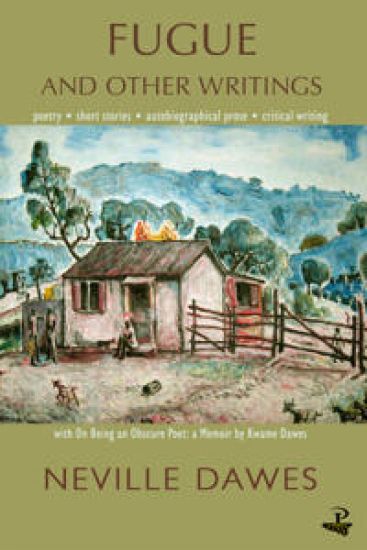
Fugue and Other Writings

Fugue and Other Writings

Kwame Dawes

Peepal Tree Press Ltd
2012
pokkari
This collection of work by the late Neville Dawes (1926-1984) gives unrivalled access to his thoughts on a rural Jamaican childhood, his exposure to Oxbridge modernism, and his involvement in nationalist ferment, and the frustrations of postcolonial politics. The book makes available the fine poems that Dawes wrote, mostly between 1950 and 1970, both as the young man in London exploring a modernist voice and as the ideologically-committed poet returning to his roots. Fugue also includes the celebrated short stories broadcast on the BBC's Caribbean Voices programme, along with pieces of insightful and humorous autobiography and a section devoted to his critical writing. A long introductory essay by Kwame Dawes brings both a scholar's studied contextualisation and a son's moving insight. Neville Dawes was born in Nigeria in 1926, but grew up in rural Jamaica. He studied for an MA at Oxford, taught in Jamaica, Ghana and Guyana, and was later appointed Director of the Institute of Jamaica. He wrote two novels, The Last Enchantment, reissued by Peepal Tree in 2009 as part of their Caribbean Modern Classics series, and Interim. Always a Marxist, he was deeply immersed in Africa and his nationalist identification with the rural Jamaican working class.
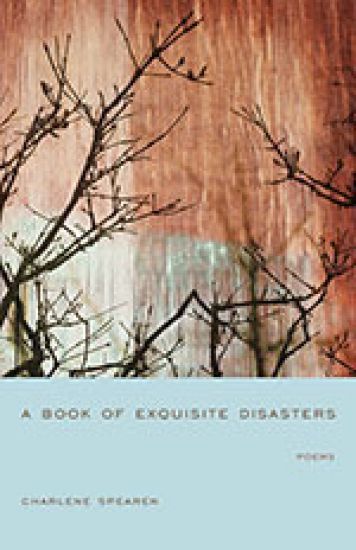
A Book of Exquisite Disasters

A Book of Exquisite Disasters

Charlene Spearen; Kwame Dawes

University of South Carolina Press
2012
nidottu
A Book of Exquisite Disasters, the first book-length poetry collection from Charlene Spearen, is an exploration of a multifaceted identity forged through moments spent as a daughter, sister, woman, and poet. A nimble wordsmith and unique spirit, Spearen plays with language as if syllables and words are musical notes that in the end creates an exquisite song erupting with mysterious clarity. In these idiosyncratic poems, she hones in with grace and vigor on perplexing subjects from her life experiences and uses the act of writing and creation to propel herself forward on a journey to question and witness humankind’s beauty and suffering as an inherent song of the world. These poems represent a leap of faith, the courageous act of letting go and taking risks while remaining reverent to a sense of being a member of a family, of being a woman. In heartfelt narratives Spearen traverses myriad landscapes populated with people real and imagined and infused throughout with the many—and often familiar—exquisite disasters that confront each of us as human beings.
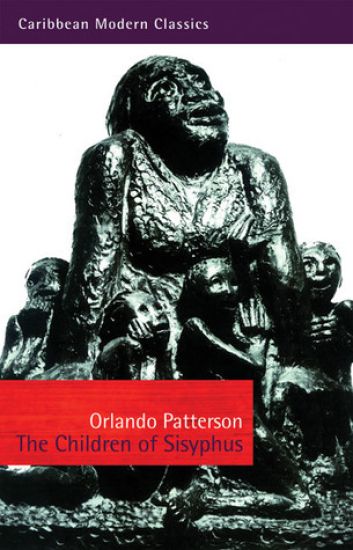
The Children of Sisyphus

The Children of Sisyphus

Kwame Dawes

Peepal Tree Press Ltd
2012
nidottu
The Children of Sisyphus is the story of Dinah, a prostitute who lives and fails to find love on the Dungle, the rubbish heap where the very poorest squat. Trapped by patriarchy and male passivity, and cursed by one of her rivals, Dinah is forced into a panicked flight to save herself. But involvement with a revival church and the favour of Shepherd John, who proposes a new life outside Jamaica, leads her to the delusion that she has found escape and meaning, a lived lie that has tragic consequences.In Patterson's brutally poetic existentialist novel, dignity comes with a stoic awareness of the absurdity of life.Introduced by Kwame Dawes.Orlando Patterson was born in Jamaica in 1940. Having studied at the University of the West Indies and at the London School of Economics, in 1970 he took the position of Visiting Associate Professor at Harvard, where he is now John Cowles Professor of Sociology. The Children of Sisyphus received the First Prize for Fiction at the Dakar Festival of Negro Arts in 1966. His other novels are An Absence of Ruins (1967) and Die the Long Day (1972). He was awarded the Order of Distinction by the Government of Jamaica in 1999.
Impossible Flying

Impossible Flying

Kwame Dawes

Peepal Tree Press Ltd
2007
nidottu
"Impossible Flying" is Dawes' most personal and universal collection, 'telling family secrets to strangers'. There are moments of transcendence, but often there is 'no epiphany, just the dire cadence of regret' since the failures of the past cannot be undone, and there is no escape from human vulnerability, the disappointment of hopes, bodily decay and death. From that bleak acceptance comes a chastened consolation, and as for poems, 'they are fine and they always find a way to cope/they outlast everything, cynical to the last foot.' The family secrets focus primarily on the triangular relationship between the poet, his father and younger brother, though in "For Mama" there is a heartfelt and deeply moving acknowledgement of the rocklike unconditionality of a mother's love and care for her family's wounded souls. As ever with Dawes' collections, the rewards come not only from the individual poems, but also from their careful arrangement, internal conversations and from the overarching meanings that emerge from the architecture of the four sections. "Legend" begins the exploration of family mythology and the special place of the youngest brother and the hubristic hopes invested in him. "Estimated Prophet" gives context to the process of the brother's descent into madness and their father's collapse into despair and premature death in the condition of Jamaica in the 1980s when cold war politics and tribal wars brought an end to the dreams of the socialistic 70s, 'that valiant, austere decade'. Here the comic vision of the first section cannot be sustained in writing about 'those chaotic seven years of dust'. This section also deepens the counter-discourse of self-reflection on the act of writing the poems: the confessions of impersonation ('I have stolen much...') and the ambivalent space between history and myth in the filtering of memory and constructed family narratives. The third section, "Brother Love" is set in the present and deals with the renewal of relationship with the brother and the guilty respite of being away 'from the long lament', with marriage, children and 'the peace and constancy/of new homes, while old homes seem/to crumble about us.' The last section, "For My Little Brother" explores the difficult dialogue between these two worlds, between a past that is unalterable and a present that is shaped by it, but that contains its own possibilities. "Impossible Flying" is deeply felt writing that has an intensity and tautness which, if not new in Dawes' work, rises to new levels of eloquence. It is impossible to read this collection without feeling that one's consciousness of what it means to be human has been immeasurably deepened, or without wanting to constantly return to the poems.
She's Gone

She's Gone

Kwame Dawes

Akashic Books,U.S.
2007
nidottu
A prominent Jamaican reggae singer falls in love with an African American woman while on tour in South Carolina. The two struggle to forge a relationship across a cultural and psychological divide in a story that spans from Jamaica to South Carolina to New York City.
WISTERIA

WISTERIA

Kwame Dawes

Red Hen Press
2006
nidottu
In Wisteria, Kwame Dawes finds poignant meaning in the landscape and history of Sumter, a small town in central South Carolina. Here the voices of women who lived through most of the twentieth century – teachers, beauticians, seamstresses, domestic workers and farming folk – unfold with the raw honesty of people who have waited for a long time to finally speak their mind. The poems move with the narrative of stories long repeated but told with fresh emotion each time, with the lyrical depth of a blues threnody or a negro spiritual, and with the flame and shock of a prophet forced to speak the hardest truths. These are poems of beauty and insight that pay homage to the women who told Dawes their stories, and that, at the same time, find a path beyond these specific narratives to something embracingly human. Few poets have managed to enter the horror of Jim Crow America with the fresh insight and sharply honed detail that we see in Dawes’s writing. With all good southern songs of spiritual and emotional truth, Dawes understands that redemption is essential and he finds it in the pure music of his art. Dawes, the Ghanaian-born, Jamaican poet is not an interloper here, but a man who reminds us of the power of the most human and civilizing gift of empathy and the shared memory of the Middle Passage and its aftermath across the black diaspora. These are essential poems.
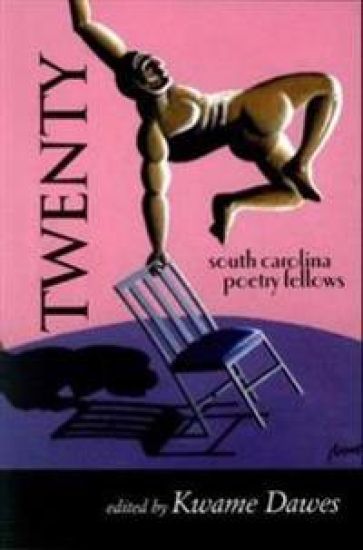
Twenty

Twenty

Kwame Dawes

Hub City Press
2005
pokkari
The poets include: Paul Allen, Jan Bailey, Cathy Smith Bowers, Jessica Bundschuh, Stephen Corey, Robert Cumming, Debra Daniel, Carol Ann Davis, Curtis Derrick, Linda Ferguson, Starkey Flythe, Angela Kelly, John Lane, Susan Ludvigson, Terri McCord, John Ower, Ron Rash, Paul Rice, Warren Slesinger, and Kathleen Whitten. Each has won a Poetry Fellowship from the South Carolina Arts Commission during the period 1977-2004. The book's introduction is written by editor Kwame Dawes, poet-in-residence at the University of South Carolina and director of the South Carolina Poetry Initiative, a statewide organization that promotes and celebrates the reading, writing, and performing of poetry across South Carolina.
A Place to Hide

A Place to Hide

Kwame Dawes

Peepal Tree Press Ltd
2003
nidottu
A man lies in a newspaper-lined room dreaming an other life. Bob Marley's spirit flew into him at the moment of the singer's death. A woman detaches herself from her perfunctory husband and finds the erotic foreplay she longs for in journeying round the island. A man climbs Blue Mountain Peak to fly and hear the voice of God. Sonia paints her new friend Joan and hopes that this will be the beginning of a sexual adventure. Dawes's characters are driven by their need for intimate contact with people and with God, and their need to construct personal myths powerful enough to live by. In a host of distinctive and persuasive voices they tell stories that reveal their inner lives and give an incisive portrayal of contemporary Jamaican society that is unsparing in confronting its elements of misogyny and nihilistic violence. Indeed several stories question how this disorder can be meaningfully told without either sensationalism or despair. For Dawes, the answer is found in the creative energies that lie just the other side of chaos. In particular, in the dub vershan episodes, which intercut the stories, there are intense and moving celebrations of moments of reggae creation in the studio and in performance. Dawes has established a growing international reputation as a poet and these are stories that combine a poetic imagination with narrative drive, an acute social awareness and a deep inwardness in the treatment of character. In the penultimate story, 'Marley's Ghost', Dawes's imagination soars to towering myth. Kwame Dawes is the author of over thirty five books, and is widely recognized as one of the Caribbean’s leading writers. He is Glenna Luschei Editor of Prairie Schooner and a Chancellor’s Professor of English at the University of Nebraska. His next book of poetry from Peepal Tree Press will be 'A New Beginning', a cycle of poems written with John Kinsella. He has been elected as a Chancellor of the Academy of American Poets.