Kirjojen hintavertailu. Mukana 12 595 353 kirjaa ja 12 kauppaa.
Kirjailija
Kweku-Muata Osei-Bryson
Kirjat ja teokset yhdessä paikassa: 8 kirjaa, julkaisuja vuosilta 2017-2025, suosituimpien joukossa Creating Theoretical Research Frameworks using Multiple Methods. Vertaile teosten hintoja ja tarkista saatavuus suomalaisista kirjakaupoista.
Quantitative Social Science Research in Practice: Generating Novel and Parsimonious Explanatory Models for Social Sciences examines quantitative Behavioral Science Research (BSR) by focusing on four key areas:Developing Novel, Parsimonious, and Actionable Causal Models: Researchers often face challenges in creating new, parsimonious causal models supported by empirical evaluation. A promising approach involves using meta-analytic reviews and more recent studies to identify relevant constructs and hypotheses that would constitutethe new causal model.Exploring the Scope of Context for a Novel Causal Model: The relevance of causal models may vary based on context, such as national or organizational culture, economic and political situations, and feasibility constraints. Behavioural science researchers have struggled to balance rigor and relevance, as theories effective in one context may not be valid in another. This book presents an approach to determine the contextual scope for new causal models.Guidance to Practice from a Novel Causal Model: Quantitative BSR studies should offer practical guidance, but often this guidance is vague or superficial. This book proposes an approach to highlight actionable insights derived from data analysis of new causal models, ensuring that the research offers concrete guidance for practitioners.Implementing Guidance from Causal Models: A significant limitation of BSR studies is the lack of clarity on how results can be made actionable for decision-makers, considering the costs and benefits of actions. This book presents a method to make research results actionable, especially for models with high explanatory and predictive power.The book is designed to be useful for various audiences: Business Managers and Practitioners: Those conducting or utilizing quantitative BSR for decision-making can find practical approaches for developing and applying causal models. Master’s and PhD Students: Students across disciplines interested in quantitative BSR can gain insight into novel methods for creating strong causal models. Active Scholars: Researchers aiming to apply new approaches in their work can benefit from the strategies outlined. Professors and Instructors: Those teaching research methodology or supervising theses can find the book a valuable resource for guiding students in their research projects.The book aims to advance the field of quantitative BSR by providing robust methodologies for developing, contextualizing, and implementing causal models, ensuring both academic rigor and practical relevance.

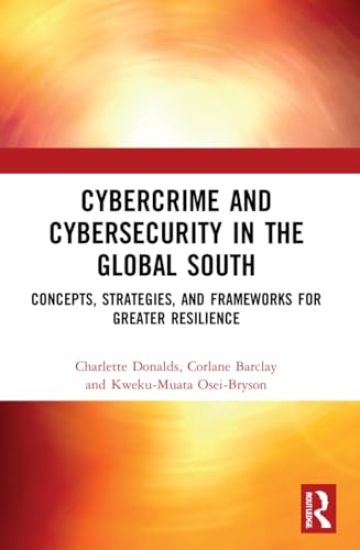
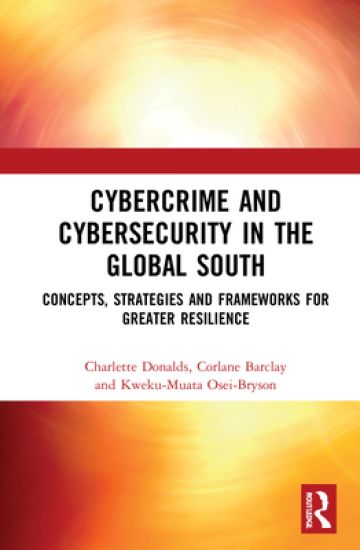
The Global South is recognized as one of the fastest growing regions in terms of Internet population as well as the region that accounts for the majority of Internet users. However, It cannot be overlooked that with increasing connectivity to and dependence on Internet-based platforms and services, so too is the potential increased for information and cybersecurity threats and attacks. Further, it has long been established that micro, small, and medium enterprises (MSMEs) play a key role in national economies, serving as important drivers of economic growth in Global South economies. Yet, little is known about information security, cybersecurity and cybercrime issues and strategies contextualized to these developing economies and MSMEs.Cybercrime and Cybersecurity in the Global South: Concepts, Strategies and Frameworks for Greater Resilience examines the prevalence, nature, trends and impacts of cyber-related incidents on Global South economies. It further explores cybersecurity challenges, potential threats, and risks likely faced by MSMEs and governments of the Global South. A major thrust of this book is to offer tools, techniques, and legislative frameworks that can improve the information, data, and cybersecurity posture of Global South governments and MSMEs. It also provides evidence-based best practices and strategies relevant to the business community and general Information Communication Technology (ICT) users in combating and preventing cyber-related incidents. Also examined in this book are case studies and experiences of the Global South economies that can be used to enhance students’ learning experience. Another important feature of this book is that it outlines a research agenda to advance the scholarship of information and cybersecurity in the Global South.Features: Cybercrime in the Caribbean Privacy and security management Cybersecurity compliance behaviour Developing solutions for managing cybersecurity risks Designing an effective cybersecurity programme in the organization for improved resilience The cybersecurity capability maturity model for sustainable security advantage Cyber hygiene practices for MSMEs A cybercrime classification ontology
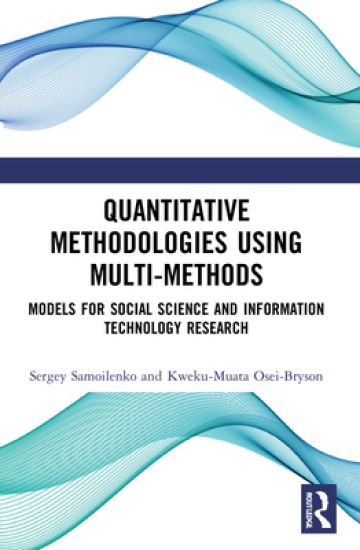
Quantitative Methodologies using Multi-Methods is a multifaceted book written to help researchers. It is a user-friendly introduction to the popular methods of data mining and data analysis. The book avoids getting involved into details that are more suitable for more advanced users; it is written for readers who have, at most, a surface-level knowledge of the methods presented in the book. The book also serves as an introductory guide to the subject of complementarity of the tools and techniques of data analysis. It shows how methods could be used in synergy to offer insights into the issues that could not be dissected by any single method alone.This text can also be used as a set of templates, where, given a set of research questions, the investigator could identify a set of methodological modules for answering the research questions of interest. This is not entirely unlike the relationship between the analysis and design phases of the systems development life cycle—where the What of the analysis phase has to be translated into the How of the design phase. The book can guide the identification of modules (the How) that are suitable for answering research questions (the What). It can aid in transitioning a conceptual domain of the research questions into a scaffolding of data analytic and data mining methods. The book is also a guide to exploring what data under investigation holds. For example, an investigator may use the methodological modules presented in this book to generate a set of preliminary questions which, after a careful consideration and a requisite culling, could be formulated into a set of questions consistent within a selected theory or a framework. Finally, the book can be used as a generator of new research questions. Applying every method in each of the book’s modules opens a new dimension ripe with follow-up questions such as, Why is this so? The answers to this question may provide new insight and lead to the development of a new theory.
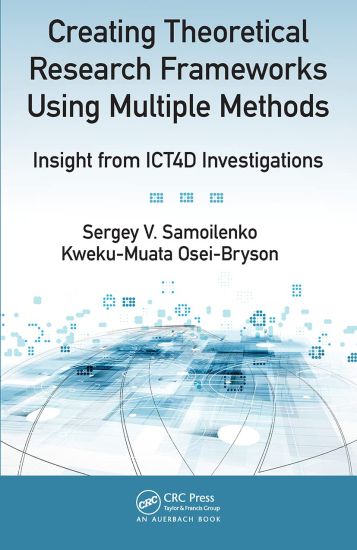
By now, it is commonly accepted that investments in information and communication technologies (ICTs) can facilitate macroeconomic growth in developed countries. Research standards in ICT for development (ICT4D) are high, and it is a basic expectation that a theoretically sound conceptual investigation should yield actionable results. An additional expectation is that an on-the-ground study conducted in each setting should add to the common body of knowledge based on theory. In other words, one is expected to make a connection between the world of concepts and the world of reality. Middle-range theories and frameworks could help connect the case studies with grand theories, by helping to create a theoretically sound and practically applicable research architecture of ICT4D.This book demonstrates how creative use of various data analysis methods (e.g., data mining [DM], data envelopment analysis [DEA], and structural equation modeling [SEM]) and conceptual frameworks (e.g., neoclassical growth accounting, chaos and complexity theories) may be utilized for inductive and deductive purposes to develop and to test, in step-by-step fashion, theoretically sound frameworks for a large subset of ICT4D research questions. Speci?cally, this book showcases the utilization of DM, DEA, and SEM for the following purposes:Identi?cation of the relevant context-speci?c constructs (inductive application)Identi?cation of the relationships between the constructs (inductive application)Development of a framework incorporating the constructs and relationships discovered (inductive application)Testing of the constructed framework (deductive application)The book takes a multi-theoretical perspective to economic development research. It starts with an overview of ICT4D. Next it covers such frameworks and theories as neoclassical growth accounting and the theory of complementarity, complex systems and chaos theories, and the product life cycle (PLC) theory. There are also nontechnical overviews of the DM and data analytic methods that can be used in this research. Also presented is evidence that human capital and investment capital are complementary and are reliable sources of economic growth. The book concludes with methodological frameworks to guide investment decisions and the formulation of strategic policy.
The Global South is recognized as one of the fastest growing regions in terms of Internet population as well as the region that accounts for the majority of Internet users. However, It cannot be overlooked that with increasing connectivity to and dependence on Internet-based platforms and services, so too is the potential increased for information and cybersecurity threats and attacks. Further, it has long been established that micro, small, and medium enterprises (MSMEs) play a key role in national economies, serving as important drivers of economic growth in Global South economies. Yet, little is known about information security, cybersecurity and cybercrime issues and strategies contextualized to these developing economies and MSMEs.Cybercrime and Cybersecurity in the Global South: Concepts, Strategies and Frameworks for Greater Resilience examines the prevalence, nature, trends and impacts of cyber-related incidents on Global South economies. It further explores cybersecurity challenges, potential threats, and risks likely faced by MSMEs and governments of the Global South. A major thrust of this book is to offer tools, techniques, and legislative frameworks that can improve the information, data, and cybersecurity posture of Global South governments and MSMEs. It also provides evidence-based best practices and strategies relevant to the business community and general Information Communication Technology (ICT) users in combating and preventing cyber-related incidents. Also examined in this book are case studies and experiences of the Global South economies that can be used to enhance students’ learning experience. Another important feature of this book is that it outlines a research agenda to advance the scholarship of information and cybersecurity in the Global South.Features: Cybercrime in the Caribbean Privacy and security management Cybersecurity compliance behaviour Developing solutions for managing cybersecurity risks Designing an effective cybersecurity programme in the organization for improved resilience The cybersecurity capability maturity model for sustainable security advantage Cyber hygiene practices for MSMEs A cybercrime classification ontology
Quantitative Methodologies using Multi-Methods is a multifaceted book written to help researchers. It is a user-friendly introduction to the popular methods of data mining and data analysis. The book avoids getting involved into details that are more suitable for more advanced users; it is written for readers who have, at most, a surface-level knowledge of the methods presented in the book. The book also serves as an introductory guide to the subject of complementarity of the tools and techniques of data analysis. It shows how methods could be used in synergy to offer insights into the issues that could not be dissected by any single method alone.This text can also be used as a set of templates, where, given a set of research questions, the investigator could identify a set of methodological modules for answering the research questions of interest. This is not entirely unlike the relationship between the analysis and design phases of the systems development life cycle—where the What of the analysis phase has to be translated into the How of the design phase. The book can guide the identification of modules (the How) that are suitable for answering research questions (the What). It can aid in transitioning a conceptual domain of the research questions into a scaffolding of data analytic and data mining methods. The book is also a guide to exploring what data under investigation holds. For example, an investigator may use the methodological modules presented in this book to generate a set of preliminary questions which, after a careful consideration and a requisite culling, could be formulated into a set of questions consistent within a selected theory or a framework. Finally, the book can be used as a generator of new research questions. Applying every method in each of the book’s modules opens a new dimension ripe with follow-up questions such as, Why is this so? The answers to this question may provide new insight and lead to the development of a new theory.
By now, it is commonly accepted that investments in information and communication technologies (ICTs) can facilitate macroeconomic growth in developed countries. Research standards in ICT for development (ICT4D) are high, and it is a basic expectation that a theoretically sound conceptual investigation should yield actionable results. An additional expectation is that an on-the-ground study conducted in each setting should add to the common body of knowledge based on theory. In other words, one is expected to make a connection between the world of concepts and the world of reality. Middle-range theories and frameworks could help connect the case studies with grand theories, by helping to create a theoretically sound and practically applicable research architecture of ICT4D.This book demonstrates how creative use of various data analysis methods (e.g., data mining [DM], data envelopment analysis [DEA], and structural equation modeling [SEM]) and conceptual frameworks (e.g., neoclassical growth accounting, chaos and complexity theories) may be utilized for inductive and deductive purposes to develop and to test, in step-by-step fashion, theoretically sound frameworks for a large subset of ICT4D research questions. Speci?cally, this book showcases the utilization of DM, DEA, and SEM for the following purposes:Identi?cation of the relevant context-speci?c constructs (inductive application)Identi?cation of the relationships between the constructs (inductive application)Development of a framework incorporating the constructs and relationships discovered (inductive application)Testing of the constructed framework (deductive application)The book takes a multi-theoretical perspective to economic development research. It starts with an overview of ICT4D. Next it covers such frameworks and theories as neoclassical growth accounting and the theory of complementarity, complex systems and chaos theories, and the product life cycle (PLC) theory. There are also nontechnical overviews of the DM and data analytic methods that can be used in this research. Also presented is evidence that human capital and investment capital are complementary and are reliable sources of economic growth. The book concludes with methodological frameworks to guide investment decisions and the formulation of strategic policy.