
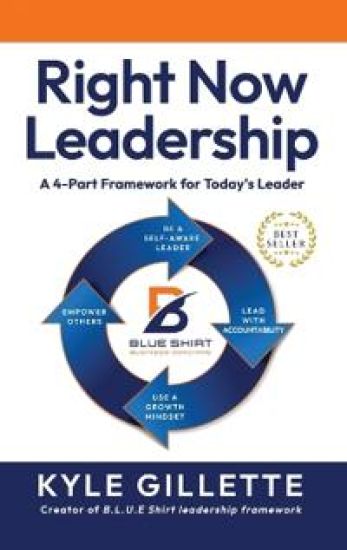
Kirjailija
Kyle Gillette
Kirjat ja teokset yhdessä paikassa: 10 kirjaa, julkaisuja vuosilta 2014-2023, suosituimpien joukossa Right Now Leadership. Vertaile teosten hintoja ja tarkista saatavuus suomalaisista kirjakaupoista.
10 kirjaa
Kirjojen julkaisuhaarukka 2014-2023.

"Ladies and gentlemen, I’m not going to play this particular scene tonight." - SabinaThornton Wilder’s The Skin of Our Teeth (1942) telescopes an audacious stretch of western history and mythology into a family drama, showing how the course of human events operates like theatre itself: constantly mutable, vanishing and beginning again.Kyle Gillette explores Wilder’s extraordinary play in three parts. Part I unpacks the play’s singular yet deeply interconnected place in theatre history, comparing its metatheatrics to those of Stein, Pirandello and Brecht, and finding its anticipation of American fantasias in the works of Vogel and Kushner. Part II turns to the play’s many historic and mythic sources, and examines its concentration of western progress and power into the model of a white, American upper-middle-class nuclear family. Part III takes a longer view, tangling with the play’s philosophical stakes.Gillette magnifies the play’s ideas and connections, teasing out historical, theoretical and philosophical questions on behalf of readers, scholars and audience members alike.

The Invisible City explores urban spaces from the perspective of a traveller, writer, and creator of theatre to illuminate how cities offer travellers and residents theatrical visions while also remaining mostly invisible, beyond the limits of attention.The book explores the city as both stage and content in three parts. Firstly, it follows in pattern Italo Calvino's novel Invisible Cities, wherein Marco Polo describes cities to the Mongol emperor Kublai Khan, to produce a constellation of vignettes recalling individual cities through travel writing and engagement with artworks. Secondly, Gillette traces the Teatro Potlach group and its ongoing immersive, site-specific performance project Invisible Cities, which has staged performances in dozens of cities across Europe and the Americas. The final part of the book offers useful exercises for artists and travellers interested in researching their own invisible cities.Written for practitioners, travellers, students, and thinkers interested in the city as site and source of performance, The Invisible City mixes travelogue with criticism and cleverly combines philosophical meditations with theatrical pedagogy.
The Invisible City explores urban spaces from the perspective of a traveller, writer, and creator of theatre to illuminate how cities offer travellers and residents theatrical visions while also remaining mostly invisible, beyond the limits of attention.The book explores the city as both stage and content in three parts. Firstly, it follows in pattern Italo Calvino's novel Invisible Cities, wherein Marco Polo describes cities to the Mongol emperor Kublai Khan, to produce a constellation of vignettes recalling individual cities through travel writing and engagement with artworks. Secondly, Gillette traces the Teatro Potlach group and its ongoing immersive, site-specific performance project Invisible Cities, which has staged performances in dozens of cities across Europe and the Americas. The final part of the book offers useful exercises for artists and travellers interested in researching their own invisible cities.Written for practitioners, travellers, students, and thinkers interested in the city as site and source of performance, The Invisible City mixes travelogue with criticism and cleverly combines philosophical meditations with theatrical pedagogy.
"Ladies and gentlemen, I‘m not going to play this particular scene tonight." - Sabina Thornton Wilder‘s The Skin of Our Teeth (1942) telescopes an audacious stretch of western history and mythology into a family drama, showing how the course of human events operates like theatre itself: constantly mutable, vanishing and beginning again. Kyle Gillette explores Wilder‘s extraordinary play in three parts. Part I unpacks the play‘s singular yet deeply interconnected place in theatre history, comparing its metatheatrics to those of Stein, Pirandello and Brecht, and finding its anticipation of American fantasias in the works of Vogel and Kushner. Part II turns to the play‘s many historic and mythic sources, and examines its concentration of western progress and power into the model of a white, American upper-middle-class nuclear family. Part III takes a longer view, tangling with the play‘s philosophical stakes. Gillette magnifies the play‘s ideas and connections, teasing out historical, theoretical and philosophical questions on behalf of readers, scholars and audience members alike.
LifeMap: Building A Future When You're Lost In The Present
Kyle Gillette
Createspace Independent Publishing Platform
2016
nidottu
Are you stuck or lost and confused in life? Are you tired of your life not going the direction you want it to? There is a way out of the cycle. You can build your future even if you are lost and confused today.Please contact [email protected] if you have any questions or feedback about the book. We are here to help and encourage LifeMap - Building a Future When You're Lost In The Present and the LifeMap Workbook (sold separately ISBN 978-1540364784), are designed to help you change your life. To help you find answers. Take action. Live the life you want beginning today.Your life can be different. Your life will be different. This book will help you to transform your life by answering key questions, finding accountability, and taking actions that will make changes that matter. You don't have to stay stuck where you are in life. There's a way out - and LifeMap can help.Your LifeMap Will Answer 3 Key QuestionsWhere am I?Where do I want to go?How am I going to get there?Your best future requires outside help, direction, and accountability. Building a LifeMap will give you a new and effective way to plan and live your life. With the help of the book, I will serve as your guide and coach to help you follow the LifeMap planning cycle. This is your life and I want yours to be the best it can possibly be Your LifeMap is the earnest pursuit of the 3 key questions and a dogged determination to pursue actions that will change your life.
Use the LifeMap Workbook to take your life to the next level The LifeMap Workbook takes the questions and concepts of the LifeMap process and puts them in an easy to use workbook format. Moving from where you are to where you want to go has never been easier.The LifeMap Workbook and LifeMap Book (sold separately ISBN 978-1540362452), are designed to help you change your life. To help you find answers. Take action. And live the life you want beginning today.This is your life and I want yours to be the best it can possibly be Your LifeMap is the earnest pursuit of the 3 key questions and a dogged determination to pursue actions that will change your life.
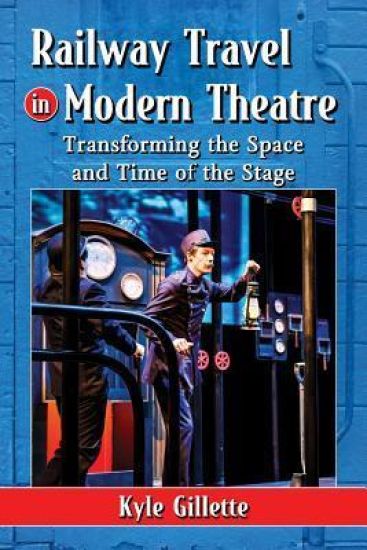
Railway travel has had a significant influence on modern theatre's sense of space and time. Early in the 20th century, breakthroughs--ranging from F.T. Marinetti's futurist manifestos to epic theatre's use of the treadmill--explored the mechanical rhythms and perceptual effects of railway travel to investigate history, technology, and motion. After World War II, some playwrights and auteur directors, from Armand Gatti to Robert Wilson to Amiri Baraka, looked to locomotion not as a radically new space and time but as a reminder of obsolescence, complicity in the Holocaust, and its role in uprooting people from their communities. By analyzing theatrical representations of railway travel, this book argues that modern theatre's perceptual, historical and social productions of space and time were stretched by theatre's attempts to stage the locomotive.