Kirjojen hintavertailu. Mukana 12 595 353 kirjaa ja 12 kauppaa.

Kirjailija

Kyoo Lee

Kirjat ja teokset yhdessä paikassa: 4 kirjaa, julkaisuja vuosilta 2012-2020, suosituimpien joukossa Queenzenglish.mp3: poetry | philosophy | performativity.. Vertaile teosten hintoja ja tarkista saatavuus suomalaisista kirjakaupoista.

4 kirjaa

Kirjojen julkaisuhaarukka 2012-2020.

Queenzenglish.mp3: poetry | philosophy | performativity.
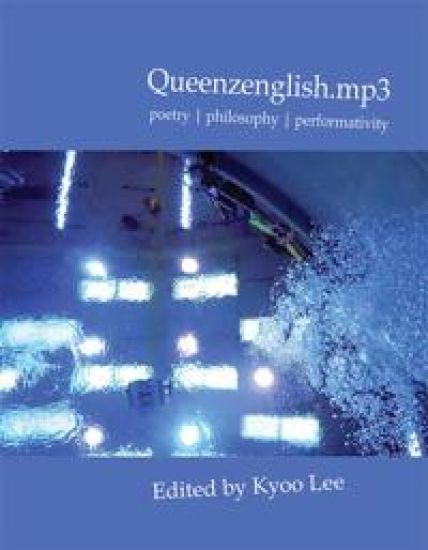
Editor Kyoo Lee describes QE3 as an anthology “ focusing on the expressive diversity of English in transition." Fifty+ poets, writers, and scholars coming together here show, telegraphically, the various ways in which they creatively engage the world of dynamic ‘ Englishing’ and its polyphonic futurity. Queenzenglish, a translingual initiative translating English into English, decolonizes writing and makes the concepts of diversity and pluralism not only legible but palpable. Among the fifty+ perspectives embodied in this dynamic assemblage of poems, prose, performance scores and experimental / theoretical expositions, readers will find various vocal positions, resonances, (trans)nationalities, and genders, each addressing in its own creative and critical ways questions around standards, power, limitations, and aspirations.
Queering Contemporary Asian American Art

Queering Contemporary Asian American Art

Susette Min; Kyoo Lee

University of Washington Press
2017
pokkari
Queering Contemporary Asian American Art takes Asian American differences as its point of departure, and brings together artists and scholars to challenge normative assumptions, essentialisms, and methodologies within Asian American art and visual culture. Taken together, these nine original artist interviews, cutting-edge visual artworks, and seven critical essays explore contemporary currents and experiences within Asian American art, including the multiple axes of race and identity, queer bodies and forms, kinship and affect, and digital identities and performances.Using the verb and critical lens of "queering" to capture transgressive cultural, social, and political engagement and practice, the contributors to this volume explore the connection points in Asian American experience and cultural production of surveillance states, decolonization and diaspora, transnational adoption, and transgender bodies and forms, as well as heteronormative respectability, the military, and war. The interdisciplinary and theoretically informed frameworks in the volume engage readers to understand global and historical processes through contemporary Asian American artistic production.
Reading Descartes Otherwise

Reading Descartes Otherwise

Kyoo Lee

Fordham University Press
2012
pokkari
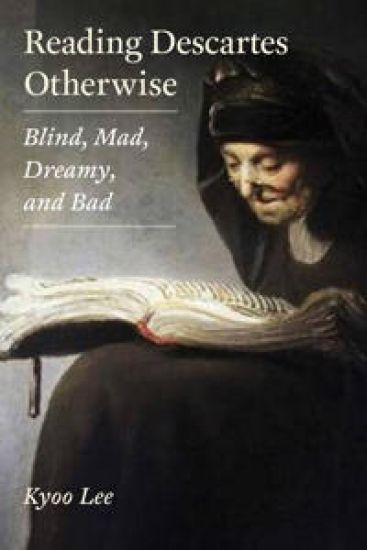
Focusing on the first four images of the Other mobilized in Descartes' Meditations—namely, the blind, the mad, the dreamy, and the bad—Reading Descartes Otherwise casts light on what have heretofore been the phenomenological shadows of "Cartesian rationality." In doing so, it discovers dynamic signs of spectral alterity lodged both at the core and on the edges of modern Cartesian subjectivity. Calling for a Copernican reorientation of the very notion "Cartesianism," the book's series of close, creatively critical readings of Descartes' signature images brings the dramatic forces, moments, and scenes of the cogito into our own contemporary moment. The author patiently unravels the knotted skeins of ambiguity that have been spun within philosophical modernity out of such clichés as "Descartes, the abstract modern subject" and "Descartes, the father of modern philosophy"—a figure who is at once everywhere and nowhere. In the process, she revitalizes and reframes the legacy of Cartesian modernity, in a way more mindful of its proto-phenomenological traces.
Reading Descartes Otherwise

Reading Descartes Otherwise

Kyoo Lee

Fordham University Press
2012
sidottu
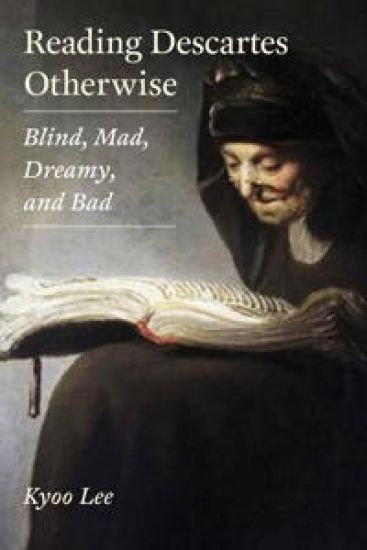
Focusing on the first four images of the Other mobilized in Descartes’ Meditations—namely, the blind, the mad, the dreamy, and the bad—Reading Descartes Otherwise casts light on what have heretofore been the phenomenological shadows of “Cartesian rationality.” In doing so, it discovers dynamic signs of spectral alterity lodged both at the core and on the edges of modern Cartesian subjectivity. Calling for a Copernican reorientation of the very notion “Cartesianism,” the book’s series of close, creatively critical readings of Descartes’ signature images brings the dramatic forces, moments, and scenes of the cogito into our own contemporary moment. The author patiently unravels the knotted skeins of ambiguity that have been spun within philosophical modernity out of such clichés as “Descartes, the abstract modern subject” and “Descartes, the father of modern philosophy”—a figure who is at once everywhere and nowhere. In the process, she revitalizes and reframes the legacy of Cartesian modernity, in a way more mindful of its proto-phenomenological traces.