Kirjailija
L. Daniel Hawk
Kirjat ja teokset yhdessä paikassa: 9 kirjaa, julkaisuja vuosilta 1992-2026, suosituimpien joukossa Undoing Manifest Destiny. Vertaile teosten hintoja ja tarkista saatavuus suomalaisista kirjakaupoista.
Mukana myös kirjoitusasut: L Daniel Hawk
9 kirjaa
Kirjojen julkaisuhaarukka 1992-2026.

What does Joshua hold to be the essential marks of Israelite identity? What distinguishes Israel from all other peoples? In tracking these themes, L. Daniel Hawk reveals in Joshua a profound struggle to define the people of the God of Israel.Hawk shows that the themes surrounding Joshua express fundamental markers of national identity: religious practice (obedience to the commandments of Moses), ethnic separation (extermination of the peoples of Canaan), and possession of land ("the land that YHWH gives"). Through the medium of narrative, Joshua tests each of these markers and demonstrates that none clearly characterize the people of God. Instead, Joshua presents Israel as a nation fundamentally constituted by choosing: YHWH's choosing of Israel and Israel's choosing of YHWH.In the present day in which ideologies of religion, race, and territorial possession have given rise to countless expressions of violence, Hawk expresses the particular value of reading Joshua. The Joshua story holds a mirror up to all who regard themselves as the people of God. The reflection is both repelling and inspiring but until we confront it, what it truly means to be the chosen people of God will remain elusive.Chapters are "Rights of Passage (1:1-18)," "Who's Who in the Promised Land? (2:1-12:24)," "Strangers in the Night (2:1-24)," "Changing State (3:1-4:24)," "First Things First (5:1-15)," "Going in Circles (6:1-27)," "Ai Spy (7:1-8:35)," "Foiled Again (9:1-10:27)," "Conquering Canaanites (10:28-12:24)," "Organizing Israel (13:1-21:45)," "Altar Egos (22:1-34)," "Unfinished Business (23:1-18)," and "Decisions, Decisions (24:1-33)." Includes twelve charts that lay out structural features of the book.
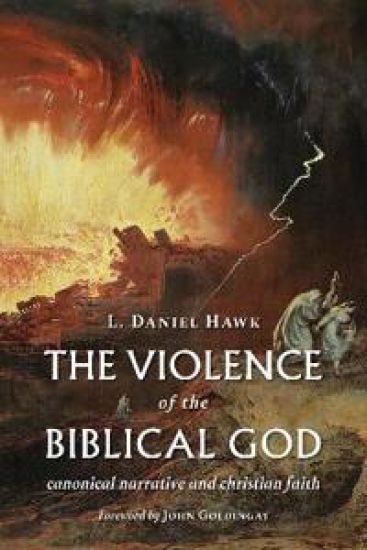
On how we can make sense of violence in the BibleThe teachings of the incarnate Jesus sometimes seem to be at odds with the edicts of the God of Israel. Joshua commands God's people to wipe out everyone in the Promised Land, yet Jesus com-mands God's people to love their enemies. How are we to interpret passages on violence when it is sanctioned at one point and condemned at another?The Violence of the Biblical God by L. Daniel Hawk offers a new frame-work, solidly rooted in the authority of Scripture, for understand-ing the paradox of God's participation in violence. Hawk suggests that the historical narrative of the Bible offers multiple canoni-cal pictures for faithful Christian engagement with the violent systems of the world. Reading Scripture as the story of the Crea-tor's decision to restore creation by working within and along with humanity, Hawk shows how Christians with diverse perspectives can at once be faithful to the biblical text and partake in a common conversation on violence.

On the surface, the book of Ruth tells the tale of an unlikely marriage between a destitute Moabite widow and an upstanding citizen of a Judean village. The deeper import of the story, however, has to do with the internal boundaries that define the people of God. Is Israel a closed community, held together exclusively by bonds of kinship, or a nation that welcomes faithful outsiders into its sphere of belonging? Ruth appropriates marriage as the symbolic vehicle of a transformation in Israel's self-understanding - from a community articulated by Naomi's declaration that her daughters-in-law marry within their own people, to the acclamations by the people of Bethlehem that endorse Boaz's marriage to a Moabite. L. Daniel Hawk undertakes a detailed narrative analysis of Ruth that goes beyond the description of its content and stylistic features to illumine its deep structure and use of metaphor. Informed by contemporary studies on ethnicity, he discovers a work of remarkable sophistication that employs a story of intermarriage to address opposing ideas of Israelite identity. Hawk's meticulous attention to patterned structures, stylistic devices and characterization reveals the strategy by which the narrator constructs a vision of Israel that looks beyond rigid internal boundaries to the welcome of faithful foreigners as agents of blessing.
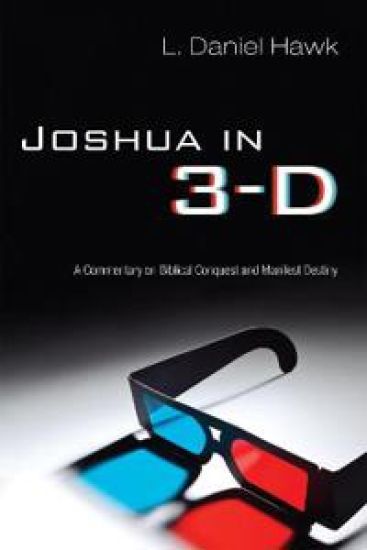
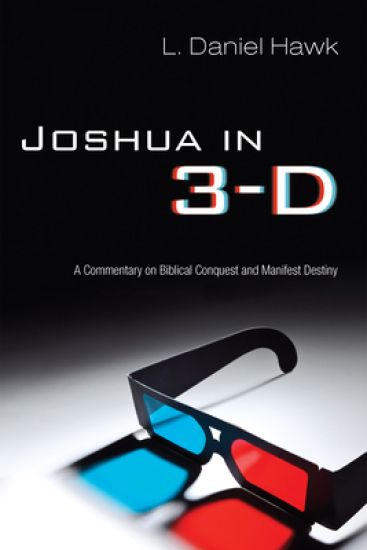


What does Joshua hold to be the essential marks of Israelite identity? What distinguishes Israel from all other peoples? In tracking these themes, L. Daniel Hawk reveals in Joshua a profound struggle to define the people of the God of Israel.Hawk shows that the themes surrounding Joshua express fundamental markers of national identity: religious practice (obedience to the commandments of Moses), ethnic separation (extermination of the peoples of Canaan), and possession of land ("the land that YHWH gives"). Through the medium of narrative, Joshua tests each of these markers and demonstrates that none clearly characterize the people of God. Instead, Joshua presents Israel as a nation fundamentally constituted by choosing: YHWH's choosing of Israel and Israel's choosing of YHWH.In the present day in which ideologies of religion, race, and territorial possession have given rise to countless expressions of violence, Hawk expresses the particular value of reading Joshua. The Joshua story holds a mirror up to all who regard themselves as the people of God. The reflection is both repelling and inspiring but until we confront it, what it truly means to be the chosen people of God will remain elusive.Chapters are "Rights of Passage (1:1-18)," "Who's Who in the Promised Land? (2:1-12:24)," "Strangers in the Night (2:1-24)," "Changing State (3:1-4:24)," "First Things First (5:1-15)," "Going in Circles (6:1-27)," "Ai Spy (7:1-8:35)," "Foiled Again (9:1-10:27)," "Conquering Canaanites (10:28-12:24)," "Organizing Israel (13:1-21:45)," "Altar Egos (22:1-34)," "Unfinished Business (23:1-18)," and "Decisions, Decisions (24:1-33)." Includes twelve charts that lay out structural features of the book.