Kirjojen hintavertailu. Mukana 12 390 323 kirjaa ja 12 kauppaa.

Kirjailija

L. Lynn Stansberry Brusnahan

Kirjat ja teokset yhdessä paikassa: 3 kirjaa, julkaisuja vuosilta 2017-2024, suosituimpien joukossa Disability, Intersectionality, and Belonging in Special Education. Vertaile teosten hintoja ja tarkista saatavuus suomalaisista kirjakaupoista.

3 kirjaa

Kirjojen julkaisuhaarukka 2017-2024.

Disability, Intersectionality, and Belonging in Special Education

Disability, Intersectionality, and Belonging in Special Education

Elizabeth A. Harkins Monaco; L. Lynn Stansberry Brusnahan; Marcus C. Fuller; Martin O. Odima

BLOOMSBURY PUBLISHING PLC
2024
sidottu
This book focuses on preparing culturally competent educators who use culturally sustaining practices and culturally relevant curricula and instruction to reach and teach all students with disabilities, including those with multiple social identities, through a varied multi-cultural lens. Today’s diverse classrooms require that educators possess competencies for teaching all students. This book has two primary audiences: 1. Pre-service educators2. Special education practitioners and administrators First, this book will assist pre-service students learning about special education for students with disabilities. We fully expect this book could be a required reading for students majoring in special education, for school social work students, for school counselors, and for students majoring in vocational rehabilitation services as a part of their coursework for transition.Second, this book will assist special education practitioners and administrators to meet the needs of individuals with disabilities including those with multiple social identities. Understanding the full-range of needs relating to cultural sustaining practices is imperative to working with individuals with disabilities and their families and care-givers. Being able to understand and explain this complex issue to others is important and often very necessary. This book is incredibly timely. Recent contributors to social injustices are the COVID-19 pandemic and the continued issues around police brutality and people of color. Social injustice in special education is historical and systemic. Special education practitioners are typically unaware of the importance of intersectional differences (Gay & Howard, 2000; Owen, 2010). Historically, practitioners have only been prepared to address cultural perspectives during awareness days and or through specific units in curricula. Other times they discuss it diagnostically (Linton, 1998), such as part of an educational plan or a need to learn English as a second language. Other issues stem from the value system of the special education practitioners themselves; some are not willing to engage in these concepts (Darling-Hammond, 2002); some “define fairness and equity as treating all children the same; and [others identify being] ‘colorblind’ [as] valuing diversity” (Owen, 2010, p. 18). Even when special educator practitioners attempt to address injustices on behalf of their students, they tend to center only on the student’s disability which means they are ignoring or erasing other aspects of their students’ identities. These issues highlight the importance of building the cultural competence of our teaching force. This book will help practitioners build this competence in their own spheres of influence.
Disability, Intersectionality, and Belonging in Special Education

Disability, Intersectionality, and Belonging in Special Education

Elizabeth A. Harkins Monaco; L. Lynn Stansberry Brusnahan; Marcus C. Fuller; Martin O. Odima

BLOOMSBURY PUBLISHING PLC
2024
nidottu
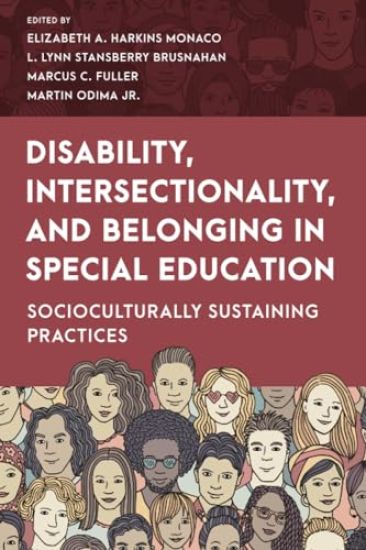
This book focuses on preparing culturally competent educators who use culturally sustaining practices and culturally relevant curricula and instruction to reach and teach all students with disabilities, including those with multiple social identities, through a varied multi-cultural lens. Today’s diverse classrooms require that educators possess competencies for teaching all students. This book has two primary audiences: 1. Pre-service educators2. Special education practitioners and administrators First, this book will assist pre-service students learning about special education for students with disabilities. We fully expect this book could be a required reading for students majoring in special education, for school social work students, for school counselors, and for students majoring in vocational rehabilitation services as a part of their coursework for transition.Second, this book will assist special education practitioners and administrators to meet the needs of individuals with disabilities including those with multiple social identities. Understanding the full-range of needs relating to cultural sustaining practices is imperative to working with individuals with disabilities and their families and care-givers. Being able to understand and explain this complex issue to others is important and often very necessary. This book is incredibly timely. Recent contributors to social injustices are the COVID-19 pandemic and the continued issues around police brutality and people of color. Social injustice in special education is historical and systemic. Special education practitioners are typically unaware of the importance of intersectional differences (Gay & Howard, 2000; Owen, 2010). Historically, practitioners have only been prepared to address cultural perspectives during awareness days and or through specific units in curricula. Other times they discuss it diagnostically (Linton, 1998), such as part of an educational plan or a need to learn English as a second language. Other issues stem from the value system of the special education practitioners themselves; some are not willing to engage in these concepts (Darling-Hammond, 2002); some “define fairness and equity as treating all children the same; and [others identify being] ‘colorblind’ [as] valuing diversity” (Owen, 2010, p. 18). Even when special educator practitioners attempt to address injustices on behalf of their students, they tend to center only on the student’s disability which means they are ignoring or erasing other aspects of their students’ identities. These issues highlight the importance of building the cultural competence of our teaching force. This book will help practitioners build this competence in their own spheres of influence.
DO-WATCH-LISTEN-SAY

DO-WATCH-LISTEN-SAY

Kathleen Ann Quill; L. Lynn Stansberry Brusnahan

Brookes Publishing Co
2017
nidottu
Trusted for more than 15 years, the groundbreaking DO-WATCH-LISTEN-SAY has revolutionized social and communication intervention for children of all ages with autism spectrum disorder. Now a new edition is here, reimagined and expanded for the next generation of children and support teams.Whether you're a professional already or in training to be one, this is the resource you need to address complex social and communication challenges for children with autism from ages 3 to 18. In one comprehensive volume, you'll have everything you need to conduct effective assessment, set goals and objectives for the child, plan interventions that work, ensure generalization of skills, and monitor progress. Immediately useful new additions—including a more extensive assessment tool and a system to monitor skill development—make this a cornerstone resource for every professional working with children and youth with autism.WHAT'S NEW:- Expanded and revised assessment and intervention planning tool, with an emphasis on tracking generalization of new skills.- The very latest evidence-based practices and intervention approaches for enhancing social and communication skills/- New activity sheets with fun and motivating ways to teach social, communication, and community skills.- A look at how restricted and repetitive behaviors affect learning and development (one of the most underexplored areas of autism).- Guidance on prioritizing goals and objectives, linking them to assessment, and designing interventions.- New chapter on progress monitoring that includes a full data collection toolkit for tracking the generalization of social and communication skills.- Updated vignettes and extended case stories illustrating social and communication challenges characteristic of autism.PRACTICAL MATERIALS: Assessment tool; activities to build play and leisure, social, and communication skills; more than a dozen sheets to help monitor progress toward skill mastery and generalization.