Kirjojen hintavertailu. Mukana 12 595 353 kirjaa ja 12 kauppaa.

Kirjailija

L. Monique Pittman

Kirjat ja teokset yhdessä paikassa: 3 kirjaa, julkaisuja vuosilta 2010-2023, suosituimpien joukossa Authorizing Shakespeare on Film and Television. Vertaile teosten hintoja ja tarkista saatavuus suomalaisista kirjakaupoista.

3 kirjaa

Kirjojen julkaisuhaarukka 2010-2023.

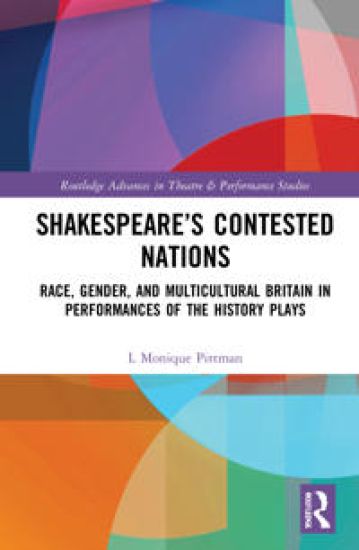
Shakespeare’s Contested Nations

Shakespeare’s Contested Nations

L. Monique Pittman

TAYLOR FRANCIS LTD
2023
nidottu
Shakespeare’s Contested Nations argues that performances of Shakespearean history at British institutional venues between 2000 and 2016 manifest a post-imperial nostalgia that fails to tell the nation’s story in ways that account for the agential impact of women and people of color, thus foreclosing promising opportunities to re-examine the nation’s multicultural past, present, and future in more intentional, self-critical, and truly progressive ways.A cluster of interconnected stage and televisual performances and adaptations of the history play canon illustrate the function that Shakespeare’s narratives of incipient "British" identities fulfill for the postcolonial United Kingdom. The book analyzes treatments of the plays in a range of styles—staged performances directed by Michael Boyd with the Royal Shakespeare Company (2000–2001) and Nicholas Hytner at the National Theatre (2003, 2005), the BBC’s Hollow Crown series (2012, 2016), the RSC and BBC adaptations of Wolf Hall and Bring Up the Bodies (2013, 2015), and a contemporary reinterpretation of the canon, Mike Bartlett’s King Charles III (2014, 2017).This book will be of great interest to scholars and students of Shakespeare, theatre, and politics.
Shakespeare’s Contested Nations

Shakespeare’s Contested Nations

L. Monique Pittman

TAYLOR FRANCIS LTD
2022
sidottu
Shakespeare’s Contested Nations argues that performances of Shakespearean history at British institutional venues between 2000 and 2016 manifest a post-imperial nostalgia that fails to tell the nation’s story in ways that account for the agential impact of women and people of color, thus foreclosing promising opportunities to re-examine the nation’s multicultural past, present, and future in more intentional, self-critical, and truly progressive ways.A cluster of interconnected stage and televisual performances and adaptations of the history play canon illustrate the function that Shakespeare’s narratives of incipient "British" identities fulfill for the postcolonial United Kingdom. The book analyzes treatments of the plays in a range of styles—staged performances directed by Michael Boyd with the Royal Shakespeare Company (2000–2001) and Nicholas Hytner at the National Theatre (2003, 2005), the BBC’s Hollow Crown series (2012, 2016), the RSC and BBC adaptations of Wolf Hall and Bring Up the Bodies (2013, 2015), and a contemporary reinterpretation of the canon, Mike Bartlett’s King Charles III (2014, 2017).This book will be of great interest to scholars and students of Shakespeare, theatre, and politics.
Authorizing Shakespeare on Film and Television

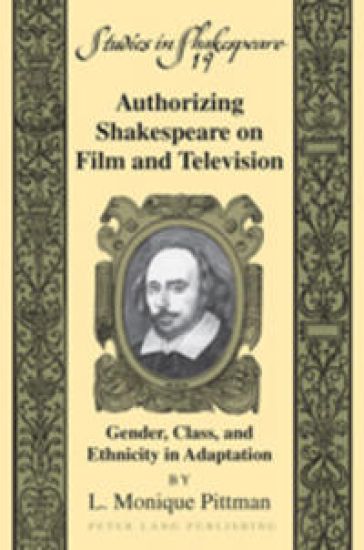
Authorizing Shakespeare on Film and Television

L. Monique Pittman

Peter Lang Publishing Inc
2010
sidottu
Authorizing Shakespeare on Film and Television examines recent film and television transformations of William Shakespeare’s drama by focusing on the ways in which modern directors acknowledge and respond to the perceived authority of Shakespeare as author, text, cultural icon, theatrical tradition, and academic institution. This study explores two central questions. First, what efforts do directors make to justify their adaptations and assert an interpretive authority of their own? Second, how do those self-authorizing gestures impact upon the construction of gender, class, and ethnic identity within the filmed adaptations of Shakespeare’s plays? The chosen films and television series considered take a wide range of approaches to the adaptative process – some faithfully preserve the words of Shakespeare; others jettison the Early Modern language in favor of contemporary idiom; some recreate the geographic and historical specificity of the original plays, and others transplant the plot to fresh settings. The wealth of extra-textual material now available with film and television distribution and the numerous website tie-ins and interviews offer the critic a mine of material for accessing the ways in which directors perceive the looming Shakespearean shadow and justify their projects. Authorizing Shakespeare on Film and Television places these directorial claims alongside the film and television plotting and aesthetic to investigate how such authorizing gestures shape the presentation of gender, class, and ethnicity.