Kirjojen hintavertailu. Mukana 12 595 353 kirjaa ja 12 kauppaa.

Kirjailija

L. Randall Wray

Kirjat ja teokset yhdessä paikassa: 13 kirjaa, julkaisuja vuosilta 2006-2025, suosituimpien joukossa Modern Money Theory. Vertaile teosten hintoja ja tarkista saatavuus suomalaisista kirjakaupoista.

13 kirjaa

Kirjojen julkaisuhaarukka 2006-2025.

Understanding Modern Money Theory

Understanding Modern Money Theory

L. Randall Wray

EDWARD ELGAR PUBLISHING LTD
2025
sidottu
In this illuminating book, Randall Wray explores the origins, nature, and evolution of money, emphasizing the critical role played by both credit and state money in capitalism. Integrating and updating the influential theories presented in Wray’s previous books, Money and Credit in Capitalist Economies and Understanding Modern Money, this new book addresses key questions in modern economic theory and policy.Wray adopts the monetary theory of production shared by the three principle heterodox traditions, Marxism, Institutionalism and Keynesianism to highlight the role played by money in the capitalist system. He applies Keynes's liquidity preference theory and Marx's labor theory of value to examine the determinants of the value of money and uncover the systemic properties driving capitalist production. He provides insights into the vital role of the state in the development and regulation of the modern monetary system. Finally, he identifies how monetary and fiscal policy can be improved to mitigate future challenges and promote economic, social and environmental sustainability.Students and scholars of heterodox approaches to economic theory, the endogenous approach to money and banking, and fiscal and monetary policy will greatly benefit from this valuable book. It is also a vital resource for academics studying the social sciences, such as sociology, political science and anthropology.
Modern Money Theory

Modern Money Theory

L. Randall Wray

Springer International Publishing AG
2024
nidottu
This book, a revised new edition, examines how money is created and how it functions within global exchange rate regimes to highlight how monetary policy can promote economic growth, full employment, and price stability. It provides an introduction to the basics of macroeconomic accounting and the domestic monetary system, as well as fiscal operations, tax policy for sovereign nations, alternative exchange rate regimes. New topics, including central bank clearing, responses to the COVID-19 pandemic, the rise of inflation, and how to finance a Green New Deal, are also discussed. Modern Money Theory provides the reader with a framework for understanding real world economies. It will be relevant to students, researchers, and policymakers interested in monetary policy.
Money for Beginners

Money for Beginners

L. Randall Wray

JOHN WILEY AND SONS LTD
2023
nidottu
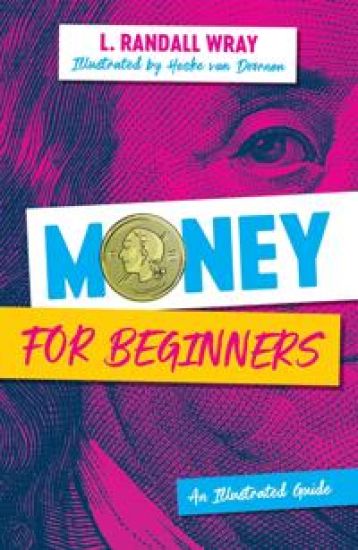
Money is mysterious. We love it, we hate it, but few people can tell you what the heck it really is. Wouldn't it be good to get out of the fog? This book will help you understand both the way money works and how to leverage its power. The authors take you on an illuminating journey from your piggy bank to the Federal Reserve with no pesky jargon or complex math. Once you see money clearly, life will never be the same. You'll know what really goes on in banks and what the cash in your wallet represents. You'll know how government really spends and why it can’t run out of money. You'll know what money can actually do — and how we can make it work for us.
Money for Beginners

Money for Beginners

L. Randall Wray

JOHN WILEY AND SONS LTD
2023
sidottu
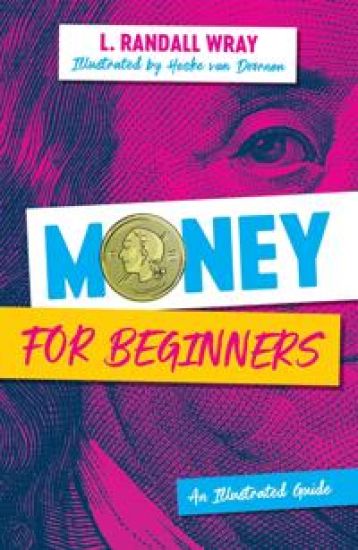
Money is mysterious. We love it, we hate it, but few people can tell you what the heck it really is. Wouldn't it be good to get out of the fog? This book will help you understand both the way money works and how to leverage its power. The authors take you on an illuminating journey from your piggy bank to the Federal Reserve with no pesky jargon or complex math. Once you see money clearly, life will never be the same. You'll know what really goes on in banks and what the cash in your wallet represents. You'll know how government really spends and why it can’t run out of money. You'll know what money can actually do — and how we can make it work for us.
Making Money Work for Us

Making Money Work for Us

L. Randall Wray

JOHN WILEY AND SONS LTD
2022
nidottu
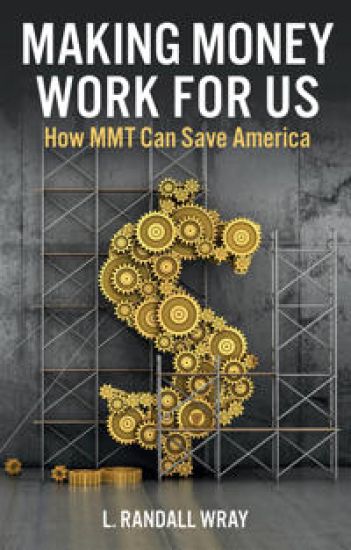
Is money precious and scarce, necessitating iron fiscal discipline? Must the government always balance the books or risk ruin? Or is money, in fact, a flexible tool that can be used to mobilize our collective resources to serve those who need them? In this book, leading Modern Money Theory (MMT) advocate Randy Wray explains that the only real constraints on public policy are physical resources, technological capacity and political will: but never money. He shows how modern sovereign governments spend by keystroking money to bank accounts. While taxes serve other important purposes, they do not – contrary to popular belief – fund spending. If we recognize this, and totally reframe how we think about money and debt, we can marshal our national wealth to make us all richer, eliminate unemployment and “look after our own.” We can make money work for us – the US. This book's account shows how MMT can become a new American political and economic orthodoxy, replacing the dominant conservative framework forever. It is essential reading for all progressives.
Making Money Work for Us

Making Money Work for Us

L. Randall Wray

JOHN WILEY AND SONS LTD
2022
sidottu
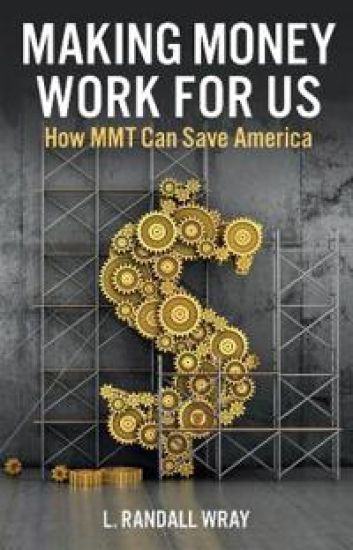
Is money precious and scarce, necessitating iron fiscal discipline? Must the government always balance the books or risk ruin? Or is money, in fact, a flexible tool that can be used to mobilize our collective resources to serve those who need them? In this book, leading Modern Money Theory (MMT) advocate Randy Wray explains that the only real constraints on public policy are physical resources, technological capacity and political will: but never money. He shows how modern sovereign governments spend by keystroking money to bank accounts. While taxes serve other important purposes, they do not – contrary to popular belief – fund spending. If we recognize this, and totally reframe how we think about money and debt, we can marshal our national wealth to make us all richer, eliminate unemployment and “look after our own.” We can make money work for us – the US. This book's account shows how MMT can become a new American political and economic orthodoxy, replacing the dominant conservative framework forever. It is essential reading for all progressives.
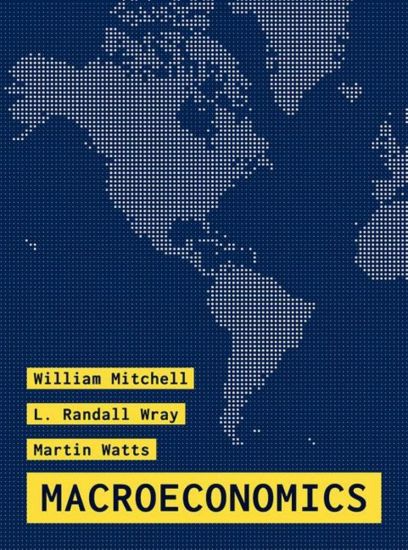
Macroeconomics

Macroeconomics

William Mitchell; L. Randall Wray; Martin Watts

Red Globe Press
2019
nidottu
This groundbreaking new core textbook encourages students to take a more critical approach to the prevalent assumptions around the subject of macroeconomics, by comparing and contrasting heterodox and orthodox approaches to theory and policy. The first such textbook to develop a heterodox model from the ground up, it is based on the principles of Modern Monetary Theory (MMT) as derived from the theories of Keynes, Kalecki, Veblen, Marx, and Minsky, amongst others. The internationally-respected author team offer appropriate fiscal and monetary policy recommendations, explaining how the poor economic performance of most of the wealthy capitalist countries over recent decades could have been avoided, and delivering a well-reasoned practical and philosophical argument for the heterodox MMT approach being advocated.The book is suitable for both introductory and intermediate courses, offering a thorough overview of the basics and valuable historical context, while covering everything needed for more advanced courses. Issues are explained conceptually, with the more technical, mathematical material in chapter appendices, offering greater flexibility of use.Accompanying online resources for this title can be found at bloomsburyonlineresources.com/mitchell-macroeconomics. These resources are designed to support teaching and learning when using this textbook and are available at no extra cost.
The Rise and Fall of Money Manager Capitalism

The Rise and Fall of Money Manager Capitalism

Eric Tymoigne; L. Randall Wray

Routledge
2016
nidottu
The book studies the trends that led to the worst financial crisis since the Great Depression, as well as the unfolding of the crisis, in order to provide policy recommendations to improve financial stability. The book starts with changes in monetary policy and income distribution from the 1970s. These changes profoundly modified the foundations of economic growth in the US by destroying the commitment banking model and by decreasing the earning power of households whose consumption has been at the core of the growth process.The main themes of the book are the changes in the financial structure and income distribution, the collapse of the Ponzi process in 2007, and actual and prospective policy responses. The objective is to show that Minsky’s approach can be used to understand the making and unfolding of the crisis and to draw some policy implications to improve financial stability.
Modern Money Theory

Modern Money Theory

L. Randall Wray

Palgrave Macmillan
2015
nidottu
This second edition explores how money 'works' in the modern economy and synthesises the key principles of Modern Money Theory, exploring macro accounting, currency regimes and exchange rates in both the USA and developing nations.
Modern Money Theory

Modern Money Theory

L. Randall Wray

Palgrave Macmillan
2015
sidottu
This second edition explores how money 'works' in the modern economy and synthesises the key principles of Modern Money Theory, exploring macro accounting, currency regimes and exchange rates in both the USA and developing nations.
The Rise and Fall of Money Manager Capitalism

The Rise and Fall of Money Manager Capitalism

Eric Tymoigne; L. Randall Wray

Routledge
2013
sidottu
The book studies the trends that led to the worst financial crisis since the Great Depression, as well as the unfolding of the crisis, in order to provide policy recommendations to improve financial stability. The book starts with changes in monetary policy and income distribution from the 1970s. These changes profoundly modified the foundations of economic growth in the US by destroying the commitment banking model and by decreasing the earning power of households whose consumption has been at the core of the growth process.The main themes of the book are the changes in the financial structure and income distribution, the collapse of the Ponzi process in 2007, and actual and prospective policy responses. The objective is to show that Minsky’s approach can be used to understand the making and unfolding of the crisis and to draw some policy implications to improve financial stability.
Understanding Modern Money

Understanding Modern Money

L. Randall Wray

Edward Elgar Publishing Ltd
2006
nidottu
In this innovative and very practical book, L. Randall Wray argues that full employment and price stability are not the incompatible goals that current economic theory and policy assume. Indeed, he advances a policy that would generate true, full employment while simultaneously ensuring an even greater degree of price stability than has been achieved in the 1990s.Wray's clearly written argument incorporates incisive historical analysis, modern monetary theory, and an examination of policy alternatives that rises above the doctrinal debates among monetarists, supply-siders and Keynesians over natural or non-inflationary rates of unemployment. Understanding Modern Money proclaims that a labor buffer stock program would guarantee full employment and increase labor productivity and economic growth, while reducing inflationary pressures. Wray's analysis shows that, contrary to popular belief, the dangers of a government budget deficit are largely imaginary. He outlines a program in which the government acts as employer of last resort, thereby providing employment and training to the otherwise unemployed, and stabilizing the wage scale which acts as a brake on inflation. This permits greater price stability without requiring conventional methods such as wage and price controls or countercyclical monetary policy.This ground-breaking book offers important new ways of thinking for policymakers, students, and general readers interested in economics, employment policies, and monetary theory.