Kirjojen hintavertailu. Mukana 12 390 323 kirjaa ja 12 kauppaa.

Kirjailija

L. Scott Kellum

Kirjat ja teokset yhdessä paikassa: 5 kirjaa, julkaisuja vuosilta 2004-2023, suosituimpien joukossa The Lion and the Lamb. Vertaile teosten hintoja ja tarkista saatavuus suomalaisista kirjakaupoista.

Mukana myös kirjoitusasut: L Scott Kellum

5 kirjaa

Kirjojen julkaisuhaarukka 2004-2023.

40 Questions about the Text and Canon of the New Testament

40 Questions about the Text and Canon of the New Testament

Charles L Quarles; L Scott Kellum

Kregel Academic Professional
2023
pokkari
How did the New Testament come to be? The ancient writings that comprise the New Testament are critical for understanding the life, teachings, and impact of Jesus of Nazareth, all of which are central to Christianity. But how were these texts circulated, collected, and given their canonical status? Is the New Testament a trustworthy source for learning about Jesus and the early church? New Testament scholars Charles L. Quarles and L. Scott Kellum address the most pressing questions regarding the study of New Testament texts, their transmission, and their collection into the canon, such as these: What happened to the original manuscripts of the New Testament? With all the variants, can we still speak of inspiration and inerrancy? What is New Testament textual criticism and why is it important? How do most scholars decide between the readings of different manuscripts? What are the competing views on canon? Did the apostles recognize contemporaneous books as Scripture? Did the early councils decide the canon? 40 Questions About the Text and Canon of the New Testament uses a question-and-answer format so readers can pursue the issues that interest them most, with additional resources at 40questions.net.
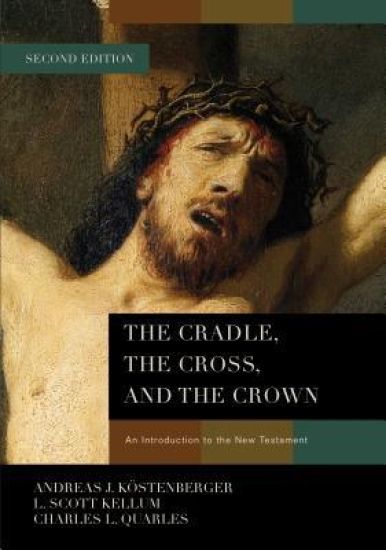
The Cradle, the Cross, and the Crown

The Cradle, the Cross, and the Crown

Andreas J. Köstenberger; L. Scott Kellum; Charles L Quarles

Broadman Holman Publishers
2016
sidottu
The Cradle, the Cross, and the Crown guides serious New Testament students through the historical, literary, and theological dimensions of the biblical text, allowing them to better understand and share God's "word of truth" (2 Tim 2:15). It offers a thorough introduction to all twenty-seven books of the New Testament and closely examines events such as Christ's incarnation and virgin birth, his crucifixion and resurrection, and triumphant return. The second edition features updated bibliographies and footnotes, interpretation sections that cover different literary genres in the New Testament, an epilogue that canvasses the entire storyline of Scripture, and a variety of maps. All of these new features contribute to making this a life-long resource for students of Scripture.
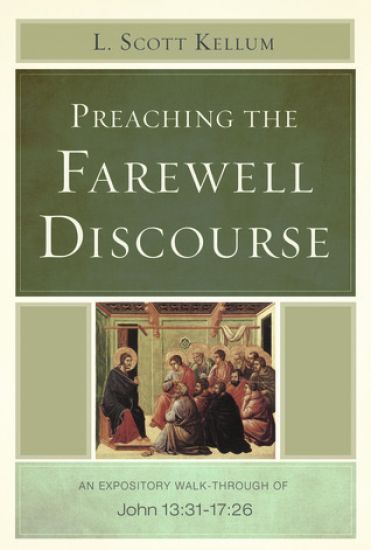
Preaching the Farewell Discourse

Preaching the Farewell Discourse

L. Scott Kellum

Broadman Holman Publishers
2014
nidottu
Through the lens of John the Apostle's Farewell Discourse found in John 13:31 - 17:26, seminary professor L. Scott Kellum provides a step-by-step illustration of how to produce an expository sermon series in "Preaching the Farewell Discourse." Kellum begins with foundational tools that will aid the journey from text to exposition and then describes how to employ discourse analysis to a hortatory document (like the Farewell Discourse) or an expository document. The latter part of the book finds Kellum implementing the theory on the Farewell Discourse of John's Gospel, examining the process in three sections: analyzing the text, interpreting the text, and preaching the text.
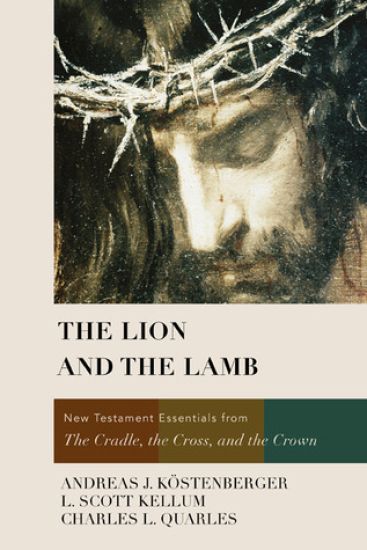
The Lion and the Lamb

The Lion and the Lamb

Andreas J. Köstenberger; L. Scott Kellum; Charles L Quarles

Broadman Holman Publishers
2012
sidottu
Engaging and accessible, "The Lion and the Lamb" is an ideal resource for college students and others interested in knowing the essentials of each New Testament book. A concise summary of "The Cradle, the Cross, and the Crown" -- the acclaimed New Testament introduction by the same authors -- this volume sets a new standard for high-level, up-to-date research presented in a core knowledge format that is practical, relevant, and easy to follow. Part One features chapters on the nature of Scripture and the religious and political background of the New Testament. Part Two covers the Gospels in the canonical order, Matthew, Mark, Luke, and John. Part Three uses Acts as the framework for treating Paul's letters in chronological written order: Galatians, 1-2 Thessalonians, 1-2 Corinthians, Romans, and the Prison and Pastoral Epistles (Philippians, Ephesians, Colossians, Philemon, and 1-2 Timothy and Titus, respectively). Part Four includes discussions of the General Epistles (Hebrews, James, 1-2 Peter, 1-3 John, Jude) and Revelation. Each chapter clearly discusses the book's key facts, contribution to the canon, historical setting, literary features, and theological message. In all, "The Lion and the Lamb" makes this learning exciting and rewarding.
The Unity of the Farewell Discourse

The Unity of the Farewell Discourse

L. Scott Kellum

T. T.Clark Ltd
2004
sidottu
The book is, primarily, a linguistic investigation into the possibility that the Johannine farewell discourse is the product of multiple hands. Chapter 1 examines the history of the problem. Chapter 2 contains an examination of the stylistic unity of the farewell discourse and John 14:31-16:33 is examined for specific literary style markers. All the style tests show that the major divisions of the farewell discourse are consistent with the style evident in the rest of the Gospel. Chapter 3 contains an investigation of the structure of the farewell discourse. The text is tested for structural unity, textual prominence, and coherence. The results show that the discourse holds together quite well in structure, peak, and cohesion. Chapter 4, therefore, returns to the issue of the magnus reus (Latin for "the great litigant"). The difficulty presented by 14:31, (ultimately, the major reason for identifying editorial activity) is investigated in terms of the assumptions current among source critics. Upon a closer examination, these assumptions are shown to be unlikely based on the conventions of ancient literature and the literary conventions of participant movement in the rest of the Fourth Gospel. The conclusion reached in this work is that the farewell discourse should be considered a unity. Journal for the Study of the New Testament Supplement Series, 256.