Kirjojen hintavertailu. Mukana 12 595 353 kirjaa ja 12 kauppaa.

Kirjailija

Lambert Spaanenburg

Kirjat ja teokset yhdessä paikassa: 2 kirjaa, julkaisuja vuosilta 2010-2014, suosituimpien joukossa Cloud Connectivity and Embedded Sensory Systems. Vertaile teosten hintoja ja tarkista saatavuus suomalaisista kirjakaupoista.

2 kirjaa

Kirjojen julkaisuhaarukka 2010-2014.

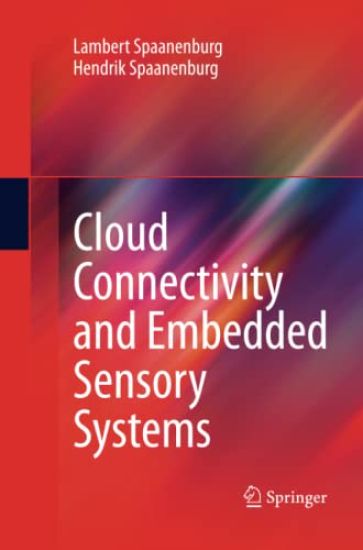
Cloud Connectivity and Embedded Sensory Systems

Cloud Connectivity and Embedded Sensory Systems

Lambert Spaanenburg; Hendrik Spaanenburg

Springer-Verlag New York Inc.
2014
nidottu
Sensor networks are meant to create awareness in space and time. They may be measuring the presence of an object or a condition, characterizing an object stream or a situational pattern, or even detect abnormalities that are to occur. This book provides new theory on the design of wireless sensor networks, based on concepts developed for large-scale, distributed computing environments known as “cloud computing.” It provides a single-source entry into the world of intelligent sensory networks, with a step-by-step discussion of building case studies that capture the requirements, taking into account practical limitations of creating ambient intelligence. The reader will not only achieve a better understanding of sensory clouds, swarms and flocks but is also guided by examples of how to design such networks taking the typical characteristics of diverse application areas into account.
Cloud Connectivity and Embedded Sensory Systems

Cloud Connectivity and Embedded Sensory Systems

Lambert Spaanenburg; Hendrik Spaanenburg

Springer-Verlag New York Inc.
2010
sidottu
Sensor networks are meant to create awareness in space and time. They may be measuring the presence of an object or a condition, characterizing an object stream or a situational pattern, or even detect abnormalities that are to occur. This book provides new theory on the design of wireless sensor networks, based on concepts developed for large-scale, distributed computing environments known as “cloud computing.” It provides a single-source entry into the world of intelligent sensory networks, with a step-by-step discussion of building case studies that capture the requirements, taking into account practical limitations of creating ambient intelligence. The reader will not only achieve a better understanding of sensory clouds, swarms and flocks but is also guided by examples of how to design such networks taking the typical characteristics of diverse application areas into account.