Kirjojen hintavertailu. Mukana 12 657 676 kirjaa ja 12 kauppaa.
Kirjailija
Laozi
Kirjat ja teokset yhdessä paikassa: 48 kirjaa, julkaisuja vuosilta 2000-2027, suosituimpien joukossa Laozi: Daodejing/Chinesisch/Deutsch. Vertaile teosten hintoja ja tarkista saatavuus suomalaisista kirjakaupoista.
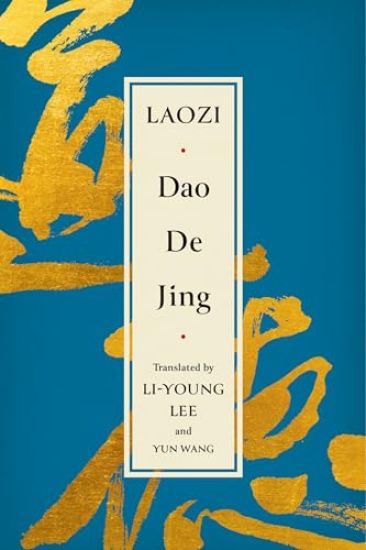
This bold new translation by two brilliant poets offers a contemporary perspective on a timeless masterpiece of Daoist scripture, introducing Dao De Jing to a new audience while retaining the majesty of the Chinese original. Composed of eighty-one short poems written by the sage Laozi in 400 BC, Dao De Jing is one of the pillars of Chinese thought. Acclaimed poet Li-Young Lee and poet and scholar Yun Wang illuminate Dao De Jing as a unified work of art. This revelatory and faithful translation--presented alongside the original Chinese text--reveals its enduring teachings in their profound simplicity, subtlety, and balance.
This work has been selected by scholars as being culturally important and is part of the knowledge base of civilization as we know it.This work is in the public domain in the United States of America, and possibly other nations. Within the United States, you may freely copy and distribute this work, as no entity (individual or corporate) has a copyright on the body of the work.Scholars believe, and we concur, that this work is important enough to be preserved, reproduced, and made generally available to the public. To ensure a quality reading experience, this work has been proofread and republished using a format that seamlessly blends the original graphical elements with text in an easy-to-read typeface.We appreciate your support of the preservation process, and thank you for being an important part of keeping this knowledge alive and relevant.
This work has been selected by scholars as being culturally important and is part of the knowledge base of civilization as we know it.This work is in the public domain in the United States of America, and possibly other nations. Within the United States, you may freely copy and distribute this work, as no entity (individual or corporate) has a copyright on the body of the work.Scholars believe, and we concur, that this work is important enough to be preserved, reproduced, and made generally available to the public. To ensure a quality reading experience, this work has been proofread and republished using a format that seamlessly blends the original graphical elements with text in an easy-to-read typeface.We appreciate your support of the preservation process, and thank you for being an important part of keeping this knowledge alive and relevant.
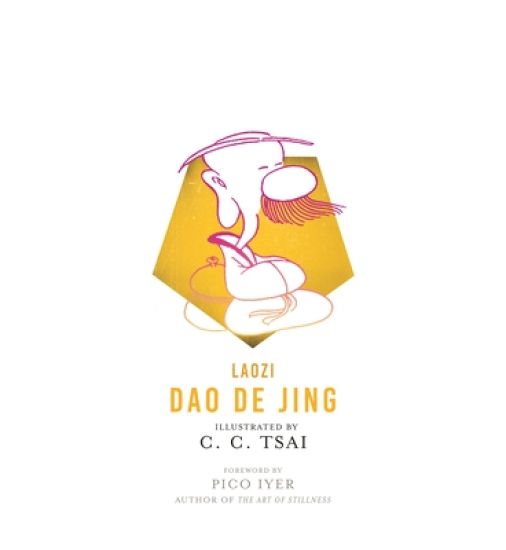
From bestselling cartoonist C. C. Tsai, a delightfully illustrated version of the classic work of Daoist philosophyC. C. Tsai is one of Asia's most popular cartoonists, and his editions of the Chinese classics have sold more than 40 million copies in over twenty languages. Here, he works his magic again with a delightful graphic adaptation of the complete text of Laozi's Dao De Jing, the beloved source of Daoist philosophy. Masterfully transforming Laozi's challenging work into entertaining and enlightening episodes, Tsai offers a uniquely fresh, relevant, and accessible version of one of the world's most influential books.After opening with Laozi's biography from the Shi Ji, Tsai turns the stage over to Laozi, who patiently explains his ideas to his earnest students (and us). Laozi describes the spontaneity of natural processes, the paradoxical effects of ethical precepts, the limits of language, the values of simplicity, and, above all else, how to go with the flow. In brief episodes that tantalize and inspire, he takes us into the subtle complexities of human existence. Ultimately, Laozi, a master visionary, guides us to the mountaintop to reveal an expansive view of life.A marvelous edition of a timeless classic, this book also presents Laozi's original Chinese text in sidebars on each page, enriching the book for readers and students of Chinese without distracting from the English-language cartoons. The text is skillfully translated by Brian Bruya, who also provides an illuminating introduction.
The Dao De Jing is one of the richest, most suggestive, and most popular works of philosophy and literature. Composed in China between the sixth and fourth centuries B.C., its enigmatic verses have inspired artists, philosophers, poets, religious thinkers, and general readers past and present. This new translation captures the beauty and nuance of the original work. In addition, the extensive and accessible commentary by Moss Roberts sheds light on the work’s historical and philosophical contexts and shows how the Dao De Jing addresses topics of relevance to our own times, such as politics, statecraft, cosmology, aesthetics, and ethics.
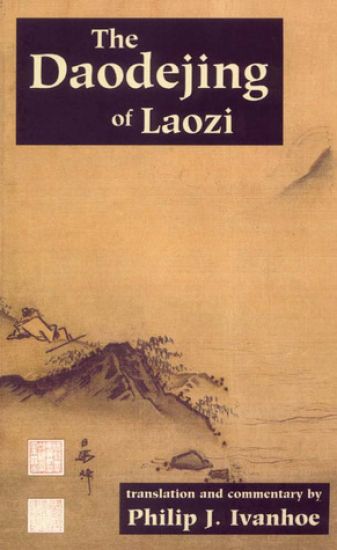
Philip J. Ivanhoe's richly annotated translation of this classic work is accompanied by his engaging interpretation and commentary, a lucid introduction, and a Language Appendix that compares eight classic translations of the opening passage of the work and invites the reader to consider the principles upon which each was rendered.
This work has been selected by scholars as being culturally important and is part of the knowledge base of civilization as we know it.This work is in the public domain in the United States of America, and possibly other nations. Within the United States, you may freely copy and distribute this work, as no entity (individual or corporate) has a copyright on the body of the work.Scholars believe, and we concur, that this work is important enough to be preserved, reproduced, and made generally available to the public. To ensure a quality reading experience, this work has been proofread and republished using a format that seamlessly blends the original graphical elements with text in an easy-to-read typeface.We appreciate your support of the preservation process, and thank you for being an important part of keeping this knowledge alive and relevant.
This work has been selected by scholars as being culturally important and is part of the knowledge base of civilization as we know it.This work is in the public domain in the United States of America, and possibly other nations. Within the United States, you may freely copy and distribute this work, as no entity (individual or corporate) has a copyright on the body of the work.Scholars believe, and we concur, that this work is important enough to be preserved, reproduced, and made generally available to the public. To ensure a quality reading experience, this work has been proofread and republished using a format that seamlessly blends the original graphical elements with text in an easy-to-read typeface.We appreciate your support of the preservation process, and thank you for being an important part of keeping this knowledge alive and relevant.