Kirjojen hintavertailu. Mukana 12 152 606 kirjaa ja 12 kauppaa.

Kirjailija

Larry A. Hickman

Kirjat ja teokset yhdessä paikassa: 9 kirjaa, julkaisuja vuosilta 1990-2023, suosituimpien joukossa The Elements of Skill. Vertaile teosten hintoja ja tarkista saatavuus suomalaisista kirjakaupoista.

Mukana myös kirjoitusasut: Larry A. Hickman, Larry A Hickman

9 kirjaa

Kirjojen julkaisuhaarukka 1990-2023.

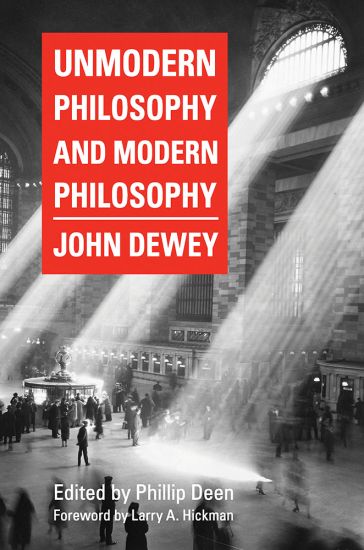
Unmodern Philosophy and Modern Philosophy

Unmodern Philosophy and Modern Philosophy

John Dewey; Larry A. Hickman

SOUTHERN ILLINOIS UNIVERSITY PRESS
2023
nidottu
In 1947 America’s premier philosopher, educator, and public intellectual John Dewey purportedly lost his last manuscript on modern philosophy in the back of a taxicab. Now, sixty-five years later, Dewey’s fresh and unpretentious take on the history and theory of knowledge is finally available. Editor Phillip Deen has taken on the task of editing Dewey’s unfinished work, carefully compiling the fragments and multiple drafts of each chapter that he discovered in the folders of the Dewey Papers at the Special Collections Research Center at Southern Illinois University Carbondale. He has used Dewey’s last known outline for the manuscript, aiming to create a finished product that faithfully represents Dewey’s original intent. An introduction and editor’s notes by Deen and a foreword by Larry A. Hickman, director of the Center for Dewey Studies, frame this previously lost work. In Unmodern Philosophy and Modern Philosophy, Dewey argues that modern philosophy is anything but; instead, it retains the baggage of outdated and misguided philosophical traditions and dualisms carried forward from Greek and medieval traditions. Drawing on cultural anthropology, Dewey moves past the philosophical themes of the past, instead proposing a functional model of humanity as emotional, inquiring, purposive organisms embedded in a natural and cultural environment. Dewey begins by tracing the problematic history of philosophy, demonstrating how, from the time of the Greeks to the Empiricists and Rationalists, the subject has been mired in the search for immutable absolutes outside human experience and has relied on dualisms between mind and body, theory and practice, and the material and the ideal, ultimately dividing humanity from nature. The result, he posits, is the epistemological problem of how it is possible to have knowledge at all. In the second half of the volume, Dewey roots philosophy in the conflicting beliefs and cultural tensions of the human condition, maintaining that these issues are much more pertinent to philosophy and knowledge than the sharp dichotomies of the past and abstract questions of the body and mind. Ultimately, Dewey argues that the mind is not separate from the world, criticizes the denigration of practice in the name of theory, addresses the dualism between matter and ideals, and questions why the human and the natural were ever separated in philosophy. The result is a deeper understanding of the relationship among the scientific, the moral, and the aesthetic. More than just historically significant in its rediscovery, Unmodern Philosophy and Modern Philosophy provides an intriguing critique of the history of modern thought and a positive account of John Dewey’s naturalized theory of knowing. This volume marks a significant contribution to the history of American thought and finally resolves one of the mysteries of pragmatic philosophy.
Unmodern Philosophy and Modern Philosophy

Unmodern Philosophy and Modern Philosophy

John Dewey; Larry A Hickman

Southern Illinois University Press
2012
sidottu
800x600Normal0falsefalsefalseEN-USX-NONEX-NONEMicrosoftInternetExplorer4In 1947 America's premier philosopher, educator, and public intellectual John Dewey purportedly lost his last manuscript on modern philosophy in the back of a taxicab. Now, sixty-five years later, Dewey's fresh and unpretentious take on the history and theory of knowledge is finally available. Editor Phillip Deen has taken on the task of editing Dewey's unfinished work, carefully compiling the fragments and multiple drafts of each chapter that he discovered in the folders of the Dewey Papers at the Special Collections Research Center at Southern Illinois University Carbondale. He has used Dewey's last known outline for the manuscript, aiming to create a finished product that faithfully represents Dewey's original intent. An introduction and editor's notes by Deen and a foreword by Larry A. Hickman, director of the Center for Dewey Studies, frame this previously lost work.In Unmodern Philosophy and Modern Philosophy, Dewey argues that modern philosophy is anything but; instead, it retains the baggage of outdated and misguided philosophical traditions and dualisms carried forward from Greek and medieval traditions. Drawing on cultural anthropology, Dewey moves past the philosophical themes of the past, instead proposing a functional model of humanity as emotional, inquiring, purposive organisms embedded in a natural and cultural environment.Dewey begins by tracing the problematic history of philosophy, demonstrating how, from the time of the Greeks to the Empiricists and Rationalists, the subject has been mired in the search for immutable absolutes outside human experience and has relied on dualisms between mind and body, theory and practice, and the material and the ideal, ultimately dividing humanity from nature. The result, he posits, is the epistemological problem of how it is possible to have knowledge at all. In the second half of the volume, Dewey roots philosophy in the conflicting beliefs and cultural tensions of the human condition, maintaining that these issues are much more pertinent to philosophy and knowledge than the sharp dichotomies of the past and abstract questions of the body and mind. Ultimately, Dewey argues that the mind is not separate from the world, criticizes the denigration of practice in the name of theory, addresses the dualism between matter and ideals, and questions why the human and the natural were ever separated in philosophy. The result is a deeper understanding of the relationship among the scientific, the moral, and the aesthetic.More than just historically significant in its rediscovery, Unmodern Philosophy and Modern Philosophy provides an intriguing critique of the history of modern thought and a positive account of John Dewey's naturalized theory of knowing. This volume marks a significant contribution to the history of American thought and finally resolves one of the mysteries of pragmatic philosophy.
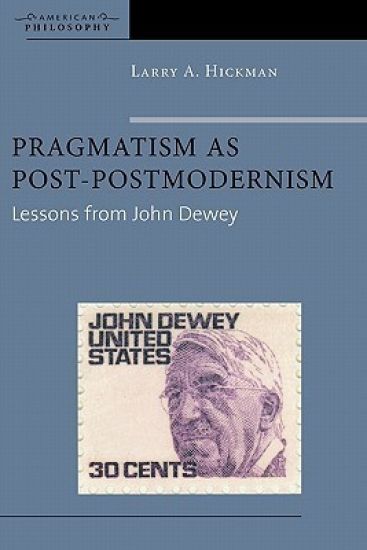
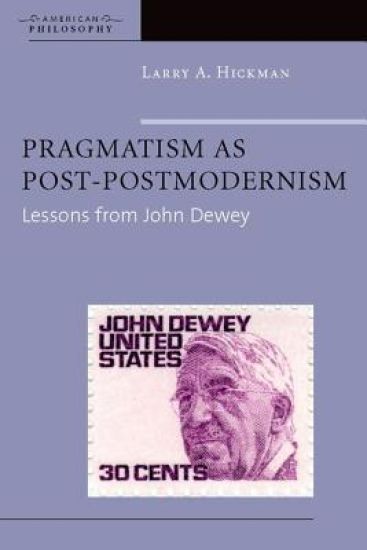
Pragmatism As Post-Postmodernism

Pragmatism As Post-Postmodernism

Larry A. Hickman

Fordham University Press
2007
pokkari
Larry A. Hickman presents John Dewey as very much at home in the busy mix of contemporary philosophy—as a thinker whose work now, more than fifty years after his death, still furnishes fresh insights into cutting-edge philosophical debates. Hickman argues that it is precisely the rich, pluralistic mix of contemporary philosophical discourse, with its competing research programs in French-inspired postmodernism, phenomenology, Critical Theory, Heidegger studies, analytic philosophy, and neopragmatism—all busily engaging, challenging, and informing one another—that invites renewed examination of Dewey's central ideas. Hickman offers a Dewey who both anticipated some of the central insights of French-inspired postmodernism and, if he were alive today, would certainly be one of its most committed critics, a Dewey who foresaw some of the most trenchant problems associated with fostering global citizenship, and a Dewey whose core ideas are often at odds with those of some of his most ardent neopragmatist interpreters. In the trio of essays that launch this book, Dewey is an observer and critic of some of the central features of French-inspired postmodernism and its American cousin, neopragmatism. In the next four, Dewey enters into dialogue with contemporary critics of technology, including Jürgen Habermas, Andrew Feenberg, and Albert Borgmann. The next two essays establish Dewey as an environmental philosopher of the first rank—a worthy conversation partner for Holmes Ralston, III, Baird Callicott, Bryan G. Norton, and Aldo Leopold. The concluding essays provide novel interpretations of Dewey's views of religious belief, the psychology of habit, philosophical anthropology, and what he termed "the epistemology industry." Pragmatism as Post-Postmodernism: Lessons from John Dewey is available from the publisher on an open-access basis.
Pragmatism As Post-Postmodernism

Pragmatism As Post-Postmodernism

Larry A. Hickman

Fordham University Press
2007
sidottu
Larry A. Hickman presents John Dewey as very much at home in the busy mix of contemporary philosophy—as a thinker whose work now, more than fifty years after his death, still furnishes fresh insights into cutting-edge philosophical debates. Hickman argues that it is precisely the rich, pluralistic mix of contemporary philosophical discourse, with its competing research programs in French-inspired postmodernism, phenomenology, Critical Theory, Heidegger studies, analytic philosophy, and neopragmatism—all busily engaging, challenging, and informing one another—that invites renewed examination of Dewey's central ideas. Hickman offers a Dewey who both anticipated some of the central insights of French-inspired postmodernism and, if he were alive today, would certainly be one of its most committed critics, a Dewey who foresaw some of the most trenchant problems associated with fostering global citizenship, and a Dewey whose core ideas are often at odds with those of some of his most ardent neopragmatist interpreters. In the trio of essays that launch this book, Dewey is an observer and critic of some of the central features of French-inspired postmodernism and its American cousin, neopragmatism. In the next four, Dewey enters into dialogue with contemporary critics of technology, including Jürgen Habermas, Andrew Feenberg, and Albert Borgmann. The next two essays establish Dewey as an environmental philosopher of the first rank—a worthy conversation partner for Holmes Ralston, III, Baird Callicott, Bryan G. Norton, and Aldo Leopold. The concluding essays provide novel interpretations of Dewey's views of religious belief, the psychology of habit, philosophical anthropology, and what he termed "the epistemology industry." Pragmatism as Post-Postmodernism: Lessons from John Dewey is available from the publisher on an open-access basis.
Dewey's Logical Theory

Dewey's Logical Theory

Larry A. Hickman

Vanderbilt University Press
2002
sidottu
Despite the resurgence of interest in the philosophy of John Dewey, his work on logical theory has received relatively little attention. Ironically, Dewey's logic was his ""first and last love."" The essays in this collection pay tribute to that love by addressing Dewey's philosophy of logic, from his work at the beginning of the twentieth century to the culmination of his logical thought in the 1938 volume, Logic: The Theory of Inquiry. All the essays are original to this volume and are written by leading Dewey scholars. Ranging from discussions of propositional theory to logic's social and ethical implications, these essays clarify often misunderstood or misrepresented aspects of Dewey's work, while emphasizing the seminal role of logic to Dewey's philosophical endeavors. This collection breaks new ground in its relevance to contemporary philosophy of logic and epistemology and pays special attention to applications in ethics and moral philosophy.
Dewey's Logical Theory

Dewey's Logical Theory

Larry A. Hickman

Vanderbilt University Press
2002
nidottu
Despite the resurgence of interest in the philosophy of John Dewey, his work on logical theory has received relatively little attention. Ironically, Dewey's logic was his ""first and last love."" The essays in this collection pay tribute to that love by addressing Dewey's philosophy of logic, from his work at the beginning of the twentieth century to the culmination of his logical thought in the 1938 volume, Logic: The Theory of Inquiry. All the essays are original to this volume and are written by leading Dewey scholars. Ranging from discussions of propositional theory to logic's social and ethical implications, these essays clarify often misunderstood or misrepresented aspects of Dewey's work, while emphasizing the seminal role of logic to Dewey's philosophical endeavors. This collection breaks new ground in its relevance to contemporary philosophy of logic and epistemology and pays special attention to applications in ethics and moral philosophy.
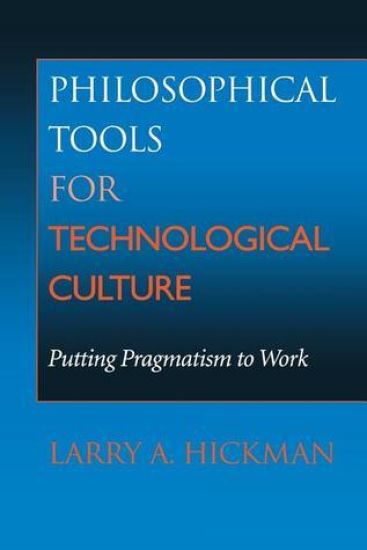
Philosophical Tools for Technological Culture

Philosophical Tools for Technological Culture

Larry A. Hickman

Indiana University Press
2001
pokkari
"Hickman['s] . . . style of pragmatism provides us with flexible, philosophical 'tools' which can be used to analyze and penetrate various technology and technological cultural problems of the present. He, himself, uses this toolkit to make his analyses and succeeds very well indeed." —Don Ihde A practical and comprehensive appraisal of the value of philosophy in today's technological culture. Philosophical Tools for Technological Culture contends that technology—a defining mark of contemporary culture—should be a legitimate concern of philosophers. Larry A. Hickman contests the perception that philosophy is little more than a narrow academic discipline and that philosophical discourse is merely redescription of the ancient past. Drawing inspiration from John Dewey, one of America's greatest public philosophers, Hickman validates the role of philosophers as cultural critics and reformers in the broadest sense. Hickman situates Dewey's critique of technological culture within the debates of 20th-century Western philosophy by engaging the work of Richard Rorty, Albert Borgmann, Jacques Ellul, Walter Benjamin, Jürgen Habermas, and Martin Heidegger, among others. Pushing beyond their philosophical concerns, Hickman designs and assembles a set of philosophical tools to cope with technological culture in a new century. His pragmatic treatment of current themes—such as technology and its relationship to the arts, technosciences and technocrats, the role of the media in education, and the meaning of democracy and community life in an age dominated by technology—reveals that philosophy possesses powerful tools for cultural renewal. This original, timely, and accessible work will be of interest to readers seeking a deeper understanding of the meanings and consequences of technology in today's world.
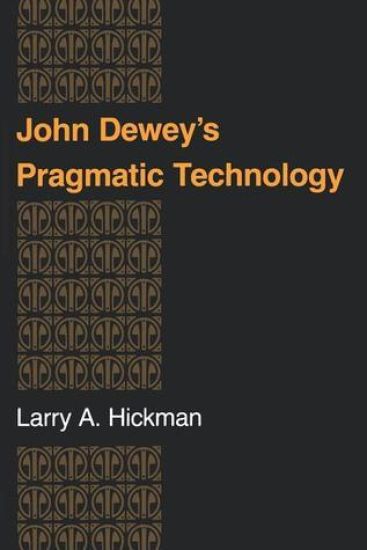
John Dewey's Pragmatic Technology

John Dewey's Pragmatic Technology

Larry A. Hickman

Indiana University Press
1990
pokkari
" . . . a comprehensive canvass of Dewey's logic, metaphysics, aesthetics, philosophy of history, and social thought." —Choice " . . . a major addition to the recent accumulation of in-depth studies of Dewey." —Journal of Speculative Philosophy "Larry Hickman has done an exemplary job in demonstrating the relevance of John Dewey's philosophy to modern-day discussions of technology." —Ethics