Kirjojen hintavertailu. Mukana 12 172 277 kirjaa ja 12 kauppaa.

Kirjailija

Larry Cuban

Kirjat ja teokset yhdessä paikassa: 28 kirjaa, julkaisuja vuosilta 1986-2023, suosituimpien joukossa Against the Odds. Vertaile teosten hintoja ja tarkista saatavuus suomalaisista kirjakaupoista.

28 kirjaa

Kirjojen julkaisuhaarukka 1986-2023.

Oversold and Underused

Oversold and Underused

Larry Cuban

Harvard University Press
2003
nidottu
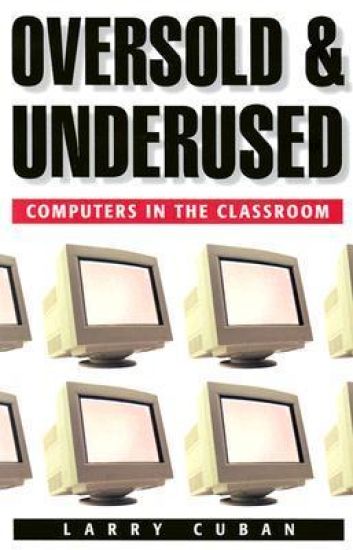
Impelled by a demand for increasing American strength in the new global economy, many educators, public officials, business leaders, and parents argue that school computers and Internet access will improve academic learning and prepare students for an information-based workplace.But just how valid is this argument? In Oversold and Underused, one of the most respected voices in American education argues that when teachers are not given a say in how the technology might reshape schools, computers are merely souped-up typewriters and classrooms continue to run much as they did a generation ago. In his studies of early childhood, high school, and university classrooms in Silicon Valley, Larry Cuban found that students and teachers use the new technologies far less in the classroom than they do at home, and that teachers who use computers for instruction do so infrequently and unimaginatively.Cuban points out that historical and organizational economic contexts influence how teachers use technical innovations. Computers can be useful when teachers sufficiently understand the technology themselves, believe it will enhance learning, and have the power to shape their own curricula. But these conditions can't be met without a broader and deeper commitment to public education beyond preparing workers. More attention, Cuban says, needs to be paid to the civic and social goals of schooling, goals that make the question of how many computers are in classrooms trivial.
Why Is It So Hard to Get Good Schools?

Why Is It So Hard to Get Good Schools?

Larry Cuban

Teachers' College Press
2003
nidottu
After almost five decades of working in and around public schools, Larry Cuban invites us to think along with him about why it is so hard to get good schools. He offers these reflections because his contact with tens of thousands of public school participants - teachers, policymakers, researchers, parents, and students - has convinced him that ""I am not alone in coping with these thorny dilemmas...as each of us muddles toward the kinds of 'good' schooling that we seek for children.
How Can I Fix It?

How Can I Fix It?

Larry Cuban

Teachers' College Press
2001
nidottu
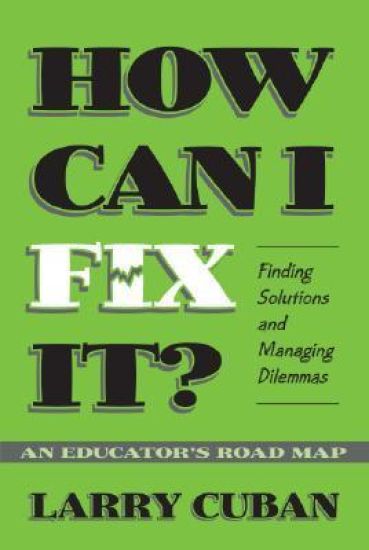
With this highly accessible and unique little guide, Larry Cuban offers educators indispensable tools to make sense of the daily complexities they encounter in their work. Teachers face dozens of classroom situations where conflicts occur. Similarly, principals wrestle with school issues that call for changes in attitudes, behaviors, and procedures. Because the process is so familiar, even expert teachers and principals often have difficulty in explaining what it is that they do and how they go about solving problems and coping with dilemmas in their classrooms and schools. Using concrete and varied examples drawn from the workplace, Cuban presents vivid and provocative case studies of practitioners' experiences in urban and suburban schools that deal with the routine conflicts of school. He draws on his own extensive experience in public schools and his research into teaching and administration to set forth a practical framework for identifying, defining, and coping with both puzzling problems and tension-filled dilemmas. A much-needed resource for both new and experienced practitioners, How Can I Fix It? focuses on common skills that practitioners have - but seldom take time to consider - and applies these skills to concrete situations.
How Scholars Trumped Teachers

How Scholars Trumped Teachers

Larry Cuban

Teachers' College Press
1999
nidottu
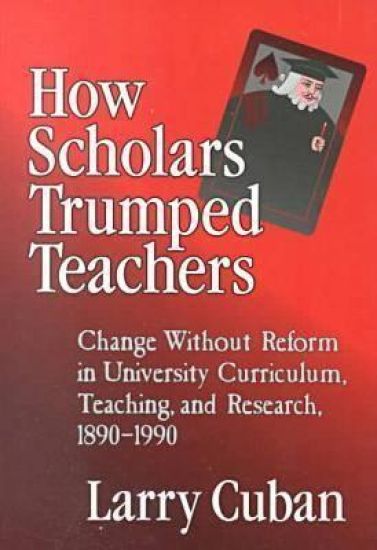
Examining a century of university history, Larry Cuban tackles the age-old question: What is more important, teaching or research? Using two departments (history and medicine) at Stanford University as a case study, Cuban shows how universities have organizationally and politically subordinated teaching to research for over one hundred years. He explains how university reforms, decade after decade, not only failed to dislodge the primacy of research but actually served to strengthen it. He examines the academic work of research and teaching to determine how each has influenced university structures and processes, including curricular reform. Can the dilemma of scholars vs. teachers ever be fully reconciled? This fascinating historical journey is a must read for all university administrators, faculty, researchers, and anyone concerned with educational reform.
Tinkering toward Utopia

Tinkering toward Utopia

David B. Tyack; Larry Cuban

Harvard University Press
1997
nidottu
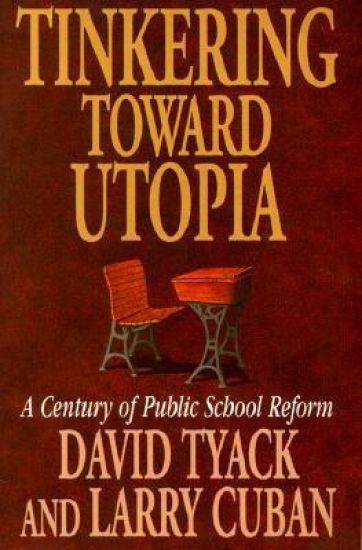
For over a century, Americans have translated their cultural anxieties and hopes into dramatic demands for educational reform. Although policy talk has sounded a millennial tone, the actual reforms have been gradual and incremental. Tinkering toward Utopia documents the dynamic tension between Americans’ faith in education as a panacea and the moderate pace of change in educational practices.In this book, David Tyack and Larry Cuban explore some basic questions about the nature of educational reform. Why have Americans come to believe that schooling has regressed? Have educational reforms occurred in cycles, and if so, why? Why has it been so difficult to change the basic institutional patterns of schooling? What actually happened when reformers tried to “reinvent” schooling?Tyack and Cuban argue that the ahistorical nature of most current reform proposals magnifies defects and understates the difficulty of changing the system. Policy talk has alternated between lamentation and overconfidence. The authors suggest that reformers today need to focus on ways to help teachers improve instruction from the inside out instead of decreeing change by remote control, and that reformers must also keep in mind the democratic purposes that guide public education.
How Teachers Taught

How Teachers Taught

Larry Cuban

Teachers' College Press
1993
nidottu
In the first edition of this seminal study, Larry Cuban presented the last century of American teaching as one of a stable teacher-centered pedagogy. Within this framework, Cuban explored how major school reform efforts to alter classroom teaching often resulted in modest shifts in pedagogy in elementary schools and even less change in secondary schools.Now, in this second edition, How Teachers Taught: Constancy and Change in American Classrooms, 1890–1990, Larry Cuban returns to his pioneering inquiry into the history of teaching practice in the United States, responds to criticisms, and incorporates the scholarship of the last ten years. While not abandoning his basic thesis of the remarkable continuity in teacher-based instruction, Cuban now examines more closely the phenomenon of "hybrids" of student-centered and teacher-centered pedagogy, and finds many instances of classroom change sufficient to give pause to those who see futility in classroom reform. The author looks closely at socioeconomic contexts and the evolution of curriculum content. In the final chapter, Cuban directly assesses the implications of his work for policymakers, practitioners, and researchers. Historians, sociologists, and educators will also find powerful relevancy to their work, and the general reader will join in an exciting search for historical realities.
The Managerial Imperative and the Practice of Leadership in Schools

The Managerial Imperative and the Practice of Leadership in Schools

Larry Cuban

State University of New York Press
1988
pokkari
With this significant new work, Larry Cuban provides a unique and insightful perspective on the bridging of the long-standing and well-known gap between teachers and administrators. Drawing on the literature of the field as well as personal experience, Cuban recognizes the enduring structural relationship within school organizations inherited by teachers, principals, and superintendents, and calls for a renewal of their sense of common purpose regarding the role of schooling in a democratic society.Cuban analyzes the dominant images (moral and technical), roles (instructional, managerial, and political), and contexts (classroom, school, and district) within which teachers, principals, and superintendents have worked over the last century. He concludes that when these powerful images and roles are wedded to the structural conditions in which schooling occurs, "managerial behavior" results, thus narrowing the potential for more thoughtful, effective, and appropriate leadership. Cuban then turns to consider this situation with respect to the contemporary movement for school reform, identifying significant concerns both for policymakers and practitioners.This honest, thought-provoking book by a leading scholar, writer, and practitioner in the field represents an invaluable resource-an insightful introduction for those just entering the field and a fresh, new perspective for those long-familiar with its complexities. Cuban's ethnographic approach to the development of his own career and viewpoint, as well as his highly readable style, make this a work of lasting value.