Kirjojen hintavertailu. Mukana 12 156 616 kirjaa ja 12 kauppaa.

Kirjailija

Larry L. Barton

Kirjat ja teokset yhdessä paikassa: 5 kirjaa, julkaisuja vuosilta 2004-2025, suosituimpien joukossa Structural and Functional Relationships in Prokaryotes. Vertaile teosten hintoja ja tarkista saatavuus suomalaisista kirjakaupoista.

Mukana myös kirjoitusasut: Larry L Barton

5 kirjaa

Kirjojen julkaisuhaarukka 2004-2025.

Structural and Functional Relationships in Prokaryotes

Structural and Functional Relationships in Prokaryotes

Larry L Barton

Springer International Publishing AG
2025
sidottu
This book is designed to be used as textbook for advanced undergraduate and graduate students in courses of microbial physiology and biochemistry, with a specific focus on the physiological processes in bacteria and archaea. This emphasis provides for the basis to explore bacterial and archaeal growth, as well as the response of these cells to the environment and to evaluate the enzymology used to support life at the cellular level. Building on the success of the first edition, the topics have been strengthened by the addition of new information and a reorganization which has resulted in condensed chapters to enable instructors to more readily adapt the various units of this book to their class schedules. A set of questions is provided for each chapter and these questions can serve as in-class discussions or homework projects. Through an extensive use of references, the reader is able to readily identify the source for material presented and this approach enables the book to also serve as a reference for research scientists. Through the use of updated figures and tables, details in the text are provided for the reader. It is the hope that this book will summarize the current understanding of structure-function relationships in prokaryotes and to serve as a bridge to future developments in this area of microbiology.
Sulfate-Reducing Bacteria and Archaea

Sulfate-Reducing Bacteria and Archaea

Larry L. Barton; Guy D. Fauque

Springer Nature Switzerland AG
2022
sidottu
The abundance of sulfate-reducing bacteria and archaea (SRBA) is impressive and new isolates are being reported continuously. A few decades ago, only two genera of sulfate-reducing bacteria (SRB) had been identified. As of 2018, 92 genera containing more than 420 species of SRB have been isolated and characterized and there are several species of archaea. This book addresses the development of the research with SRBA and includes historical background of this field. Biochemical characterization of the enzymes, cytochromes and electron carriers involved with dissimilatory sulfate reduction are reviewed and the presence of relevant genes in cultured and uncultured SRBA are assessed using genome analysis. The contributions of transmembrane electron transport complexes as related to cell energetics are discussed. This book highlights the unique cellular and molecular features of the SRBA and discusses the biochemical interactions behind their metabolic capabilities which enable SRBA to grow in extreme environments. Examples are provided to detoxify and alleviate pollution situations, to evaluate mechanisms proposed for corrosion of ferrous metals and to examine the effects of SRB on human and animal hosts.
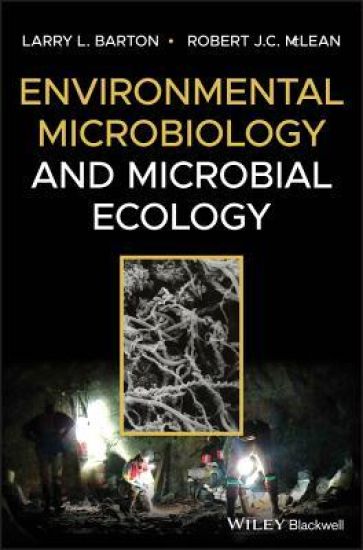
Environmental Microbiology and Microbial Ecology

Environmental Microbiology and Microbial Ecology

Larry L. Barton; Robert J. C. McLean

John Wiley Sons Inc
2019
sidottu
An authoritative overview of the ecological activities of microbes in the biosphere Environmental Microbiology and Microbial Ecology presents a broad overview of microbial activity and microbes' interactions with their environments and communities. Adopting an integrative approach, this text covers both conventional ecological issues as well as cross-disciplinary investigations that combine facets of microbiology, ecology, environmental science and engineering, molecular biology, and biochemistry. Focusing primarily on single-cell forms of prokaryotes — and cellular forms of algae, fungi, and protozoans — this book enables readers to gain insight into the fundamental methodologies for the characterization of microorganisms in the biosphere. The authors draw from decades of experience to examine the environmental processes mediated by microorganisms and explore the interactions between microorganisms and higher life forms. Highly relevant to modern readers, this book examines topics including the ecology of microorganisms in engineered environments, microbial phylogeny and interactions, microbial processes in relation to environmental pollution, and many more. Now in its second edition, this book features updated references and major revisions to chapters on assessing microbial communities, community relationships, and their global impact. New content such as effective public communication of research findings and advice on scientific article review equips readers with practical real-world skills. Explores the activities of microorganisms in specific environments with case studies and actual research dataHighlights how prominent microbial biologists address significant microbial ecology issuesOffers guidance on scientific communication, including scientific presentations and grant preparationIncludes plentiful illustrations and examples of microbial interactions, community structures, and human-bacterial connectionsProvides chapter summaries, review questions, selected reading lists, a complete glossary, and critical thinking exercises Environmental Microbiology and Microbial Ecology is an ideal textbook for graduate and advanced undergraduate courses in biology, microbiology, ecology, and environmental science, while also serving as a current and informative reference for microbiologists, cell and molecular biologists, ecologists, and environmental professionals.
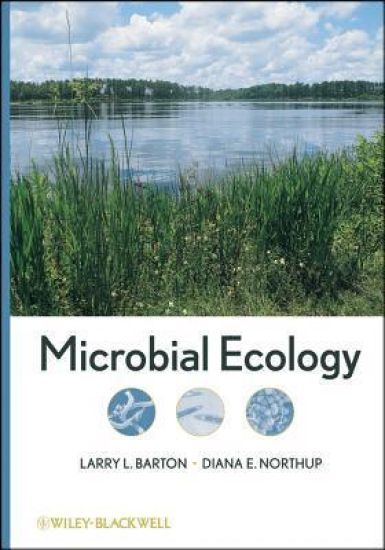
Microbial Ecology

Microbial Ecology

Larry L. Barton; Diana E. Northup

John Wiley Sons Inc
2011
sidottu
This book covers the ecological activities of microbes in the biosphere with an emphasis on microbial interactions within their environments and communities In thirteen concise and timely chapters, Microbial Ecology presents a broad overview of this rapidly growing field, explaining the basic principles in an easy-to-follow manner. Using an integrative approach, it comprehensively covers traditional issues in ecology as well as cutting-edge content at the intersection of ecology, microbiology, environmental science and engineering, and molecular biology. Examining the microbial characteristics that enable microbes to grow in different environments, the book provides insights into relevant methodologies for characterization of microorganisms in the environment. The authors draw upon their extensive experience in teaching microbiology to address the latest hot-button topics in the field, such as: Ecology of microorganisms in natural and engineered environmentsAdvances in molecular-based understanding of microbial phylogeny and interactionsMicrobially driven biogeochemical processes and interactions among microbial populations and communitiesMicrobial activities in extreme or unusual environmentsEcological studies pertaining to animal, plant, and insect microbiologyMicrobial processes and interactions associated with environmental pollution Designed for use in teaching, Microbial Ecology offers numerous special features to aid both students and instructors, including: Information boxes that highlight key microbial ecology issues"Microbial Spotlights" that focus on how prominent microbial ecologists became interested in microbial ecologyExamples that illustrate the role of bacterial interaction with humansExercises to promote critical thinkingSelected reading listsChapter summaries and review questions for class discussion Various microbial interactions and community structures are presented through examples and illustrations. Also included are mini case studies that address activities of microorganisms in specific environments, as well as a glossary and key words. All these features make this an ideal textbook for graduate or upper-level undergraduate students in biology, microbiology, ecology, or environmental science. It also serves as a highly useful reference for scientists and environmental professionals.
Structural and Functional Relationships in Prokaryotes

Structural and Functional Relationships in Prokaryotes

Larry L. Barton

Springer-Verlag New York Inc.
2004
sidottu
For several decades, bacteria have served as model systems to describe the life p- cesses of growth and metabolism. In addition, it is well recognized that prokaryotes have contributed greatly to the many advances in the areas of ecology, evolution, and biotechnology. This understanding of microorganisms is based on studies of members from both theBacteria andArchaea domains. With each issue of the various scienti?c publications, new characteristics of prokaryotic cells are being reported and it is - portant to place these insights in the context of the appropriate physiological processes. Structural and Functional Relationships in Prokaryotes describes the fundamental physiological processes for members of the Archaea and Bacteria domains. The - ganization of the book re?ects the emphasis that I have used in my 30 years of teaching a course of bacterial physiology. The philosophy used in the preparation of this book is to focus on the fundamental features of prokaryotic physiology and to use these features as the basis for comparative physiology. Even though diverse phenotypes have evolved from myriad genetic possibilities, these prokaryotes display considerable functional similarity and support the premise that there is a unity of physiology in the prokaryotes. The variations observed in the chemical structures and biochemical p- cesses are important in contributing to the persistence of microbial strains in a speci?c environment.