Kirjojen hintavertailu. Mukana 12 337 756 kirjaa ja 12 kauppaa.

Kirjailija

Larry May

Kirjat ja teokset yhdessä paikassa: 32 kirjaa, julkaisuja vuosilta 1996-2025, suosituimpien joukossa Medieval Legal and Political Thought. Vertaile teosten hintoja ja tarkista saatavuus suomalaisista kirjakaupoista.

32 kirjaa

Kirjojen julkaisuhaarukka 1996-2025.

Genocide

Genocide

Larry May

Cambridge University Press
2010
pokkari
Larry May examines the normative and conceptual problems concerning the crime of genocide. Genocide arises out of the worst of horrors. Legally, however, the unique character of genocide is reduced to a technical requirement, that the perpetrator's act manifest an intention to destroy a protected group. From this definition, many puzzles arise. How are groups to be identified and why are only four groups subject to genocide? What is the harm of destroying a group and why is this harm thought to be independent of killing many people? How can a person in the dock, as an individual, be responsible for a collective crime like genocide? How should we understand the specific crimes associated with genocide, especially instigation, incitement, and complicity? Paying special attention to the recent case law concerning the Rwanda genocide, May offers the first philosophical exploration of the crime of genocide in international criminal law.
Genocide

Genocide

Larry May

Cambridge University Press
2010
sidottu
Larry May examines the normative and conceptual problems concerning the crime of genocide. Genocide arises out of the worst of horrors. Legally, however, the unique character of genocide is reduced to a technical requirement, that the perpetrator's act manifest an intention to destroy a protected group. From this definition, many puzzles arise. How are groups to be identified and why are only four groups subject to genocide? What is the harm of destroying a group and why is this harm thought to be independent of killing many people? How can a person in the dock, as an individual, be responsible for a collective crime like genocide? How should we understand the specific crimes associated with genocide, especially instigation, incitement, and complicity? Paying special attention to the recent case law concerning the Rwanda genocide, May offers the first philosophical exploration of the crime of genocide in international criminal law.

Aggression and Crimes Against Peace

Aggression and Crimes Against Peace

Larry May

Cambridge University Press
2008
pokkari
In this volume, the third in his trilogy on the philosophical and legal aspects of war and conflict, Larry May locates a normative grounding for the crime of aggression - the only one of the three crimes charged at Nuremberg that is not currently being prosecuted - that is similar to that for crimes against humanity and war crimes. He considers cases from the Nuremberg trials, philosophical debates in the Just War tradition, and more recent debates about the International Criminal Court, as well as the hard cases of humanitarian intervention and terrorist aggression. His thesis refutes the traditional understanding of aggression. At Nuremberg, crimes against humanity charges were only pursued if the defendant also engaged in the crime of aggression. May argues for a reversal of this position, contending that aggression charges should be pursued only if the defendant's acts involve serious human rights violations.
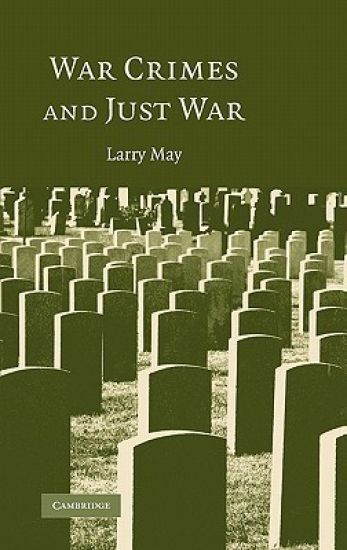
War Crimes and Just War

War Crimes and Just War

Larry May

Cambridge University Press
2007
pokkari
Larry May argues that the best way to understand war crimes is as crimes against humanness rather than as violations of justice. He shows that in a deeply pluralistic world, we need to understand the rules of war as the collective responsibility of states that send their citizens into harm's way, as the embodiment of humanity, and as the chief way for soldiers to retain a sense of honour on the battlefield. Throughout, May demonstrates that the principle of humanness is the cornerstone of international humanitarian law, and is itself the basis of the traditional principles of discrimination, necessity, and proportionality. He draws extensively on the older Just War tradition to assess recent cases from the International Tribunal for Yugoslavia as well as examples of atrocities from the archives of the International Committee of the Red Cross.
War Crimes and Just War

War Crimes and Just War

Larry May

Cambridge University Press
2007
sidottu
Larry May argues that the best way to understand war crimes is as crimes against humanness rather than as violations of justice. He shows that in a deeply pluralistic world, we need to understand the rules of war as the collective responsibility of states that send their citizens into harm's way, as the embodiment of humanity, and as the chief way for soldiers to retain a sense of honour on the battlefield. Throughout, May demonstrates that the principle of humanness is the cornerstone of international humanitarian law, and is itself the basis of the traditional principles of discrimination, necessity, and proportionality. He draws extensively on the older Just War tradition to assess recent cases from the International Tribunal for Yugoslavia as well as examples of atrocities from the archives of the International Committee of the Red Cross.
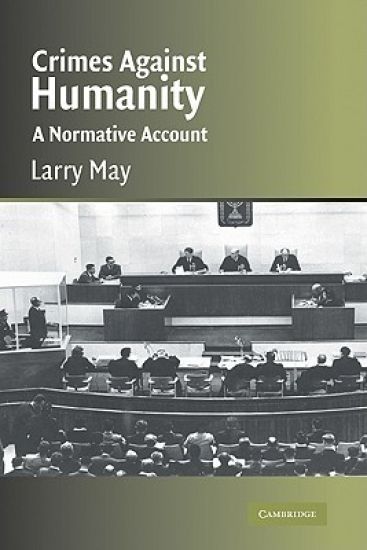
Crimes against Humanity

Crimes against Humanity

Larry May

Cambridge University Press
2004
pokkari
This book was the first booklength treatment of the philosophical foundations of international criminal law. The focus is on the moral, legal, and political questions that arise when individuals who commit collective crimes, such as crimes against humanity, are held accountable by international criminal tribunals. These tribunals challenge one of the most sacred prerogatives of states - sovereignty - and breaches to this sovereignty can be justified in limited circumstances, following what the author calls a minimalist account of the justification of international prosecution. Written in a clear and accessible style, this book should appeal to anyone with an interest in international law, political philosophy, international relations, and human rights theory.
Crimes against Humanity

Crimes against Humanity

Larry May

Cambridge University Press
2004
sidottu
This book was the first booklength treatment of the philosophical foundations of international criminal law. The focus is on the moral, legal, and political questions that arise when individuals who commit collective crimes, such as crimes against humanity, are held accountable by international criminal tribunals. These tribunals challenge one of the most sacred prerogatives of states - sovereignty - and breaches to this sovereignty can be justified in limited circumstances, following what the author calls a minimalist account of the justification of international prosecution. Written in a clear and accessible style, this book should appeal to anyone with an interest in international law, political philosophy, international relations, and human rights theory.
Praying for a Cure

Praying for a Cure

Peggy DesAutels; Margaret P. Battin; Larry May

Rowman Littlefield
1999
nidottu
When the children of Christian Scientists die from a treatable illness, are their parents guilty of murder for withholding that treatment? How should the rights of children, the authority of the medical community, and religious freedom be balanced? Is it possible for those adhering to a medical model of health and disease and for those adhering to the Christian Science model to enter into a meaningful dialogue, or are the two models incommensurable? DesAutels, Battin, and May engage in a lucid and candid debate of the issues of who is ultimately responsible for deciding these questions and how to accommodate (and, in some cases, constrain) Christian Science views and practices within a pluralistic society.
Masculinity and Morality

Masculinity and Morality

Larry May

Cornell University Press
1998
pokkari
What does it mean to be a morally responsible man? Psychology and the law have offered reasons to excuse men for acting aggressively. In these philosophically reflective essays, Larry May argues against standard accounts of traditional male behavior, discussing male anger, paternity, pornography, rape, sexual harassment, the exclusion of women, and what he terms the myth of uncontrollable male sexuality. While refuting the platitudes of the popular men's movement, his book challenges men to reassess and change behavior that has had detrimental effects on the lives of women and of men. In May's view, the key to solving many problems is to understand how individual actions may combine to produce large-scale, harmful consequences. May is eager to reconceptualize male roles in ways that build on men's strength rather than rendering them androgynous. Each chapter in his book suggests strategies to effect changes based on May's views on the nature of moral responsibility. Examining separatism and the socialization of youth in athletics and the military, specifically at Virginia Military Institute and the Citadel, May analyzes the moral implications of the way all-male environments are constructed. Rejecting the standard arguments for them, he speculates about the positive ways they might be used to transform the socialization of young men.
The Socially Responsive Self

The Socially Responsive Self

Larry May

University of Chicago Press
1996
nidottu
In this work, Larry May argues that socially responsive individuals need not be self-sacrificing or overly conscientious. According to the author a person's integrity and moral responsibility are shaped and limited not just by conscience, but also by socialization and moral support from the communities to which he or she belongs. Applying his theory of responsibility to professional ethics, May contends that current methods of professional socialization should be changed so that professionals are not expected to ignore considerations of personal well-being, family, or community. For instance, lawyers should not place client loyalty above concerns for the common good; doctors should not place the physical well-being of patients above their mental and spiritual well-being; scientists and engineers should not feel obliged to blow the whistle on fraud and corruption unless their professional groups protect them from retaliation.
The Socially Responsive Self

The Socially Responsive Self

Larry May

University of Chicago Press
1996
sidottu
In this work, Larry May argues that socially responsive individuals need not be self-sacrificing or overly conscientious. According to the author a person's integrity and moral responsibility are shaped and limited not just by conscience, but also by socialization and moral support from the communities to which he or she belongs. Applying his theory of responsibility to professional ethics, May contends that current methods of professional socialization should be changed so that professionals are not expected to ignore considerations of personal well-being, family, or community. For instance, lawyers should not place client loyalty above concerns for the common good; doctors should not place the physical well-being of patients above their mental and spiritual well-being; scientists and engineers should not feel obliged to blow the whistle on fraud and corruption unless their professional groups protect them from retaliation.
Sharing Responsibility

Sharing Responsibility

Larry May

University of Chicago Press
1996
nidottu
Are individuals responsible for the consequences of actions taken by their community? What about their community's inaction or its attitudes? In this work, the author departs from the traditional Western view that moral responsibility is limited to the consequences of overt individual action. Drawing on the insights of Arendt, Jaspers and Sartre, he argues that even when individuals are not direct participants, they share responsibility for various harms perpetrated by their communities.