Kirjojen hintavertailu. Mukana 12 390 323 kirjaa ja 12 kauppaa.

Kirjailija

Larry Stewart

Kirjat ja teokset yhdessä paikassa: 7 kirjaa, julkaisuja vuosilta 2006-2018, suosituimpien joukossa Man on the Run. Vertaile teosten hintoja ja tarkista saatavuus suomalaisista kirjakaupoista.

7 kirjaa

Kirjojen julkaisuhaarukka 2006-2018.

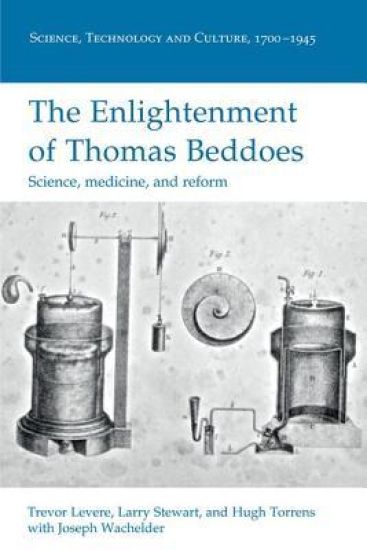
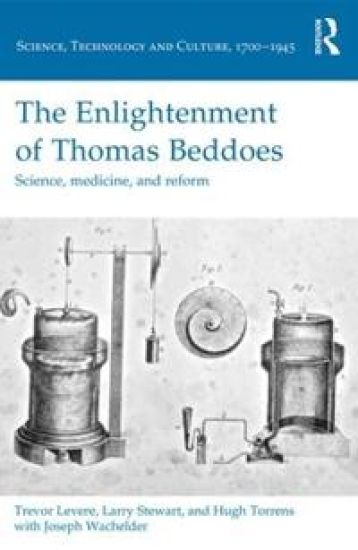
The Enlightenment of Thomas Beddoes

The Enlightenment of Thomas Beddoes

Trevor Levere; Larry Stewart; Hugh Torrens; Joseph Wachelder

Routledge
2018
nidottu
Thomas Beddoes (1760-1808) lived in ‘decidedly interesting times’ in which established orders in politics and science were challenged by revolutionary new ideas. Enthusiastically participating in the heady atmosphere of Enlightenment debate, Beddoes' career suffered from his radical views on politics and science. Denied a professorship at Oxford, he set up a medical practice in Bristol in 1793. Six years later - with support from a range of leading industrialists and scientists including the Wedgwoods, Erasmus Darwin, James Watt, James Keir and others associated with the Lunar Society - he established a Pneumatic Institution for investigating the therapeutic effects of breathing different kinds of ‘air’ on a wide spectrum of diseases.The treatment of the poor, gratis, was an important part of the Pneumatic Institution and Beddoes, who had long concerned himself with their moral and material well-being, published numerous pamphlets and small books about their education, wretched material circumstances, proper nutrition, and the importance of affordable medical facilities. Beddoes’ democratic political concerns reinforced his belief that chemistry and medicine should co-operate to ameliorate the conditions of the poor. But those concerns also polarized the medical profession and the wider community of academic chemists and physicians, many of whom became mistrustful of Beddoes’ projects due to his radical politics.Highlighting the breadth of Beddoes’ concerns in politics, chemistry, medicine, geology, and education (including the use of toys and models), this book reveals how his reforming and radical zeal were exemplified in every aspect of his public and professional life, and made for a remarkably coherent program of change. He was frequently a contrarian, but not without cause, as becomes apparent once he is viewed in the round, as part of the response to the politics and social pressures of the late Enlightenment.
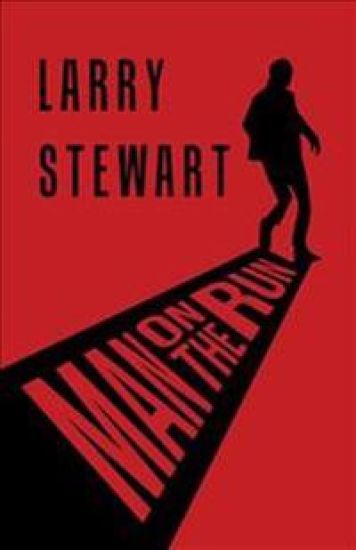
Man on the Run

Man on the Run

Larry Stewart

iUniverse
2017
pokkari
Lance Knight is an average Joe ready to declare his independence from the rat race. With a briefcase in hand, he enters a Vancouver bank, walks up to a teller and in one minute and thirty seconds, robs four tills and the vault. Toting three grocery bags and the briefcase, Lance quickly exits the bank and escapes in a Chevy Impala.A half hour later, Vancouver police detective Rob Passaglia receives word of Lance's robbery and is assigned to the case. His captain thinks the case will be a slam dunk, but Rob is about to learn otherwise. As he leads the hunt to bring Lance to justice, the chase turns into a global pursuit as the inexperienced perp realizes the impact of an egregious error and becomes immersed in life on the run. Now isolated from his wife and family, Lance must make sense of a new love interest who has no idea that their entire relationship is based on lies. With the detective in hot pursuit, Lance's effort to escape seems futile. Or is it?Man on the Run is a thrilling romp of international proportions as a novice criminal is pitted against the law, the environment, and dangerous characters while attempting to escape his past.
The Enlightenment of Thomas Beddoes

The Enlightenment of Thomas Beddoes

Trevor Levere; Larry Stewart; Hugh Torrens; Joseph Wachelder

Routledge
2016
sidottu
Thomas Beddoes (1760-1808) lived in ‘decidedly interesting times’ in which established orders in politics and science were challenged by revolutionary new ideas. Enthusiastically participating in the heady atmosphere of Enlightenment debate, Beddoes' career suffered from his radical views on politics and science. Denied a professorship at Oxford, he set up a medical practice in Bristol in 1793. Six years later - with support from a range of leading industrialists and scientists including the Wedgwoods, Erasmus Darwin, James Watt, James Keir and others associated with the Lunar Society - he established a Pneumatic Institution for investigating the therapeutic effects of breathing different kinds of ‘air’ on a wide spectrum of diseases.The treatment of the poor, gratis, was an important part of the Pneumatic Institution and Beddoes, who had long concerned himself with their moral and material well-being, published numerous pamphlets and small books about their education, wretched material circumstances, proper nutrition, and the importance of affordable medical facilities. Beddoes’ democratic political concerns reinforced his belief that chemistry and medicine should co-operate to ameliorate the conditions of the poor. But those concerns also polarized the medical profession and the wider community of academic chemists and physicians, many of whom became mistrustful of Beddoes’ projects due to his radical politics.Highlighting the breadth of Beddoes’ concerns in politics, chemistry, medicine, geology, and education (including the use of toys and models), this book reveals how his reforming and radical zeal were exemplified in every aspect of his public and professional life, and made for a remarkably coherent program of change. He was frequently a contrarian, but not without cause, as becomes apparent once he is viewed in the round, as part of the response to the politics and social pressures of the late Enlightenment.
Chasing Dreams

Chasing Dreams

Larry Stewart

Trafford Publishing
2011
pokkari
Clint McBride wanted to have it all--a beautiful wife, a great career, success, wealth--all before age 30, but it was not to be. Everything came crashing down on him, including his beautiful home that he burned to the ground. Doors opened for Clint everywhere he went, as his best friend's father took the young architect into his construction business. Deal followed deal, success followed success, and soon Clint and his wife, Dusty, seemed to have it all. But it was too much too soon for the young couple--especially for Clint, whose greed for more wealth, more power, and more success dominated his life. Clint and Dusty had it all and then lost it. Terrible things happened to the two of them as Clint's dreams became obsessions and overpowered their lives in Woodside, California. When greed and betrayal took over, Clint left for Europe. In a drunken stupor on the airplane to Madrid, he met Father Bernardo, who eventually brought renewed direction and meaning to Clint's life and helped turn failure into new success. What lay ahead meant new places, new people, a new life, and new dreams to chase--dreams that Clint never could have imagined before.
Practical Matter

Practical Matter

Margaret C. Jacob; Larry Stewart

Harvard University Press
2006
nidottu
Margaret Jacob and Larry Stewart examine the profound transformation that began in 1687. From the year when Newton published his Principia to the Crystal Palace Exhibition of 1851, science gradually became central to Western thought and economic development. The book aims at a general audience and examines how, despite powerful opposition on the Continent, a Newtonian understanding gained acceptance and practical application. By the mid-eighteenth century the new science had achieved ascendancy, and the race was on to apply Newtonian mechanics to industry and manufacturing. They end the story with the temple to scientific and technological progress that was the Crystal Palace exhibition. Choosing their examples carefully, Jacob and Stewart show that there was nothing preordained or inevitable about the centrality awarded to science. "It is easy to forget that science might have been stillborn, or remained the esoteric knowledge of court elites. Instead, for better and for worse, science became a centerpiece of Western culture."