Kirjojen hintavertailu. Mukana 12 657 676 kirjaa ja 12 kauppaa.
Kirjailija
László F. Földényi
Kirjat ja teokset yhdessä paikassa: 16 kirjaa, julkaisuja vuosilta 2008-2024, suosituimpien joukossa Marionetten und Übermarionetten. Vertaile teosten hintoja ja tarkista saatavuus suomalaisista kirjakaupoista.
Mukana myös kirjoitusasut: Laszlo F. Foldenyi, Lászlo F. Földényi
An exemplary collection of work from one of the world’s leading scholars of intellectual history “Földényi . . . stage[s] a broad metaphysical melodrama between opposites that he pursues throughout this fierce, provoking collection (expertly translated by Ottilie Mulzet). . . . He proves himself a brilliant interpreter of the dark underside of Enlightenment ambition.”—James Wood, New Yorker László Földényi’s work, in the long tradition of public intellectual and cultural criticism, resonates with the writings of Montaigne, Walter Benjamin, and Thomas Mann. In this new essay collection, Földényi considers the continuing fallout from the collapse of religion, exploring how Enlightenment traditions have not replaced basic elements of previously held religious mythologies—neither their metaphysical completeness nor their comforting purpose. Realizing beautiful writing through empathy, imagination, fascination, and a fierce sense of justice, Földényi covers a wide range of topics including a meditation on the metaphysical unity of a sculpture group and an analysis of fear as a window into our relationship with time.
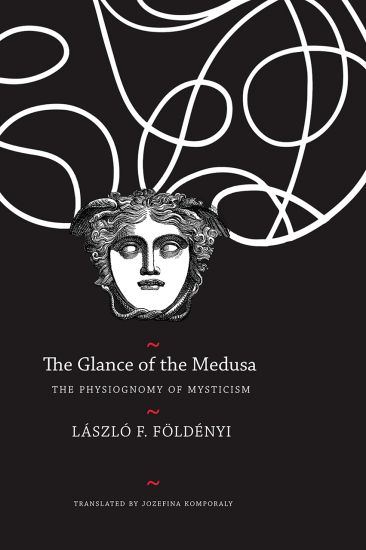
In The Glance of the Medusa, Laszo F. Foeldenyi offers a mesmerizing examination of the rich history of European culture through the lens of mythology and philosophy. Embracing the best traditions of essay writing, this volume invites readers on a spiritual and intellectual adventure. The seven essays bear testimony to Foeldenyi's encyclopedic knowledge and ask whether it is possible to overcome our fear of passing away. In doing so, they illuminate moments of mystical experience viewed in a historical perspective while inviting readers to engage with such moments in the present by immersing themselves into the process of reading and thinking. Rather than providing firm answers to burning questions, The Glance of the Medusa highlights the limits of definition, conjuring up situations in which Man partakes of unutterable experiences-such as passion, pleasure, fear, poetry, or disgust-suggesting that moments of ecstasy cannot be pinned down or captured, only drawn a little closer.
Sju essäer om de ögonblick som i den västerländska traditionen brukar beskrivas som mystiska, katartiska, omskakande eller extatiska. »Människan må vara en unik varelse, men i varje fiber av hennes kropp manifesterar sig det vara som håller alla människor vid liv; hon har något som är oändligt främmande för henne att tacka för sitt liv. Hennes anletsdrag kan inte förväxlas med andras, icke desto mindre är hela kosmos ansvarigt för hennes ojämförliga drag, hennes kropp är helt hennes egen, fastän den inte står henne det minsta närmare än planeter på ljusårs avstånd; hennes hårs och hennes naglars växt är lika mycket en händelse som en stjärnas explosion; exkrementet som lämnar hennes kropp är universums eget råstoff, och ljudet av hennes hjärtslag hämtar näring ur den tystnad som slukar och frambringar allt, liksom det mörker som fyller hennes kropp när sig av den universella osynligheten.« László F. Földényi är konstteoretiker, litteraturforskare och essäist. Han räknas till Ungerns främsta intellektuella och är professor i konstteori vid Akademien för teater och film i Budapest. Sedan 2009 medlem av Tyska Akademien.
A leading European intellectual reflects on the changing concept of melancholy throughout history Alberto Manguel praises the Hungarian writer László Földényi as “one of the most brilliant essayists of our time.” Földényi’s extraordinary Melancholy, with its profusion of literary, ecclesiastical, artistic, and historical insights, gives proof to such praise. His book, part history of the term melancholy and part analysis of the melancholic disposition, explores many centuries to explore melancholy’s ambiguities. Along the way Földényi discovers the unrecognized role melancholy may play as a source of energy and creativity in a well-examined life. Földényi begins with a tour of the history of the word melancholy, from ancient Greece to the medieval era, the Renaissance, and modern times. He finds the meaning of melancholy has always been ambiguous, even paradoxical. In our own times it may be regarded either as a psychic illness or a mood familiar to everyone. The author analyzes the complexities of melancholy and concludes that its dual nature reflects the inherent tension of birth and mortality. To understand the melancholic disposition is to find entry to some of the deepest questions one’s life. This distinguished translation brings Földényi’s work directly to English-language readers for the first time.
»Vår tids civilisation sätter all sin tillit till praktiska lösningar - allt det som skulle kunna hota dess optimism sätts inom parentes. Ändå är de många fasor som hemsöker världen inte rätt och slätt funktionsstörningar; de är avigsidorna av det som den moderna civilisationen demonstrativt beundrar.« László F. Földényi Lászlo F. Földényi, född 1952, undervisar på universitetet i Budapest och räknas till Ungerns främsta intellektuella. Han har fått ett flertal priser för sina konstfilosofiska, litteratur- och kulturhistoriska verk.
Wir wissen: Geschichte wird geschrieben von den Siegern. Aber nicht die Besiegten sind die Opfer der Geschichte. Denn schlimmer als besiegt zu sein, ist es, des Besiegtwerdens nicht wert zu sein. Die wahren Opfer der Geschichte sind die, deren Existenz uns nicht einmal bekannt ist. Ausgehend von der Schilderung Dostojewskis Verbannung in Sibirien richtet Föld?nyi in diesem eleganten Essay voll leiser Sprengkraft den Blick auf den blinden Fleck der Geschichte. Seine Überlegungen lesen sich wie ein kritischer Kommentar zur Gegenwart: Was aber, wenn man sie zu Ende denkt? ?L?szl? Föld?nyi hat einen wunderbar intelligenten und stilistisch brillanten Essay verfasst, der sich zum Plädoyer für die Denkfreiheit weitet.? Frankfurter Allgmeine Zeitung vom 7.04.2008